Peonies — History & Facts
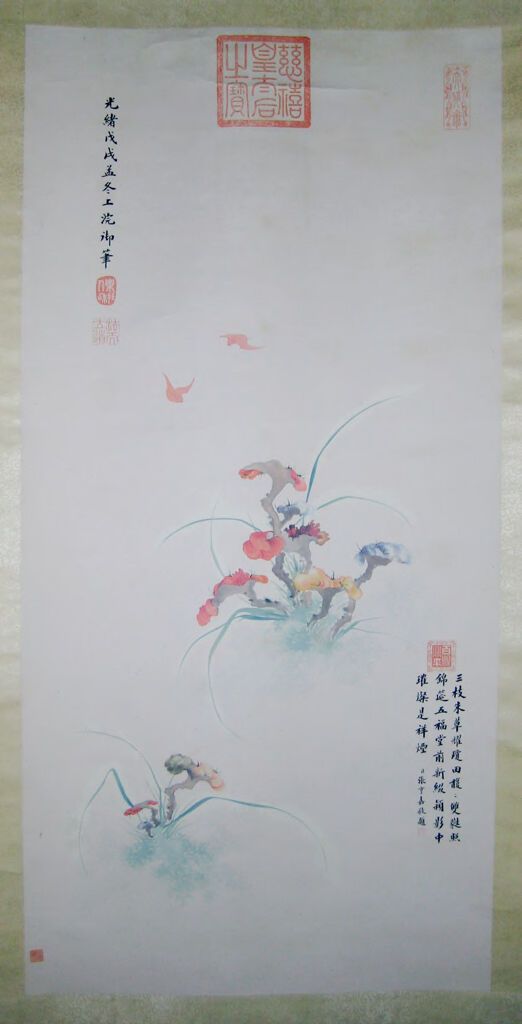
In a world where beauty often demands one's devotion, an obsession emerges, entwined with the delicate presence of peonies, whispering stories of longing and loss. Look closely at the rich, velvety petals, their vibrant hues ranging from soft pink to deep crimson, inviting the viewer to explore their lush depths. Notice how the artist has skillfully captured the light, allowing it to dance elegantly across the surface, illuminating each bloom with a gentle glow. The subtle brushstrokes convey a sense of movement, as if the flowers themselves are swaying in an unseen breeze, while the background remains muted, emphasizing the peonies' quiet but profound significance. Amid this floral display, we sense a tension—a juxtaposition between exuberance and fragility.
The flowers, often symbols of wealth and prosperity in Chinese culture, also evoke a fleeting beauty, a reminder of the impermanence of life. In their clustered arrangement, they symbolize both abundance and the weight of expectations, as if each bloom bears the burden of unspoken desires. The interplay of colors and forms invites contemplation of personal obsession, perhaps reflecting the artist's own struggles with power and legacy. Created during the late 19th to early 20th century, this work emerged from the life of Empress Dowager Cixi, a woman who navigated the complexities of political intrigue amid China’s tumultuous transformation.
Living in the Forbidden City, she wielded considerable influence while also grappling with her personal aspirations and societal constraints. Surrounded by a world that often confined her, this intimate portrayal of peonies captures both her artistic expression and her deeper yearnings.