People by a Blue Lake — History & Facts
What first catches the eye in People by a Blue Lake is the sense of movement stilled, as if the figures have just paused mid-step beneath the trees. The brushwork is bold, almost sculpting the forms from blocks of color—deep blue for the lake, flashes of yellow and green for the sunlit ground, and the warm brown of the man’s suit anchoring the trio. The woman leans toward the child, her gesture gentle and protective, while the man stands upright, his gaze unreadable beneath the brim of his hat.
The faces are left indistinct, drawing attention instead to posture and color, as if the emotional heart of the scene lies in their arrangement and the shimmering air around them. Painted in 1913, this work belongs to a world on the cusp of change, when artists like August Macke—a leading figure of German Expressionism—sought new ways to capture the fleeting joys of modern life. Such paintings were rarely grand commissions; rather, they were personal explorations, often made for private circles or small exhibitions. The vivid palette and simplified forms reflect the influence of French Fauvism and the search for harmony between people and nature.
History has kept few traces of the journey of this particular piece, now preserved in the Google Art Project, but its colors still pulse with the optimism and uncertainty of its era—inviting the viewer to linger, and to imagine the world just beyond the blue lake.
More Artworks by August Macke
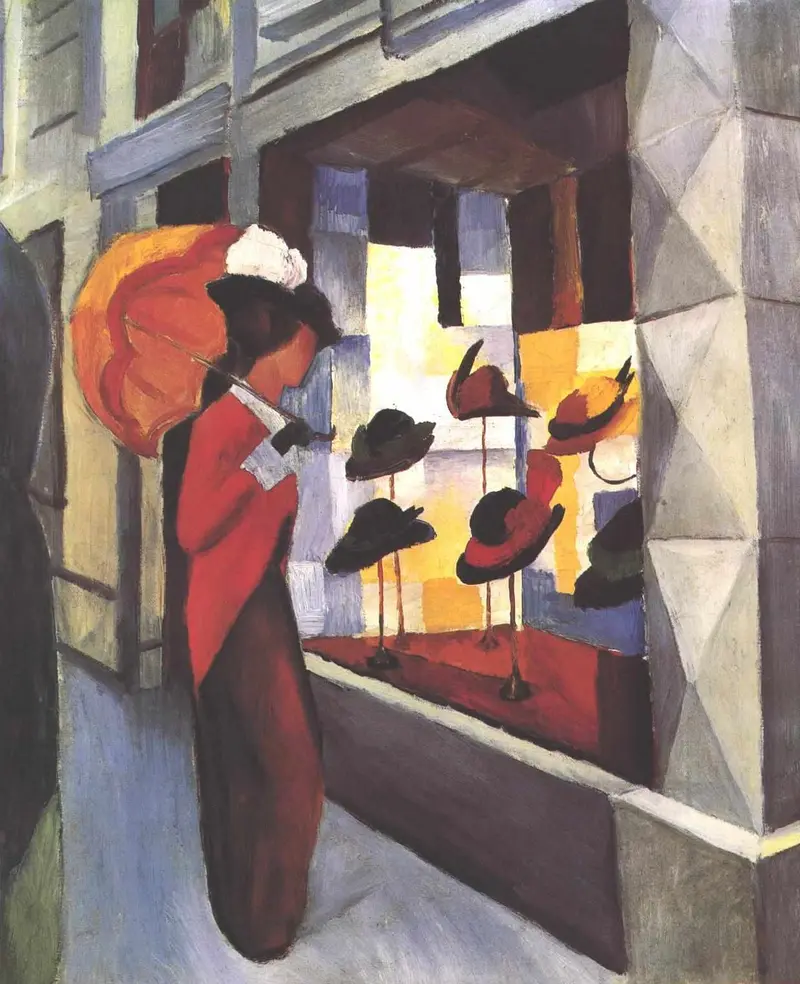
Woman with a Parasol in Front of a Hat Shop
August Macke

Street with Church in Kandern
August Macke
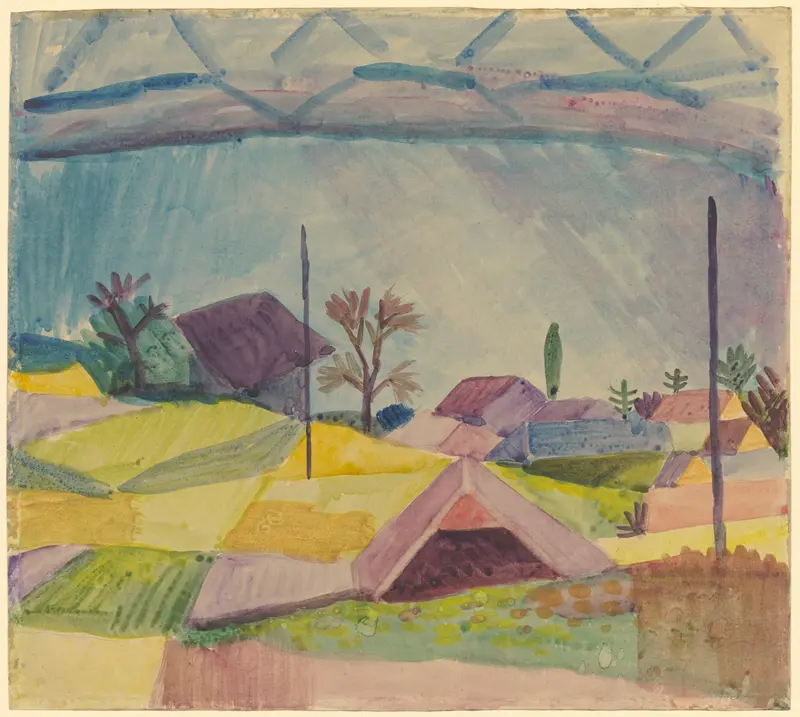
View of Hilterfingen
August Macke

Paar im Nachen
August Macke
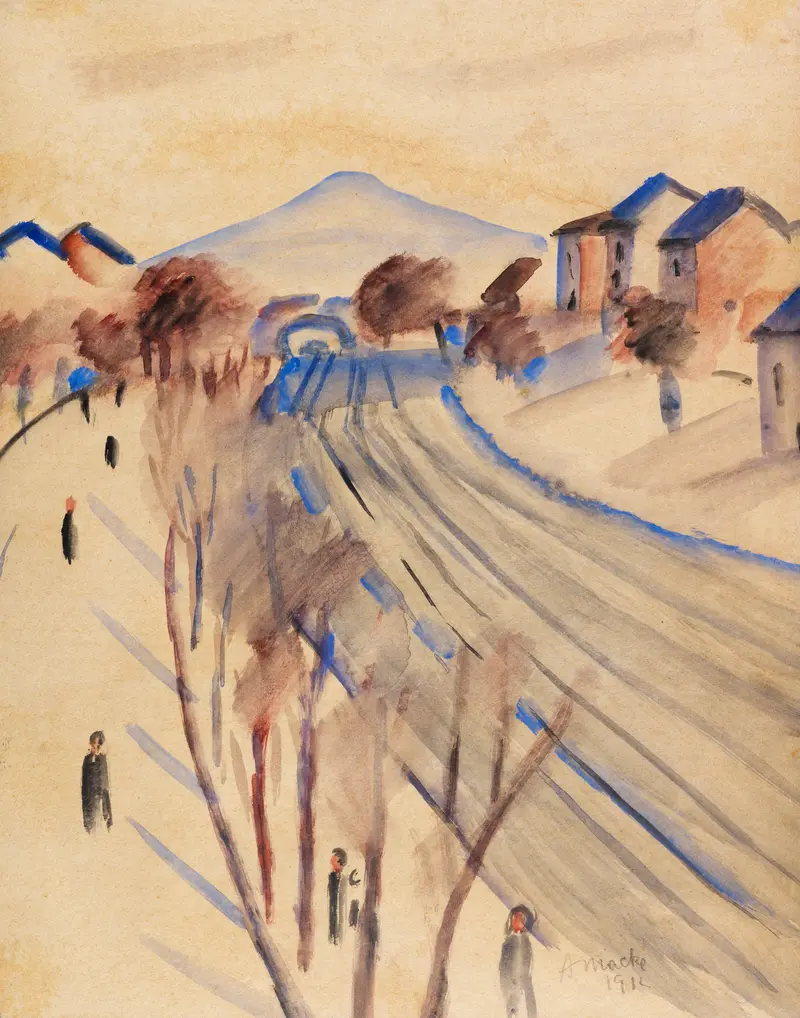
Ölberg mit Bahngleisen II
August Macke
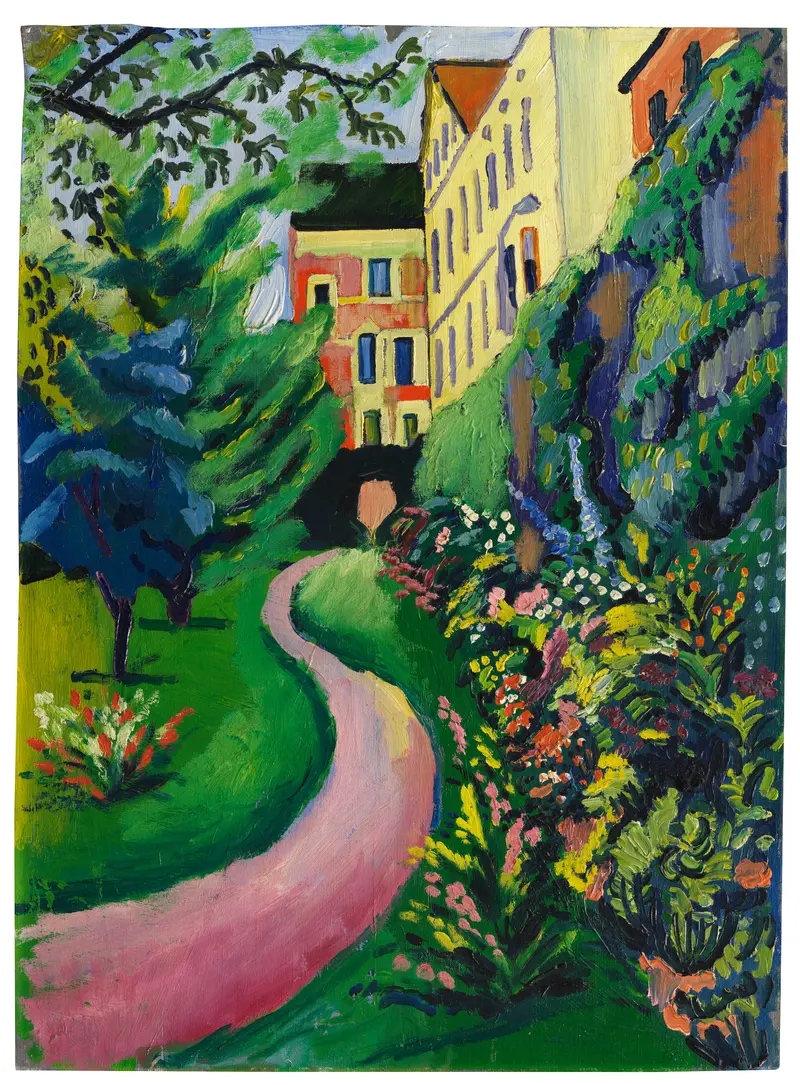
Unser Garten mit blühenden Rabatten
August Macke
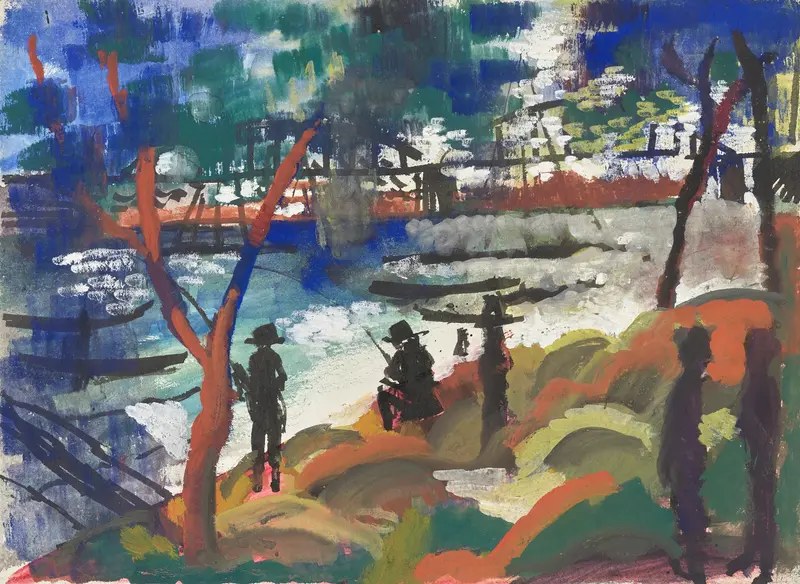
Angler am Fluss
August Macke
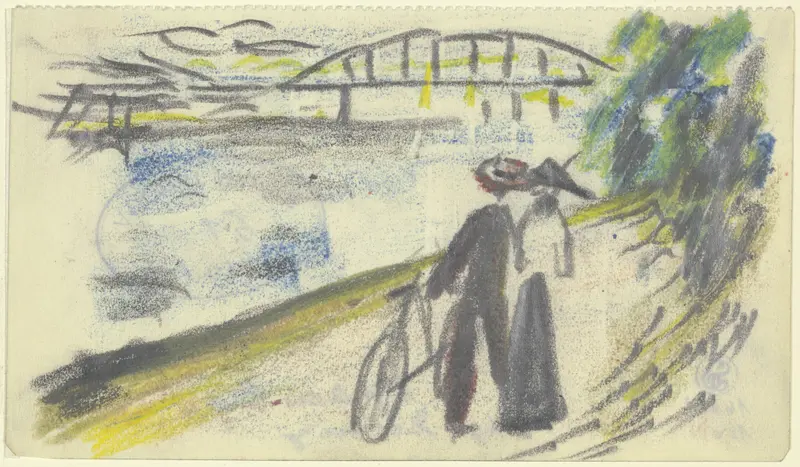
Path at the Rhine
August Macke
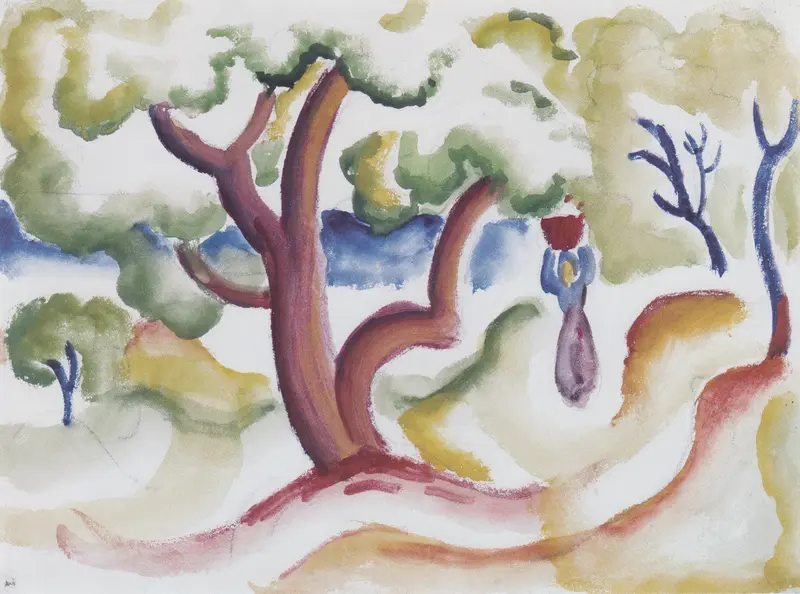
Frau mit Krug unter Bäumen
August Macke
Sonnige Straße mit Hund
August Macke