Pergola with Oranges — History & Facts
In a world where nature conceals its emotions, a painter distills chaos into an intimate communion with the earthly realm. Look to the center of the canvas, where the vibrant oranges hang enticingly from the lush pergola. The warm, golden hues of the fruit contrast starkly with the verdant greens of the leaves, creating a harmonious balance that invites the eye to wander. Notice how the dappled sunlight filters through the foliage, casting playful shadows that dance across the textured surface, embodying the fleeting nature of time.
Fearnley's deft brushwork breathes life into the scene, with each stroke echoing the delicate interplay between light and organic form. Beneath the surface, the painting conveys a deeper dialogue between cultivation and wildness. The oranges represent human effort to nurture and create beauty, while the untamed vines suggest nature’s inherent unpredictability. This tension speaks to the fragility of existence; it’s a reminder of the symbiosis between humanity and the earth, one that is often taken for granted.
The work invites contemplation of creation itself — both the artistry of the painter and the natural artistry of growth in the garden. In 1834, as Fearnley painted this piece, he was immersing himself in the evolving Romantic movement, where the beauty of nature became a focal point for expression. He was in Norway, often drawing inspiration from its stunning landscapes, yet simultaneously engaging with broader European artistic dialogues. This period saw great shifts in art, as artists sought to depict not just landscapes but the emotions they evoked — a pursuit that Fearnley embraced wholeheartedly with Pergola with Oranges.
More Artworks by Thomas Fearnley
Browse all →
Norwegian Landscape, Marumfoss
Thomas Fearnley

View of the Oslofjord
Thomas Fearnley

Gudvangen
Thomas Fearnley

Stormy Landscape with a Rider
Thomas Fearnley
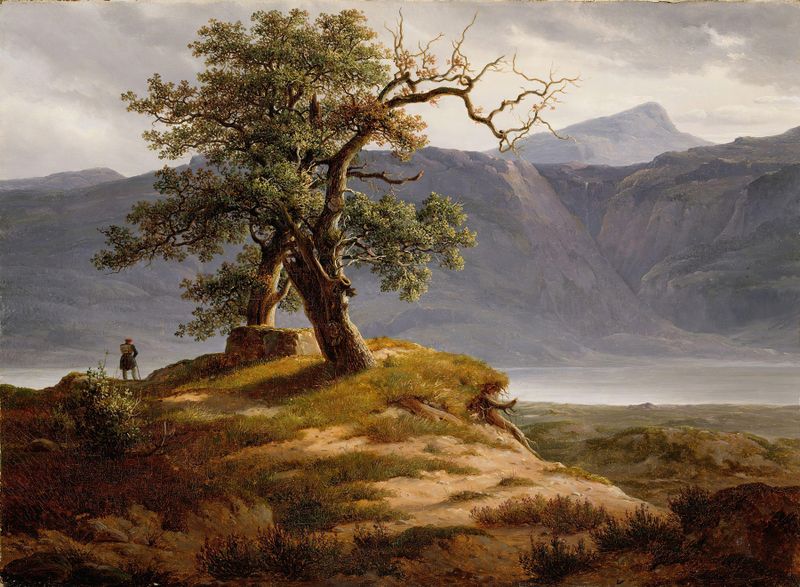
Landscape with a Wanderer
Thomas Fearnley
The Grindelwaldgletscher
Thomas Fearnley

Clouds over the Fjord
Thomas Fearnley
From Königssee
Thomas Fearnley

The Bridge of Hauge outside Arendal
Thomas Fearnley

King Vilhelm II’s ceremonial Processsion in Amsterdam in 1840
Thomas Fearnley