
Pergola with Vine in Amalfi — History & Facts
In the serene embrace of the Amalfi coast, tranquility lies heavy, intertwining emptiness with beauty. The viewer is invited to contemplate the stillness, as if the very air carries unspoken secrets, echoing the solitude of the vine-laden pergola. Look to the left at the gentle curves of the archway, where twisting tendrils of green cascade, inviting us into a world both inviting and isolating. The muted palette — soft greens and warm earth tones — creates a harmonious blend, while the dappled sunlight filters through the foliage, casting delicate shadows on the warm stone surface below.
Each brushstroke reveals the artist’s meticulous attention to detail, allowing nature's quiet magnificence to take center stage. Yet, amid the lush surroundings lies a poignant contradiction: the absence of figures emphasizes a profound solitude. The pergola, a structure of refuge, stands empty, beckoning yet withholding. This juxtaposition evokes a sense of yearning, suggesting that true connection lies just beyond reach, shrouded in the folds of nature's embrace. In 1858, while residing in Amalfi, Blaschnik captured this moment of stillness against a backdrop of shifting artistic movements in Europe.
This period marked a growing fascination with natural landscapes, reflecting Romantic ideals and a longing for simplicity amid industrial change. Immersed in this vibrant environment, the artist found a space to explore the delicate balance between presence and absence, crafting a visual narrative that resonates deeply with viewers today.
More Artworks by Arthur Blaschnik
Browse all →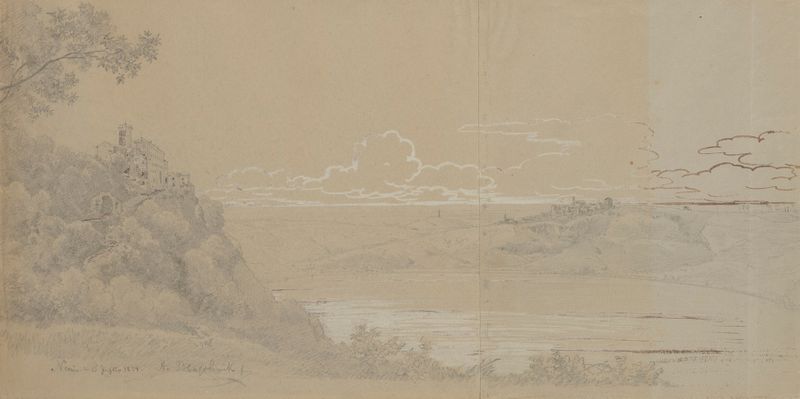
Palazzo Ruspoli by Lake Nemi, in the Distance the Town of Genzano di Roma
Arthur Blaschnik
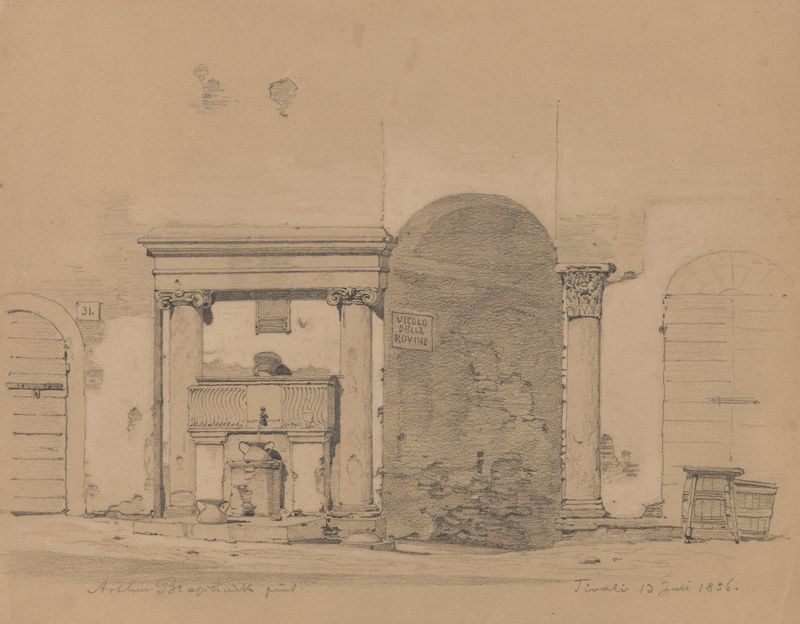
Gate Leading to Vicoli dei Grana near Piazza Palatina in Tivoli
Arthur Blaschnik
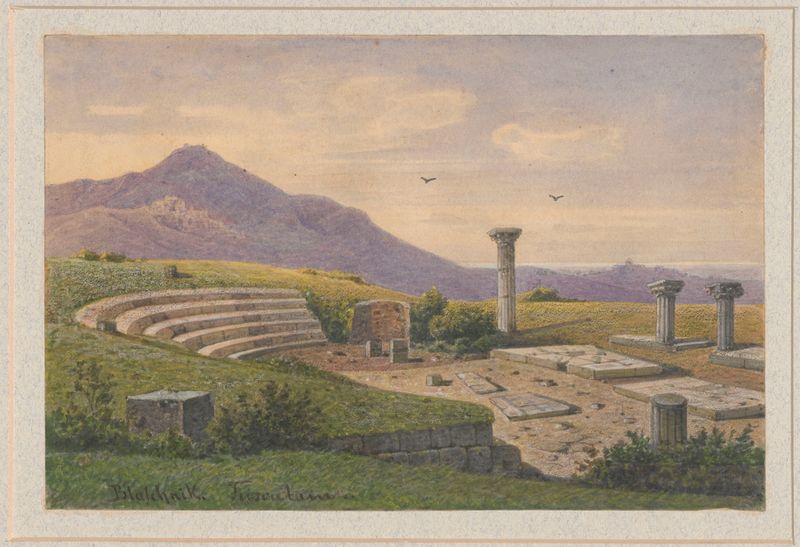
Amphitheatre in Tusculum
Arthur Blaschnik
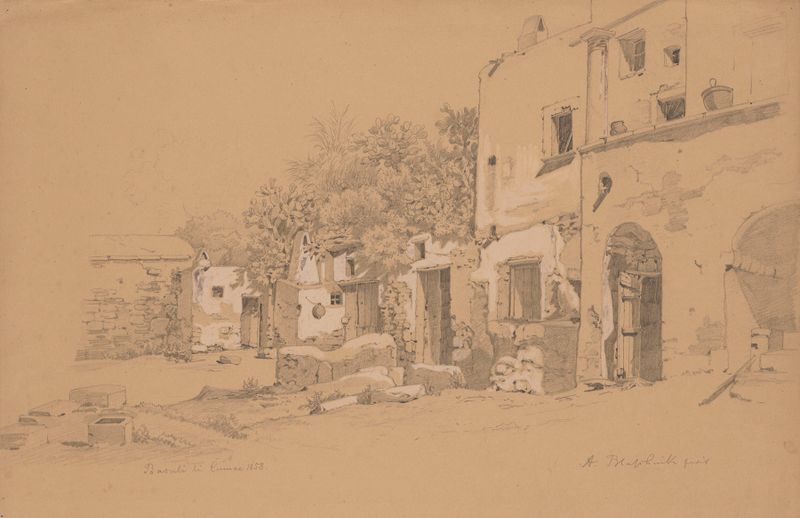
House and Outbuildings in Bacoli
Arthur Blaschnik
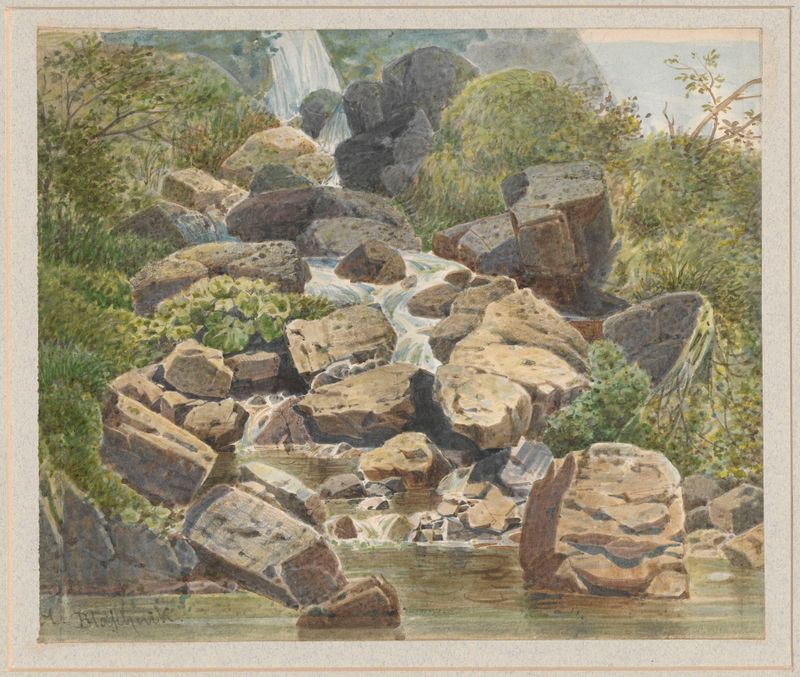
View of a small waterfall near Covigliaio, Tuscany
Arthur Blaschnik
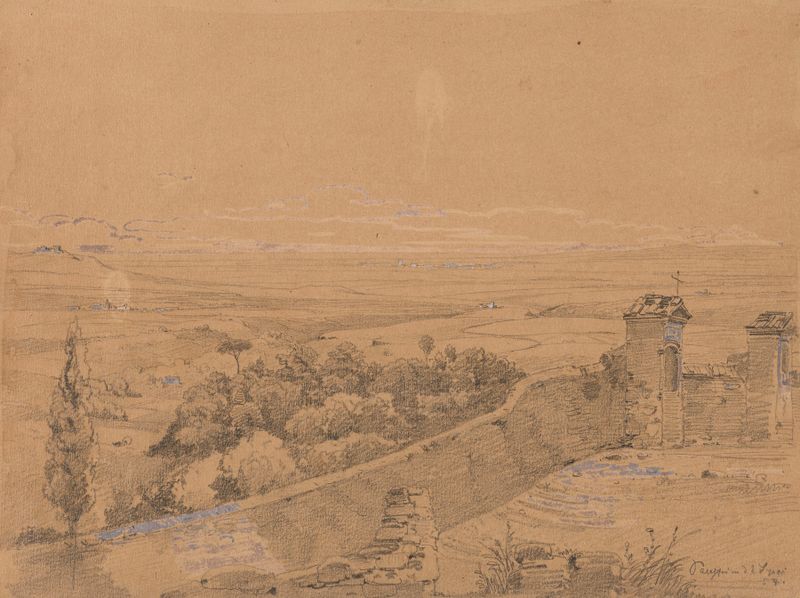
Landscape from the Vicinity of Palestrina
Arthur Blaschnik
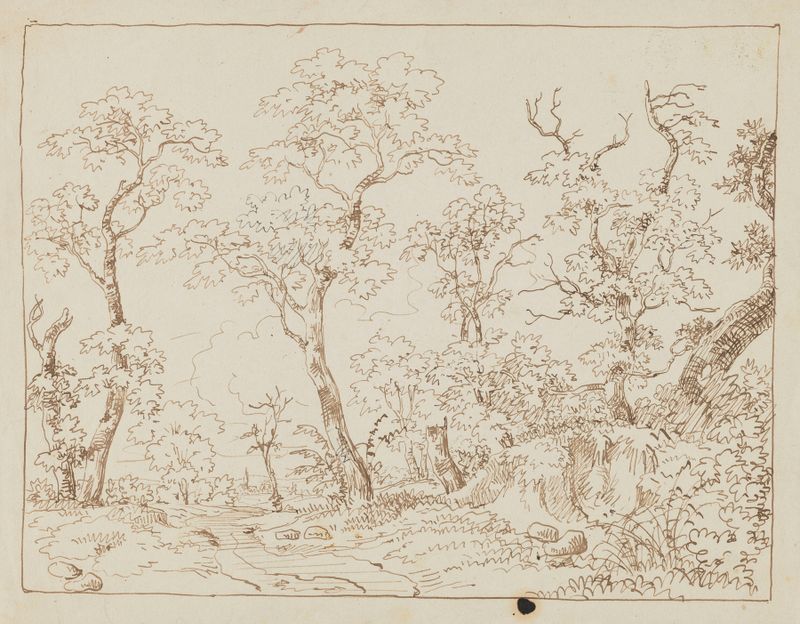
Studies of Trees, Landscape
Arthur Blaschnik
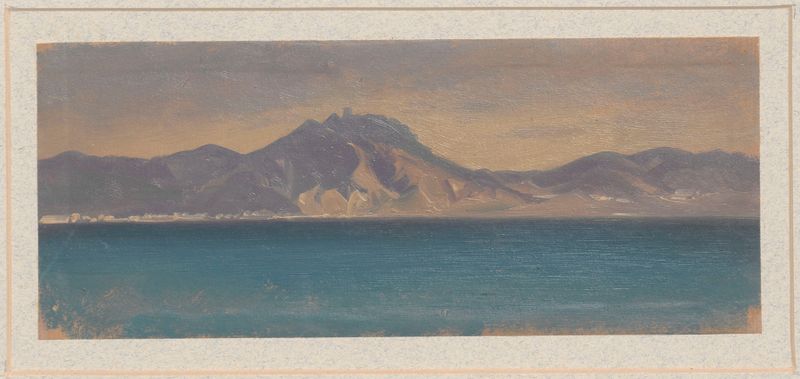
View of the Island of Capri
Arthur Blaschnik
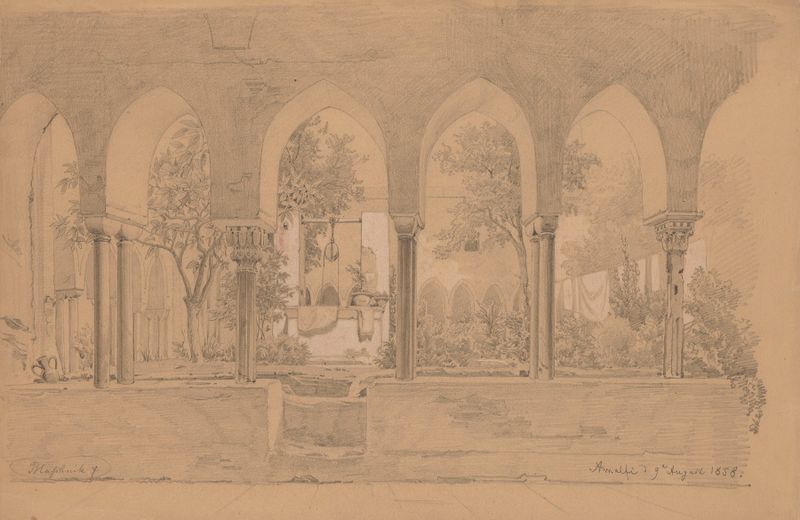
Cloister with Arcade Gallery in Amalfi
Arthur Blaschnik
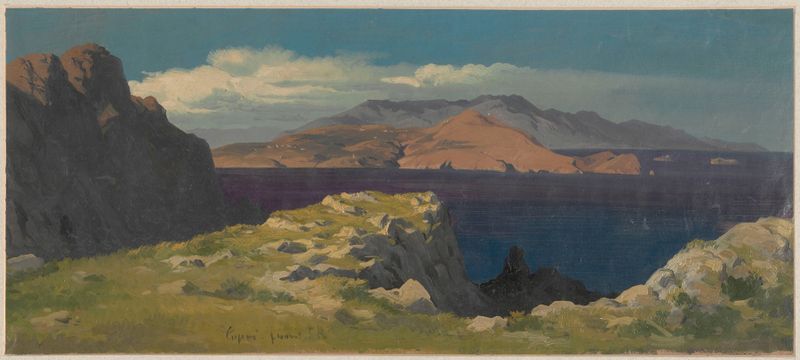
View of Capri
Arthur Blaschnik





