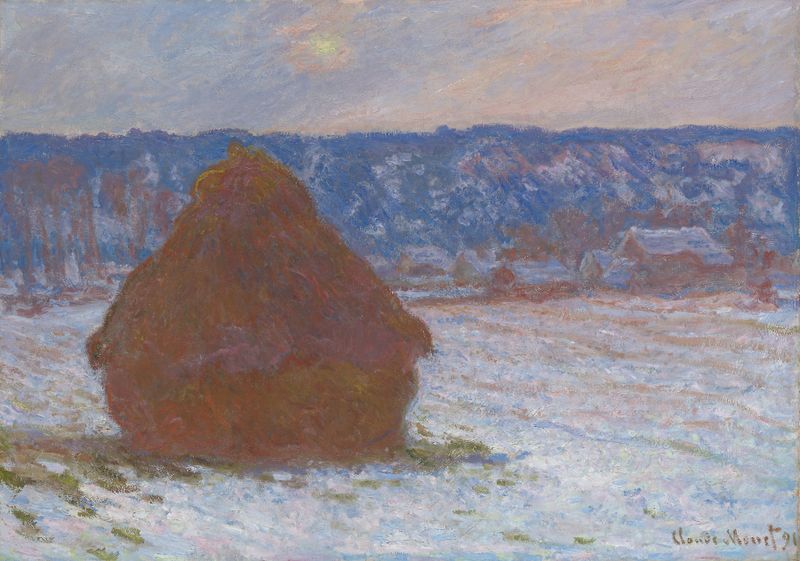
Peupliers au bord de l’Epte, crépuscule — History & Facts
Is this a mirror — or a memory? In Peupliers au bord de l’Epte, crépuscule, the duality of reflection and reminiscence intertwines, presenting a landscape that speaks to the fragility of trust and the haunting nature of betrayal. Look to the left, where the fading sun casts an amber hue across the water’s surface, illuminating the silhouettes of poplar trees. The soft, fluid strokes of the brush create a delicate balance between the vibrant colors of dusk and the deep blues of the river, drawing the viewer's eyes toward the horizon. Notice how Monet captures the fleeting light, allowing it to dance upon the water, inviting contemplation and evoking a sense of nostalgia that permeates the scene. Beneath the serene beauty lies a tension that suggests the impermanence of such moments.
The trees, standing resolute yet isolated, evoke a sense of loss, as if they are guardians of secrets long buried. The water, while reflecting the brilliance of the sky, also serves as a reminder of life’s dual nature: tranquil yet tumultuous, an echo of past betrayals that ripple through time. This interplay of elements invites viewers to confront their own experiences of trust and deception, framing a haunting narrative within the natural world. In 1891, Monet painted this piece during a period of intense innovation and personal development, having settled in Giverny, where he immersed himself in the exploration of light and color.
The Impressionist movement was flourishing, reshaping perceptions of art and nature, yet Monet’s works also reflected his own emotional experiences, including complex relationships and the struggles of an artist seeking authenticity in a rapidly changing world.