
Pins Aux Cannebiers — History & Facts
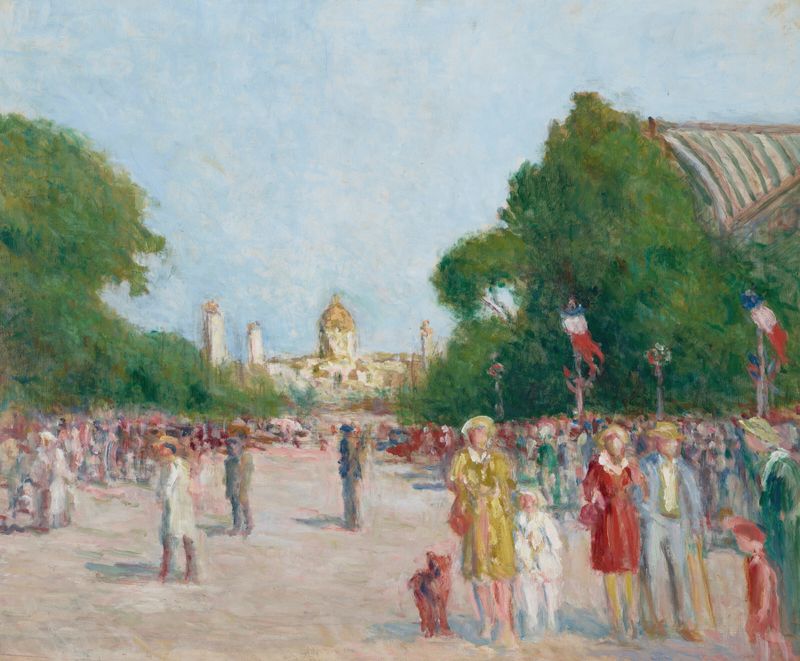
Can paint confess what words never could? In Pins Aux Cannebiers, the essence of mortality emerges not in explicit representation, but in the delicate interplay of light and color, whispering truths that often remain unspoken. Look to the center of the canvas where vibrant green pines rise majestically against a soft blue sky. The interplay of dappled sunlight filters through leaves, casting gentle shadows that dance upon the ground. Notice how the brushstrokes pulse with energy—each stroke a heartbeat, every hue a fleeting moment in time.
The artist employs a palette rich in emeralds and golds, creating a dreamlike atmosphere that draws the viewer into a serene yet ephemeral landscape. Yet beneath this idyllic portrayal lies a poignant contrast. The vivid colors evoke a sense of life and vitality, while the depicted trees, rooted yet ever-growing, embrace the duality of existence—growth intertwined with decay. The scene invites contemplation on the passage of time; each growing green pine may hold the weight of inevitable change, urging us to ponder the cycles of life and death.
In the distance, the horizon looms, reminding us that beauty is often coupled with transience. In 1903, while working in a vibrant artistic community in Paris, Luce created this piece amidst the burgeoning influence of Impressionism. The turn of the century marked a significant shift in art, as artists began to explore new techniques and perspectives. Luce, a follower of Seurat’s pointillism, was deeply engaged with themes of modernity and nature, reflecting both the world around him and the complexities of human emotion encapsulated in a moment.
More Artworks by Maximilien Luce
Browse all →
Le Quai Montebello Et La Colline Sainte-Geneviève
Maximilien Luce

Le Pont-Neuf, La Seine, Petit Bras
Maximilien Luce
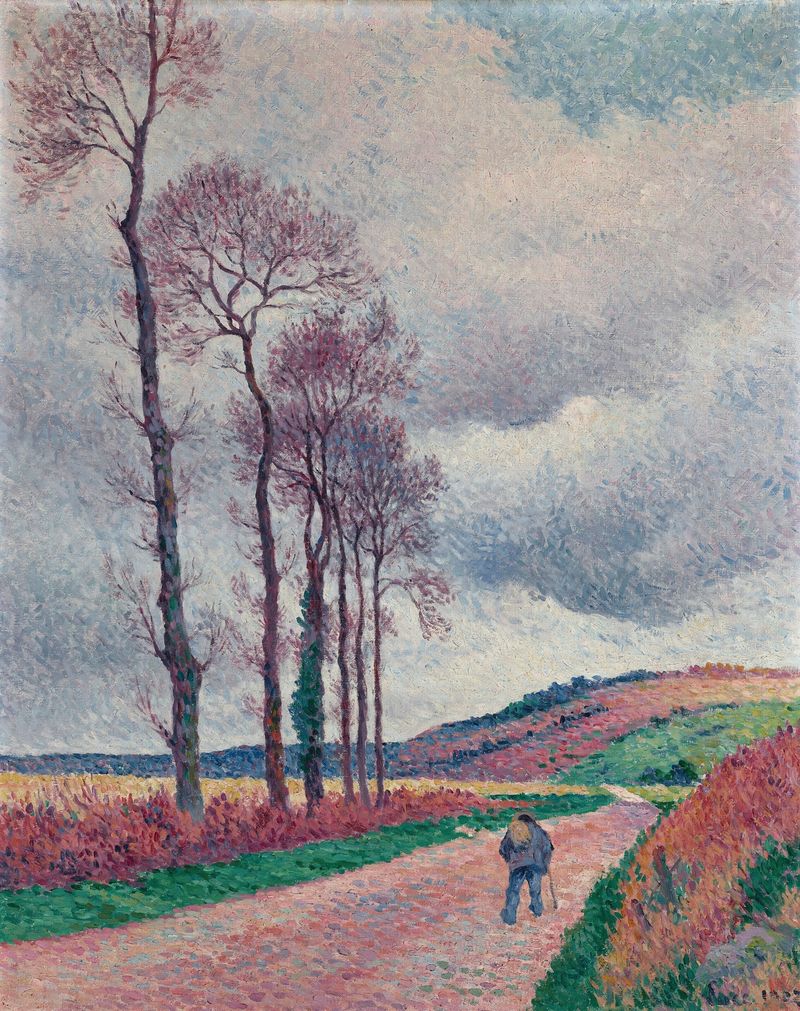
La route aux environs de Méréville
Maximilien Luce
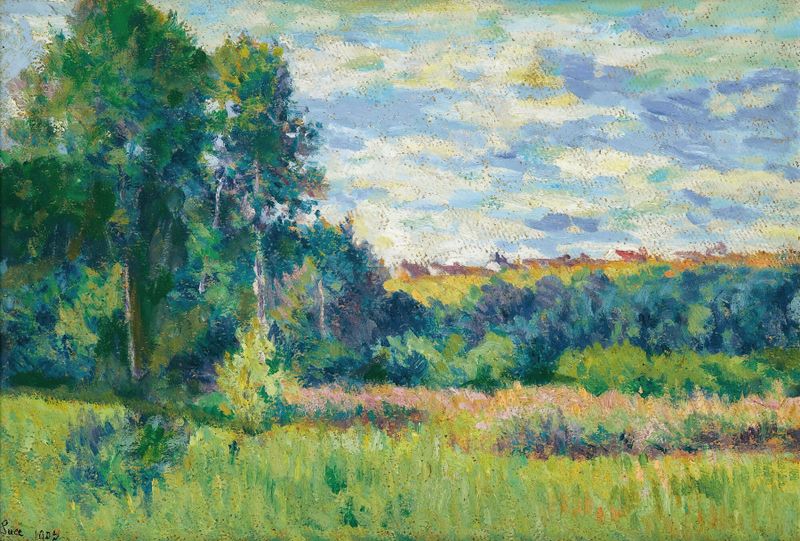
Paysage
Maximilien Luce
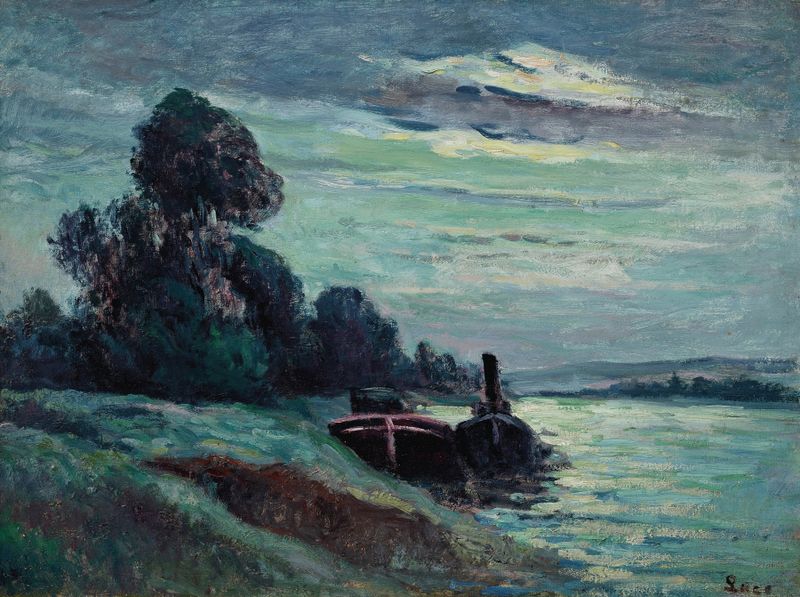
Péniches sur la Seine
Maximilien Luce

Notre Dame de Paris
Maximilien Luce
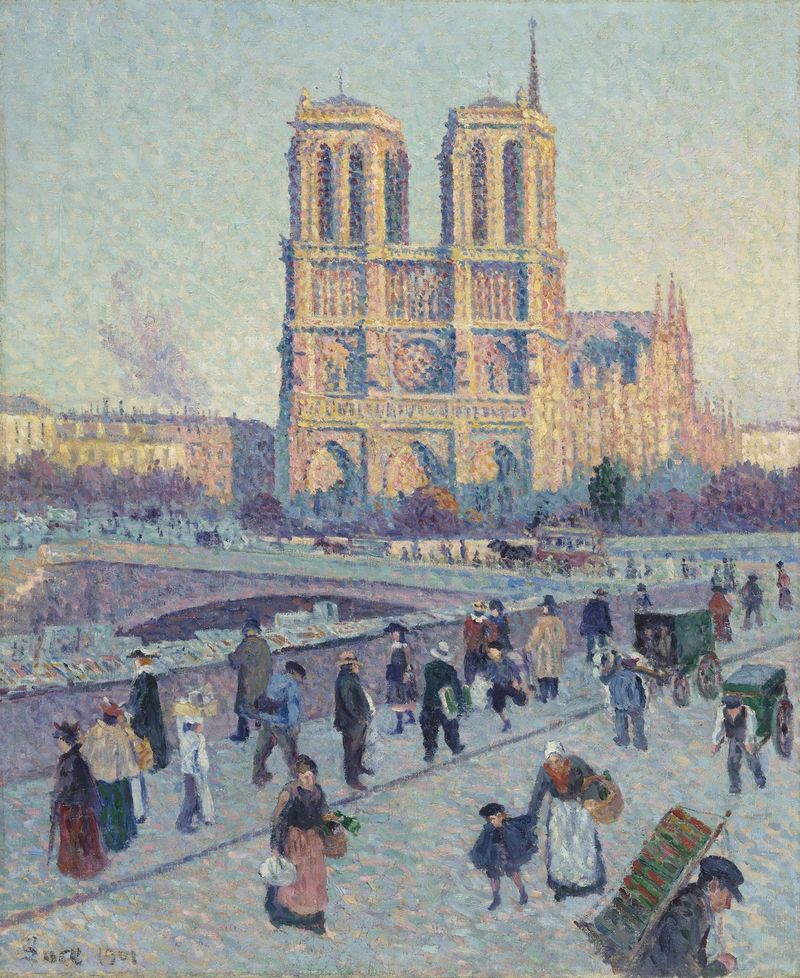
The Quai Saint-Michel and Notre-Dame
Maximilien Luce

La Seine au Pont Mirabeau
Maximilien Luce
L’avenue Winston-Churchill, Paris
Maximilien Luce

Paris, Le Quartier De Vaugirard
Maximilien Luce





