
Place de l’Opera — History & Facts
Could a single brushstroke hold eternity? In Place de l’Opera, the artist captures a fleeting moment in time, where divinity intertwines with the daily rhythm of life in Paris. Look to the left at the majestic architecture of the opera house, its elaborate façade rising against a sky dusted with soft, pastel hues. The play of light across the buildings creates a divine sparkle, while the warm tones of the cobblestone streets ground the scene in reality. Notice the figures bustling about, their movements rendered with loose, fluid strokes that evoke both urgency and grace, as if they are caught in a dance with the city itself. Beneath the surface, this composition reveals a contrast between the grandeur of the opera house and the everyday lives of the people.
The elegance of the architecture suggests a lofty ideal, a sanctuary for art and culture, while the hurried figures hint at the struggles and aspirations of the common man. The juxtaposition of these elements creates a dialogue about the interplay of aspiration and reality, reminding viewers of the divine potential found in ordinary existence. In 1890, the artist was deeply engaged in capturing the essence of Parisian life, using this work to reflect on the rapid changes of the era. The late 19th century was a time of artistic exploration, as impressionism was reaching its zenith, and grasping the ephemeral moments of life, like the one depicted here, became an integral part of the artistic endeavor.
Lepère's focus on light and movement speaks to his desire to immortalize fleeting experiences in a city pulsating with life.
More Artworks by Auguste Louis Lepère
Browse all →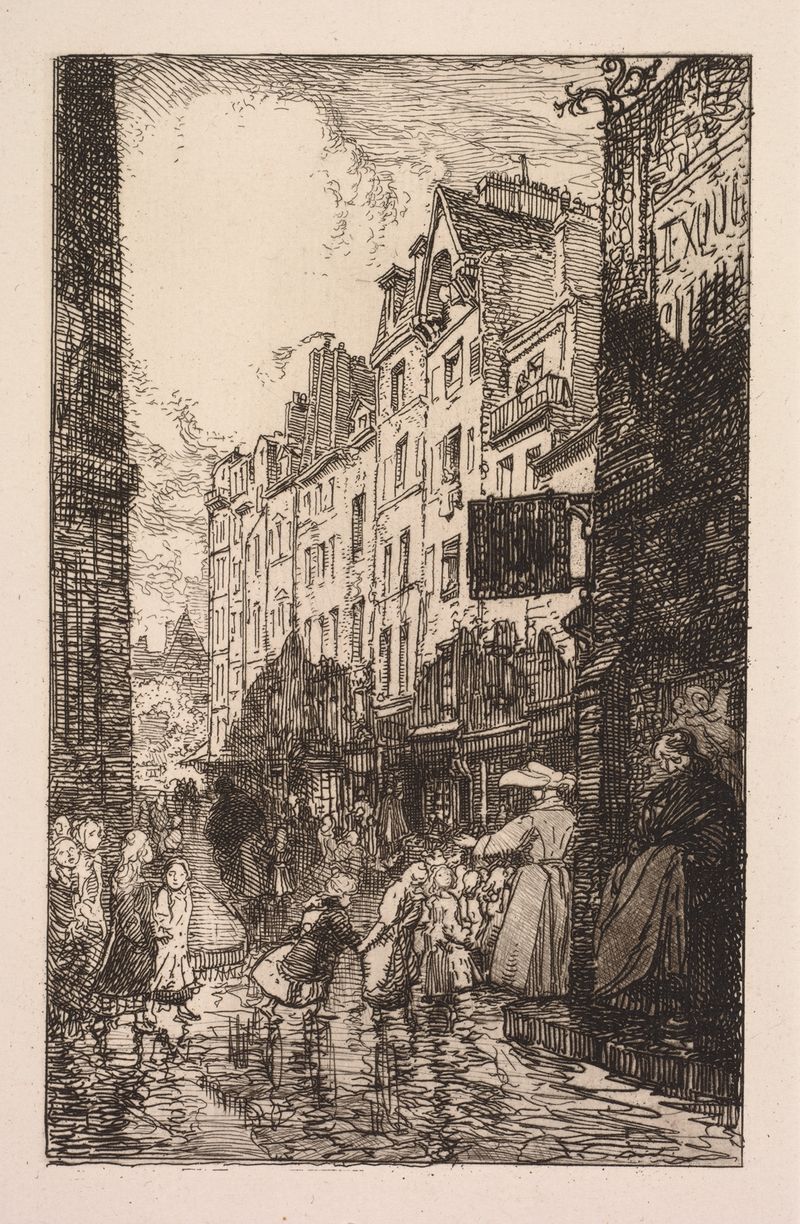
La Rue des Prêtres Saint-Séverin
Auguste Louis Lepère
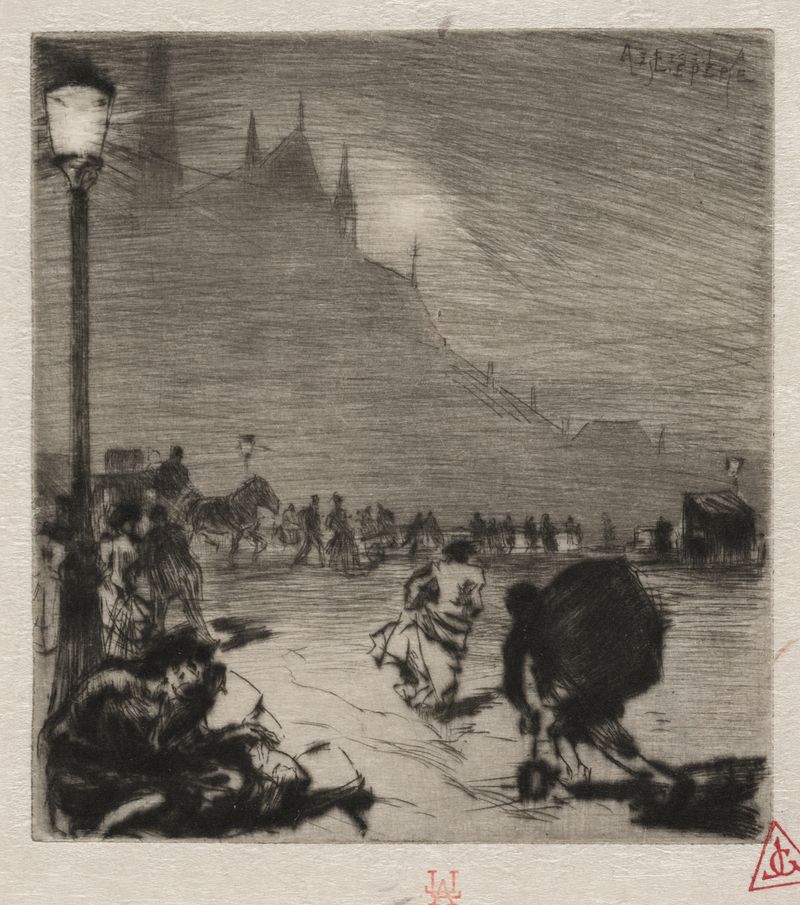
Au Coin du Pont-aux-Doubles
Auguste Louis Lepère
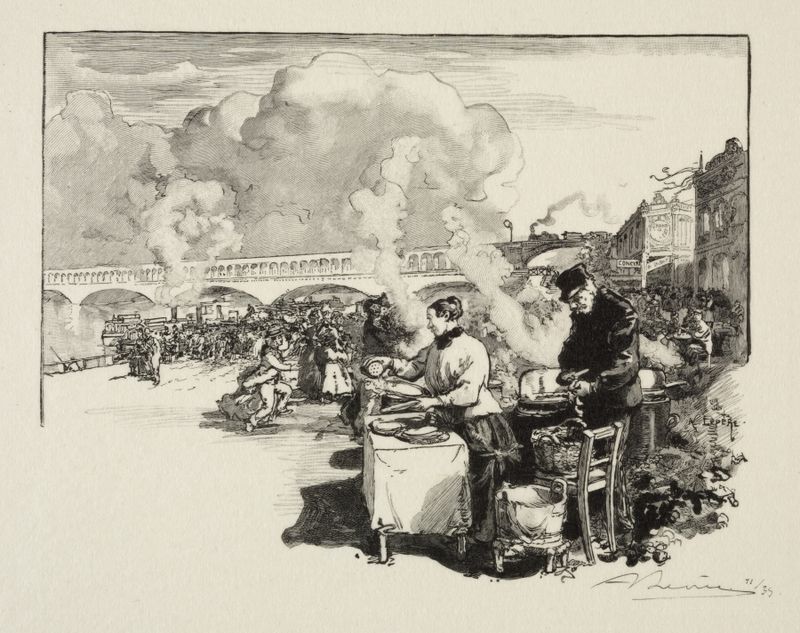
Debarcadère des bateaux-omnibus
Auguste Louis Lepère

La Seine, au quai de la Rapée
Auguste Louis Lepère
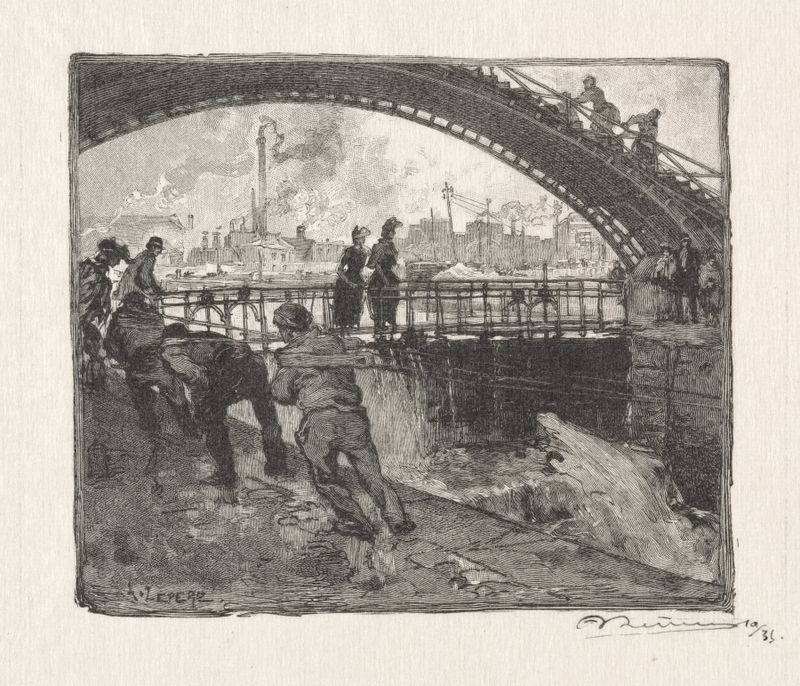
L’Ecluse du Canal St. Martin
Auguste Louis Lepère

Le Boulevard Montmartre, le Soir
Auguste Louis Lepère

Une Chasse au Mont Gérard
Auguste Louis Lepère
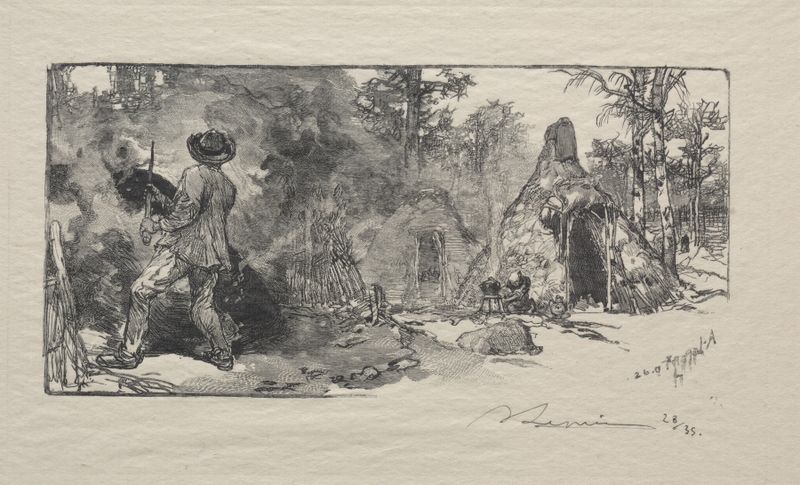
Les Charbonniere
Auguste Louis Lepère
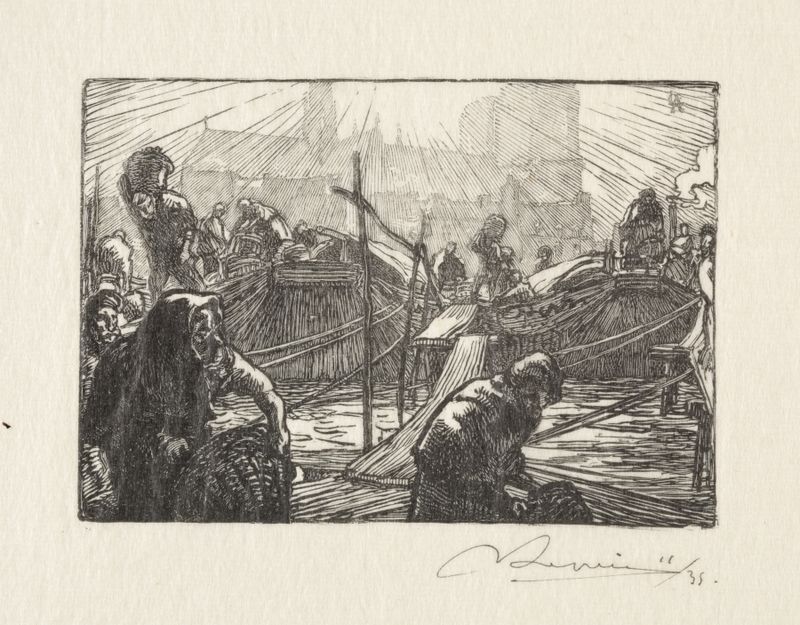
Notre Dame vue du Marché aux pommes
Auguste Louis Lepère

Le Palais des Arts Liberaux, Intèrieur
Auguste Louis Lepère
More Architecture Art
Browse all →
The statue of Liberty
Frédéric Auguste Bartholdi

View of Houses in Delft, Known as ‘The Little Street’
Johannes Vermeer

View of Houses in Delft, Known as ‘The Little Street’
Johannes Vermeer

The Cathedral in Rouen. The portal, Grey Weather
Claude Monet

The yellow house
Vincent van Gogh

The Church in Auvers-sur-Oise, View from the Chevet
Vincent van Gogh