
Place Saint André des Arts pendant les travaux du métro — History & Facts
In a world spiraling through the cacophony of change, it is the stillness within art that resonates with the pulse of movement. Look closely at the painting's center, where the bustling activity of the workmen contrasts sharply with the serene architecture of Place Saint André des Arts. The warm hues of ochre and sepia envelop the scene, lending a nostalgic glow to the busy figures as they labor, their gestures caught in a moment of purpose. Notice how Jouas captures the play of light on the cobblestones, illuminating the path forward, even amidst the chaos of construction. Amidst the vibrancy, a subtle tension brews; the juxtaposition of the men’s vigorous labor against the stillness of the surrounding buildings seems to question the permanence of architecture in the face of life’s ebb and flow.
The shadows cast by the laborers evoke a sense of transience, reminding us that every structure stands upon the shoulders of human effort. The scene pulsates with the urgency of progress, yet the surrounding landscape remains a silent witness, embodying the dichotomy between action and stability. During the years between 1915 and 1945, Jouas created this work in Paris, a city undergoing profound transformation and reconstruction. The contexts of war, innovation, and urban expansion heavily influenced artists of the time, whose works often reflected the shifting societal norms.
As the metro tunnels were carved through the heart of the city, Jouas captured not just the physical labor, but the spirit of a city in transition, marking a poignant moment in both art and history.
More Artworks by Charles Jouas
Browse all →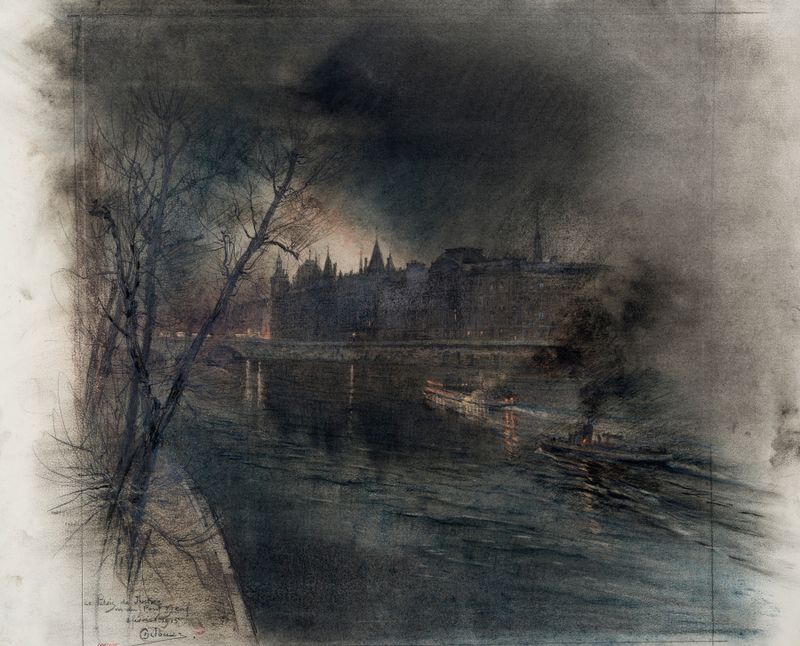
Le Palais de Justice vu du Pont-Neuf
Charles Jouas
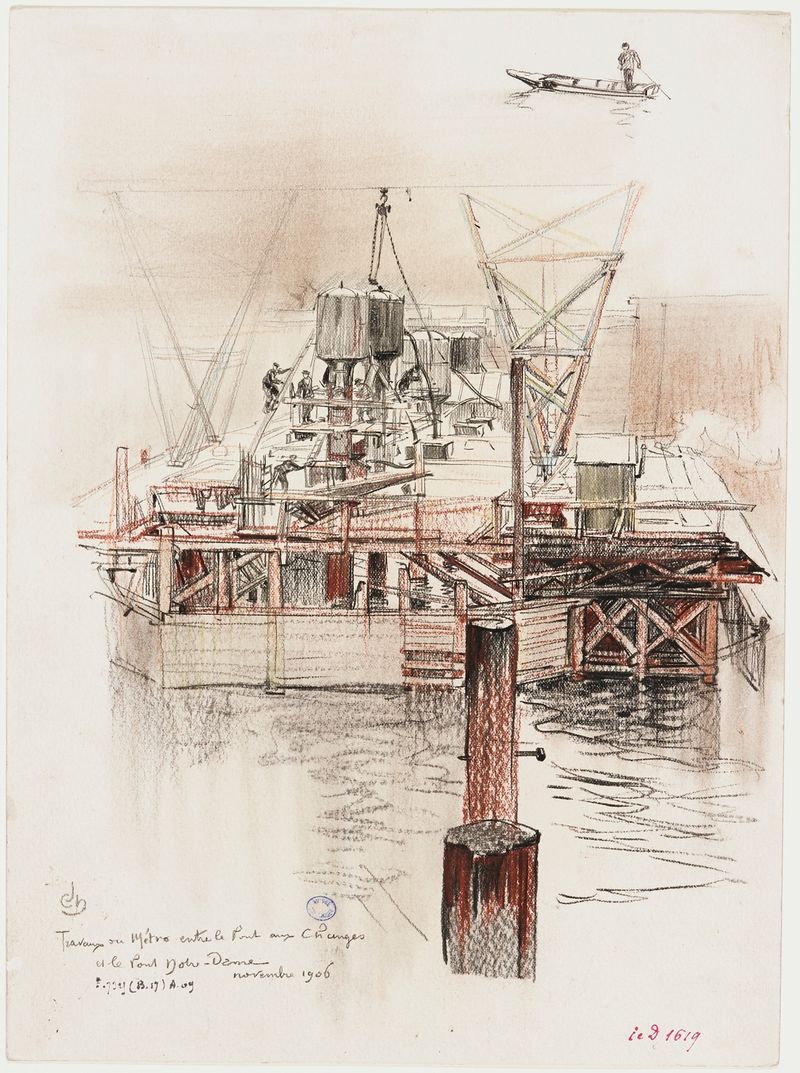
Travaux du métro entre le pont au Change et le pont Notre Dame
Charles Jouas
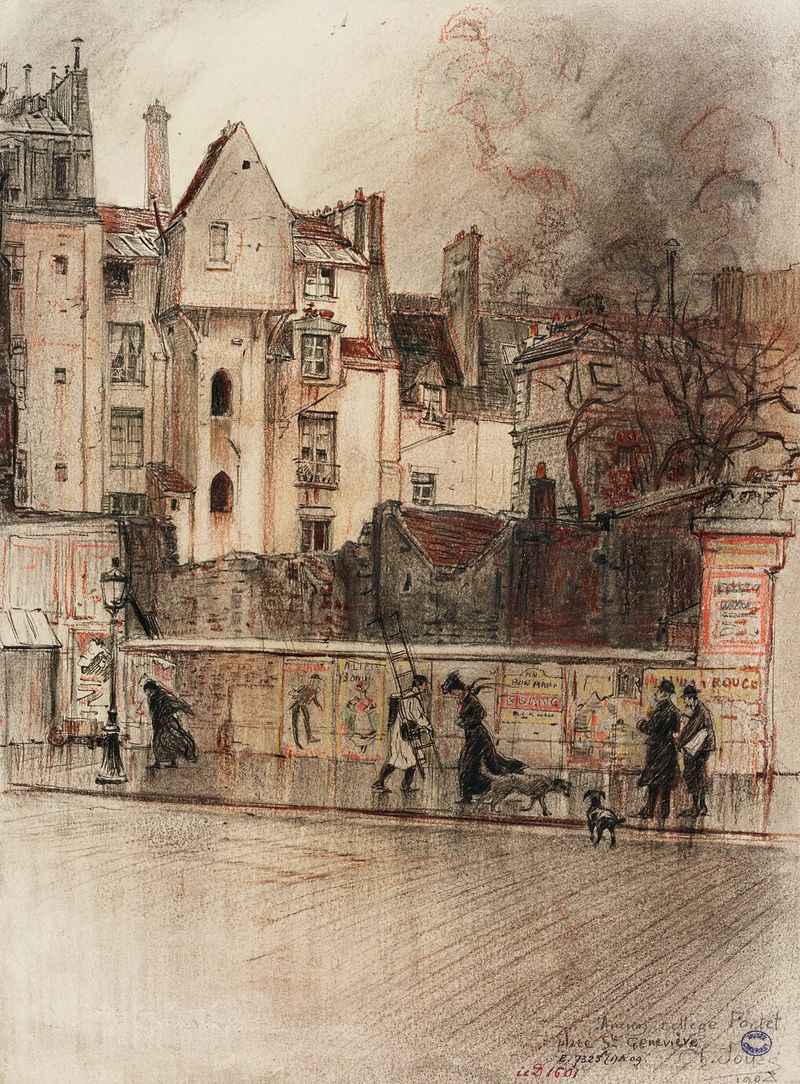
La tour de Calvin (ancien collège de Fortet), place Sainte Geneviève
Charles Jouas

Travaux du métro entre le pont au Change et le pont Notre Dame
Charles Jouas
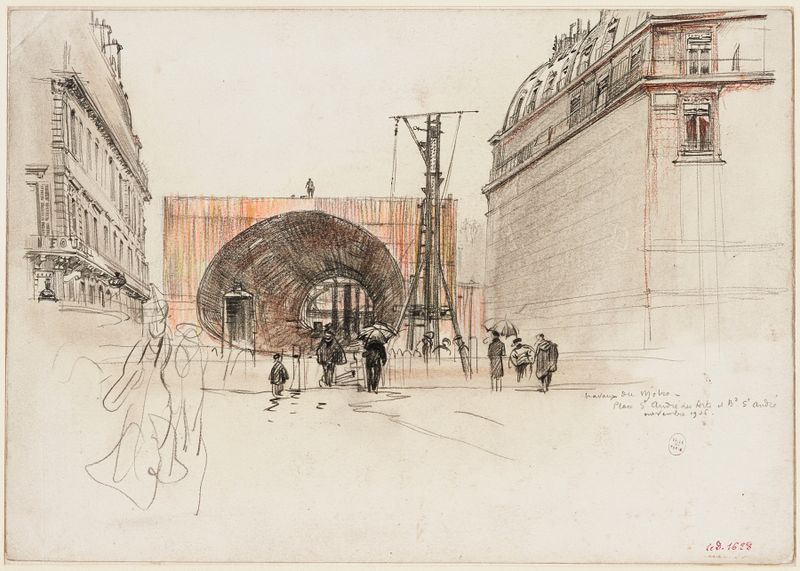
Travaux du métropolitain rue Danton et boulevard Saint-André (le caisson), 6ème aarondissement, Paris
Charles Jouas
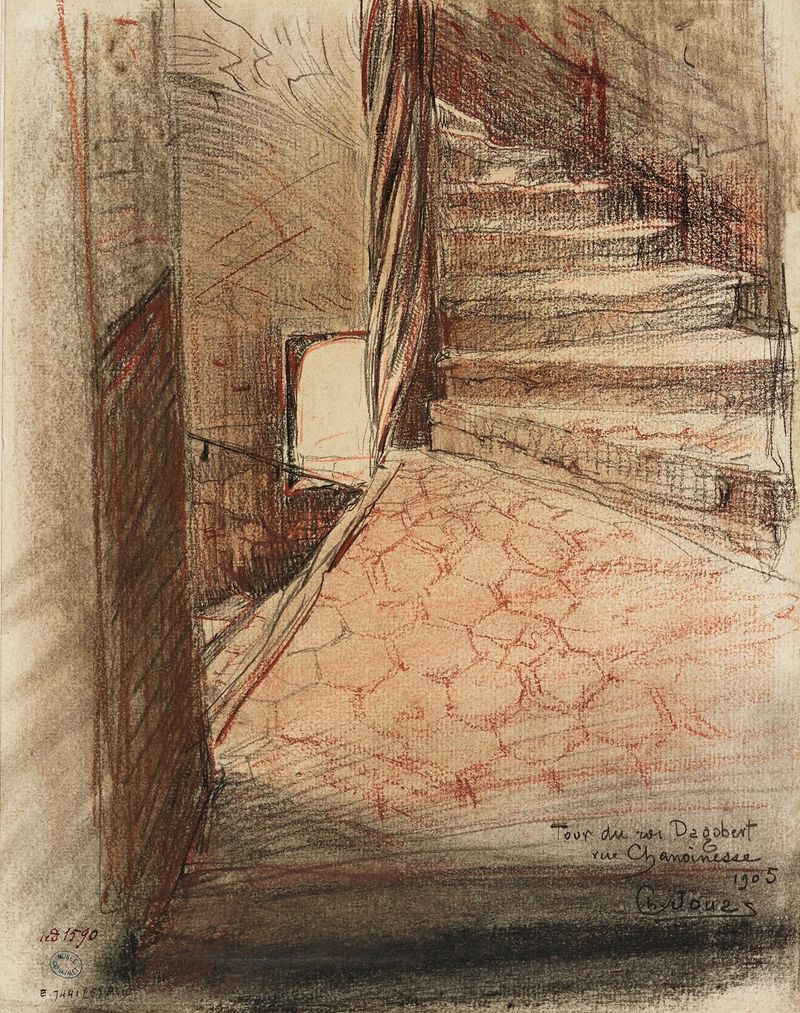
Escalier de la tour Dagobert, rue Chanoinesse
Charles Jouas

Escalier intérieur, 16 rue du Cloître Notre-Dame
Charles Jouas

L’escalier de la rue des Barres
Charles Jouas
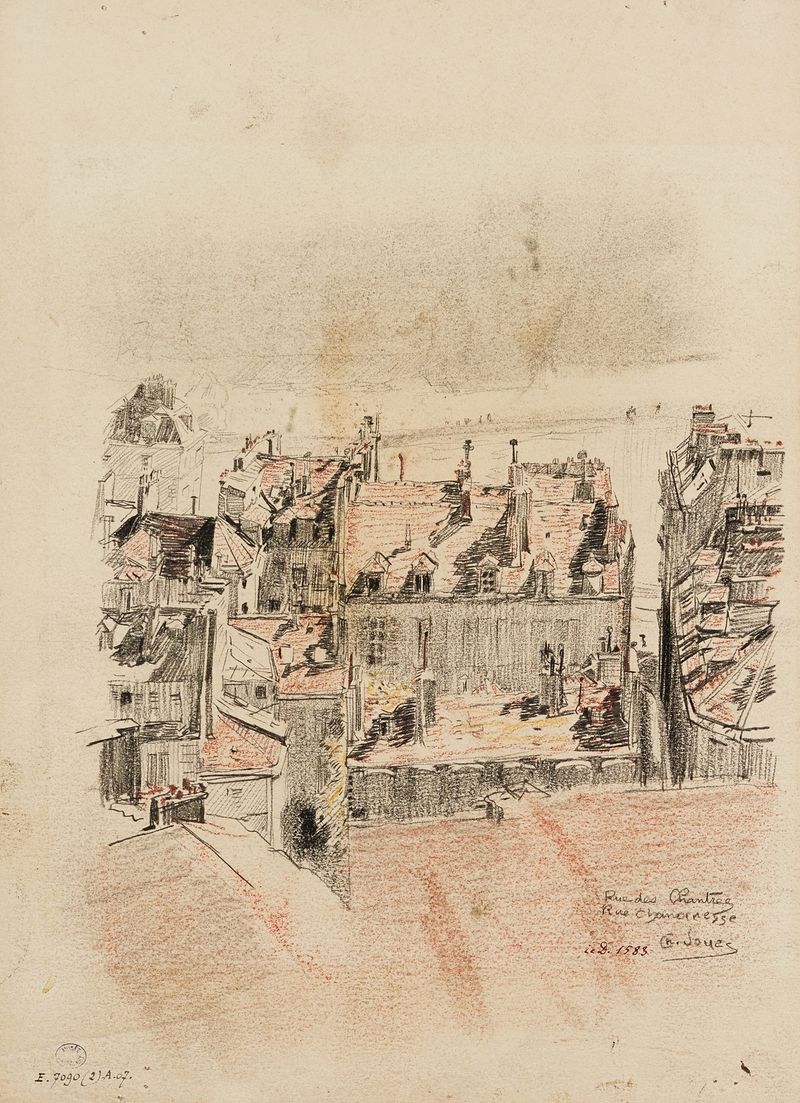
Rue des Chantres et rue Chanoinesse
Charles Jouas

Rue Grenier sur l’Eau
Charles Jouas
More Architecture Art
Browse all →
The statue of Liberty
Frédéric Auguste Bartholdi

View of Houses in Delft, Known as ‘The Little Street’
Johannes Vermeer

View of Houses in Delft, Known as ‘The Little Street’
Johannes Vermeer

The Cathedral in Rouen. The portal, Grey Weather
Claude Monet

The yellow house
Vincent van Gogh

The Church in Auvers-sur-Oise, View from the Chevet
Vincent van Gogh