
Portrait of Empress Maria Feodorovna — History & Facts
Portrait of Empress Maria Feodorovna was painted by Ivan Kramskoi in 1881, during a period when he was recognized as one of the leading portraitists in Russia. The work depicts Maria Feodorovna, born Princess Dagmar of Denmark, who became Empress of Russia as the wife of Tsar Alexander III and mother of Tsar Nicholas II. Executed in oil on canvas, the painting measures 109 by 74 centimeters and was created in Russia at a time of significant political and cultural transition. The portrait presents Empress Maria Feodorovna in formal court attire, set against a dark, neutral background that emphasizes her presence.
She is shown wearing a lavish white gown adorned with ermine and a red sash, complemented by an elaborate array of pearl and diamond jewelry, including a tiara, necklaces, and earrings. A delicate lace veil frames her face and shoulders, while her hands hold a closed fan. The artist employs a refined technique, capturing the intricate textures of lace, fur, and jewels with meticulous attention to detail, and uses soft, even lighting to model the Empress’s features and convey her poise. The painting is held in the collection of the Hermitage Museum, Saint Petersburg, under inventory number ЭРЖ-3340.
As a formal state portrait, it reflects the conventions of late 19th-century Russian court portraiture and was likely commissioned to commemorate Maria Feodorovna’s status within the imperial family. The work remains an important example of Kramskoi’s mature style and his contribution to Russian portrait painting of the era.
Sources: Wikidata Q21730488 · Image source (Wikimedia Commons)
More Artworks by Ivan Kramskoi
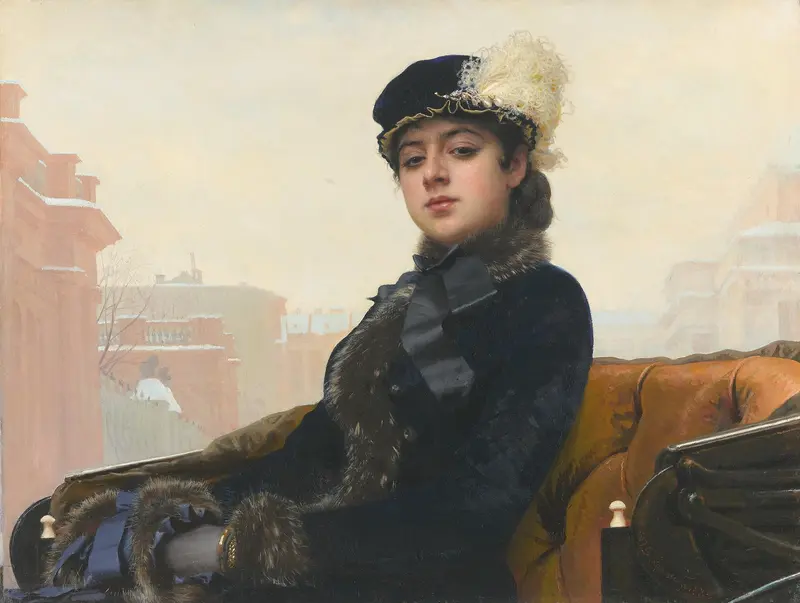
Portrait of an Unknown Woman
Ivan Kramskoi
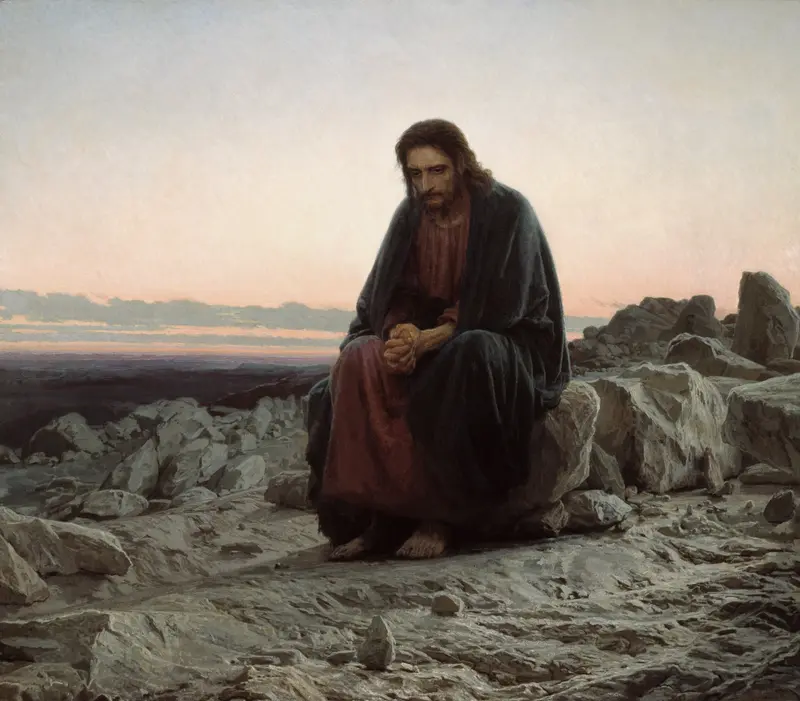
Christ in the Wilderness
Ivan Kramskoi
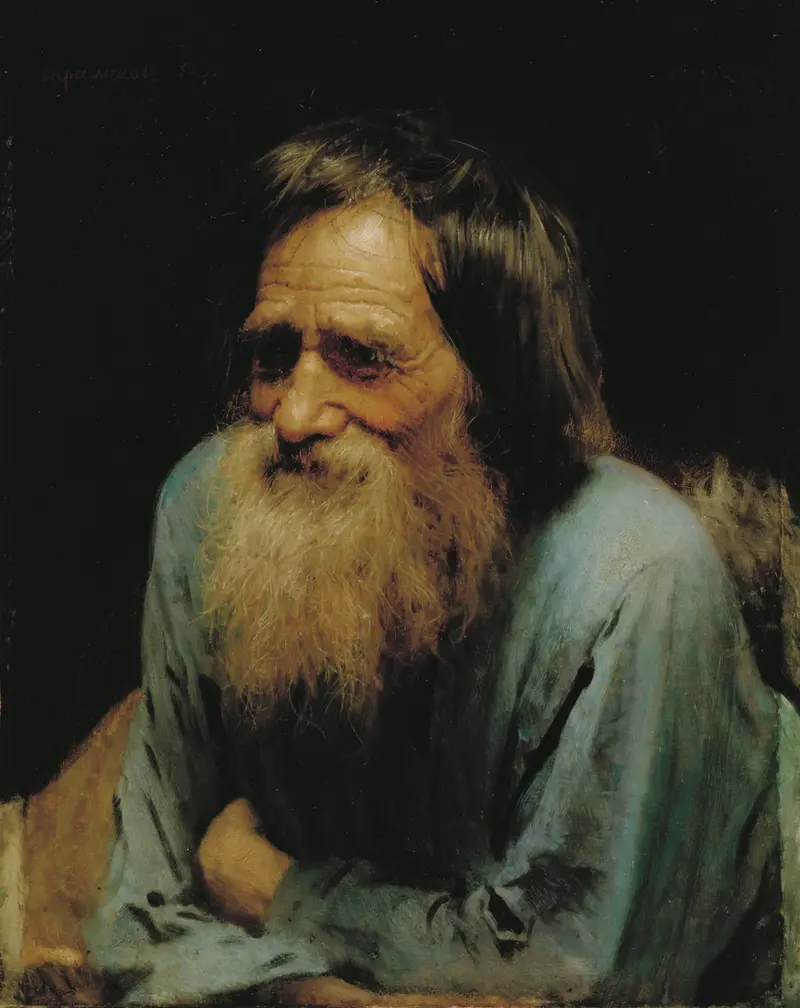
Mina Moiseyev
Ivan Kramskoi
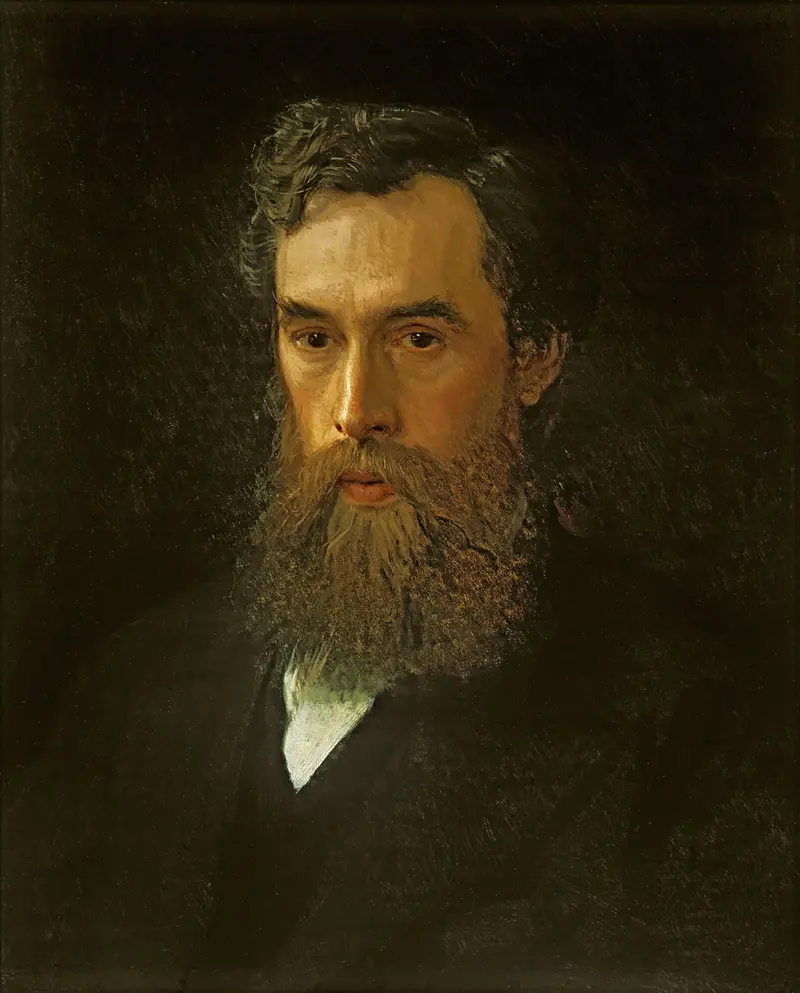
Portrait of Pavel Tretyakov
Ivan Kramskoi
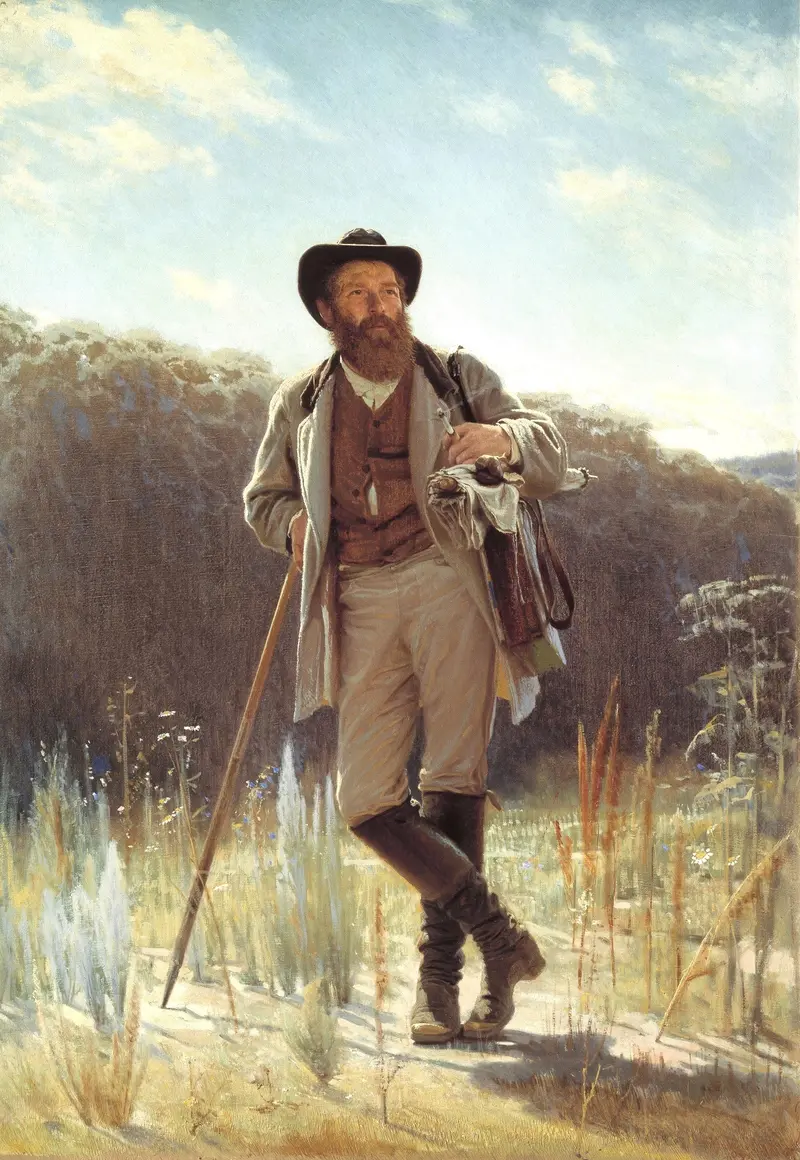
Portrait of Ivan Shishkin
Ivan Kramskoi
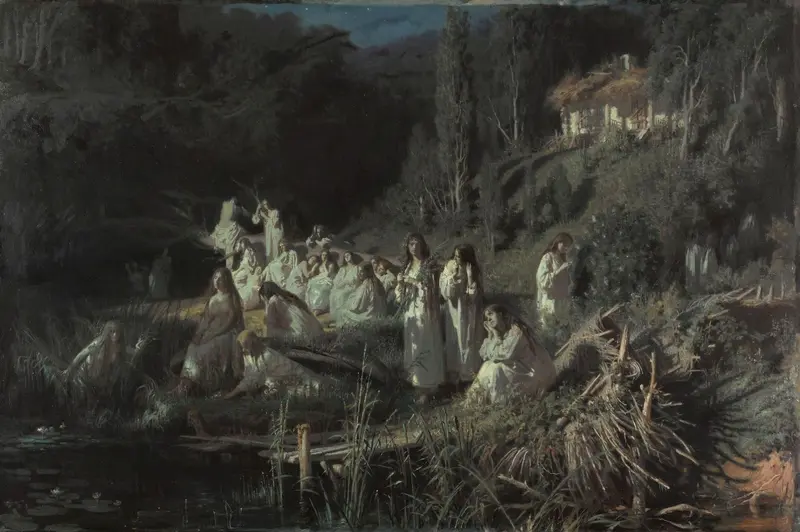
The Mermaids
Ivan Kramskoi
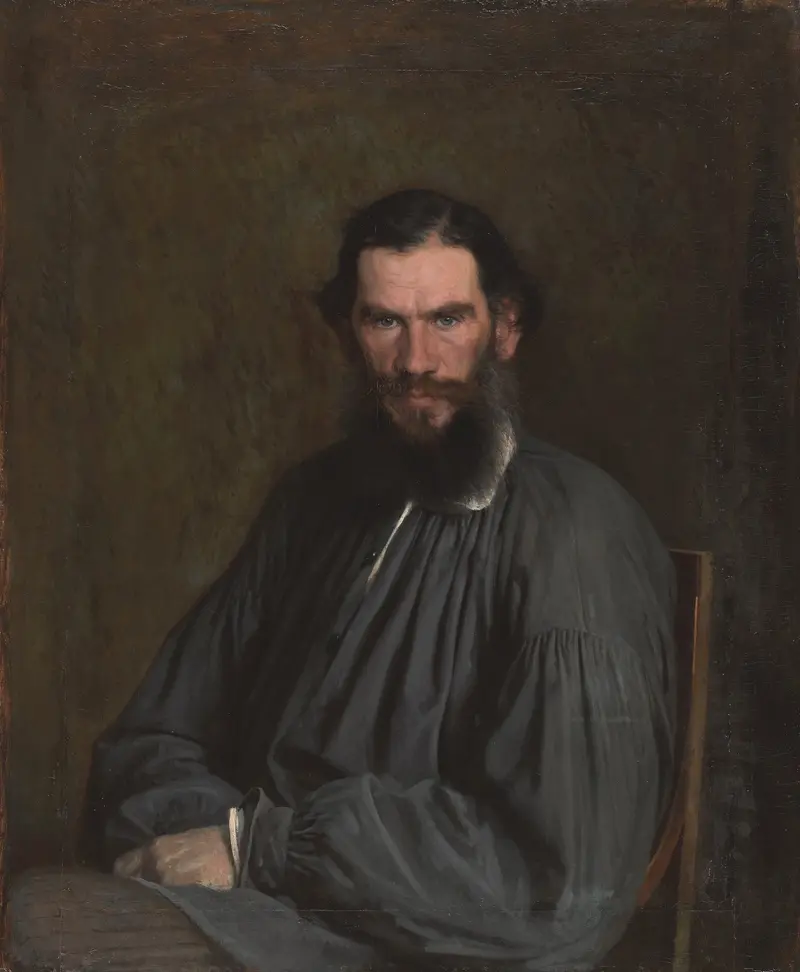
Portrait of Leo Tolstoy
Ivan Kramskoi
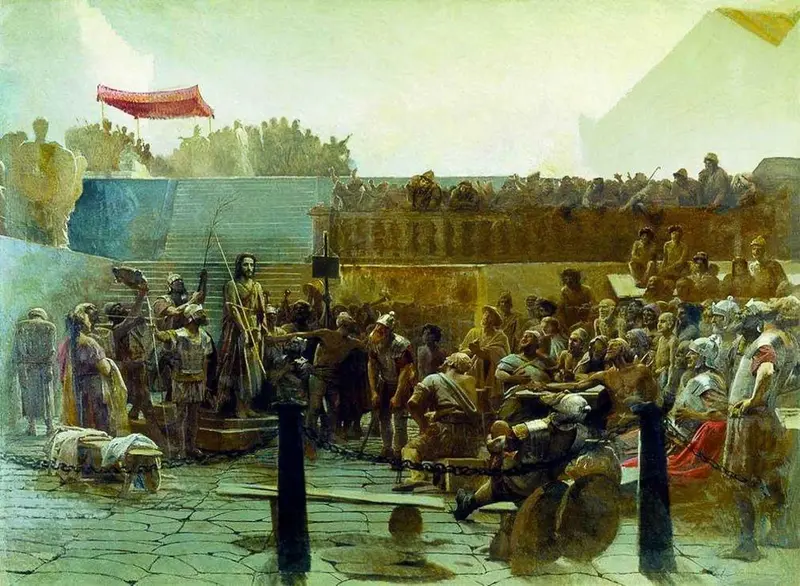
Laughter (Rejoice, King of the Jews)
Ivan Kramskoi
Moonlit Night
Ivan Kramskoi
Forester
Ivan Kramskoi





