
Portrait of Félix Fénéon (Opus 217) — History & Facts
Portrait of Félix Fénéon (Opus 217) was painted by Paul Signac in 1890, during a period when the artist was a leading figure in the development of the Neo-Impressionist movement. The work depicts the critic and anarchist Félix Fénéon, who was an important supporter of avant-garde artists in late nineteenth-century Paris. The painting was executed in oil on canvas and is recognized as a major example of Signac’s mature pointillist technique. The composition presents Fénéon in profile, dressed in a yellow suit and holding a flower, with a top hat and cane in his other hand.
The background is filled with swirling, abstract patterns in vivid colors, including concentric circles, stars, and organic motifs, all rendered in precise dots of paint. The use of pure, unmixed colors and rhythmic forms creates a dynamic, decorative effect that emphasizes both the sitter’s individuality and the scientific approach to color characteristic of Neo-Impressionism. This portrait is held in the collection of The Museum of Modern Art (MoMA), New York. It has been widely exhibited and reproduced, and is considered a landmark in the history of modern portraiture.
The work’s documented history includes its association with Fénéon, who played a key role in promoting the work of Signac and his contemporaries, and its prominent place in the narrative of late nineteenth-century French art.
More Artworks by Paul Signac
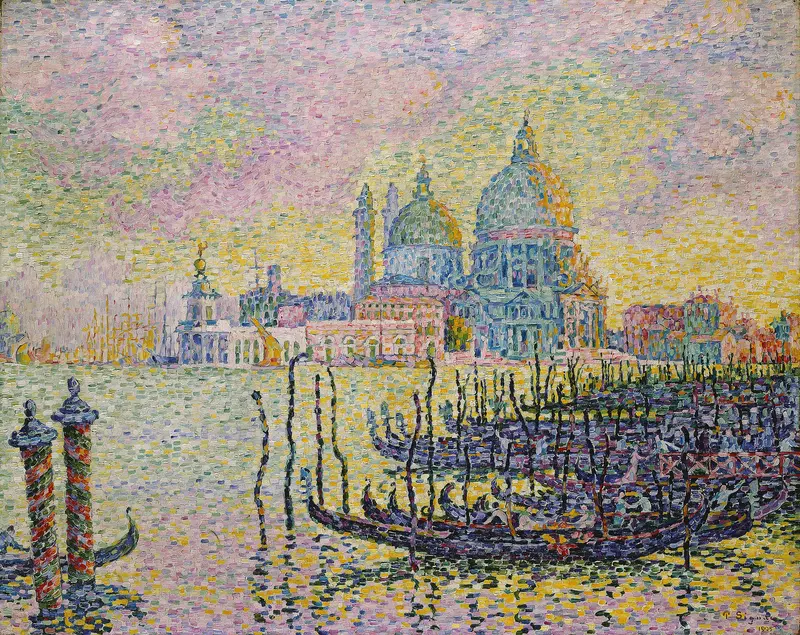
Entrance to the Grand Canal, Venice
Paul Signac
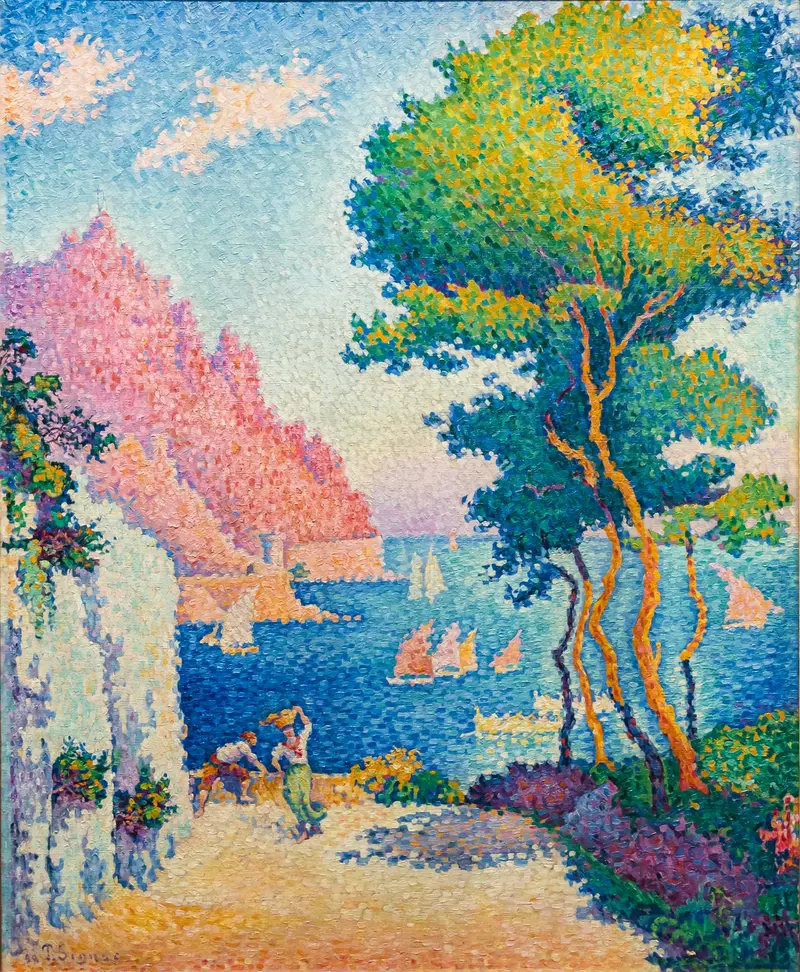
Capo di Noli, near Genoa
Paul Signac

Les Andelys. Soleil couchant
Paul Signac

Saint-Tropez, le port
Paul Signac
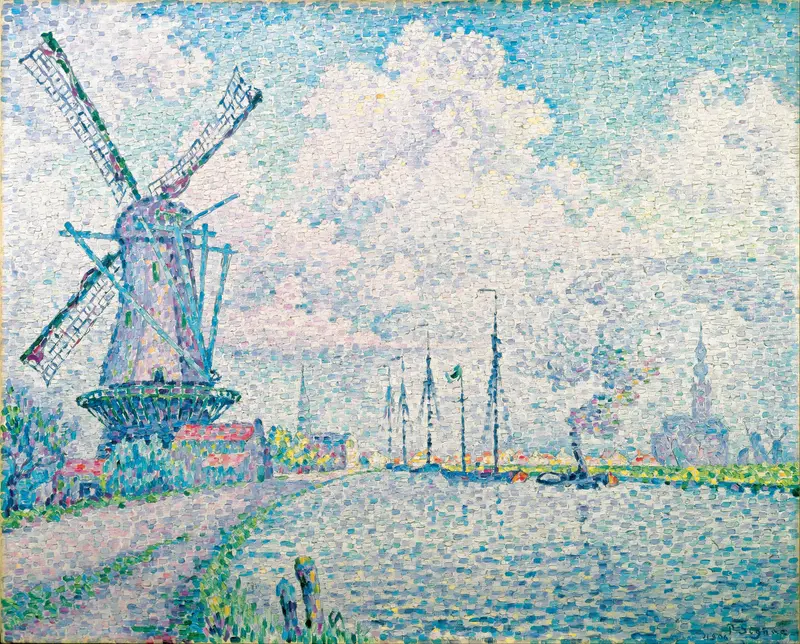
Canal of Overschie
Paul Signac
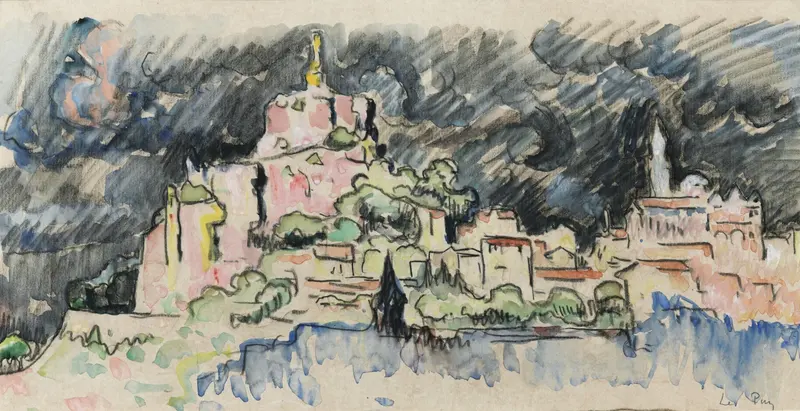
Le Puy-En-Velay, Ciel D’orage
Paul Signac
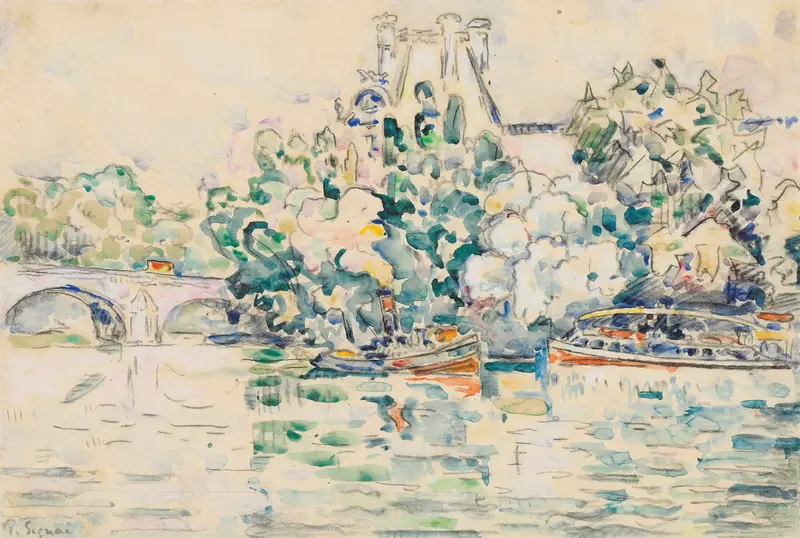
Paris, La Seine au Pont-Royal
Paul Signac
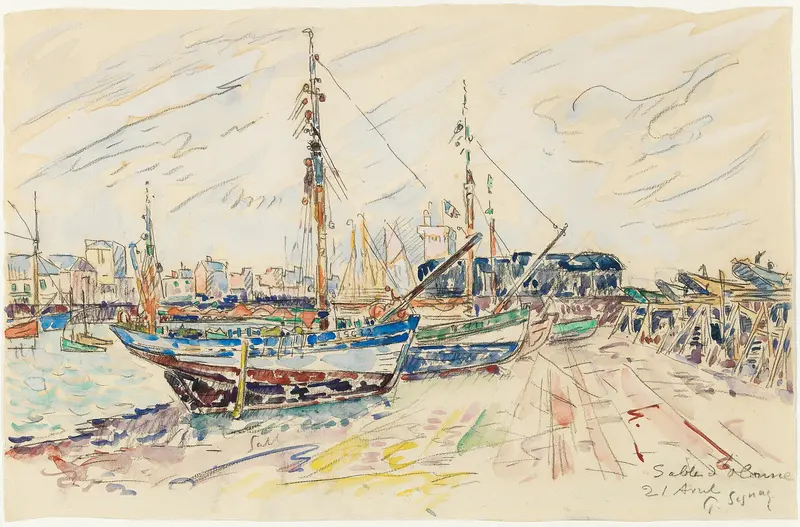
Sables d’Olonne
Paul Signac
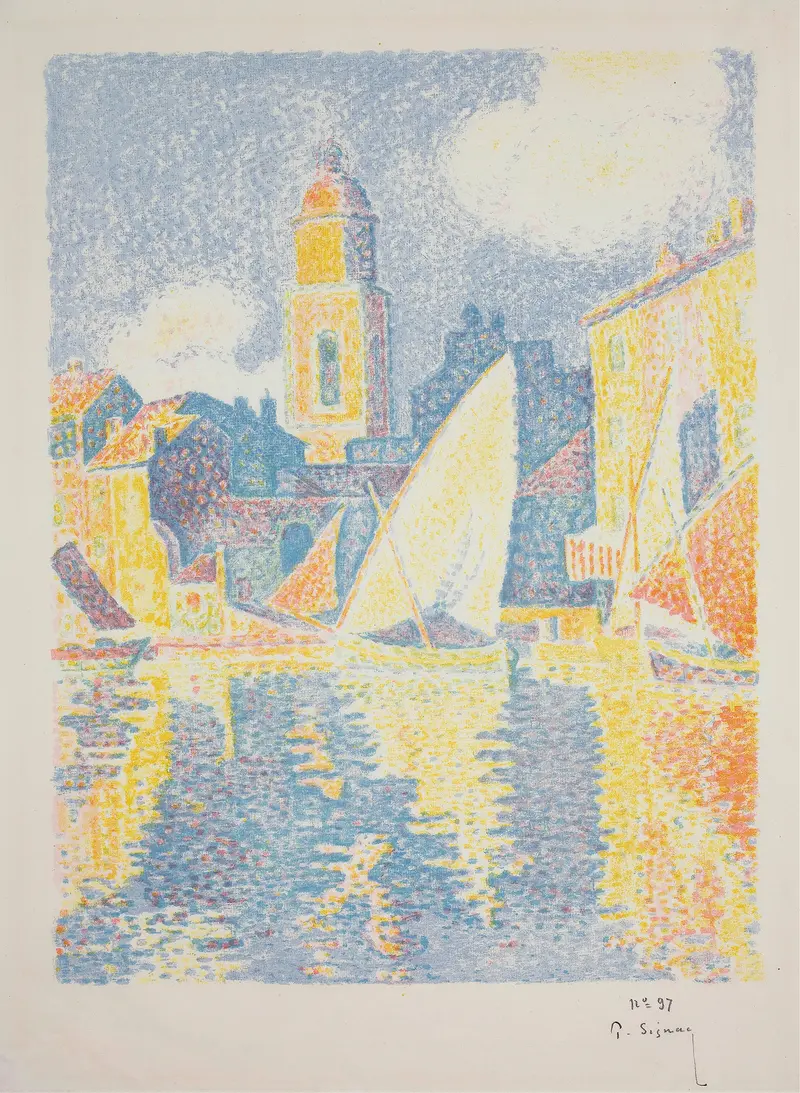
The Port of St. Tropez
Paul Signac
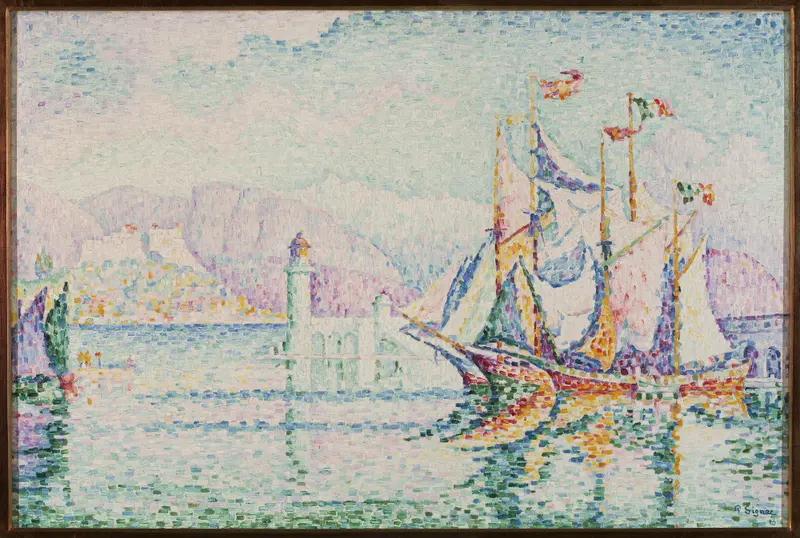
Antibes – Morning
Paul Signac





