Porträt des Max Halbe. — History & Facts
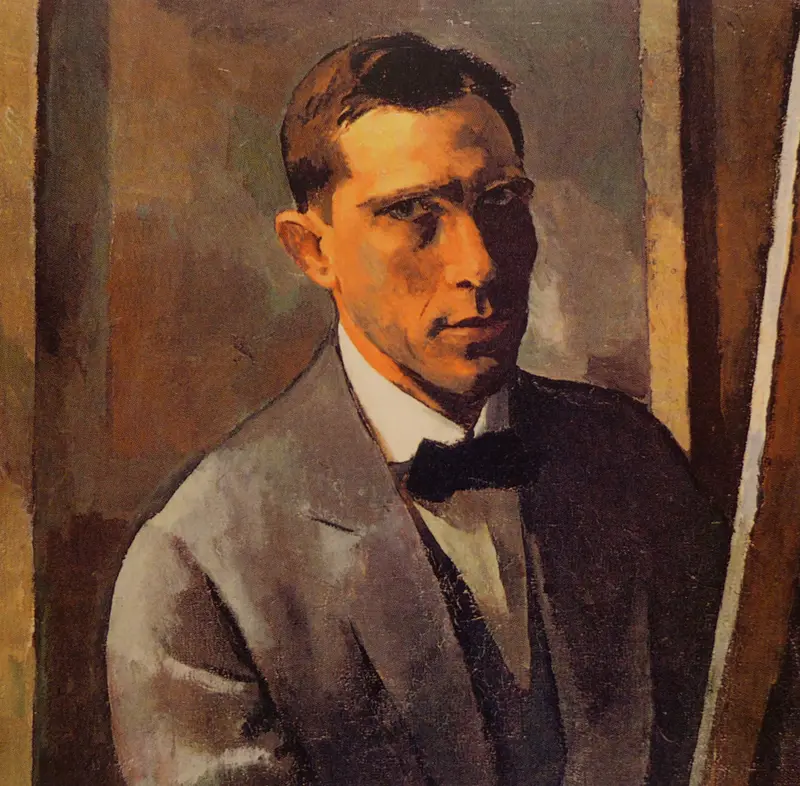
The first thing that seizes the viewer in Porträt des Max Halbe by Albert Weisgerber is the unyielding gaze of its sitter, framed by the heavy folds of his suit and the patterned backdrop that seems almost to press forward into the viewer’s space. The subject’s posture is not one of ease; he sits squarely, shoulders forward, hands hidden, as if bracing himself for a conversation that will not be short. Weisgerber’s brushwork is broad and confident, the textures of fabric and flesh rendered with a certain bluntness that resists flattery.
The light, soft but deliberate, falls across the sitter’s face and vest, drawing the eye to the stern mouth and the glint of spectacles, while the rest dissolves into a haze of shadow and pattern. This is a portrait that asks not to be admired, but to be reckoned with. Painted in 1909, this work stands at the crossroads of a changing Germany, when portraiture was shifting from the grand, formal commissions of the nineteenth century to more intimate, psychological studies. Around this time, artists like Weisgerber—working in the wake of Impressionism and on the eve of Expressionism—were exploring new ways to capture the inner life of their subjects.
Such portraits were often commissioned by the sitters themselves or by their families, intended for private study rather than public display. Little is recorded about the specific journey of this canvas, but its survival and documentation—photographed in 2009 and attributed firmly to Weisgerber—remind us how many faces from this era have faded from view. The sitter’s stare lingers, inviting us to look closer and wonder what stories remain hidden behind those steady eyes.