
Prancing Figure with Paper Birds — History & Facts
No one knows exactly when Katsushika Hokusai created Prancing Figure with Paper Birds, and this uncertainty has only deepened its allure among scholars and collectors. The work’s playful subject and lively composition have led some to speculate that it was a personal piece, perhaps never intended for public display, or even a teaching aid for his many students. Unlike Hokusai’s famous Thirty-six Views of Mount Fuji series, this work stands alone, with no known preparatory sketches or companion pieces.
Its anonymity in both date and medium has fueled debate: is it an early experiment, or a late flourish from the artist’s final years? At the center, a figure dances with one foot lifted, arms outstretched, surrounded by delicate paper birds that seem to flutter in midair. The moment Hokusai captures is one of pure, unguarded joy—a fleeting instant where the boundary between human and nature blurs. The paper birds, rendered with swift, calligraphic lines, recall the Japanese tradition of origami, symbolizing wishes and ephemeral beauty.
The figure’s prancing pose, with garments swirling, suggests movement and freedom, a theme Hokusai explored in other works, such as his lively sketches of street performers. Unlike the formal, static figures in Ukiyo-e prints by Utamaro, here the energy is spontaneous, almost mischievous. Little is known about the provenance of Prancing Figure with Paper Birds. Without inscriptions or seals, its journey through history remains largely unrecorded, and it is absent from early catalogues of Hokusai’s work.
The piece is now preserved in an online collection, where it invites new audiences to speculate about its origins and meaning. In the context of Hokusai’s career, it stands as a testament to his restless creativity and his fascination with everyday pleasures, even as its precise place in his oeuvre remains a mystery.
More Artworks by Katsushika Hokusai

The Great Wave off Kanagawa
Katsushika Hokusai
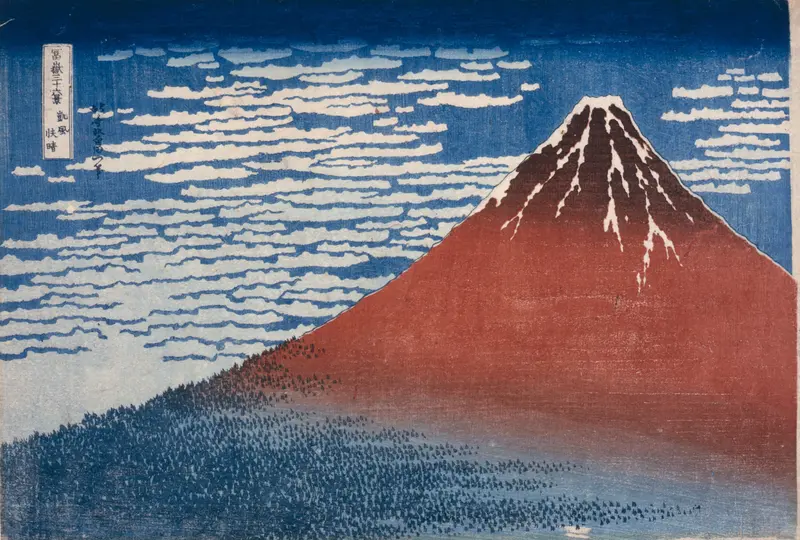
Fine Wind, Clear Morning (Red Fuji)
Katsushika Hokusai
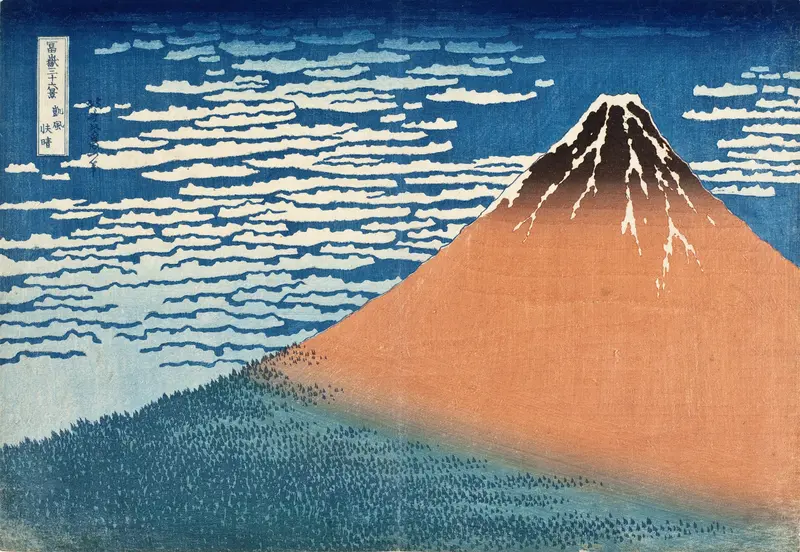
South Wind, Clear Dawn
Katsushika Hokusai
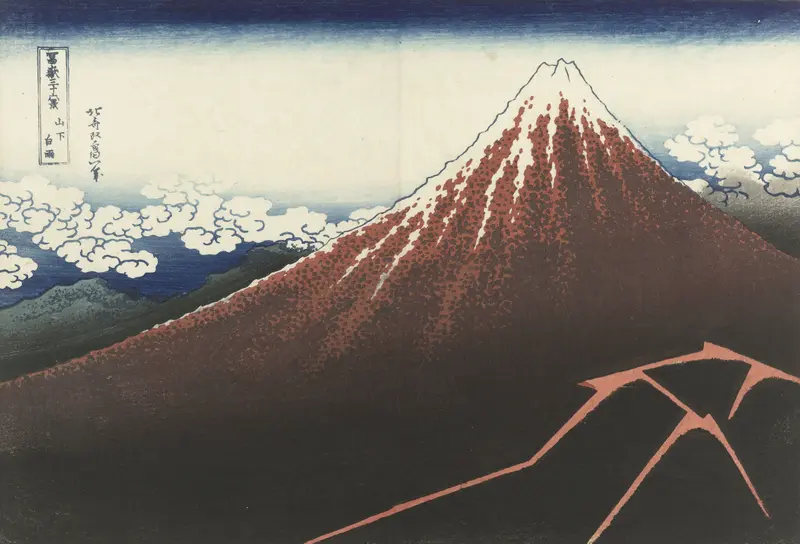
Rainstorm Beneath the Summit
Katsushika Hokusai
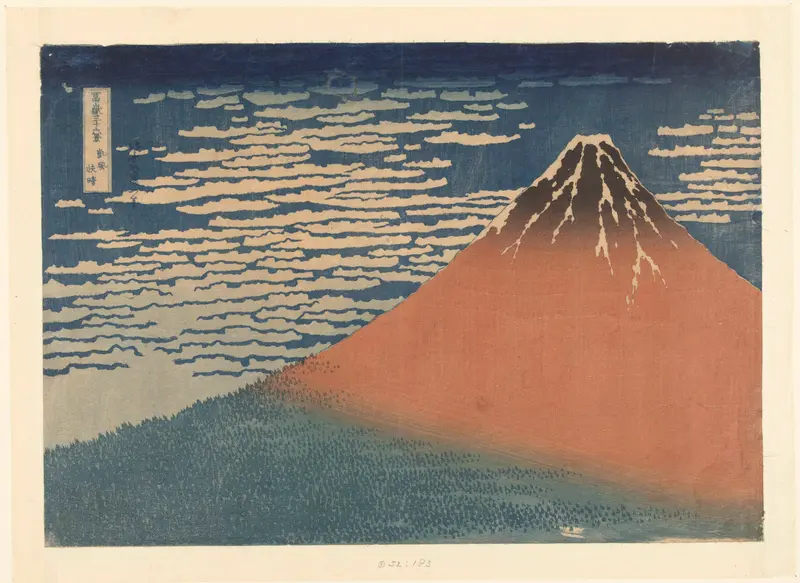
Clear Weather with a Southerly Wind
Katsushika Hokusai
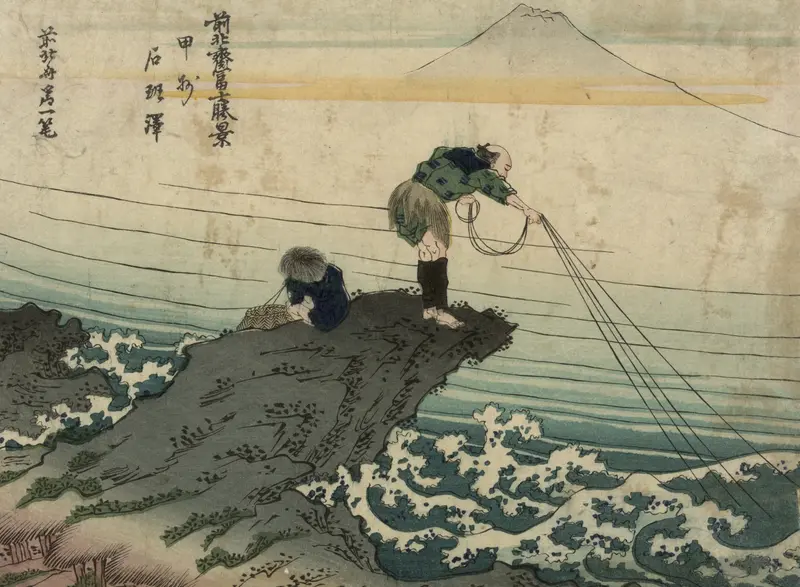
Kōshū kajikazawa
Katsushika Hokusai
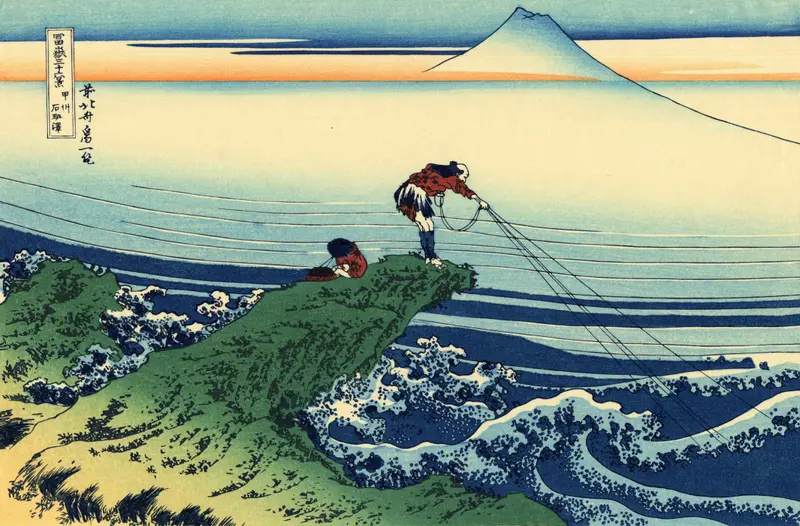
Kōshū kajikazawa 2
Katsushika Hokusai
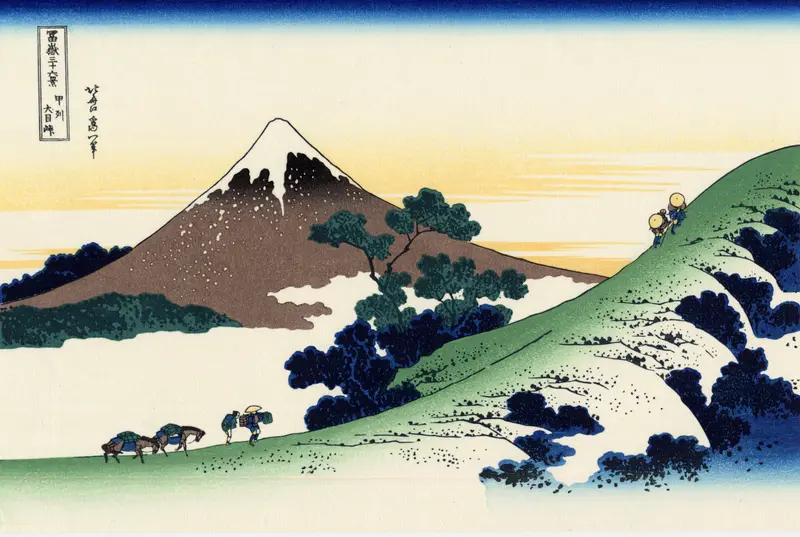
Inume Pass in Kai Province (Kôshû inume-tôge)
Katsushika Hokusai

Yoro Falls in Mino Province (Mino no Yoro no taki), from the series "A Tour of Waterfalls in Various Provinces (Shokoku taki meguri)"
Katsushika Hokusai
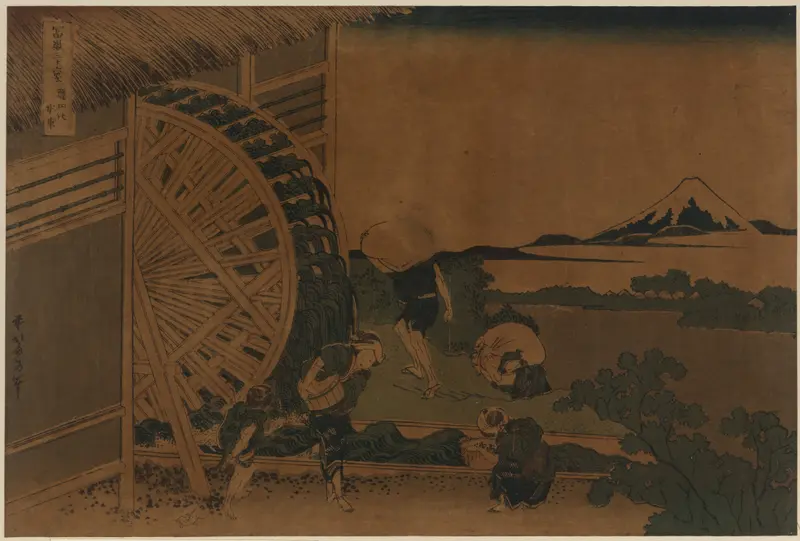
Onden no suisha
Katsushika Hokusai



