
Prince Woronzoff’s palace – near Yalta on the south coast of the Crimea — History & Facts
Did the painter know this moment would outlive them? As time shifts and memories fade, art remains a vessel for revelation, capturing the essence of life and place. Look to the center of the canvas where the grand architecture of Prince Woronzoff’s palace commands attention, its elegant lines and classical features striking against the backdrop of the surrounding landscape. Notice how the soft pastels of the sky cradle the structure, creating a serene harmony between the man-made and the natural. The interplay of light dances upon the palace walls, accentuating its ornate details, while shadows play around the trees, imparting a sense of depth and tranquility. The painting evokes a duality: the solidity of human achievement contrasted with the ephemeral beauty of nature.
In this juxtaposition lies a quiet tension—the palace symbolizes stability, authority, and the fleeting nature of power, while the vibrant greenery and rolling hills suggest the relentless passage of time. Look closer at the figures in the foreground, their smallness emphasizing both the grandeur of the structure and the insignificance of individual life within the vastness of history. William Simpson painted this work during the mid-19th century, a period marked by the Romantic movement's exploration of emotion and nature. He traveled to Crimea in 1855 amidst the backdrop of the Crimean War, capturing not just the physical landscape but also the socio-political climate of his time.
This location, near Yalta, was brimming with historical significance, and Simpson’s work served to document a moment that would endure beyond his lifetime, framing a world in transition.
More Artworks by William Simpson
Browse all →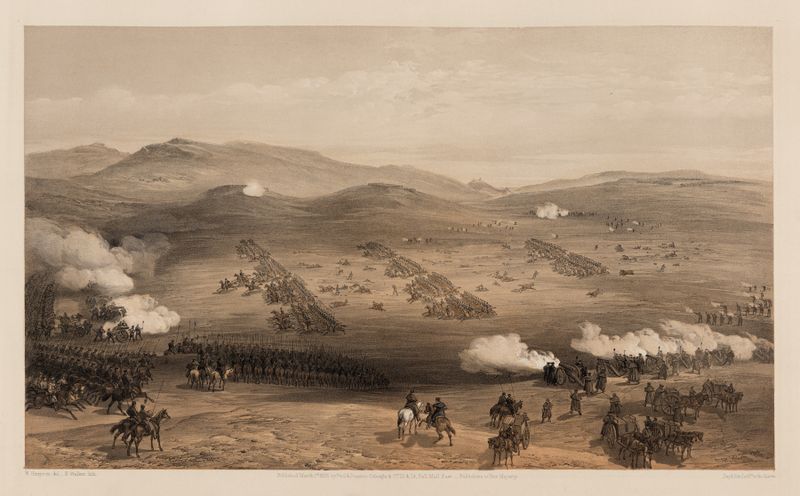
Charge of the light cavalry brigade, 25th Oct. 1854, under Major General the Earl of Cardigan
William Simpson

Charge of the heavy cavalry brigade, 25th Octr. 1854
William Simpson
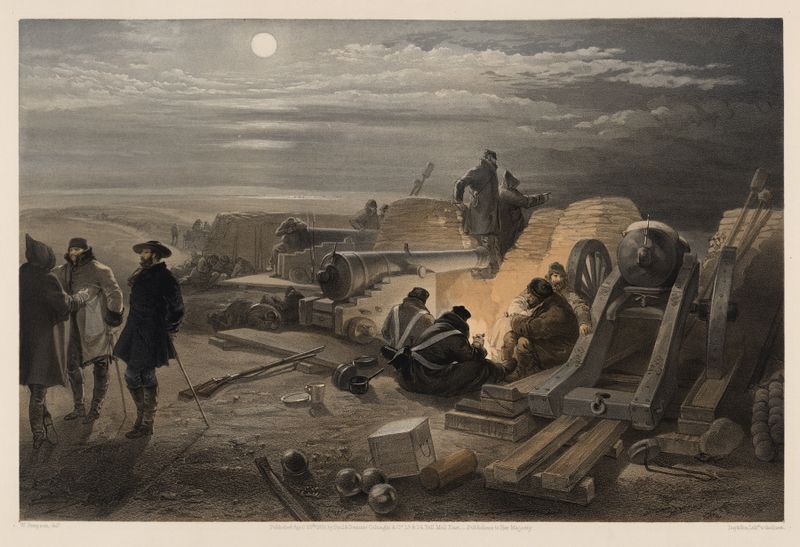
A quiet night in the batteries – a sketch in the Greenhill battery (Major Chapman’s), 29th Jany. 1855
William Simpson

The Great Wall of China
William Simpson
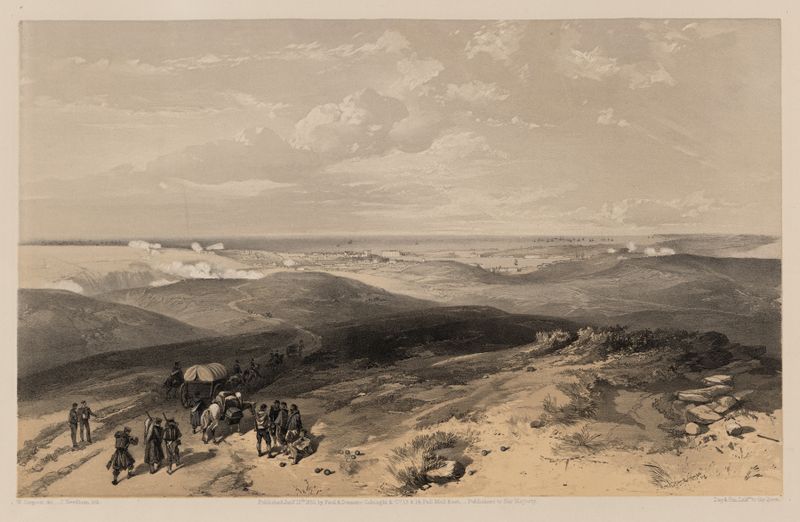
Sebastopol from the rear of the English batteries
William Simpson
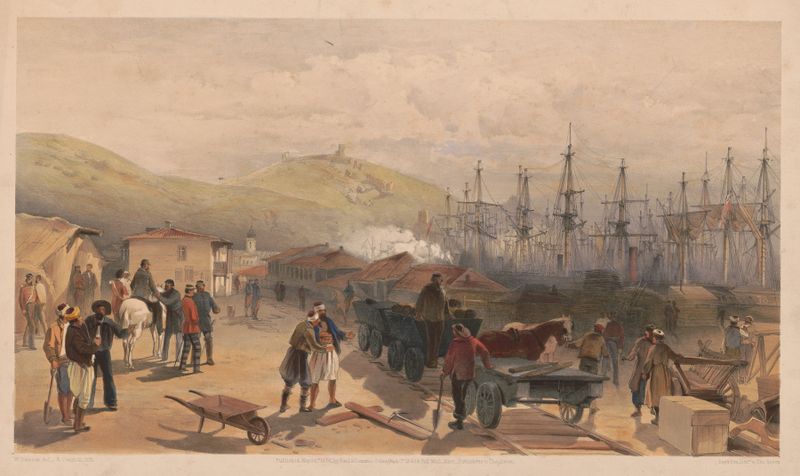
The railway at Balaklava, looking south
William Simpson

The Governor-General’s and Commander-in-Chief’s Camp at Jalandhar, 1 Febuary 1860
William Simpson
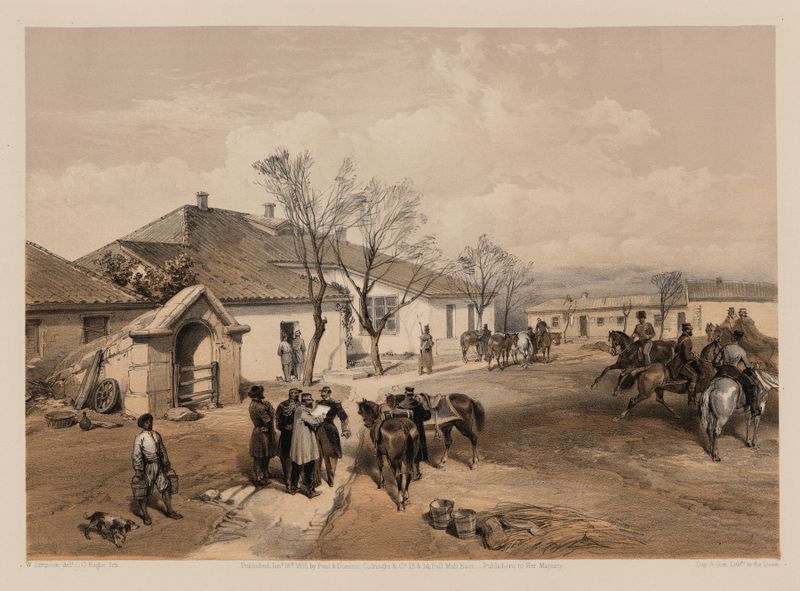
Lord Raglan’s head quarters at Khutor-Karagatch
William Simpson
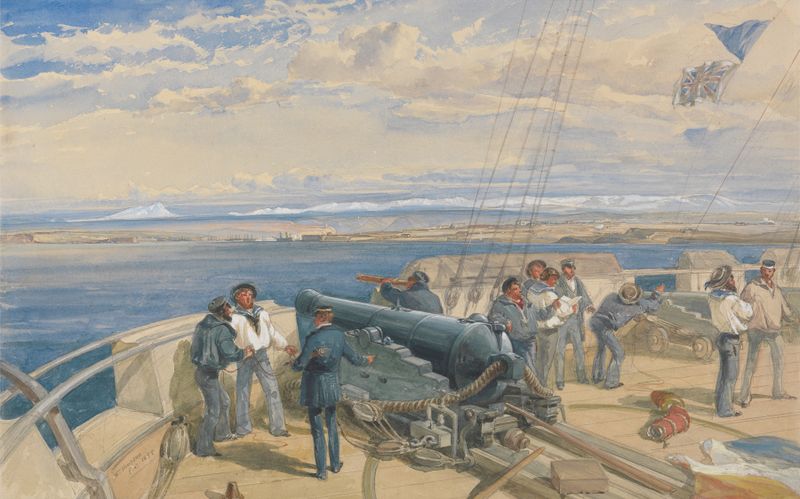
Sebastopol from the Sea, Sketched from the Deck of H. M. S. Sidon, Feb. 1855
William Simpson
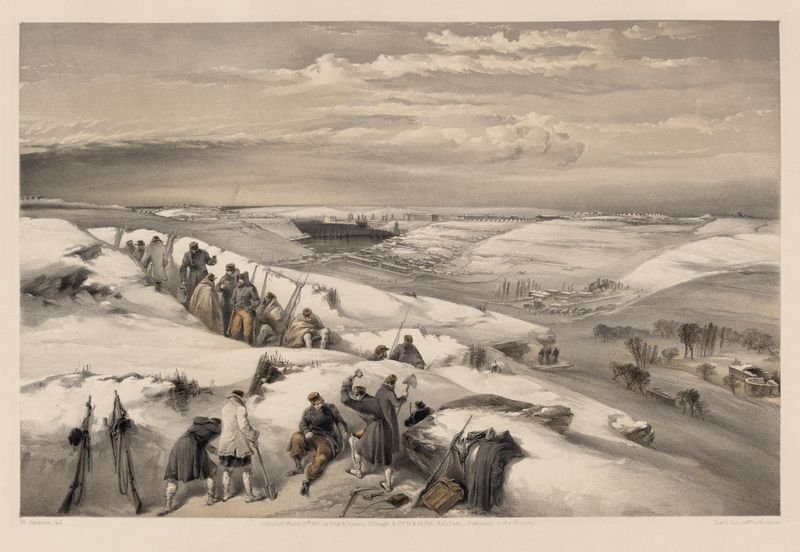
Sebastobol from the 26 gun battery on the extreme right of French attack
William Simpson
More Architecture Art
Browse all →
The statue of Liberty
Frédéric Auguste Bartholdi

View of Houses in Delft, Known as ‘The Little Street’
Johannes Vermeer

View of Houses in Delft, Known as ‘The Little Street’
Johannes Vermeer

The Cathedral in Rouen. The portal, Grey Weather
Claude Monet

The yellow house
Vincent van Gogh

The Church in Auvers-sur-Oise, View from the Chevet
Vincent van Gogh