Promenade — History & Facts
A sudden flare of white draws the eye—one woman’s hat, luminous against a field of deep greens and burning oranges, sets the tone for Promenade by August Macke. The figures drift through a sun-dappled avenue, their faces left as soft suggestions, their bodies rendered in broad, sure strokes. The crowd is both together and apart: the woman in white turns away, her profile gentle and unreadable, while the others—men in dark coats and bowler hats—move forward, their forms merging with the rhythm of the trees.
The light is restless, skipping from leaf to shoulder, guiding the viewer’s gaze along the path and back again, as if the painting itself is in motion. Created in 1914, this work belongs to a moment when artists like Macke were reshaping how the world could be seen. The bold color blocks and simplified shapes speak to the influence of Expressionism, a movement that sought to capture the inner pulse of modern life rather than its surface details. Such promenades were a ritual of urban society, and paintings like this one—often made for private collectors or progressive exhibitions—offered viewers a new way to see themselves: not as individuals, but as part of a fleeting, collective experience.
History has kept few traces of this particular Promenade, copied here from an art book and documented in 2009, but the sense of movement and color remains immediate. Let your eye wander among the crowd, and notice how the scene never quite stands still.
More Artworks by August Macke
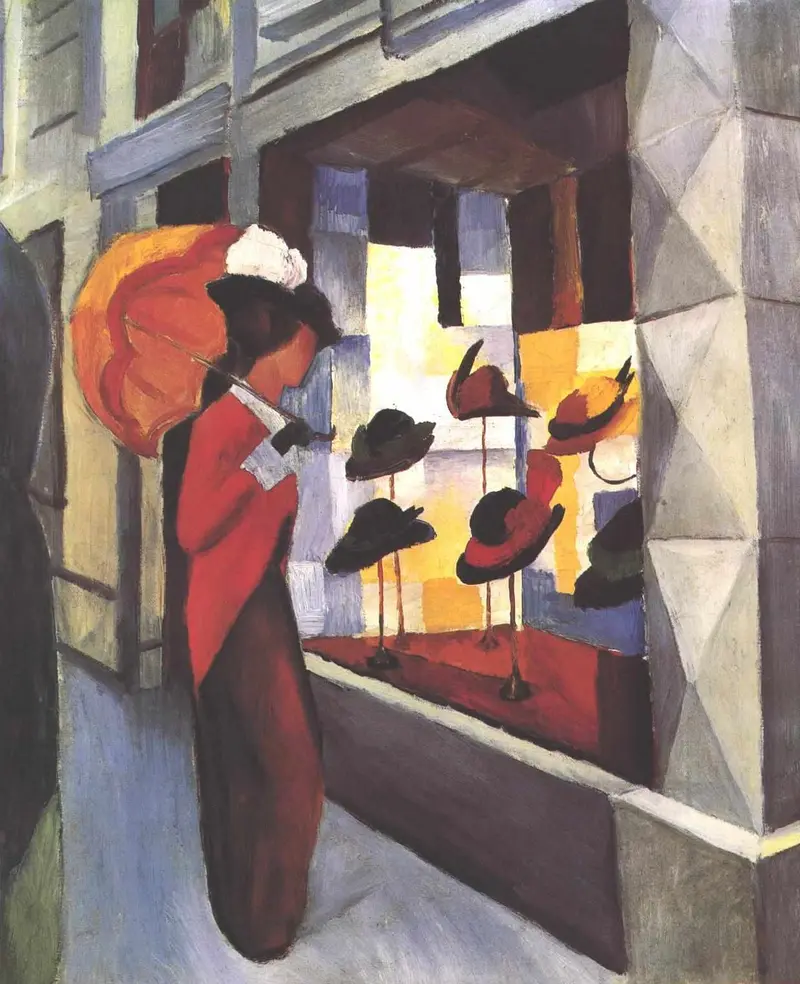
Woman with a Parasol in Front of a Hat Shop
August Macke

Street with Church in Kandern
August Macke
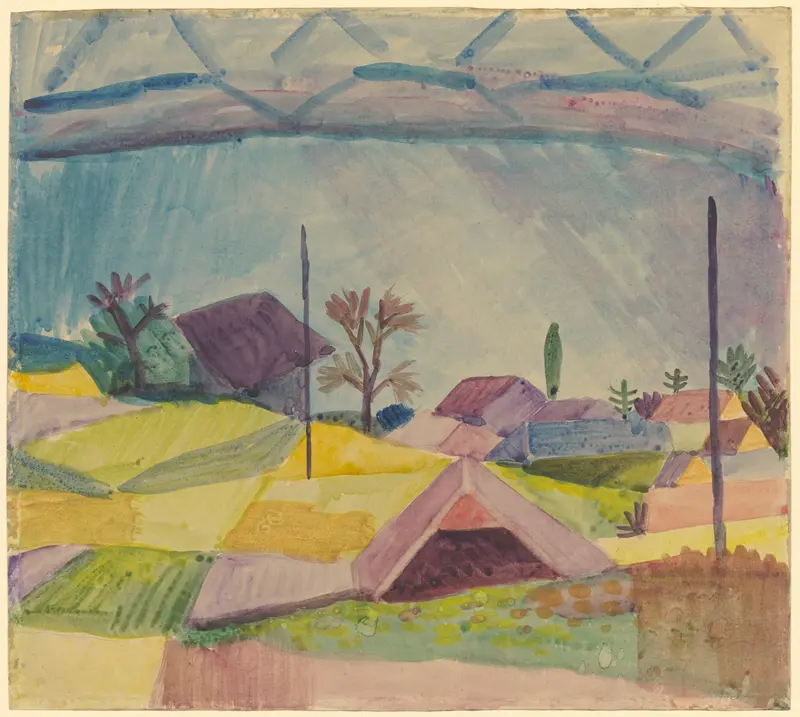
View of Hilterfingen
August Macke

Paar im Nachen
August Macke
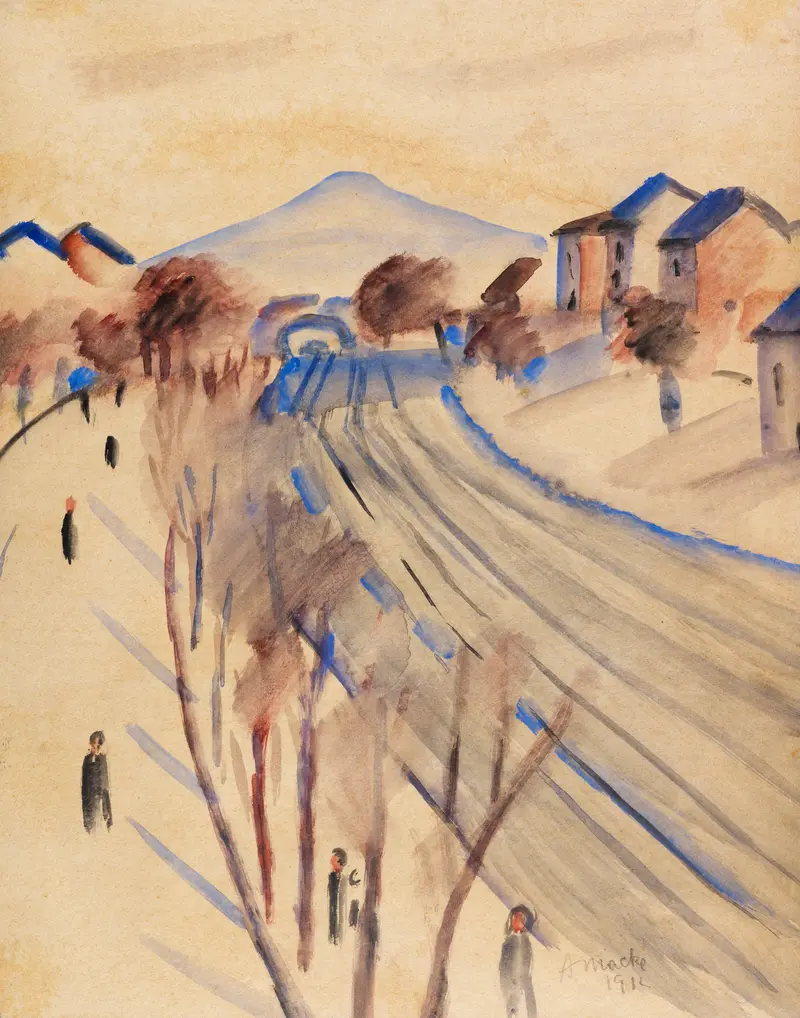
Ölberg mit Bahngleisen II
August Macke
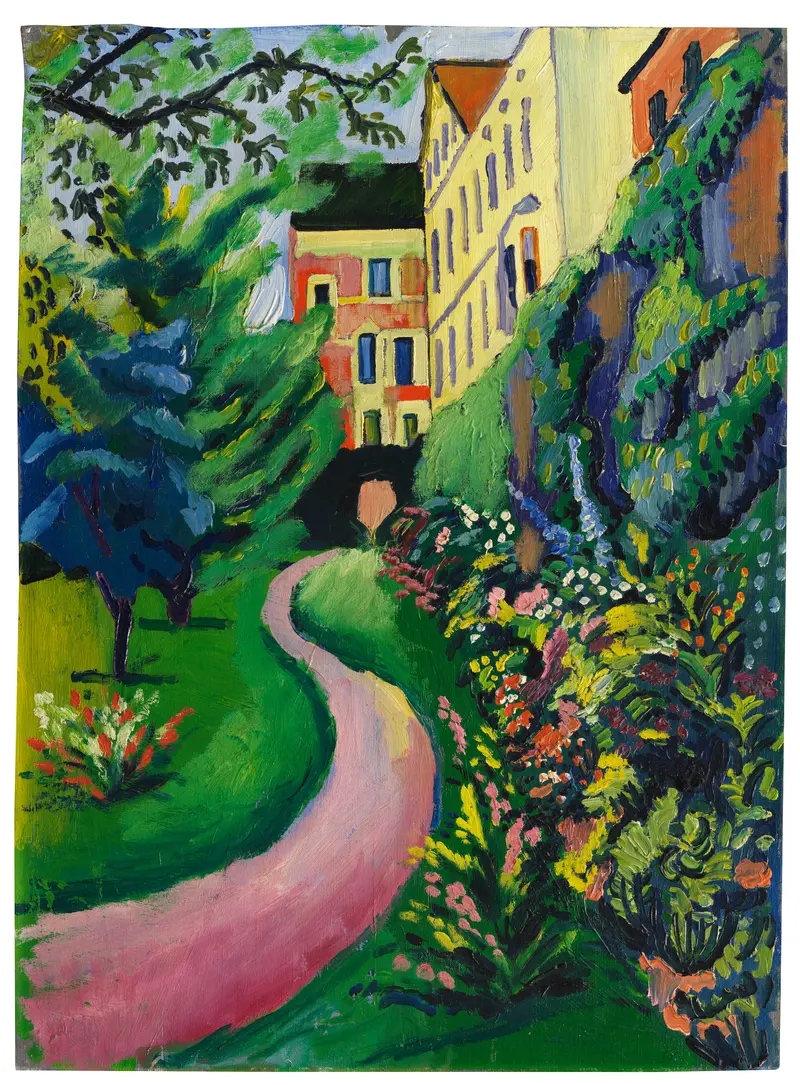
Unser Garten mit blühenden Rabatten
August Macke
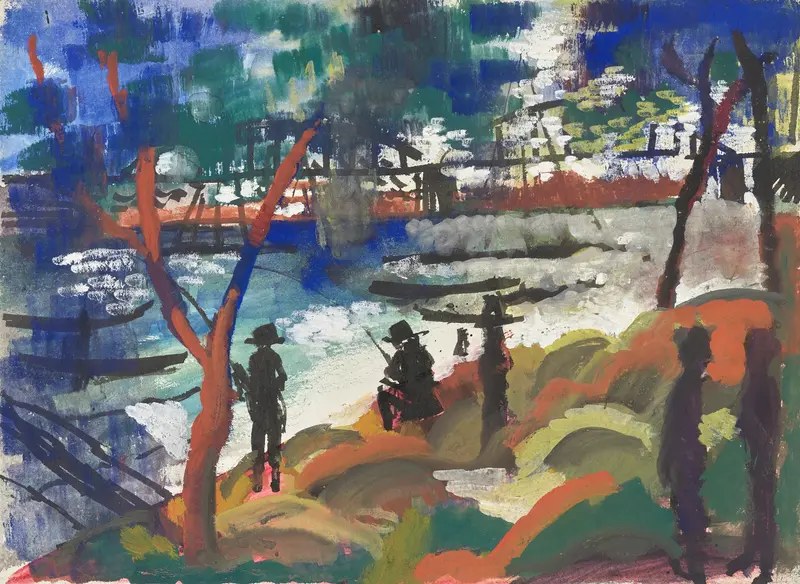
Angler am Fluss
August Macke
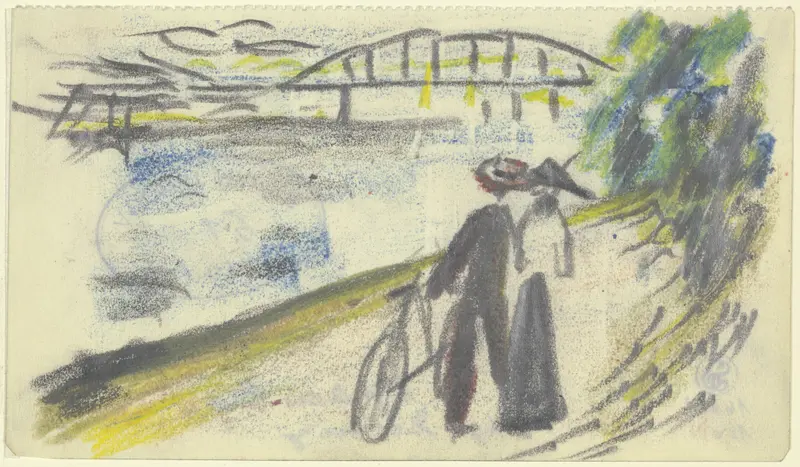
Path at the Rhine
August Macke
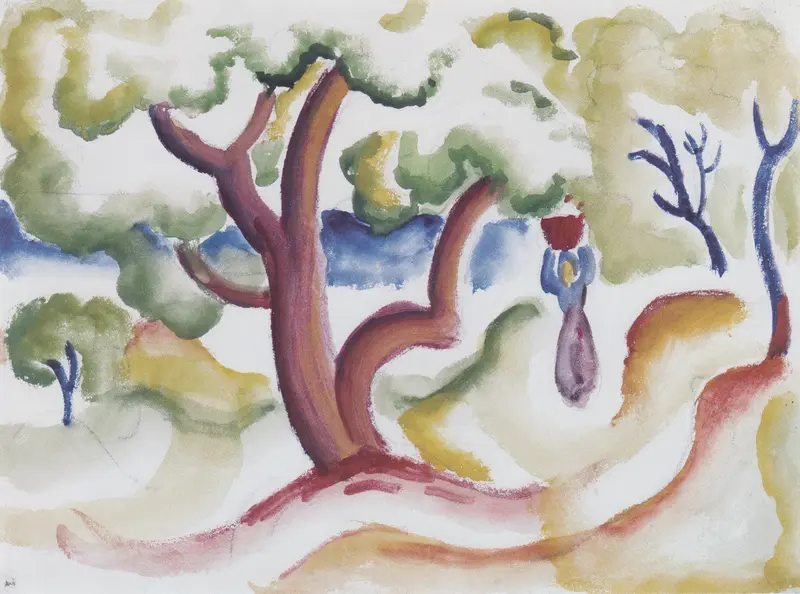
Frau mit Krug unter Bäumen
August Macke
Sonnige Straße mit Hund
August Macke