Puberty — History & Facts
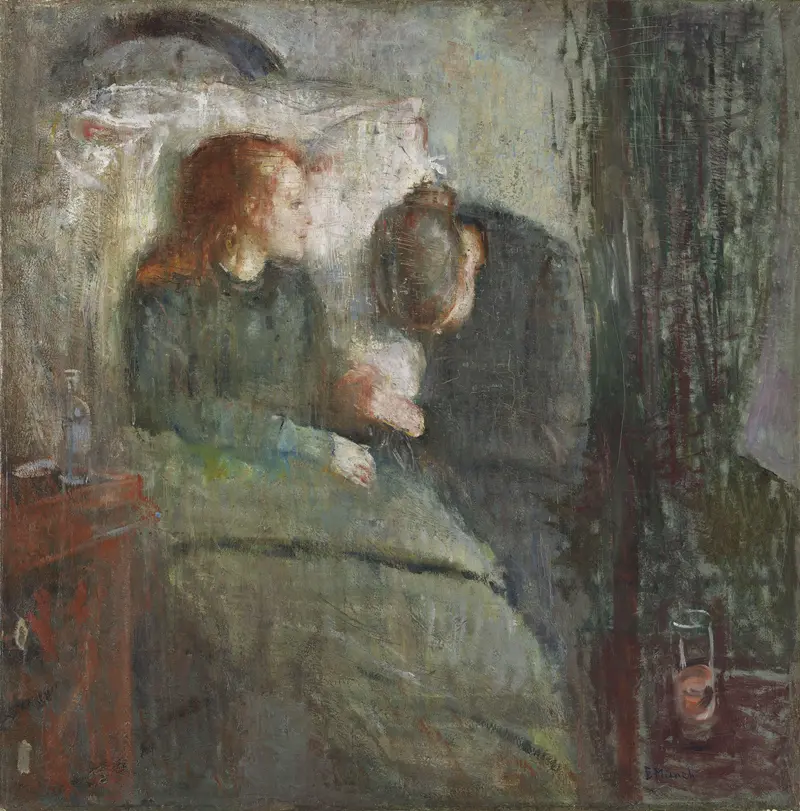
In Puberty, Edvard Munch presents a striking scene filled with vivid colors and emotional intensity. The central figure, a young girl, is depicted in a moment of introspection, surrounded by swirling forms that suggest confusion and anxiety. The use of reds and blues creates a stark contrast, emphasizing her inner turmoil.
The background is abstract, further enhancing the sense of isolation and emotional struggle. The painting is executed in oil on canvas, showcasing Munch's characteristic brushwork and color palette. The dimensions are approximately 90 x 70 cm, making it a medium-sized work that draws the viewer's attention. Munch's technique involves layering colors to create depth and texture, which adds to the emotional weight of the piece.
The overall composition is dynamic, with the figure at the center commanding focus. Puberty was painted around 1894, during a period when Munch was exploring themes of love, anxiety, and existential dread. This work reflects his personal experiences and observations of adolescence, a time marked by emotional upheaval. An interesting fact about this painting is that it was part of a series of works that Munch created to express the complexities of human emotions.
Munch's exploration of these themes has made Puberty a significant piece in the Symbolist movement.