
Quai de l’Hôtel de Ville — History & Facts
In the quiet corners of Paris, moments linger long after they have passed, whispering of destiny in every cobblestone and shadow. Focus on the long, sweeping lines that crisscross the canvas, tracing the elegant architecture of the Hôtel de Ville. The viewer's gaze is drawn first to the intricate details of the building, rendered with a delicate precision that breathes life into stone. Notice how the soft, muted color palette evokes a sense of nostalgia, while the gentle play of light captures the fleeting nature of time—both a moment frozen and a memory in motion. Beneath the surface lies a poignant exploration of the passage of time.
The figures in the foreground are mere silhouettes, hinting at lives intertwined yet solitary, embodying the duality of connection and isolation in a bustling city. The stillness contrasts sharply with the movement of life beyond the frame—an invitation to ponder the destinies that converge and diverge within this urban tapestry. The impression of a rainy day adds a layer of melancholy, suggesting that even the vibrant heart of Paris can be touched by sorrow. In 1886, Lepère painted this work while immersed in the burgeoning Impressionist movement, capturing the changing landscape of Paris.
This period marked a shift towards modernity, as artists sought to depict the everyday life of their city, reflecting the social transformations occurring around them. It was a time of personal exploration for Lepère, as he carved out his unique voice amidst the vibrant artistic community, forever reshaping the perception of urban life through his art.
More Artworks by Auguste Louis Lepère
Browse all →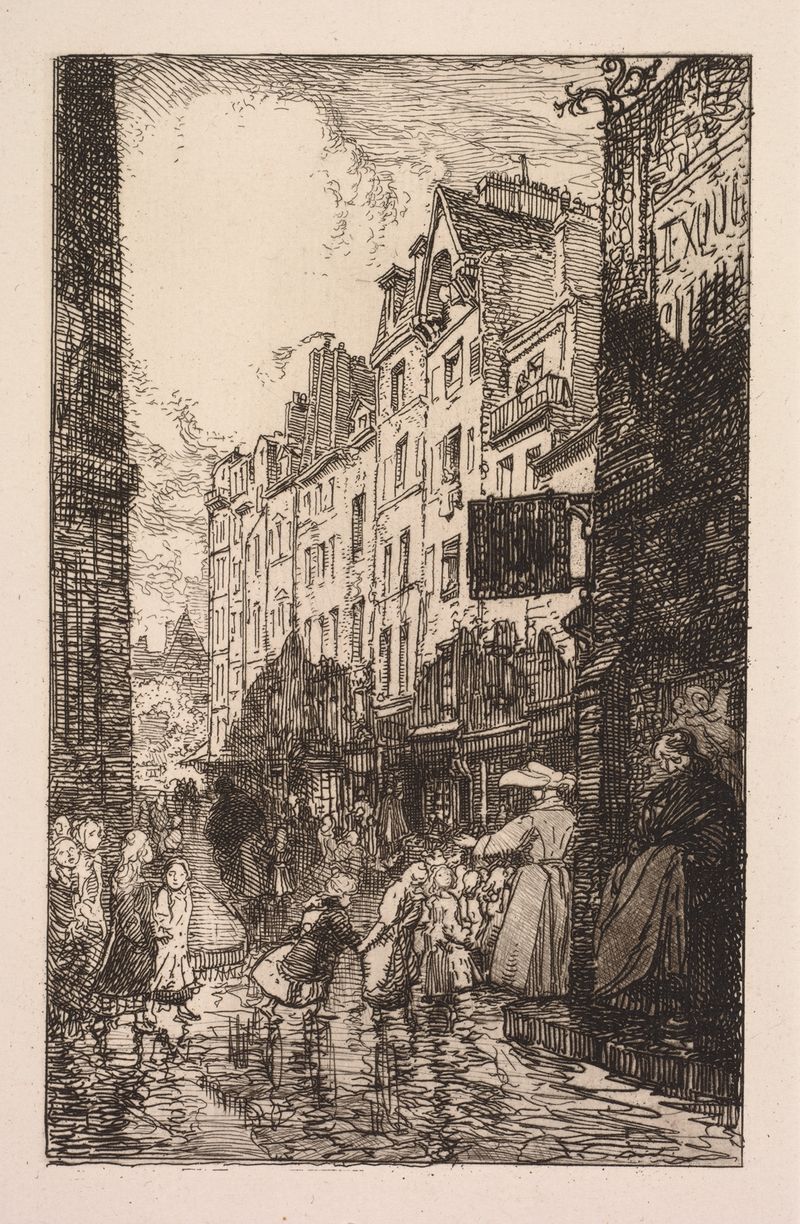
La Rue des Prêtres Saint-Séverin
Auguste Louis Lepère
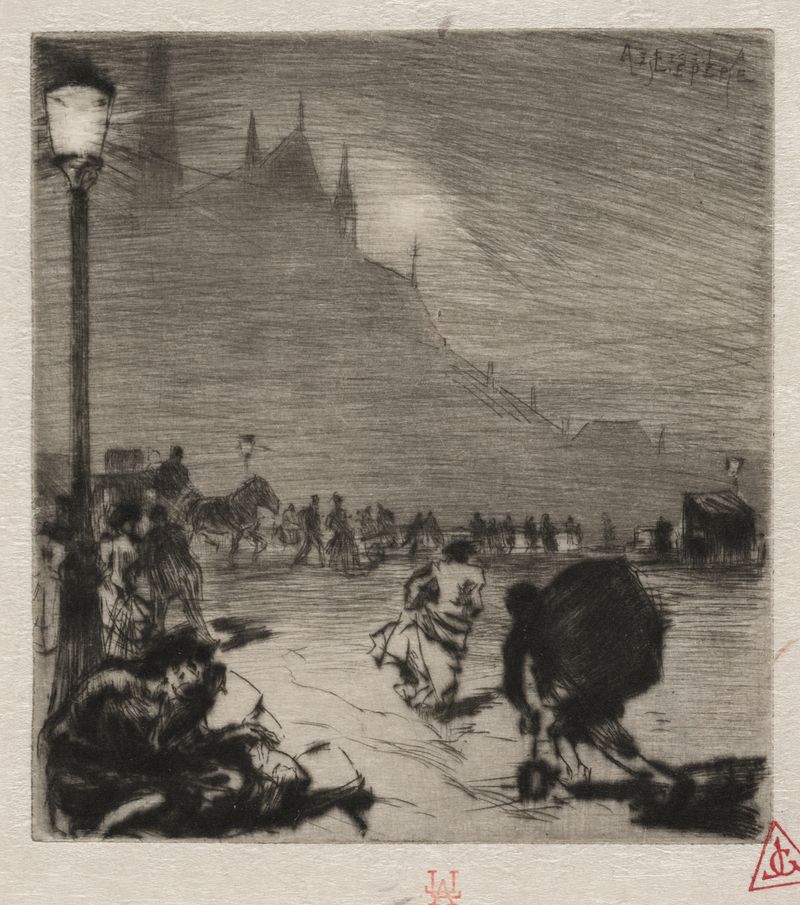
Au Coin du Pont-aux-Doubles
Auguste Louis Lepère
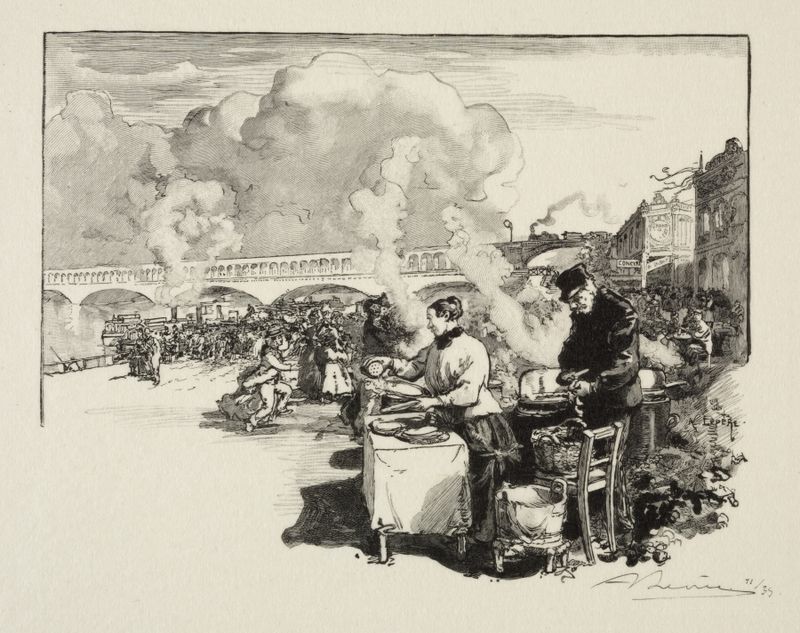
Debarcadère des bateaux-omnibus
Auguste Louis Lepère

La Seine, au quai de la Rapée
Auguste Louis Lepère
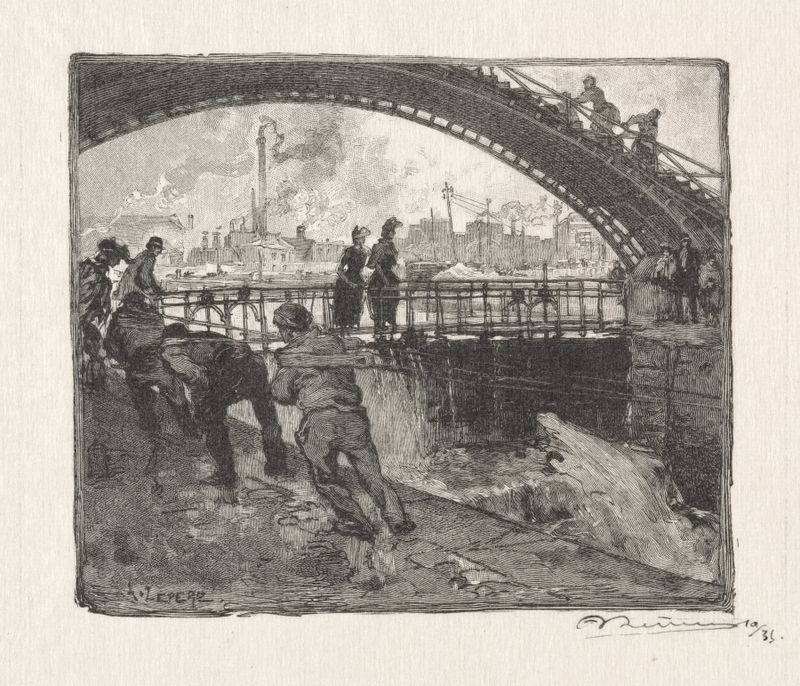
L’Ecluse du Canal St. Martin
Auguste Louis Lepère

Le Boulevard Montmartre, le Soir
Auguste Louis Lepère

Une Chasse au Mont Gérard
Auguste Louis Lepère
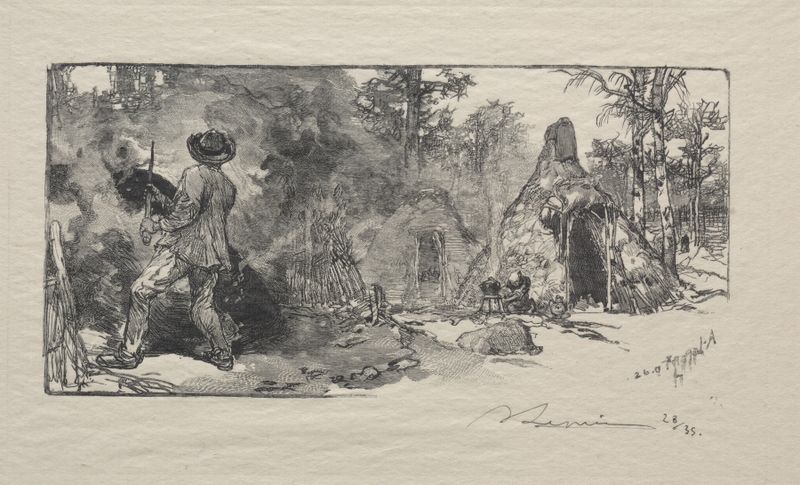
Les Charbonniere
Auguste Louis Lepère
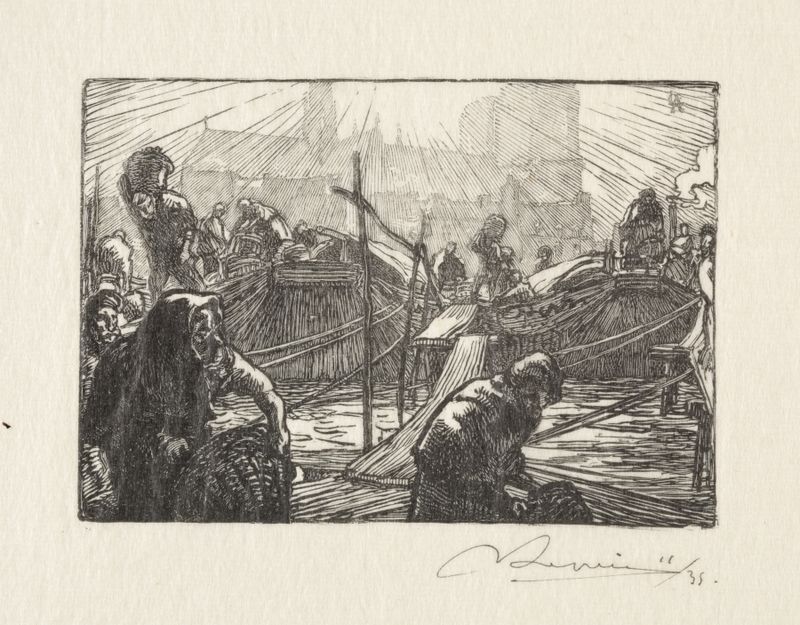
Notre Dame vue du Marché aux pommes
Auguste Louis Lepère

Le Palais des Arts Liberaux, Intèrieur
Auguste Louis Lepère
More Architecture Art
Browse all →
The statue of Liberty
Frédéric Auguste Bartholdi

View of Houses in Delft, Known as ‘The Little Street’
Johannes Vermeer

View of Houses in Delft, Known as ‘The Little Street’
Johannes Vermeer

The Cathedral in Rouen. The portal, Grey Weather
Claude Monet

The yellow house
Vincent van Gogh

The Church in Auvers-sur-Oise, View from the Chevet
Vincent van Gogh