
Quarantine cemetery and church, with French battery no. 50 — History & Facts
In the midst of sorrow and turmoil, innocence is both a precious memory and a haunting specter, captured by a moment in time. Look to the center, where the modest church stands resilient against the encroaching shadows of despair. Its steeple reaches skyward, a beacon amidst the muted tones of grey and ochre that envelop the cemetery surrounding it. Notice how the artist skillfully contrasts the angular lines of the architecture with the soft, uneven contours of the headstones, each telling stories of lives interrupted.
The diffuse light seems to filter through the clouds, casting an ethereal glow that illuminates the grave markers, revealing the fragility of life and the weight of remembrance. As you explore the foreground, observe the scattered graves, their weathered surfaces speaking of both loss and the passage of time. Each stone holds the echoes of innocence—young lives claimed too soon, now lost but not forgotten. The juxtaposition of the church and the cemetery prompts reflection on faith amid grief, a tension between hope and mourning that resonates deeply.
The presence of the military battery, looming in the background, serves as a stark reminder of the conflict that shrouded this scene, highlighting the fragility of peace. Created in 1855, this artwork emerged during the Crimean War, a time when William Simpson was documenting the harsh realities faced by soldiers and civilians alike. His experiences on the battlefield informed his perspective, allowing him to infuse profound emotional depth into his work. In this moment, he captures not just a physical landscape but the poignant intersection of innocence, loss, and the enduring human spirit amidst the chaos of war.
More Artworks by William Simpson
Browse all →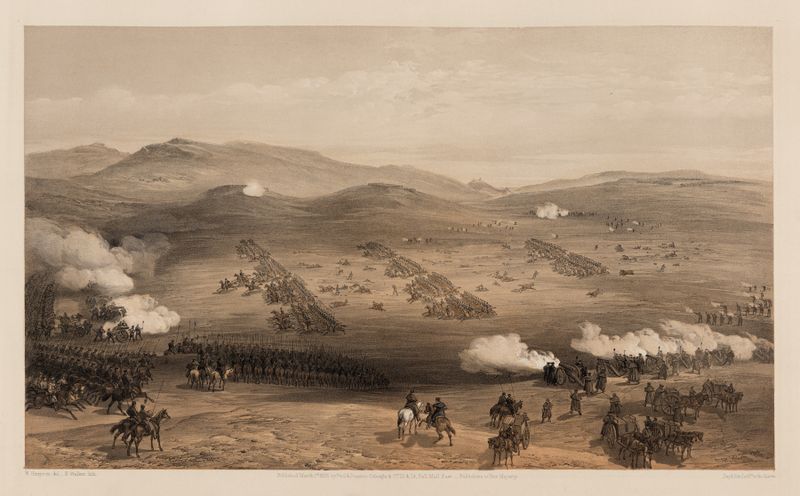
Charge of the light cavalry brigade, 25th Oct. 1854, under Major General the Earl of Cardigan
William Simpson

Charge of the heavy cavalry brigade, 25th Octr. 1854
William Simpson
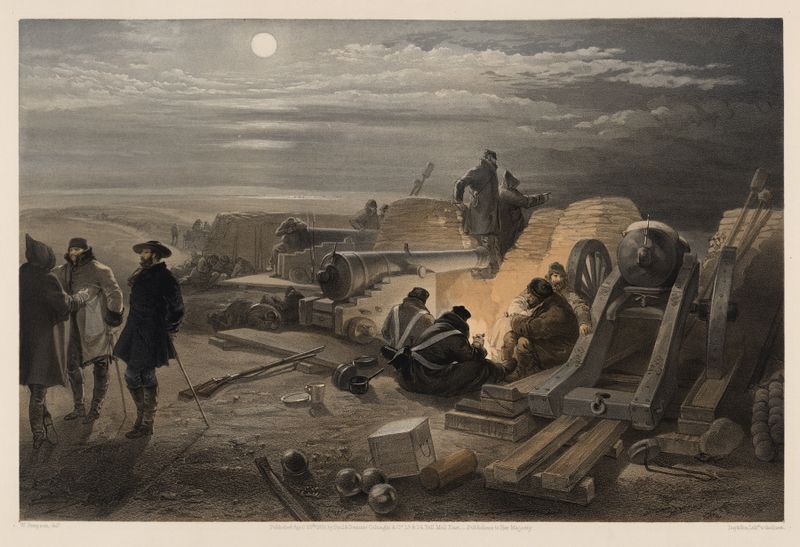
A quiet night in the batteries – a sketch in the Greenhill battery (Major Chapman’s), 29th Jany. 1855
William Simpson

The Great Wall of China
William Simpson
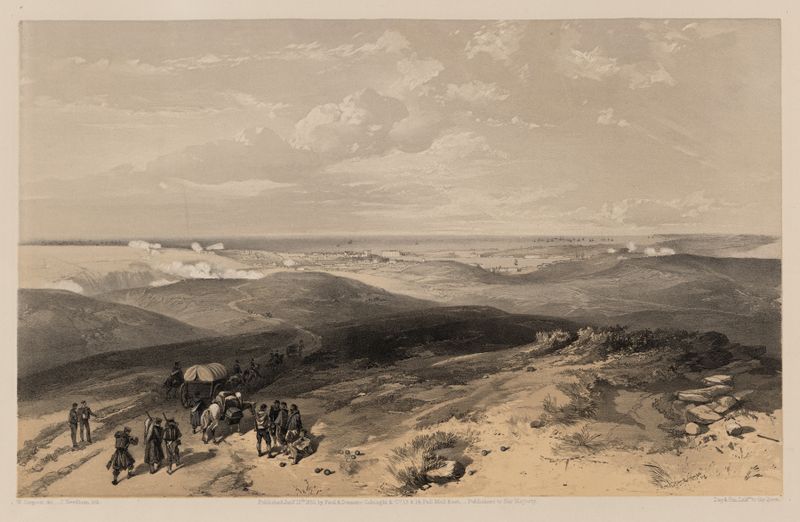
Sebastopol from the rear of the English batteries
William Simpson
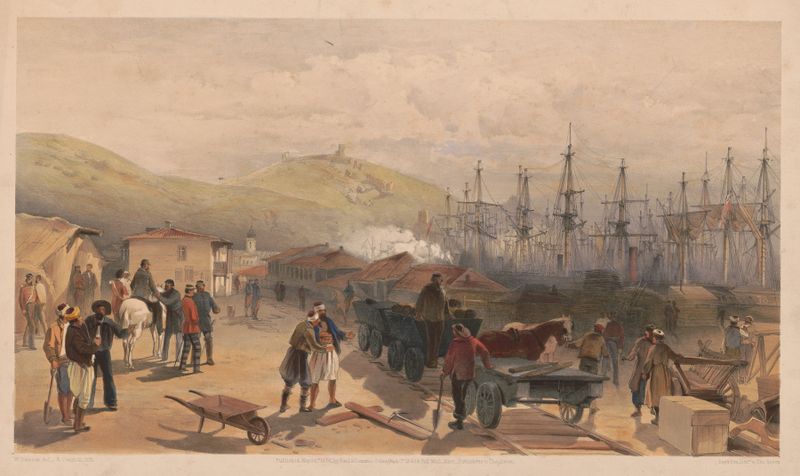
The railway at Balaklava, looking south
William Simpson

The Governor-General’s and Commander-in-Chief’s Camp at Jalandhar, 1 Febuary 1860
William Simpson
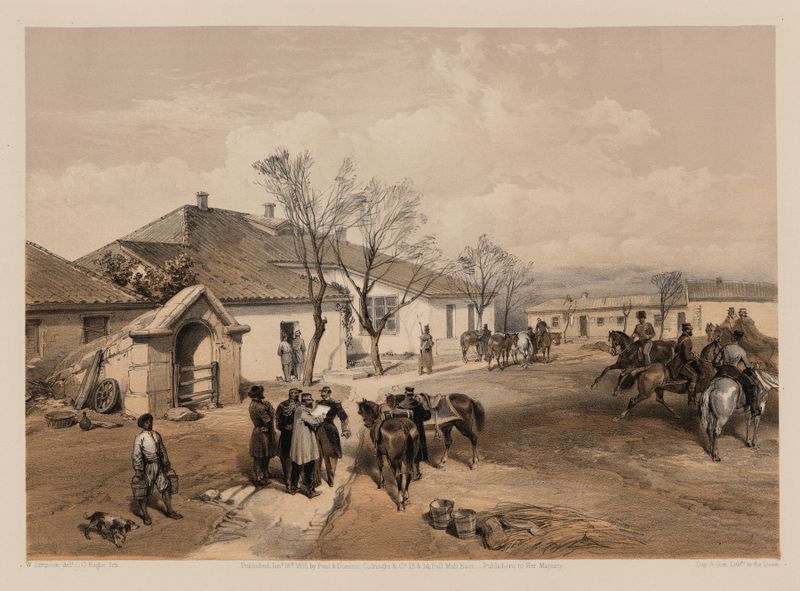
Lord Raglan’s head quarters at Khutor-Karagatch
William Simpson
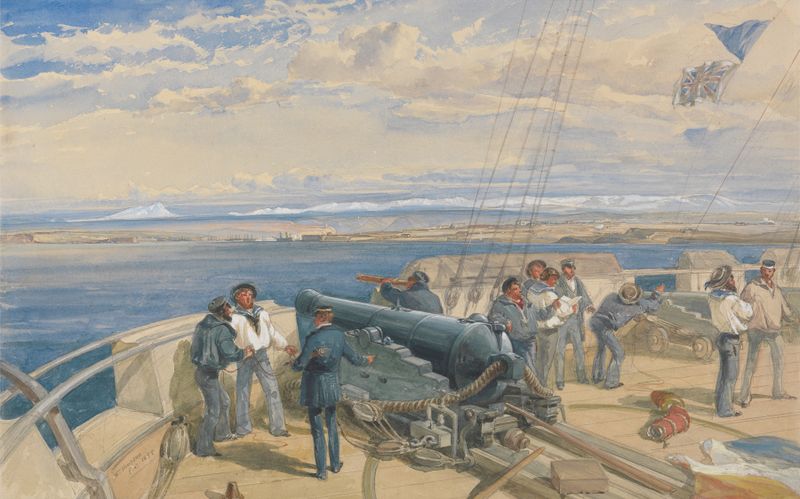
Sebastopol from the Sea, Sketched from the Deck of H. M. S. Sidon, Feb. 1855
William Simpson
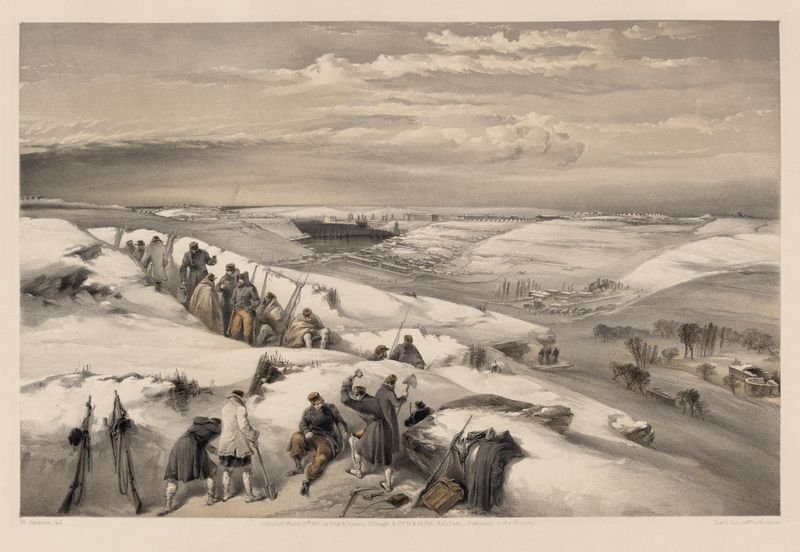
Sebastobol from the 26 gun battery on the extreme right of French attack
William Simpson





