Quay in Antwerp — History & Facts
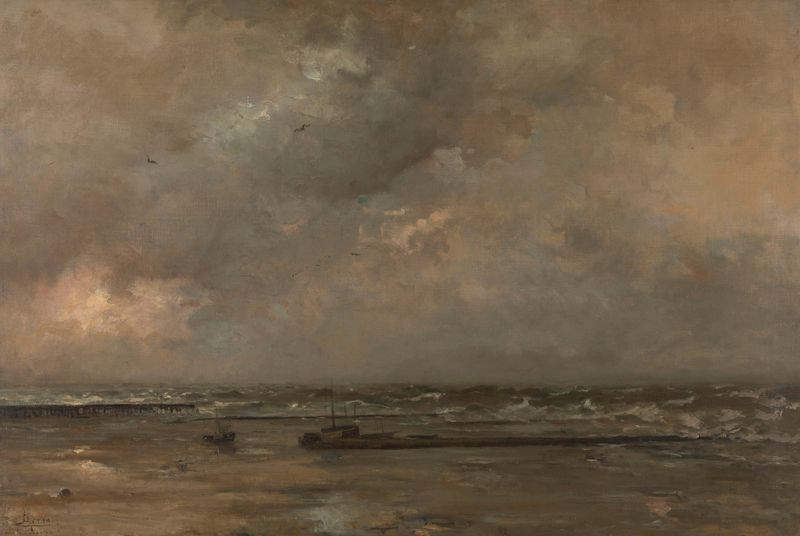
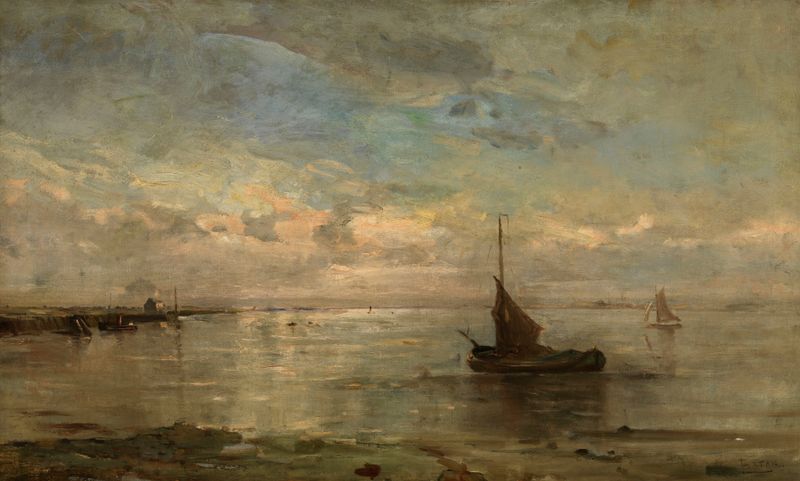
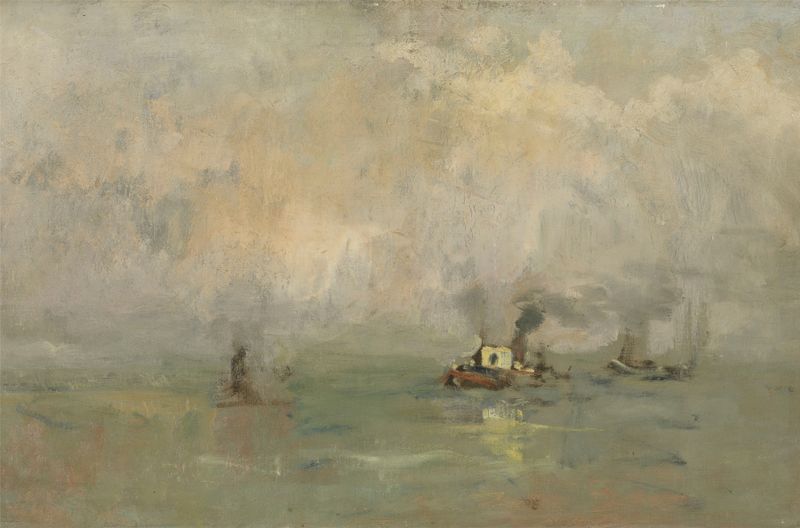
In Quay in Antwerp, an air of melancholy cloaks the bustling port, a silent testament to the passage of time and the stories woven within its embrace. Look to the foreground where a small cluster of figures assembles, their muted clothing blending harmoniously with the somber palette that dominates the canvas. Notice how the cool blues and greys evoke a sense of longing, with the water reflecting the overcast sky, while the gentle ripples illustrate the quiet turbulence of their thoughts. The composition draws your eye along the quay's edge, where boats sway softly, their masts cutting into the horizon like silent sentinels, poised between the past and an uncertain future. In this scene, contrasting elements emerge, enriching the narrative.
The busy dockworkers juxtapose the stillness of the water, embodying the tension between action and introspection. A lone figure stands apart from the group, gazing at the horizon, inviting questions about their dreams and fears. This poignant moment encapsulates the bittersweet nature of human existence, where life continues to flow, yet echoes of solitude linger in the air. Created in 1873, this work reflects the artist's profound engagement with themes of human experience amidst the industrial growth of Antwerp.
At this time, Artan was navigating his own artistic journey, drawing inspiration from the urban landscape and the lives entwined within it. The era was marked by significant changes, both socially and politically, as the world began to modernize, and his paintings served as a lens through which to explore the complexities of this transformative period.