The North Sea at Blankenberge — History & Facts
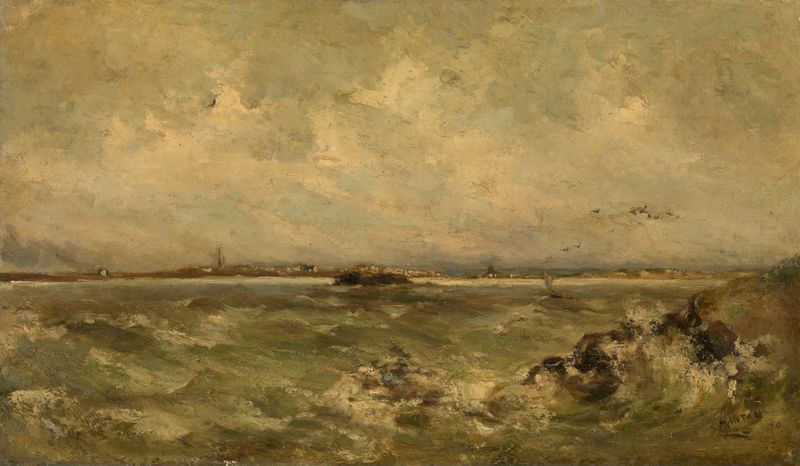
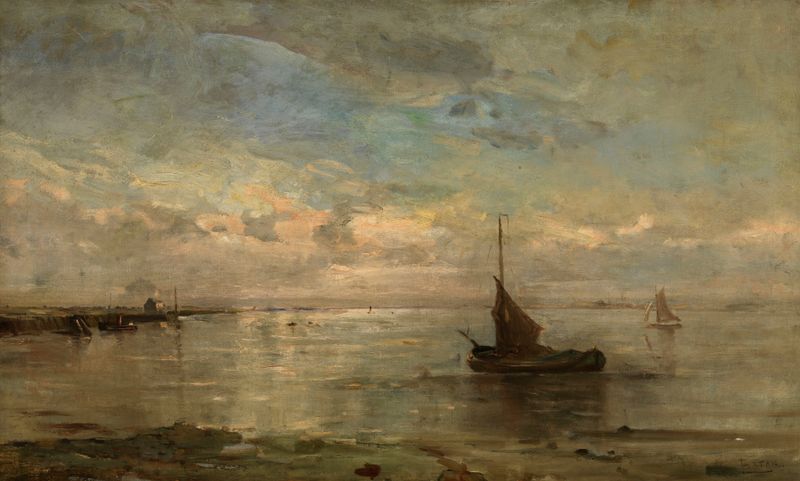
When did color learn to lie? In the delicate interplay of hue and light, The North Sea at Blankenberge invites viewers to question the very nature of reality itself. Focus your gaze on the vibrant blues and greens that dance across the canvas, reflecting the restless spirit of the sea. Notice how the gentle brushwork captures the movement of the waves, each stroke breathing life into the water's surface. To the left, dark clouds loom, their shadows creating a striking contrast against the sunlit patches of the ocean, emphasizing the tumultuous relationship between calm and chaos. Delve deeper into the painting, and you'll uncover the emotional undercurrents at play.
The serene horizon suggests hope and tranquility, yet the choppy waters reveal turmoil beneath. This duality mirrors human experience, where moments of peace are often undercut by the unpredictability of life. The lighthouse, though a distant figure, stands resolute; it symbolizes guidance and safety amid uncertainty. In 1871, while working in Belgium, Louis Artan painted this remarkable seascape during a time when the realism movement was gaining momentum in the art world.
The desire to depict nature with honesty and depth was paramount, and Artan, influenced by his surroundings and the artistic currents of his time, sought to convey the awe-inspiring beauty of the North Sea. His work reflects not only the landscape but the broader human condition—ever-changing, yet steadfast in its pursuit of understanding.