Seascape at De Panne — History & Facts
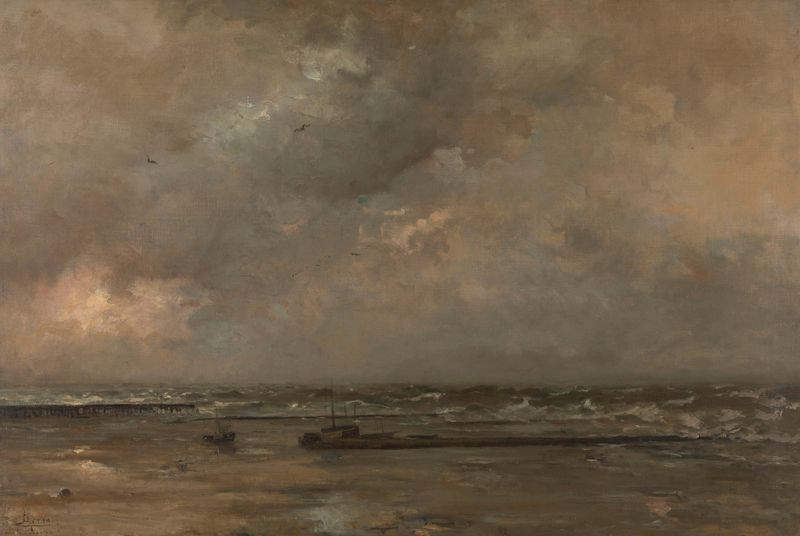
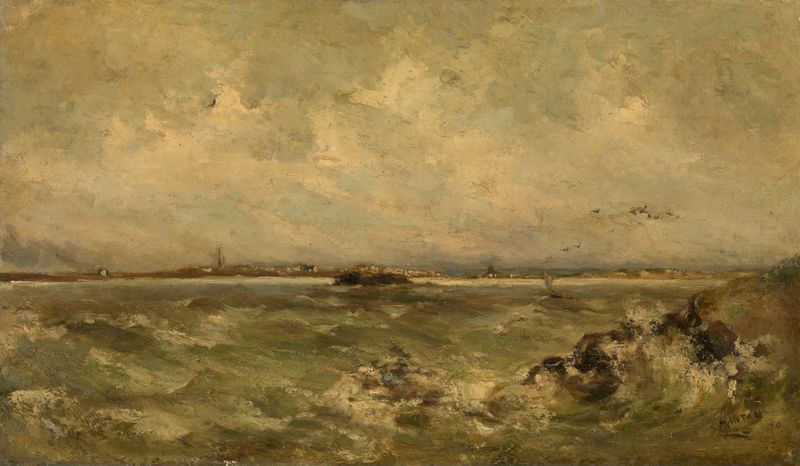
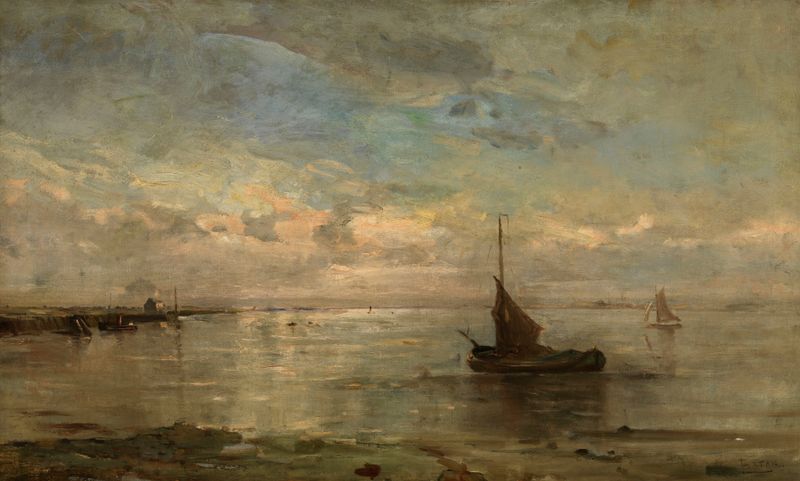
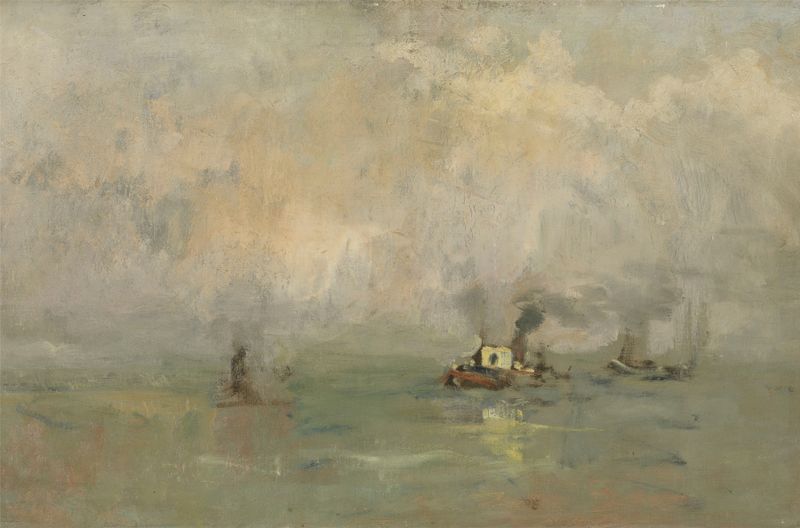
Did the painter know this moment would outlive them? In Seascape at De Panne, the serene expanse of the sea speaks volumes, whispering secrets of the horizon and beckoning to the observer's soul. Focus on the shimmering waves that dance under the brushstrokes, revealing the interplay of light and shadow. Look to the left, where the soft hues of blue transition into gentle grays; this gradient invites you to step closer, to feel the cool sea breeze brush against your skin. Notice the clouds, painted with delicate strokes, conveying a sense of movement that suggests the passage of time while grounding the scene in the present moment.
The artist masterfully captures the vibrant textures, from the foamy surf to the smooth sands, creating a harmonious composition that draws the eye across the canvas. Within this tranquil seascape lies a profound tension between nature's beauty and its impermanence. The contrast between the calm waters and the tumultuous sky reflects an inner conflict, perhaps a reminder of life's transient nature. Additionally, the fleeting light over the waves may symbolize hope and renewal, echoing the ever-changing tides of existence.
Each brushstroke captures not just the physical world but the emotions it evokes, inviting contemplation of our own fleeting moments. Louis Artan painted Seascape at De Panne in 1870, during a period of personal exploration and growth. Living in Belgium, he sought to capture the natural beauty around him, influenced by the burgeoning movements of Impressionism. As the art world began to embrace new techniques and perspectives, this work serves as a testament to his response to the shifting tides of artistic expression and the profound connection between observer and the natural world.