Seascape — History & Facts
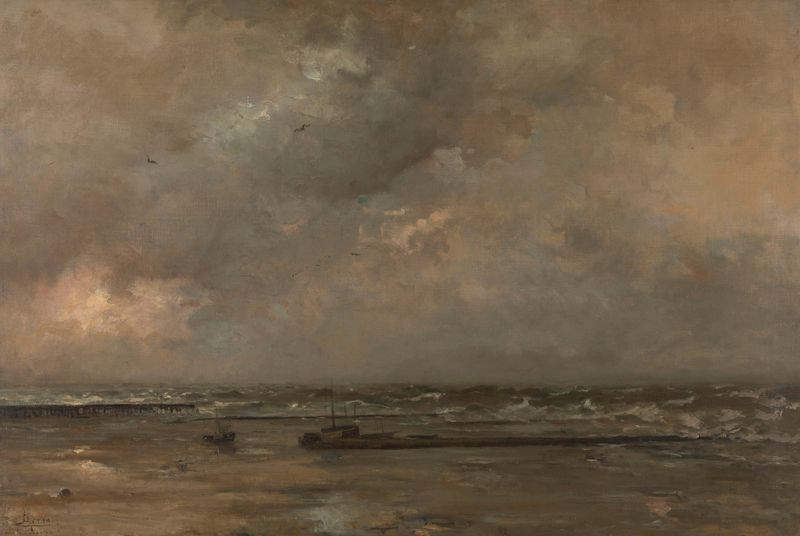
What if beauty was never meant to be finished? In the turbulent dance between land and sea lies a haunting reminder of nature’s raw power, a beauty that both captivates and unnerves. Focus on the tumultuous waves crashing against the rocky shoreline, where shades of deep teal and frothy white intermingle. Notice how the brushstrokes convey both the motion and ferocity of the ocean, each energetic mark revealing the artist’s struggle to capture a fleeting moment. The turbulent sky, painted in moody grays and hints of lavender, mirrors the chaos below, while patches of light cut through the clouds, illuminating the froth of the waves—a fleeting glimpse of hope amid turmoil. Delve deeper into the emotional landscape before you.
The stark contrast between the gentle light and violent waves suggests a confrontation between beauty and chaos, evoking a sense of vulnerability. The rocky outcrops stand resolute against the relentless onslaught, symbolizing the fragile nature of existence against unyielding forces—both natural and human. This juxtaposition invites a contemplation of how beauty, though often celebrated, can emerge from violence and struggle. In 1878, while working on Seascape, Louis Artan was stationed in the coastal regions of France, capturing the essence of the tumultuous seas that surrounded him.
At this time, the art world was experiencing a shift toward Impressionism, embracing the transient effects of light and atmosphere. Artan, however, infused his work with a sense of urgency and emotional depth, reflecting both personal and societal tensions of the era.