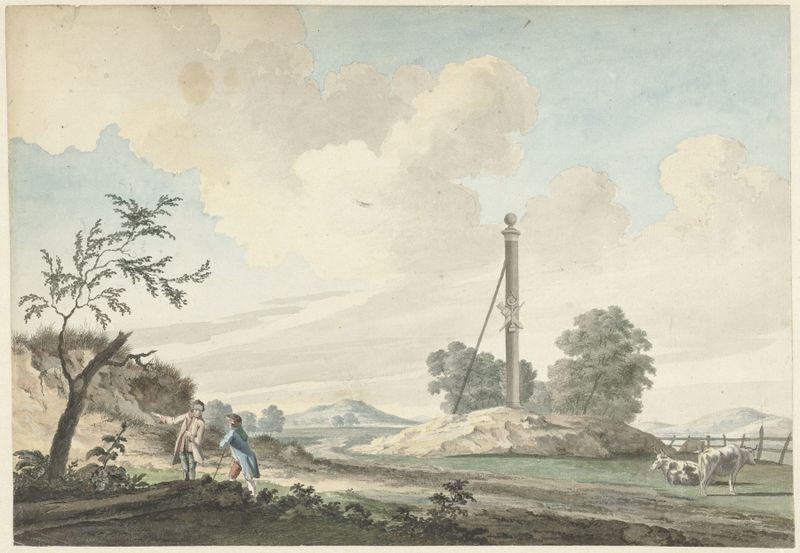
Rechts ein Sandabhang mit einem dürren Baum, an dessen Fuße zwei Frauen und zwei Männer sich unterhalten — History & Facts
In the quiet space of an artwork, obsession emerges as an unspoken force, binding the viewer to the scene. Look to the left, where the stark contours of a dry tree rise against the sandy embankment. Its gnarled branches twist into the sky, while the desolate ground, painted in muted earth tones, anchors the figures just below. The two couples—caught in animated conversation—draw the eye, their postures and gestures conveying a tapestry of emotions.
Notice how the dappled light softly caresses the landscape, creating a fleeting warmth that contrasts with the starkness of the tree, reinforcing the lingering tension between life and desolation. The figures evoke a sense of connection amidst a barren backdrop, their dialogue hinting at deeper narratives of longing and introspection. Each character’s stance and gaze reveal subtle dynamics—perhaps the weight of unfulfilled desires or a shared obsession with the stark beauty surrounding them. The juxtaposition of their vibrant clothing against the muted hues of the sand and tree suggests an internal struggle, where vibrant experiences battle the encroaching silence of their desolate environment. During the period Gerrit Toorenburgh painted this piece, likely in the early 17th century, he was establishing his reputation in the Dutch art scene.
The world was experiencing a shift towards realism, and artists were beginning to explore human emotion and psychology with greater depth. Amidst personal and societal changes, Toorenburgh’s work reflects a keen observation of intimate moments, encapsulating the complexity of human interactions against the rigorous landscapes of his time.