
Reduced Study of Tintoret's "Madonna of the Faithful," in the Academy of Venice — History & Facts
Can beauty exist without sorrow? In the delicate interplay of light and shadow, Reduced Study of Tintoret's "Madonna of the Faithful," in the Academy of Venice invites us to ponder the balance between joy and grief. Here, the essence of divine grace is juxtaposed against the weight of human experience, creating a compelling dialogue that resonates through time. Focus on the soft azure background where gentle hues cradle the figures, leading your eyes to the serene expression of the Madonna. Notice how the artist's brushwork breathes life into the folds of her gown, each stroke hinting at a story untold.
The interplay of warm and cool tones creates a visual harmony, drawing the viewer into a moment that is both tranquil and charged with emotion. Hidden within the contours of the composition are whispers of tension; the Madonna’s downcast gaze evokes a sense of longing, while the radiant light illuminating her features suggests hope. It is this duality—an embrace of both sorrow and serenity—that enhances the painting's profound impact. The subtle gestures of the figures extend beyond mere representation, inviting contemplation on faith and devotion amidst life’s trials. In 1876, while crafting this work, the artist was immersed in the rich traditions of Venetian painting, grappling with the principles of the old masters while seeking his own voice.
Positioned within a period of artistic exploration and revival, Moore endeavored to bridge classical beauty with contemporary sentiment, capturing not just a moment in time, but an enduring conversation about the human condition.
More Artworks by Charles Herbert Moore
Browse all →
John Ruskin (1819-1900)
Charles Herbert Moore

Mount Washington
Charles Herbert Moore

High Peak and Round Top (Catskill) in Winter
Charles Herbert Moore

The Catskill Mountains
Charles Herbert Moore

Upland Pasture
Charles Herbert Moore
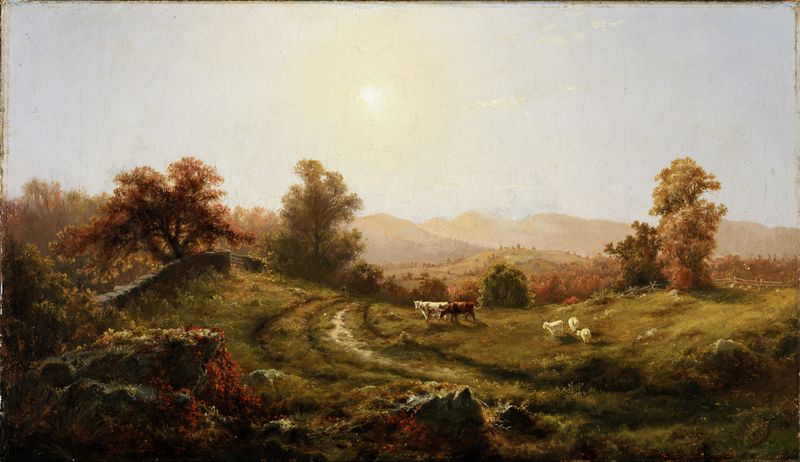
Landscape
Charles Herbert Moore
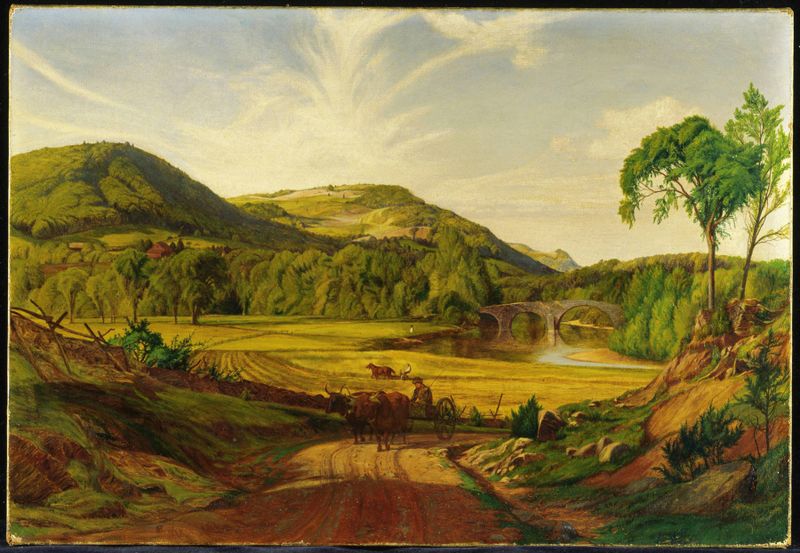
Leeds Bridge
Charles Herbert Moore

Study of the Head of the Sleeping Saint Ursula, after Carpaccio, in the Academy of Venice
Charles Herbert Moore

Study, Reduced to One-Quarter Size, of the Angel in Veronese's Annunciation, in the Uffizi Gallery at Florence
Charles Herbert Moore
More Religious Art
Browse all →
The Return of the Prodigal Son
Rembrandt van Rijn

The Garden of Earthly Delights
El Bosco

Count Orgaz’ funeral
El Greco

The Hundred Guilder Print: the central piece with Christ preaching, the plate arched
Rembrandt van Rijn

The Descent from the Cross
Rogier van der Weyden

The return of the prodigal son
Rembrandt van Rijn