
Mount Washington — History & Facts
Could beauty survive in a century of chaos? Mount Washington, painted by Charles Herbert Moore in 1872, invites us to ponder this question as we are drawn into its serene embrace. The majestic peak looms with a quiet strength, a reminder of nature's timelessness amidst the transient struggles of humanity. Look to the center of the canvas, where the mountain stands tall against a backdrop of soft clouds. Notice the warm golden hues that filter through the mist, illuminating the rugged texture of the rock.
The artist's brushstrokes reveal a delicate interplay of light and shadow, enhancing the mountain's grandeur. Your eye will be led along the contours of the terrain, tracing the gentle slopes that fade into the distant horizon, an invitation to wander deeper into the wilderness. In this artwork, contrasts abound: the stillness of the natural landscape against the chaos of urban development during the industrial era. The vibrant greens of the foreground symbolize life and renewal, while the cooler blues and grays of the background evoke feelings of distance and contemplation.
Moore captures not only the majestic beauty of the mountain but also the fragile balance between the human experience and the vastness of nature, hinting at both awakening and introspection. At the time Moore created this piece, he was immersed in the Hudson River School movement, which celebrated American landscapes. In the early 1870s, the nation was grappling with rapid industrialization and its implications, making the tranquil beauty of nature increasingly significant. This painting reflects not only Moore's artistic vision but also a collective yearning for solace in the natural world, a sanctuary from the encroaching chaos.
More Artworks by Charles Herbert Moore
Browse all →
John Ruskin (1819-1900)
Charles Herbert Moore

High Peak and Round Top (Catskill) in Winter
Charles Herbert Moore

The Catskill Mountains
Charles Herbert Moore

Upland Pasture
Charles Herbert Moore
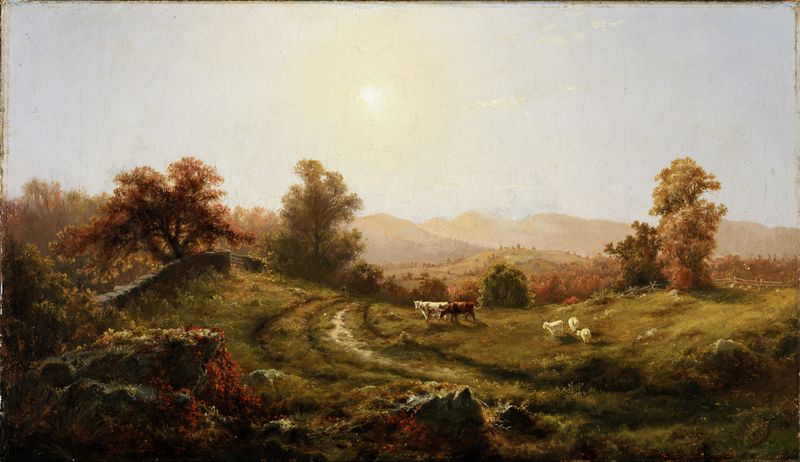
Landscape
Charles Herbert Moore
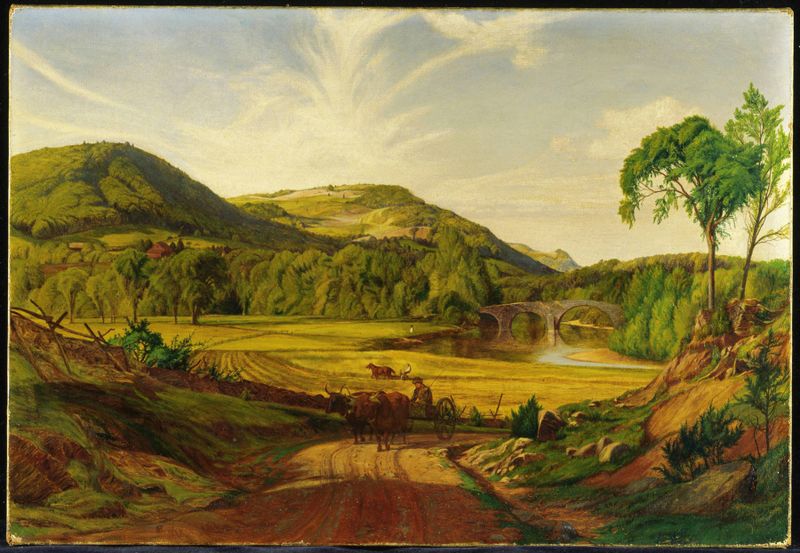
Leeds Bridge
Charles Herbert Moore

Study of the Head of the Sleeping Saint Ursula, after Carpaccio, in the Academy of Venice
Charles Herbert Moore
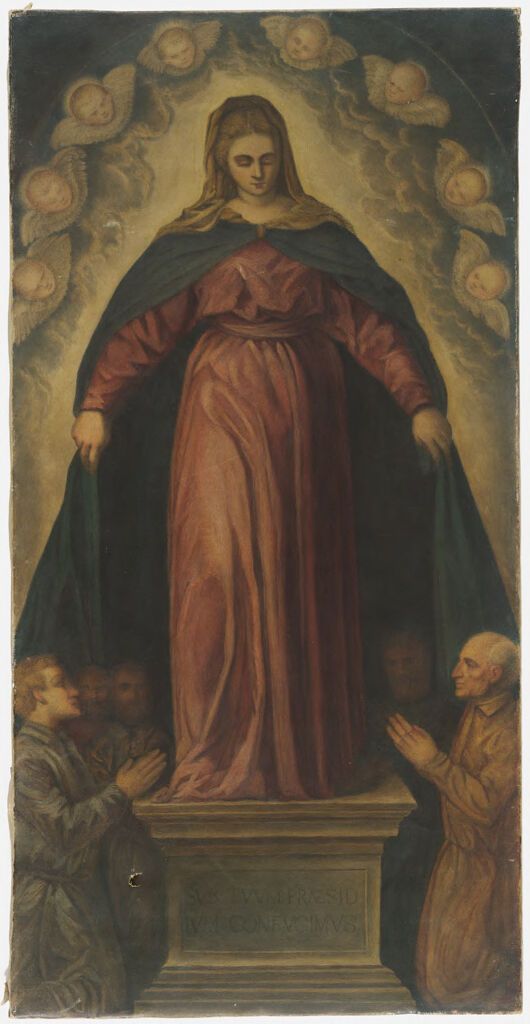
Reduced Study of Tintoret's "Madonna of the Faithful," in the Academy of Venice
Charles Herbert Moore

Study, Reduced to One-Quarter Size, of the Angel in Veronese's Annunciation, in the Uffizi Gallery at Florence
Charles Herbert Moore





