
Rinderherde mit zwei Schafen und dem Hirten unter einer Eiche rastend — History & Facts
Could beauty survive in a century of chaos? In Johann Georg Pforr’s Rinderherde mit zwei Schafen und dem Hirten unter einer Eiche rastend, the pastoral dreamscape offers a glimpse of divine tranquility amidst the tumult of the 18th century. It invites contemplation on the resilience of nature and the simple joys of rural life, echoing a timeless harmony that transcends turbulent times. Focus on the center, where the soft forms of cattle and sheep emerge from a verdant backdrop. The shepherd, perhaps a guardian of this fleeting moment, sits quietly beneath a grand oak, its leafy canopy spilling dappled light across the scene.
The palette is rich yet muted, with earthy greens and warm browns that evoke a sense of serenity. Notice how Pforr masterfully intertwines the figures with their surroundings, celebrating both the beauty of pastoral life and the intricate dance of light and shadow. The interplay between the shepherd and his flock reveals a deeper commentary on connection and stewardship. Each animal, rendered with careful detail, represents a piece of the divine; their peaceful existence contrasts sharply with the looming uncertainty of contemporary society.
The oak tree, a symbol of strength and endurance, stands sentinel over this tranquil gathering, embodying a sense of permanence amidst the fleeting nature of life. This harmony hints at a lost Eden, a sanctuary that exists only in memory and art. Created in 1785, during a period marked by social upheaval and the Enlightenment's intellectual fervor, Pforr painted this work in Germany, a time when artists grappled with the dichotomy of hope and despair. As the world outside began to stir with revolutionary ideas, his serene portrayal of rural life stands in stark contrast to the chaos brewing, illustrating his desire to preserve beauty through the lens of nature and simplicity.
More Artworks by Johann Georg Pforr
Browse all →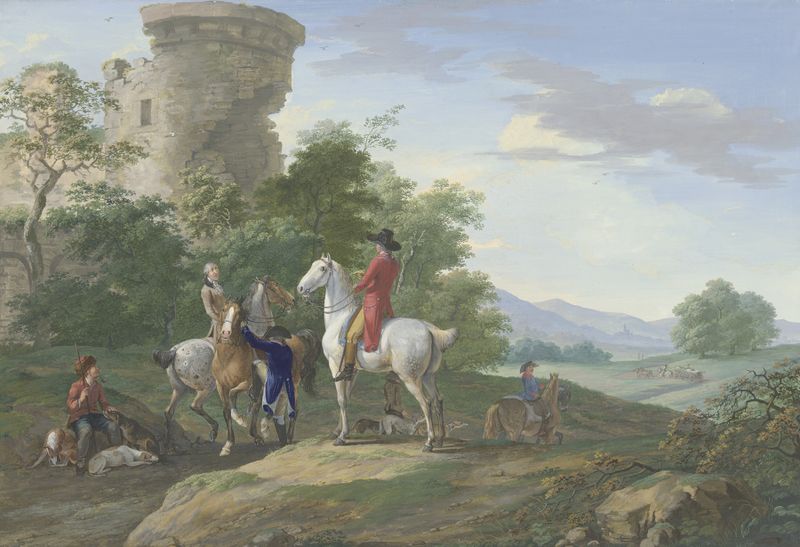
Jäger mit Pferden und Jagdhunden machen bei einer Ruine halt
Johann Georg Pforr
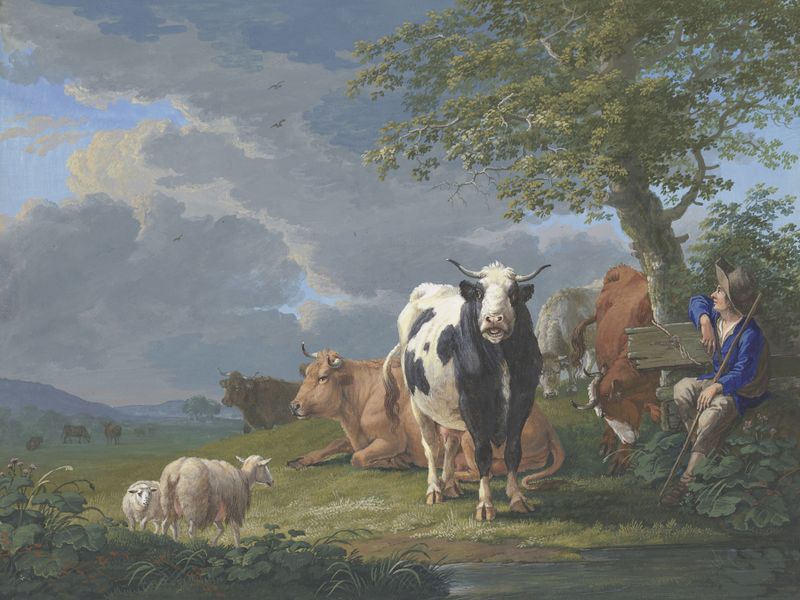
Hirte unter einem Baum mit seiner Rinderherde und zwei Schafen
Johann Georg Pforr
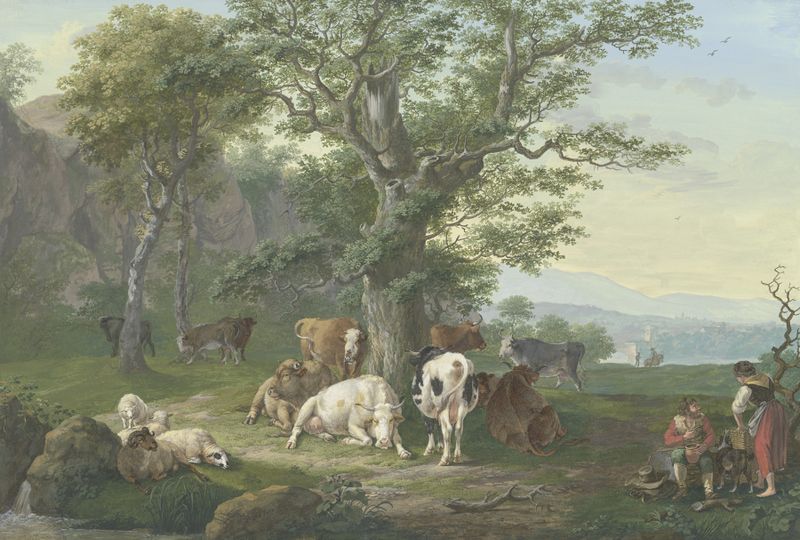
Lagernde Herde unter einer Eiche, rechts Hirte und Hirtin bei der Mahlzeit und Ausblick in die Ferne
Johann Georg Pforr
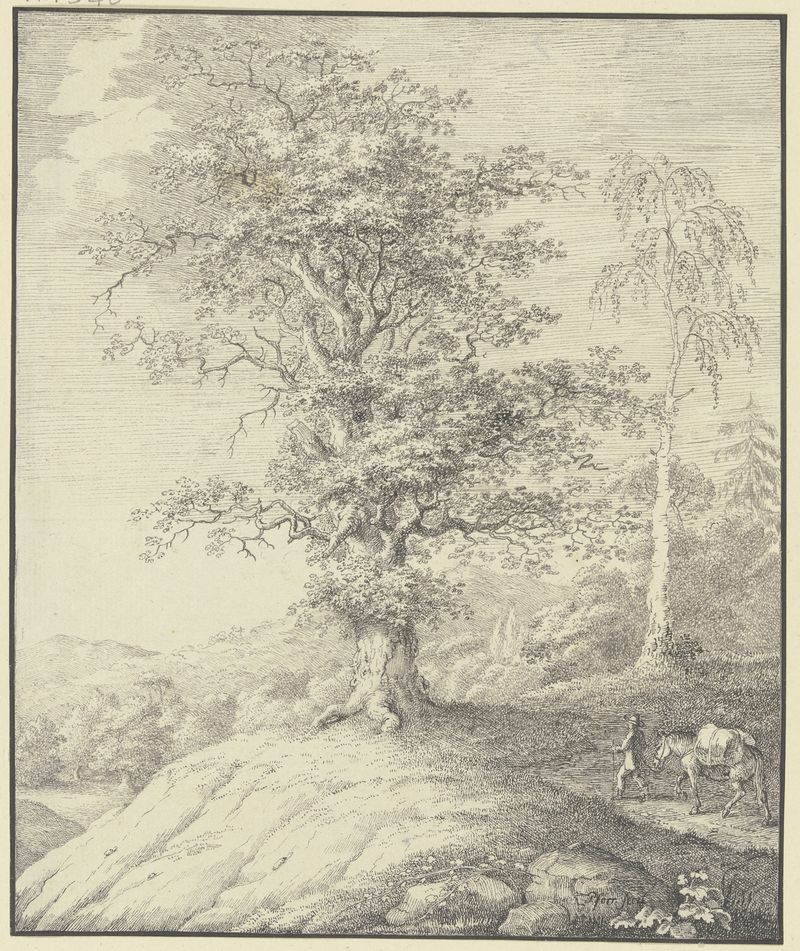
Eichbaum und Birke auf einer Anhöhe, von rechts führt ein Mann ein bepacktes Pferd herbei
Johann Georg Pforr
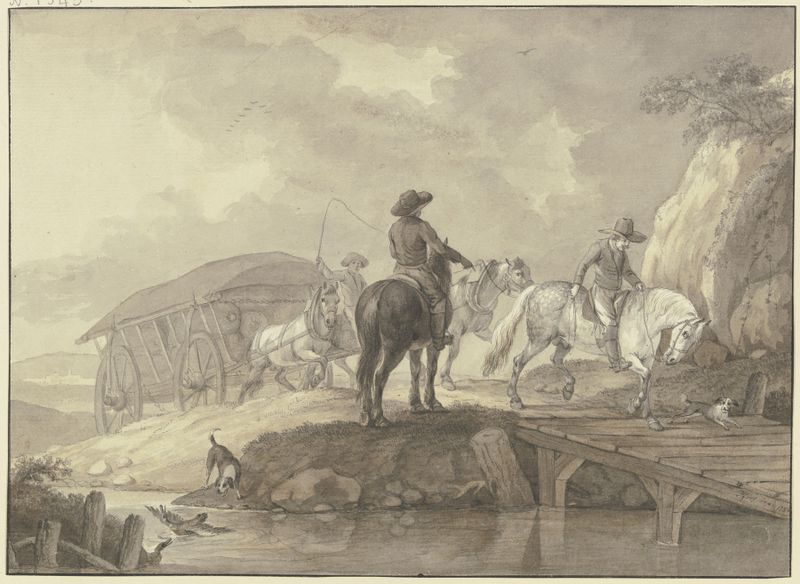
Ein mit Säcken beladener Lastwagen, begleitet von zwei Reitern und zwei Hunden, fährt über eine Brücke
Johann Georg Pforr
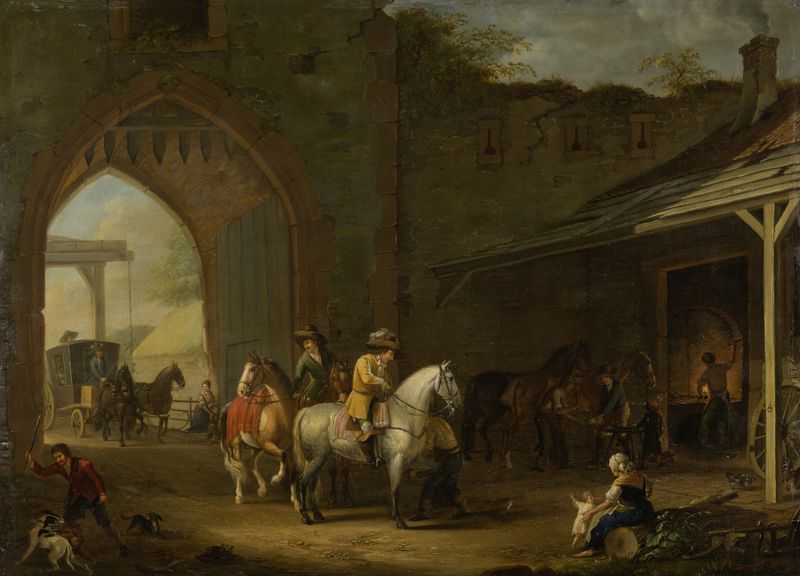
Horsemen at the Blacksmith’s
Johann Georg Pforr

Mondscheinlandschaft an einem Fluß, Hirte und Hirtin treiben das Vieh zum Hof
Johann Georg Pforr
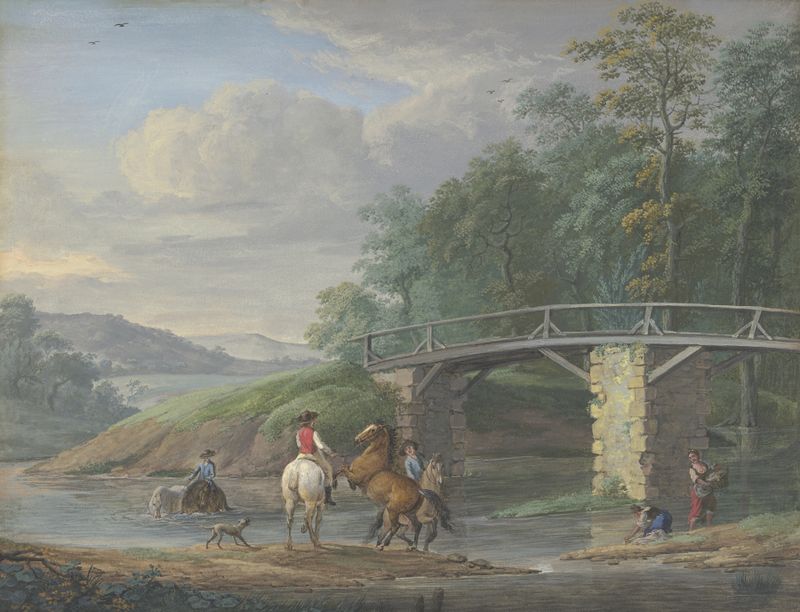
Pferde in der Schwemme bei einer Brücke, rechts zwei Wäscherinnen
Johann Georg Pforr

Viehherde mit zwei Hirten, bei einer Steinbrücke durch das Wasser schwimmend
Johann Georg Pforr
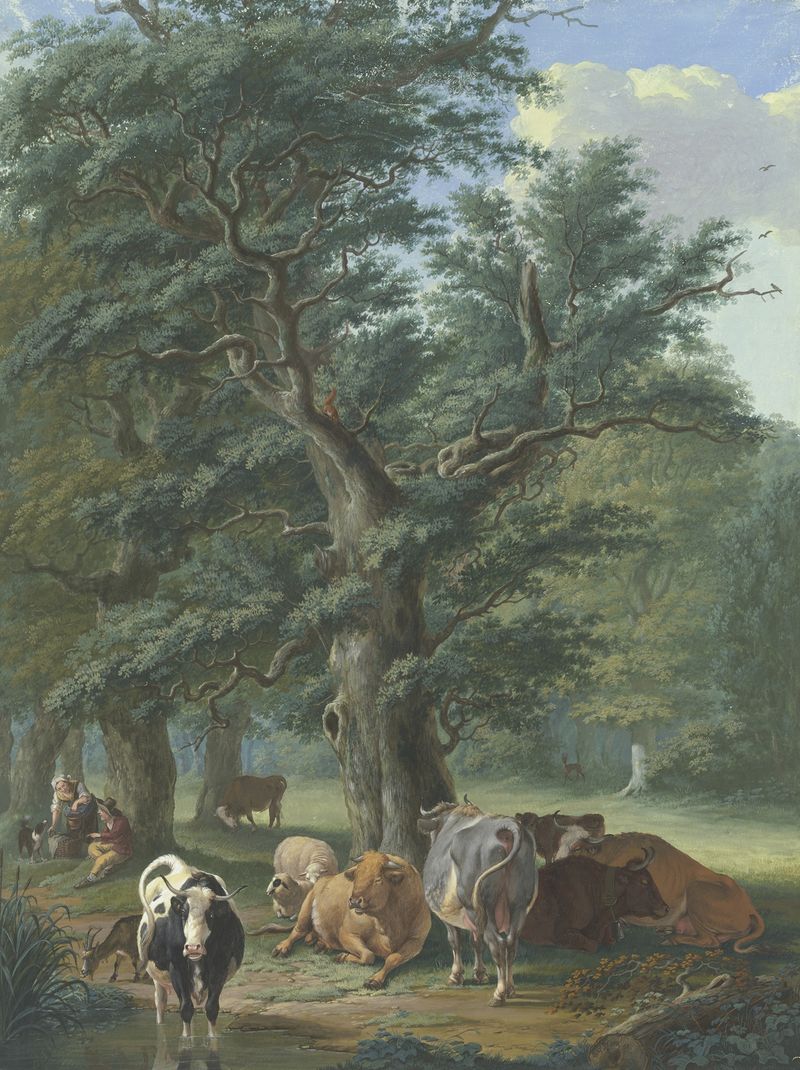
Unter einen großen Eiche ruht Vieh, in der Ferne ein Reh, links bringt eine Frau dem Hirten das Essen
Johann Georg Pforr





