
Unter einen großen Eiche ruht Vieh, in der Ferne ein Reh, links bringt eine Frau dem Hirten das Essen — History & Facts
Did the painter know this moment would outlive them? The quietude captured in Unter einen großen Eiche ruht Vieh, in der Ferne ein Reh, links bringt eine Frau dem Hirten das Essen evokes a profound yearning, a stillness that resonates deeply across time. Look to the center where the great oak rises majestically, its thick trunk and sprawling branches forming a protective embrace around the peaceful scene. The pastoral palette of soft greens and browns draws the eye, accentuating the tranquility of the resting cattle while a gentle light filters through the leaves, creating a dappled pattern on the ground. The woman approaching from the left, her simple dress fluttering slightly in an unseen breeze, brings a touch of warmth and life to the composition, contrasting the stillness of nature with her purposeful gesture. Hidden within the scene are themes of companionship and sustenance, where the act of bringing food transcends mere practicality, weaving a deeper bond between the shepherd and the woman.
The distant deer, poised gracefully at the edge of the forest, symbolizes the wild yet harmonious coexistence of cultivated and untamed nature, echoing the tension between civilization and the wilderness. This serene tableau invites viewers to contemplate their own connections to the land and each other, igniting a longing for simpler times. In 1791, Johann Georg Pforr was creating in the context of a shifting artistic landscape, as Romanticism began to take root across Europe. Living in Germany, he was influenced by both the beauty of the rural landscape and the emerging ideas surrounding nature, emotion, and human experience.
This painting reflects his desire to capture a moment of quiet intimacy amidst the broader currents of change in society and the arts.
More Artworks by Johann Georg Pforr
Browse all →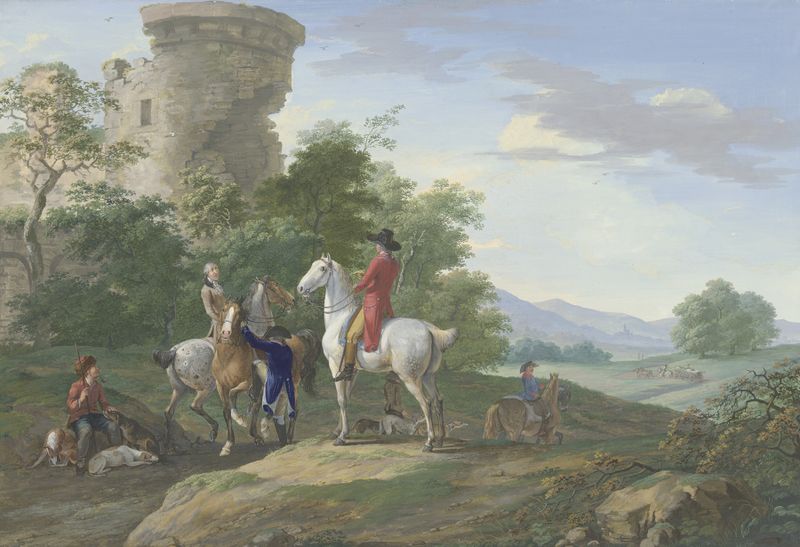
Jäger mit Pferden und Jagdhunden machen bei einer Ruine halt
Johann Georg Pforr
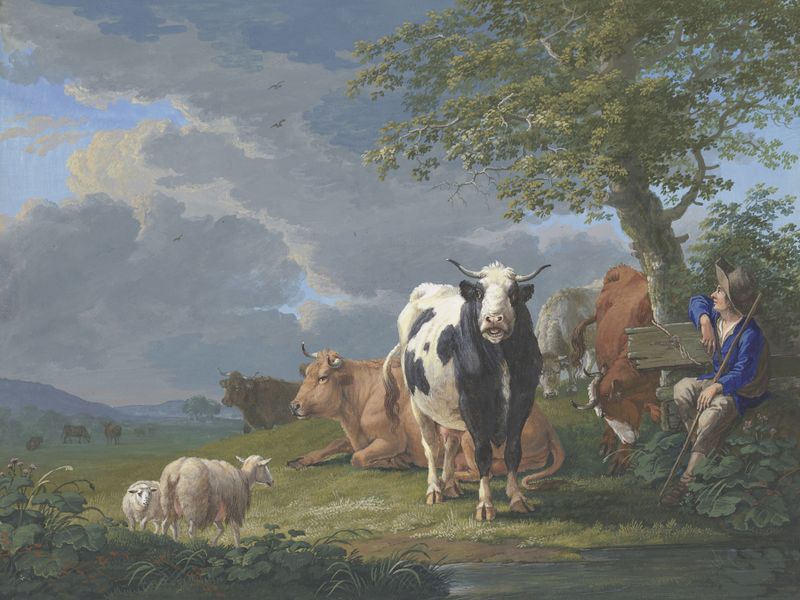
Hirte unter einem Baum mit seiner Rinderherde und zwei Schafen
Johann Georg Pforr
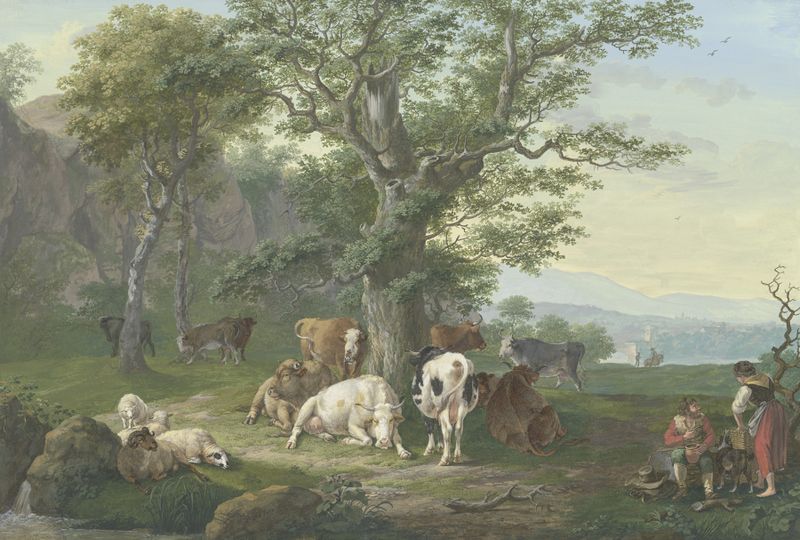
Lagernde Herde unter einer Eiche, rechts Hirte und Hirtin bei der Mahlzeit und Ausblick in die Ferne
Johann Georg Pforr
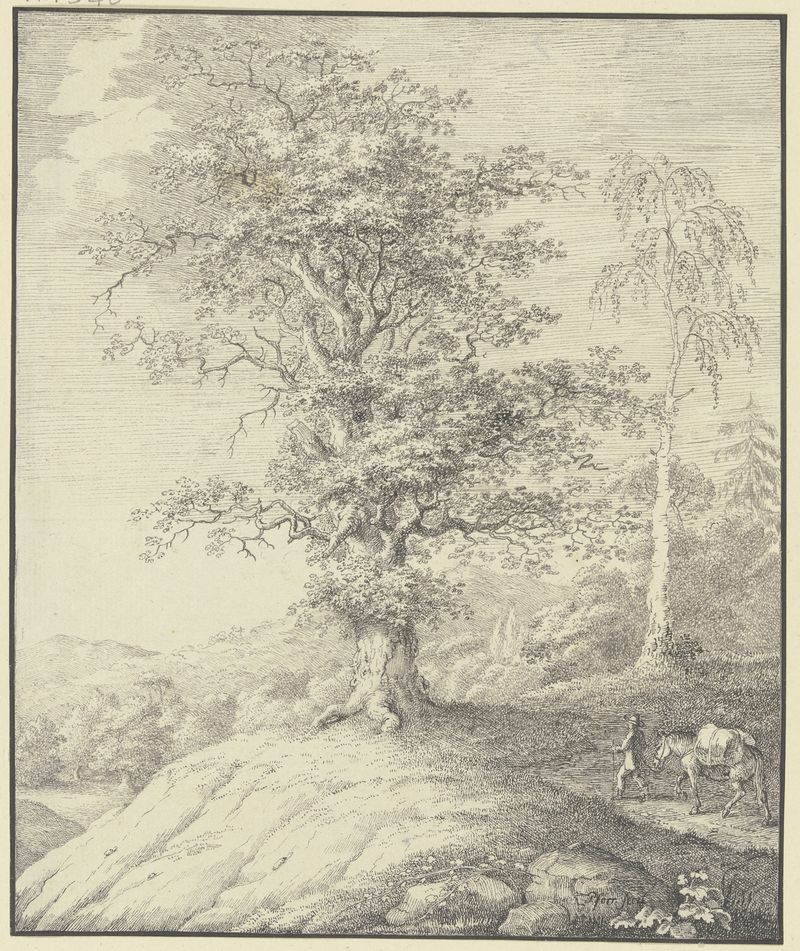
Eichbaum und Birke auf einer Anhöhe, von rechts führt ein Mann ein bepacktes Pferd herbei
Johann Georg Pforr
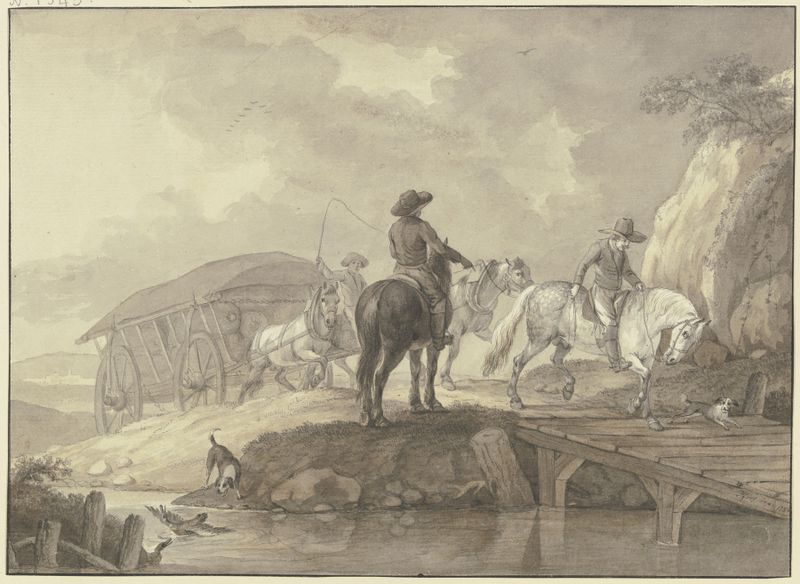
Ein mit Säcken beladener Lastwagen, begleitet von zwei Reitern und zwei Hunden, fährt über eine Brücke
Johann Georg Pforr
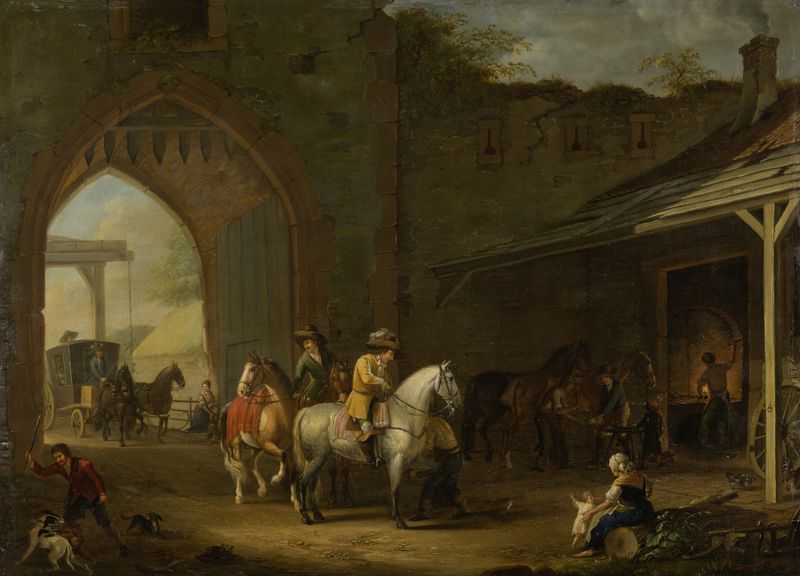
Horsemen at the Blacksmith’s
Johann Georg Pforr
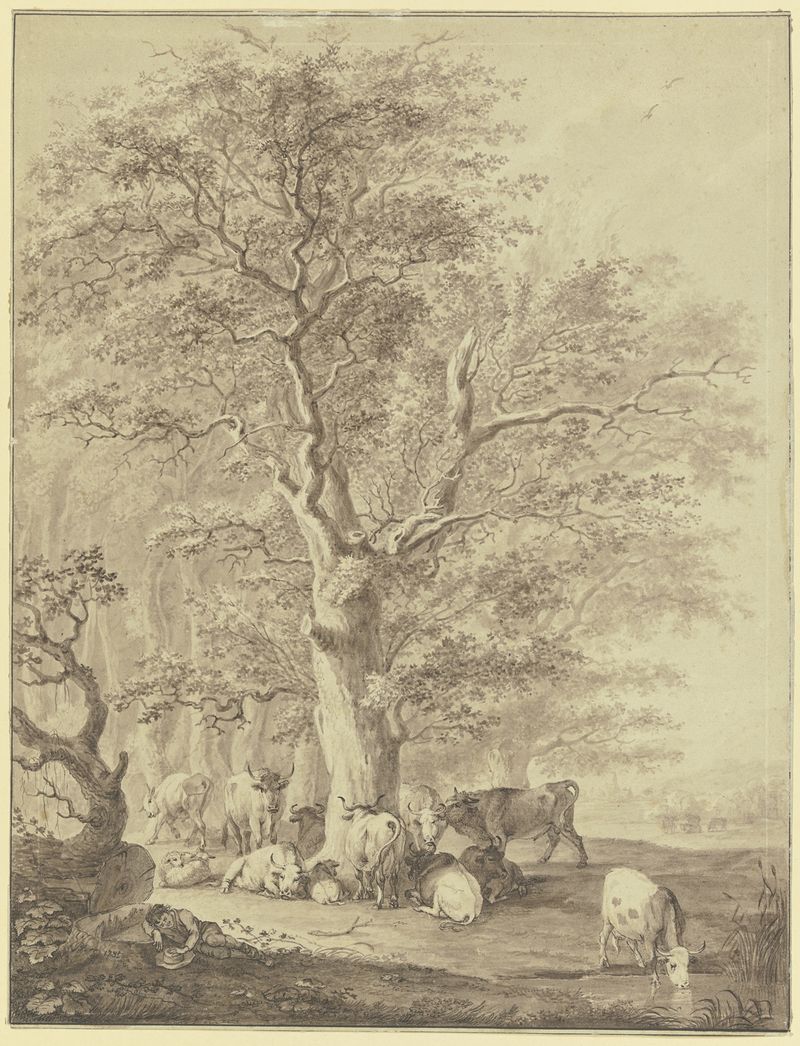
Rinderherde mit zwei Schafen und dem Hirten unter einer Eiche rastend
Johann Georg Pforr

Mondscheinlandschaft an einem Fluß, Hirte und Hirtin treiben das Vieh zum Hof
Johann Georg Pforr
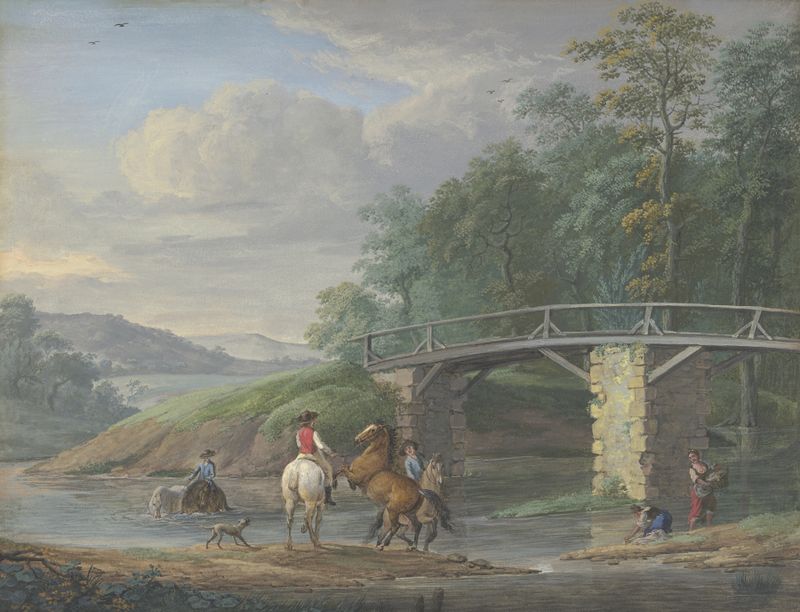
Pferde in der Schwemme bei einer Brücke, rechts zwei Wäscherinnen
Johann Georg Pforr

Viehherde mit zwei Hirten, bei einer Steinbrücke durch das Wasser schwimmend
Johann Georg Pforr





