
Horsemen at the Blacksmith’s — History & Facts
Can paint confess what words never could? In Horsemen at the Blacksmith’s, the tension between creation and decay unfolds vividly, inviting us to ponder the stories woven into every brushstroke. Look to the center of the canvas, where the light catches the rugged features of weary horsemen standing resolute in a chaotic world. The dark, muted palette of browns and grays envelops the scene, while sparks fly from the forge, momentarily illuminating the figures with a crackling energy. Notice how the blacksmith's hammer rises in a poised arc, the fluid motion suggesting both strength and fatigue, as if he battles against the inevitability of rust and ruin. The juxtaposition is compelling: the horsemen, sturdy yet weary, symbolize the burden of life’s struggles, while the blacksmith’s craft represents both creation and the slow march toward decay.
Each character's posture is deliberate—some lean heavily against their mounts, exuding a sense of exhaustion, while others gaze watchfully, caught between anticipation and resignation. The encroaching shadows hint at an inevitable decline, contrasting the fleeting brilliance of the sparks, a visual echo of life’s duality. Johann Georg Pforr painted this work in 1787, during a time when Germany was emerging from the Enlightenment into Romanticism. He was influenced by the burgeoning neoclassical movement, yet his focus on emotional depth and narrative suggests a transition to a more complex exploration of humanity's trials.
This period was marked by a growing interest in the rural and the everyday, and Horsemen at the Blacksmith’s encapsulates that spirit, embodying both craftsmanship and the weight of existence.
More Artworks by Johann Georg Pforr
Browse all →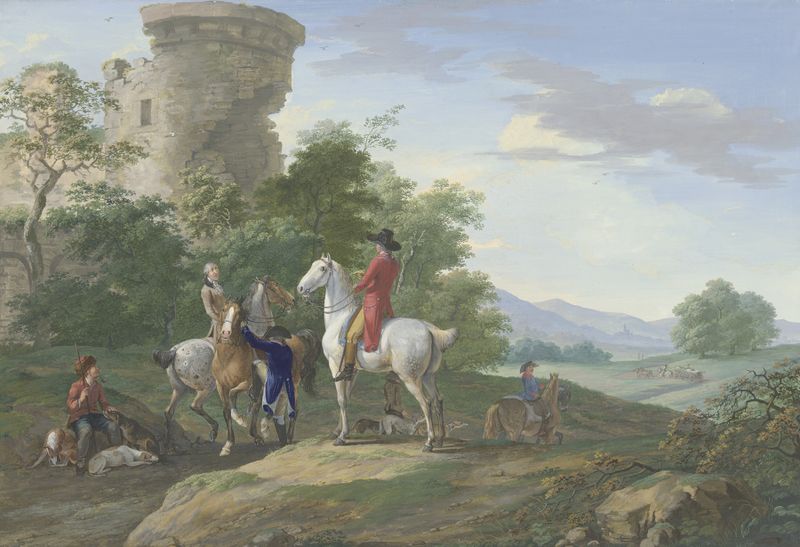
Jäger mit Pferden und Jagdhunden machen bei einer Ruine halt
Johann Georg Pforr
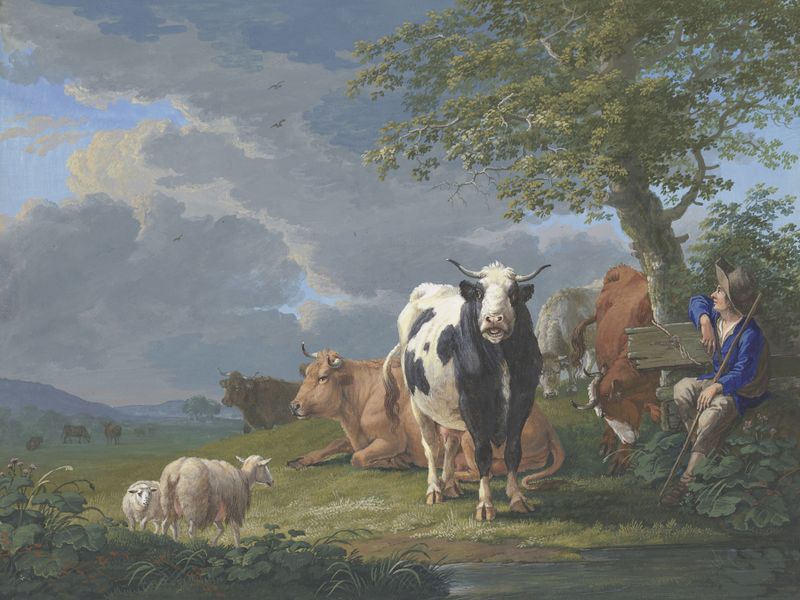
Hirte unter einem Baum mit seiner Rinderherde und zwei Schafen
Johann Georg Pforr
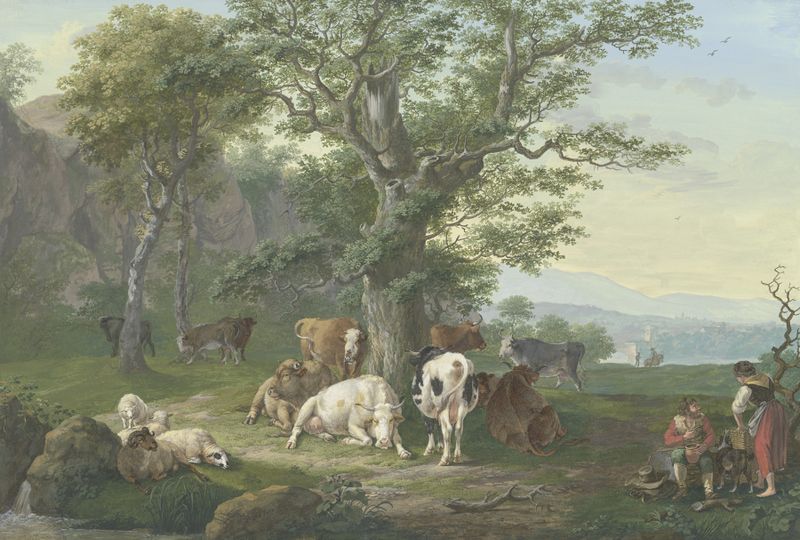
Lagernde Herde unter einer Eiche, rechts Hirte und Hirtin bei der Mahlzeit und Ausblick in die Ferne
Johann Georg Pforr
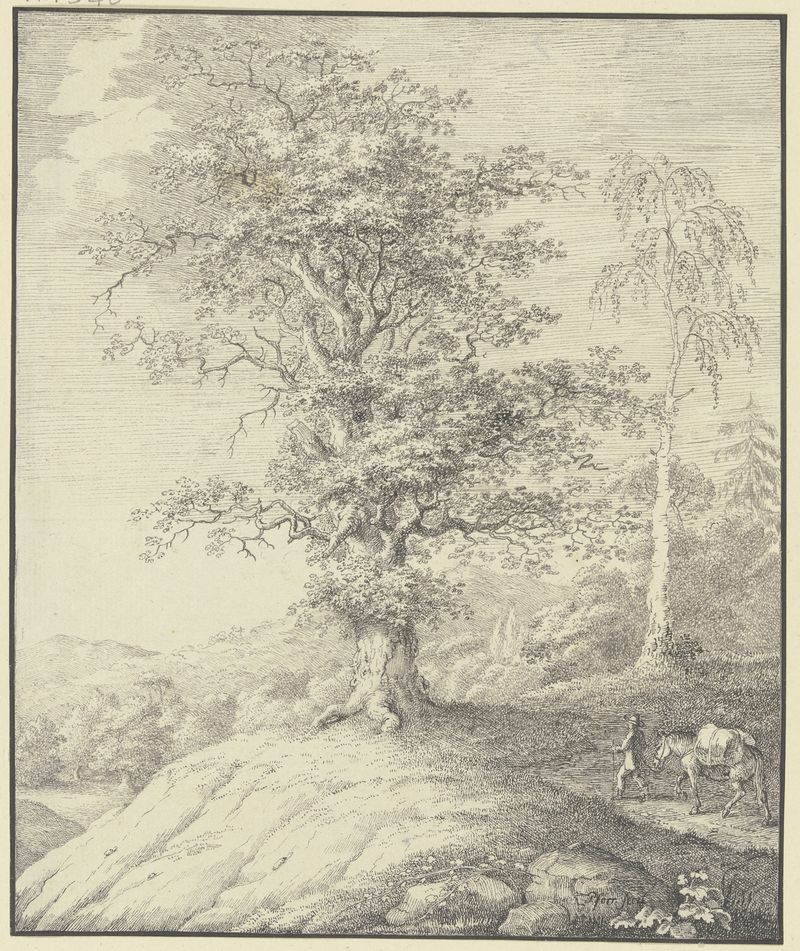
Eichbaum und Birke auf einer Anhöhe, von rechts führt ein Mann ein bepacktes Pferd herbei
Johann Georg Pforr
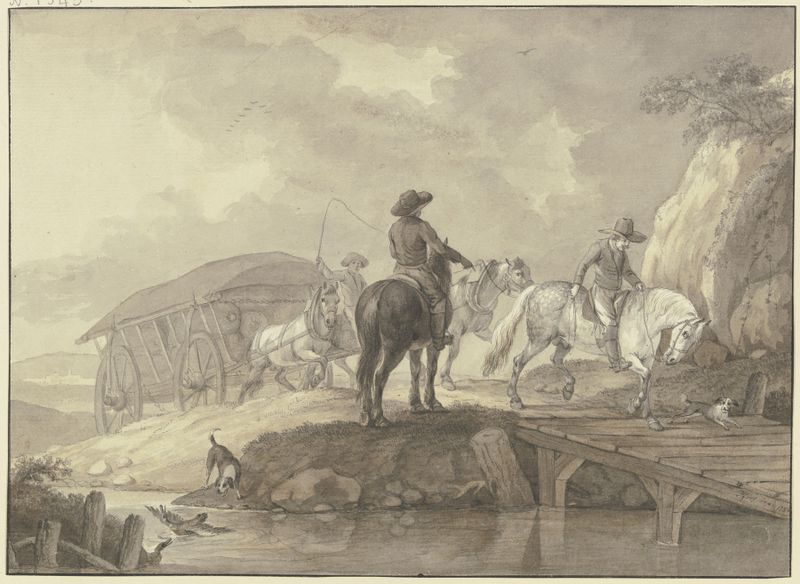
Ein mit Säcken beladener Lastwagen, begleitet von zwei Reitern und zwei Hunden, fährt über eine Brücke
Johann Georg Pforr
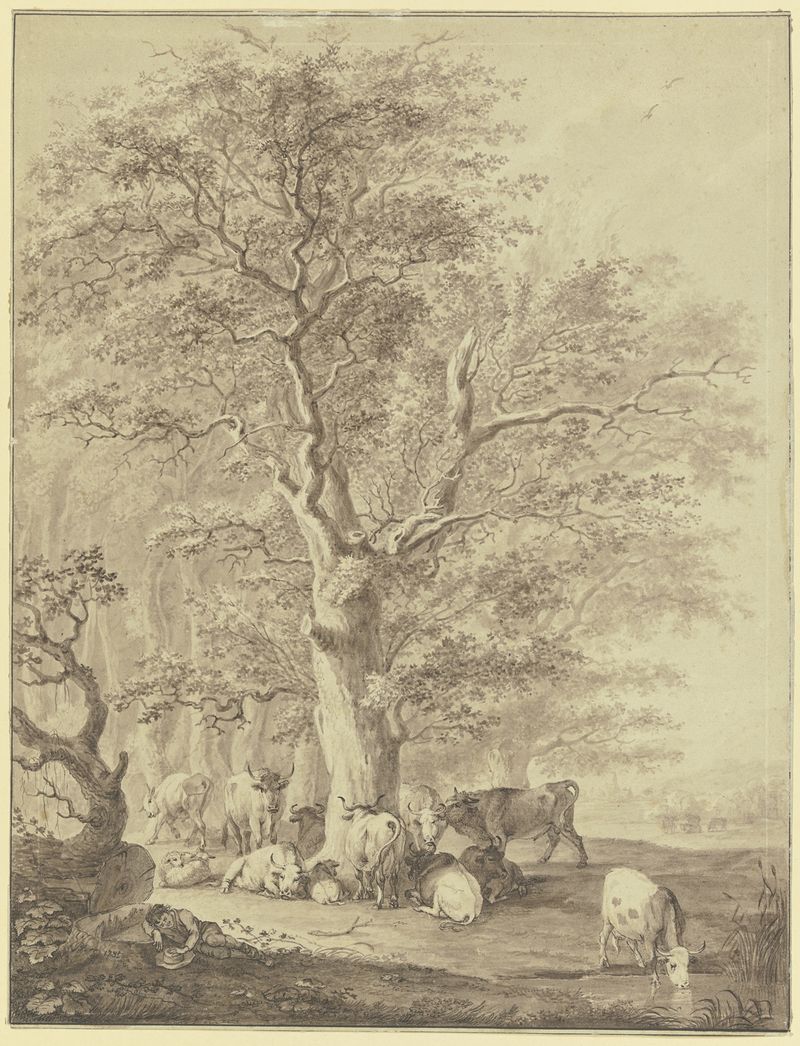
Rinderherde mit zwei Schafen und dem Hirten unter einer Eiche rastend
Johann Georg Pforr

Mondscheinlandschaft an einem Fluß, Hirte und Hirtin treiben das Vieh zum Hof
Johann Georg Pforr
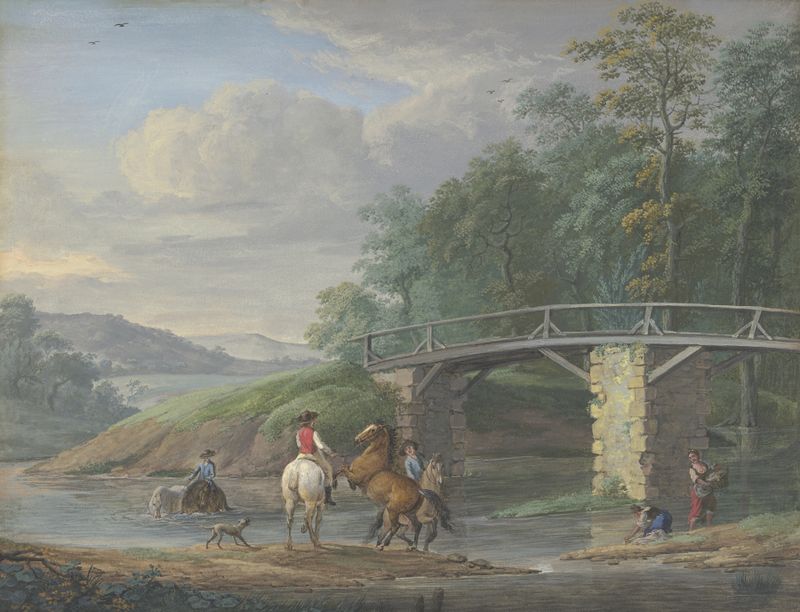
Pferde in der Schwemme bei einer Brücke, rechts zwei Wäscherinnen
Johann Georg Pforr

Viehherde mit zwei Hirten, bei einer Steinbrücke durch das Wasser schwimmend
Johann Georg Pforr
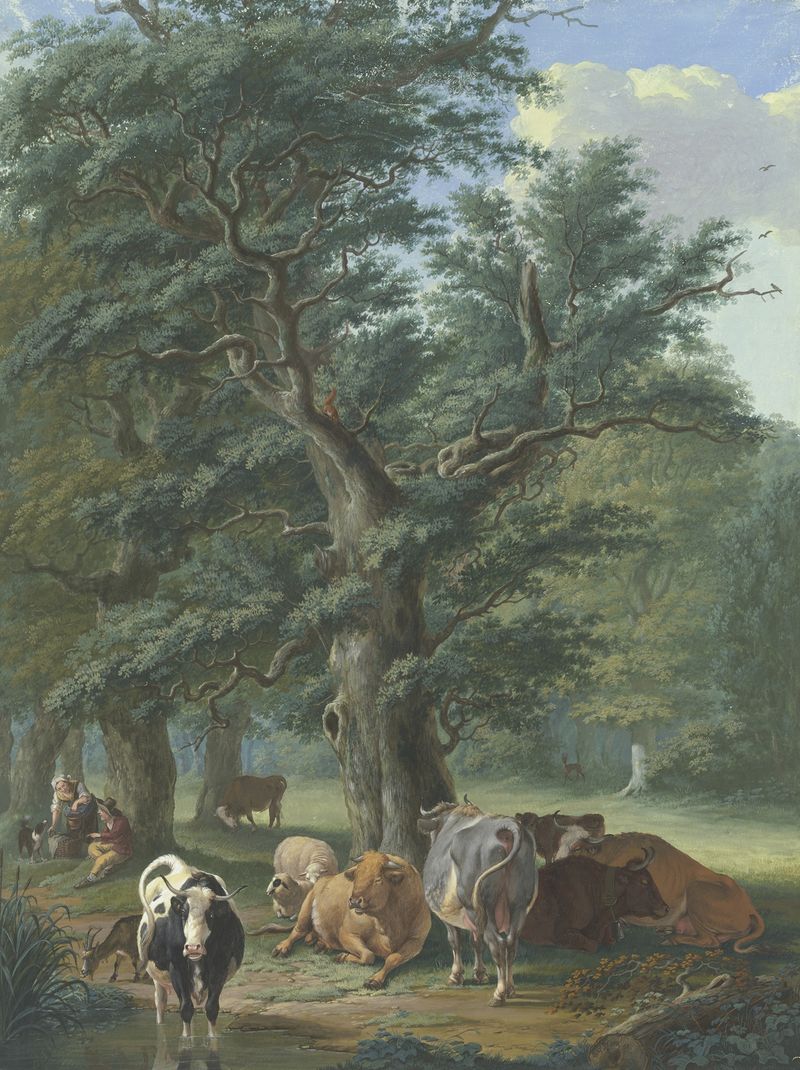
Unter einen großen Eiche ruht Vieh, in der Ferne ein Reh, links bringt eine Frau dem Hirten das Essen
Johann Georg Pforr





