
River Landscape — History & Facts
What if silence could speak through light? In George Barret's River Landscape, the stillness of a tranquil riverside conceals an undercurrent of emotional tension lurking just beneath the surface. Look to the left, where the gentle flow of the river draws your gaze, its smooth surface reflecting the soft hues of twilight. Notice how the trees frame the scene, their dark silhouettes standing guard over the shimmering water, casting long shadows that stretch toward the horizon. The sky, painted in a palette of muted blues and golds, evokes a profound serenity, yet the interplay of light and shadow hints at an unsettling truth—betrayal quietly lurking in the idyllic setting. As you explore the painting further, consider the small figures in the distance, almost insignificant in scale, suggesting isolation amid beauty.
They appear engaged in quiet conversation, yet their body language reads as strained, their postures betraying a sense of unresolved conflict. The juxtaposition of the serene landscape with the figures’ tension creates a poignant contrast, inviting deeper reflection on the fragility of human connections in the face of nature's overwhelming beauty. In 1773, Barret created this work amidst the rise of the romantic landscape movement in England, where nature was celebrated for its beauty and emotional depth. Living in London, Barret was influenced by the shift towards capturing the sublime in art, as well as the turmoil of his personal life.
This period was marked by a fascination with the emotional resonance of the natural world, juxtaposing the serene with the tumultuous, which is embodied beautifully in River Landscape.
More Artworks by George Barret
Browse all →
A wooded landscape with a lake, anglers in the foreground
George Barret
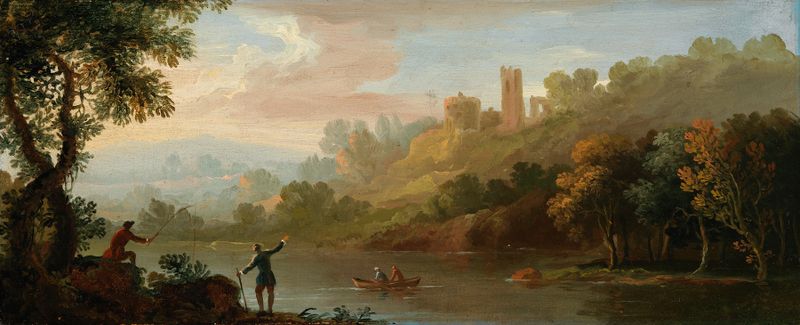
A River Scene
George Barret
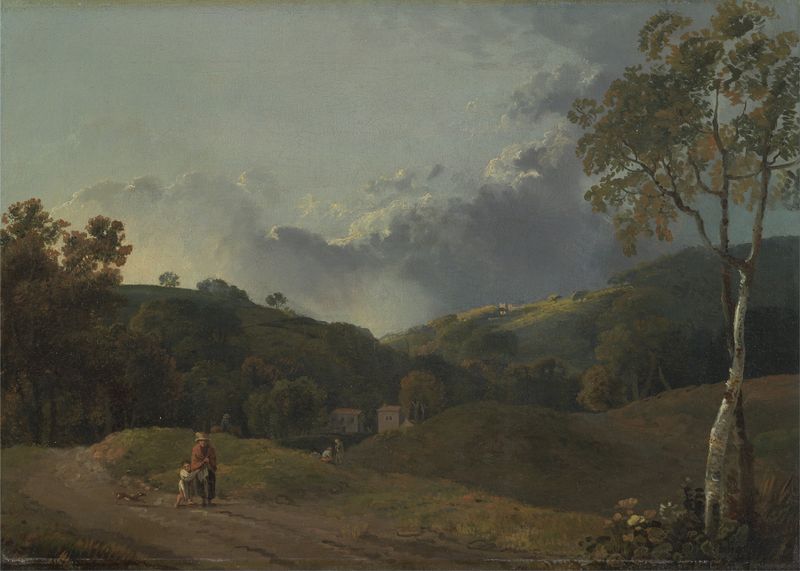
Landscape with Cottagers
George Barret

Landscape with Figures in the Background
George Barret

Morning: Landscape with Mares and Sheep
George Barret

View in a Park
George Barret
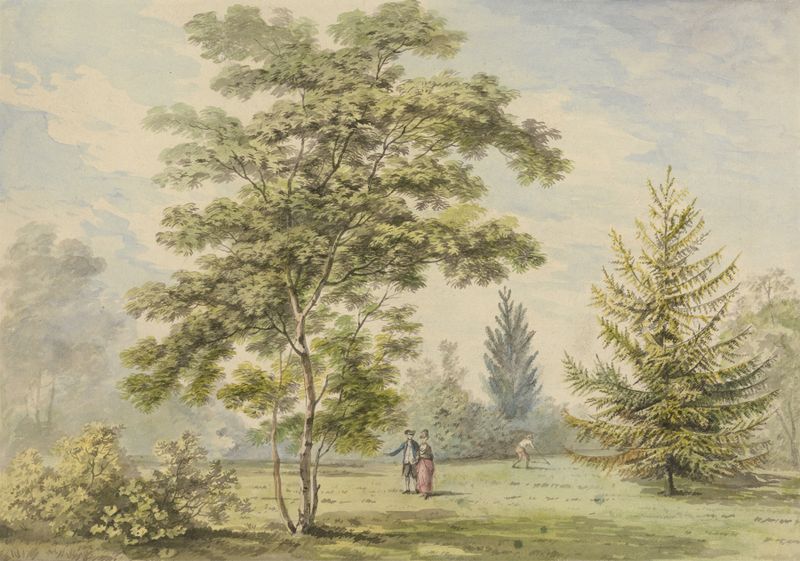
The Acacia Tree, Figures in a Park
George Barret

Timber Wain on a Rough Road
George Barret

Wooded Landscape with a Boy and his Dog
George Barret
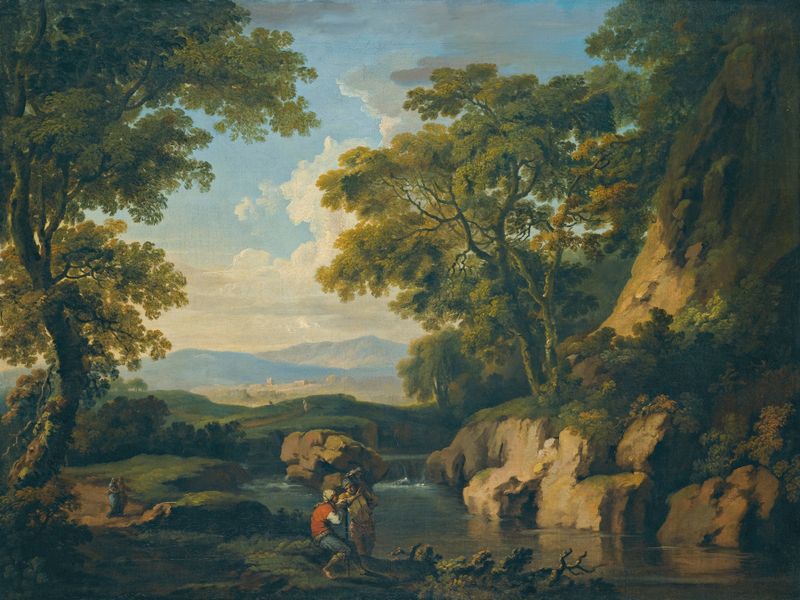
A Mountainous Wooded Landscape With Figures By A River In The Foreground
George Barret





