
River of Thaw — History & Facts
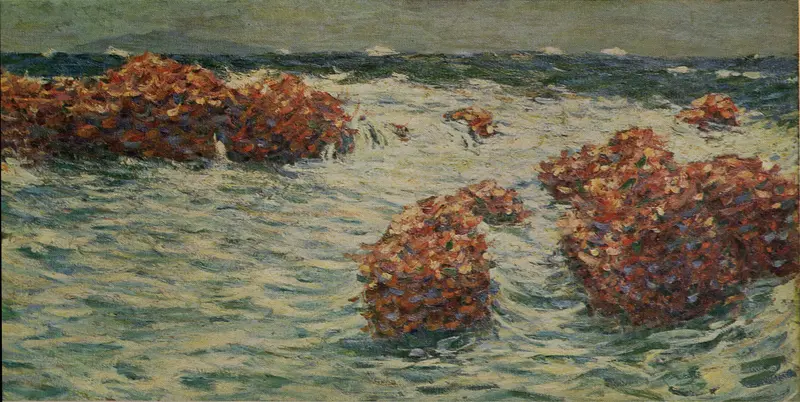
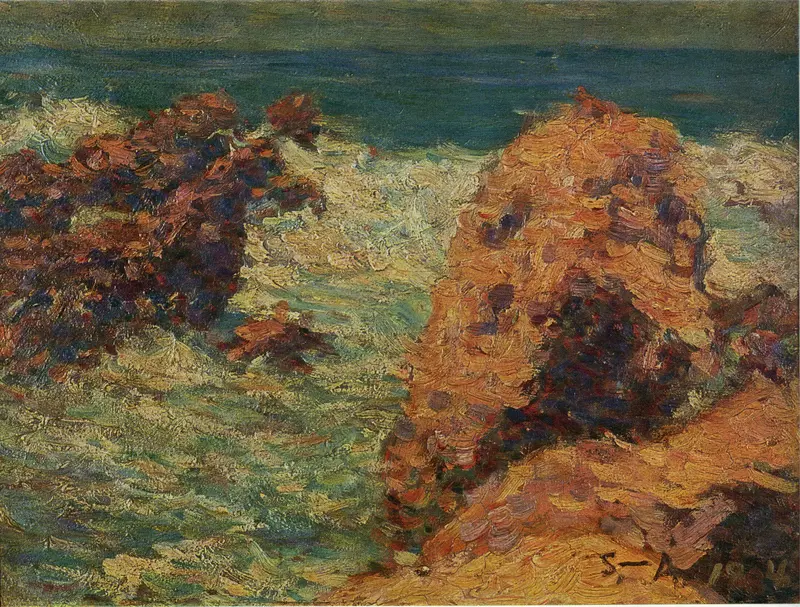
What first catches the eye in River of Thaw is the restless surface at the painting’s base—a river, not calm but alive with the churn of melting ice and the promise of spring’s return. The brushwork is swift and almost rough, as if the artist, Aoki Shigeru, meant to capture not just the scene but the sensation of water breaking free from winter’s grip. The current pulls the gaze toward the center, where a band of green marks the riverbank, blurred and softened by the same thaw that animates the water.
Above, mountains rise, their snowcaps still resisting the season’s change, while the sky is streaked with muted violets and ochres, echoing the unsettled mood below. The palette is earthy and subdued, yet every stroke seems to pulse with the tension between cold and warmth, stillness and movement. Painted around 1906, this work belongs to a moment in Japanese art when painters like Aoki Shigeru were absorbing and reinterpreting Western techniques, yet grounding them in native landscapes and sensibilities. The early twentieth century was a period of rapid transformation in Japan—industrialization, exposure to European art, and a search for new forms of expression.
Landscape painting, once a domain of ink and idealized views, became a field for experimentation and personal vision. River of Thaw survives in the record through a 1963 collection, its medium and journey largely unchronicled, a reminder of how many works from this era exist on the margins of history. Yet its energy and immediacy invite viewers to linger, to imagine the chill in the air and the slow, insistent return of life along the river’s edge.
More Artworks by Aoki Shigeru
More Landscape Art

The Starry Night
Vincent van Gogh

View of Delft
Johannes Vermeer

Water Lilies
Claude Monet

The Grand Canal, Venice, looking north-west from the Ca' Corner to the Ca' Contarini degli Scrigni, with the campanile of Santa Maria della Carità
Canaletto

Windsor Castle
Canaletto

The Grand Canal looking North-East from the Palazzo Dolfin-Manin to the Rialto Bridge
Canaletto