
Riverbank with windmill — History & Facts
This notion echoes through the serene landscape painted before us, where tranquility conceals deeper longings beneath its surface. Focus on the foreground, where the delicate brushstrokes bring to life the shimmering river, reflecting the soft hues of the sky. Notice how the gentle curve of the bank leads the eye towards the windmill, standing tall yet solitary, its blades poised against the backdrop of a fading day. The pastel palette, tinged with muted greens and warm yellows, evokes a sense of nostalgia, inviting contemplation as the light dances across the water's surface. As you delve deeper into the scene, subtle emotional tensions emerge.
The windmill, often a symbol of industriousness, paradoxically represents isolation in this setting. The flowing water suggests movement yet remains unyielding, mirroring an inner struggle between the passage of time and the permanence of longing. The quietude of the landscape contrasts with the unspoken narratives of the people who might have passed through, their presence felt in the silence. Jacob van Strij created this piece during an era when Dutch landscape painting was reaching its zenith, likely in the late 17th century.
Nestled in the Netherlands, he was influenced by both the natural beauty surrounding him and the socio-political climate of the time, which often inspired a sense of yearning for stability and harmony in a changing world. His work captures a moment that transcends mere representation, reflecting the depth of human emotion intertwined with nature.
More Artworks by Jacob van Strij
Browse all →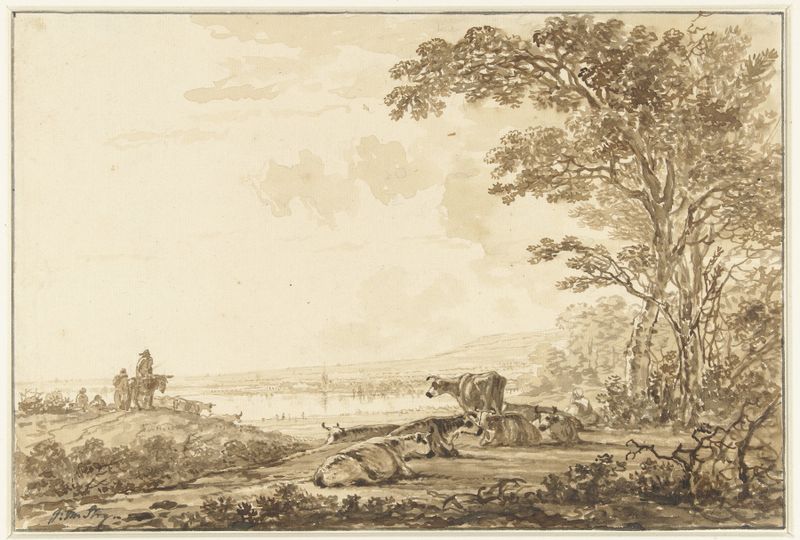
Rivierlandschap met rustend vee
Jacob van Strij
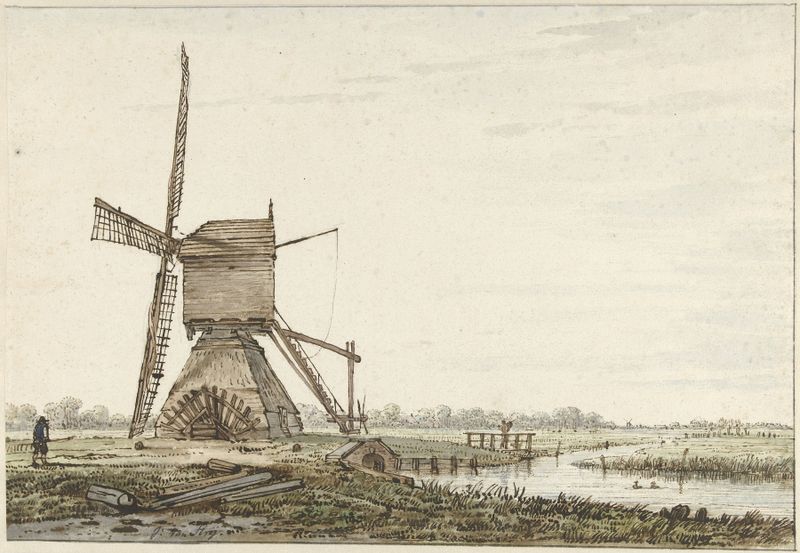
Landschap met poldermolen
Jacob van Strij

Milking Time
Jacob van Strij
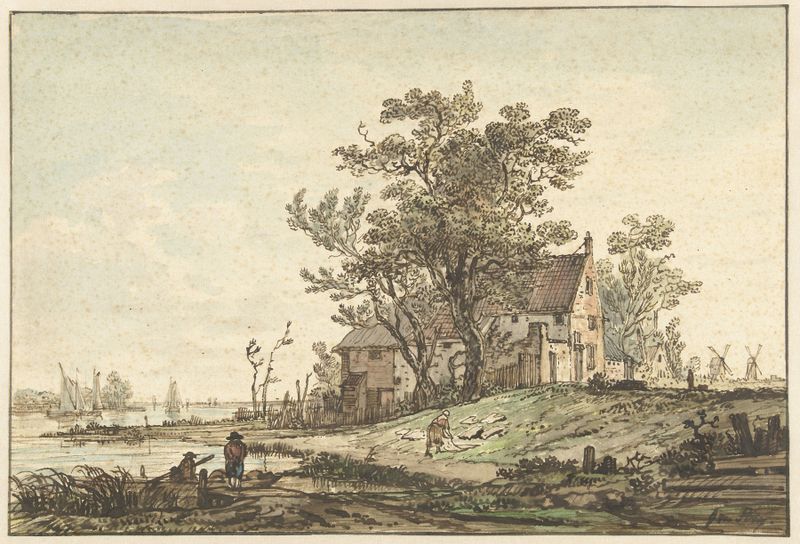
Oude boerderij aan een rivier
Jacob van Strij

Paysage arboré avec figures et maisons au bord du rivage
Jacob van Strij

Landscape with Peasants with their Cattle and Anglers on the Water
Jacob van Strij

Italianisierende Landschaft mit einem Hirten
Jacob van Strij
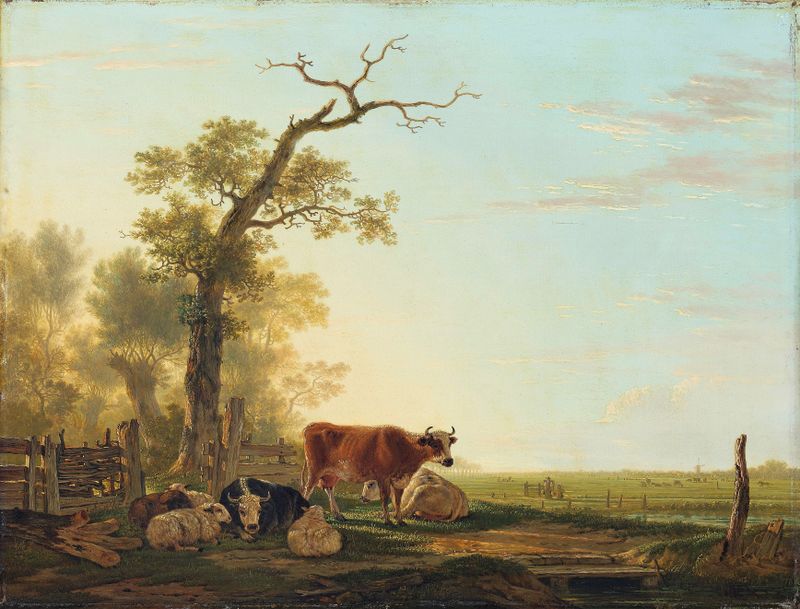
Meadow Landscape with Animals
Jacob van Strij
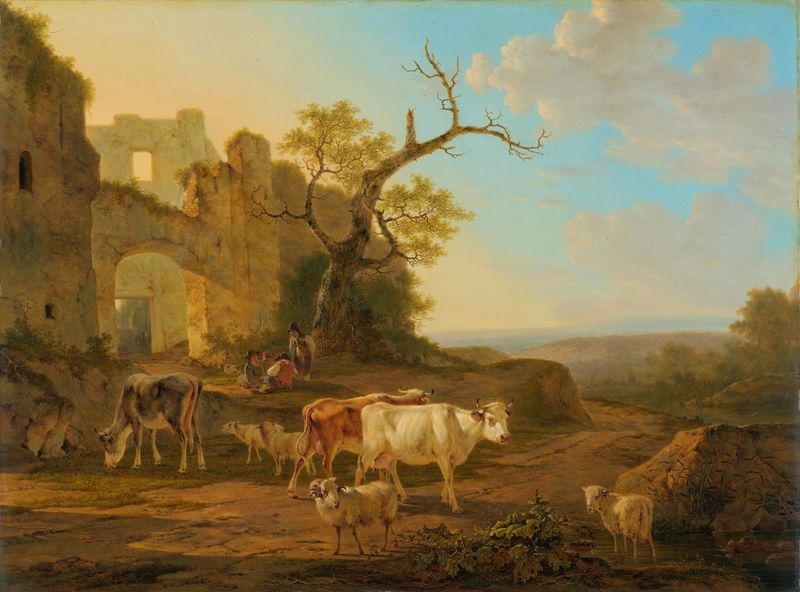
Landscape with Cows near a Ruin
Jacob van Strij
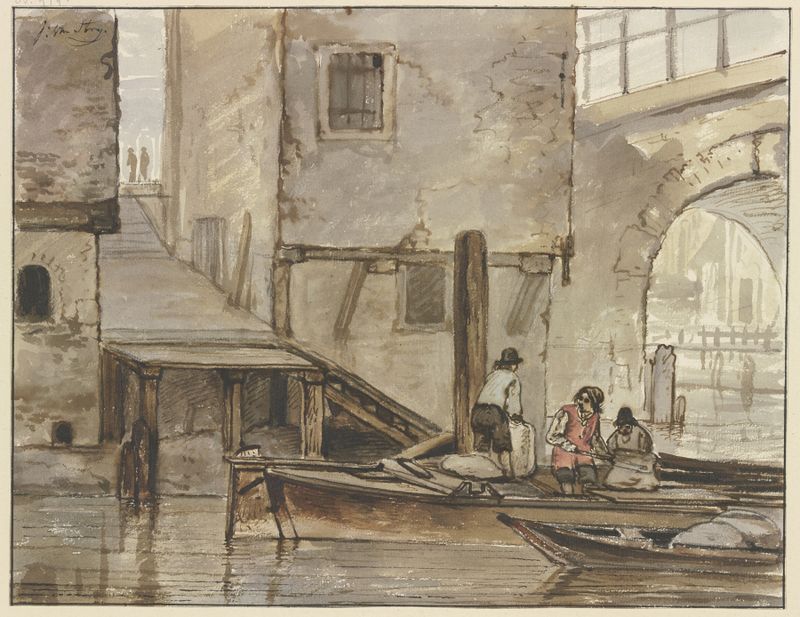
Gracht mit zwei Ruderbooten
Jacob van Strij





