
Riviergezicht met ruïne — History & Facts
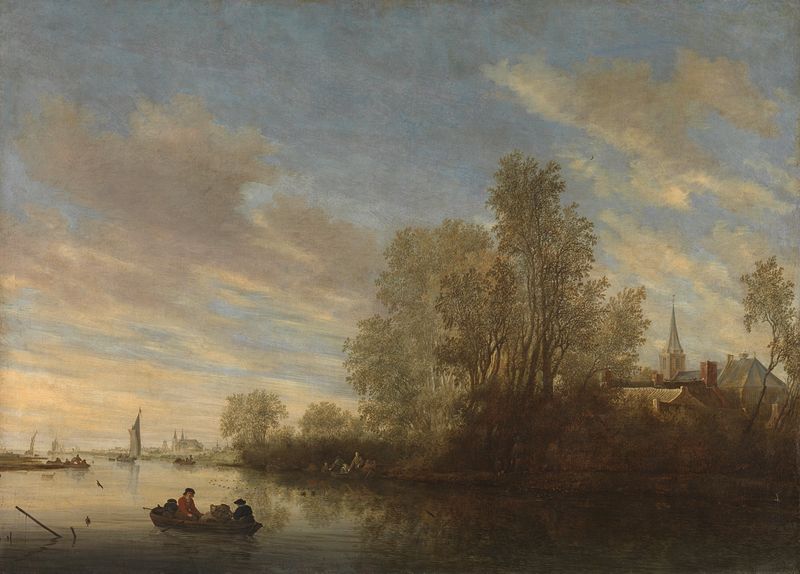
What if beauty was never meant to be finished? In a world where nature unravels and transforms with relentless vigor, there lies a haunting tension beneath the serene surface. Look to the left at the weathered ruins, bathed in soft, muted light that seems to frame their decay. The twisted branches and tangled foliage speak of an unyielding struggle against time, while the river meanders gently, reflecting the sky’s pale hues. Notice how the artist employs a rich palette of greens and browns, contrasting the vibrant life surrounding the dilapidated structure with the desolate remnants of human endeavor.
The calm surface of the water belies the violent history that once echoed through the landscape. This composition reveals a disquieting duality: the tranquil beauty of nature coexists with the whispers of destruction. The ruins, although still captivating, serve as a grim reminder of how time erodes even the most triumphant of creations. The painter’s delicate brushwork captures the fleeting moments of light piercing through the clouds, suggesting that beauty is transient, forever entwined with loss and decay. Created in 1647, this artwork emerged during a period when Salomon van Ruysdael was exploring landscape painting's potential, distinct from his contemporaries.
At this time, he was a prominent figure in the Dutch Golden Age, navigating an art world captivated by realism and the sublime. The blend of nature and ruin in his work reflects not only his personal insights but also the broader societal tensions of an era transitioning through abundance and instability.
More Artworks by Salomon van Ruysdael
Browse all →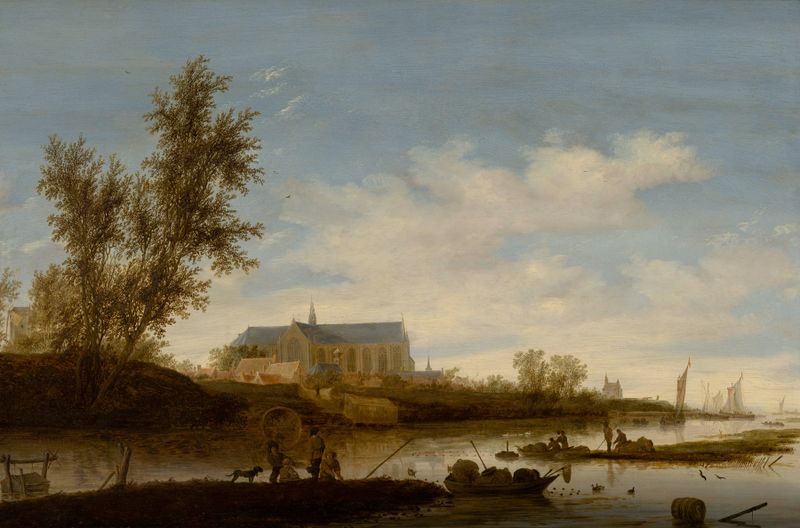
River landscape with fishermen in the foreground, the Laurenskerk in Alkmaar beyond
Salomon van Ruysdael

River Landscape with a View of Naarden
Salomon van Ruysdael
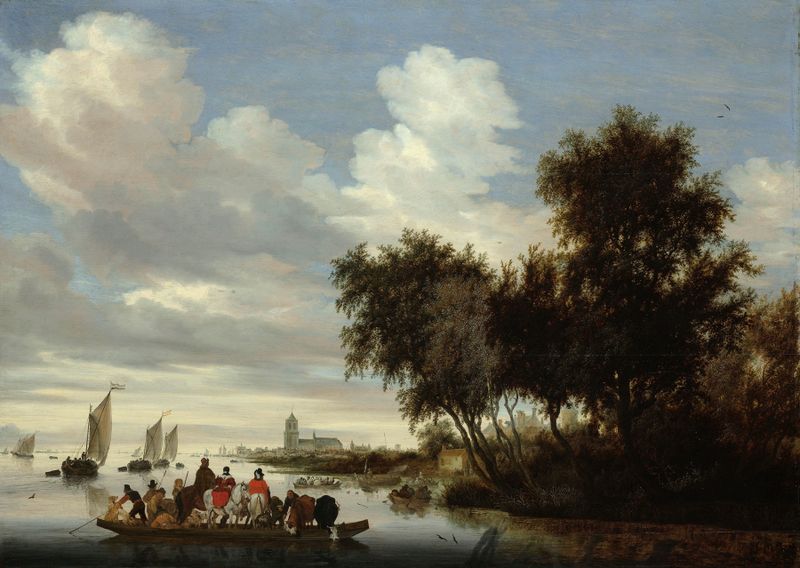
River Landscape with Ferry
Salomon van Ruysdael
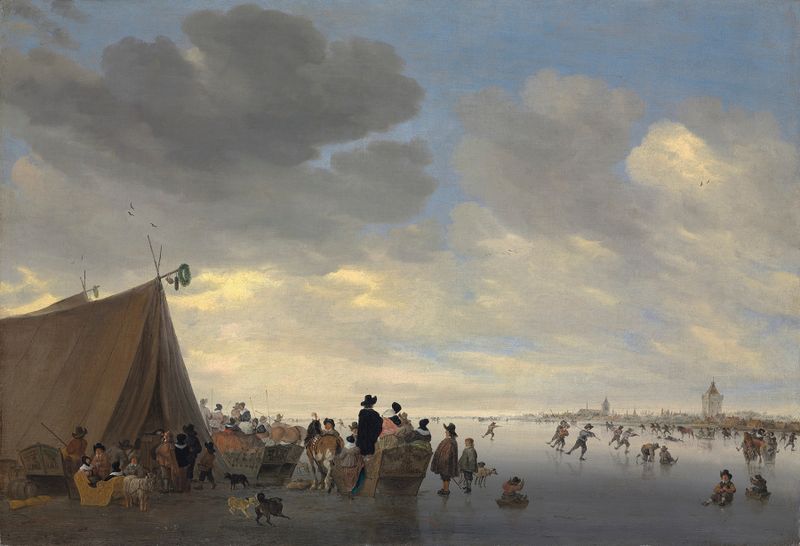
Skaters on the frozen river Lek, the town of Vianen beyond
Salomon van Ruysdael
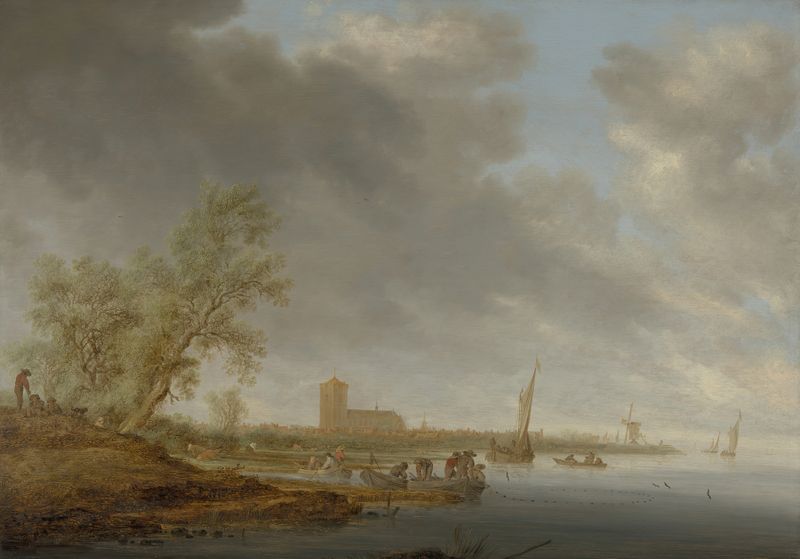
River Landscape with a View of Naarden
Salomon van Ruysdael
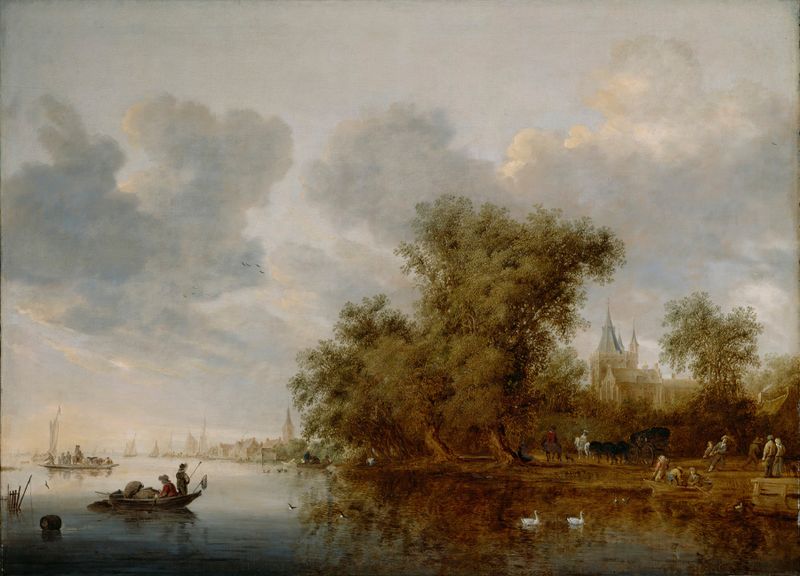
River Landscape
Salomon van Ruysdael
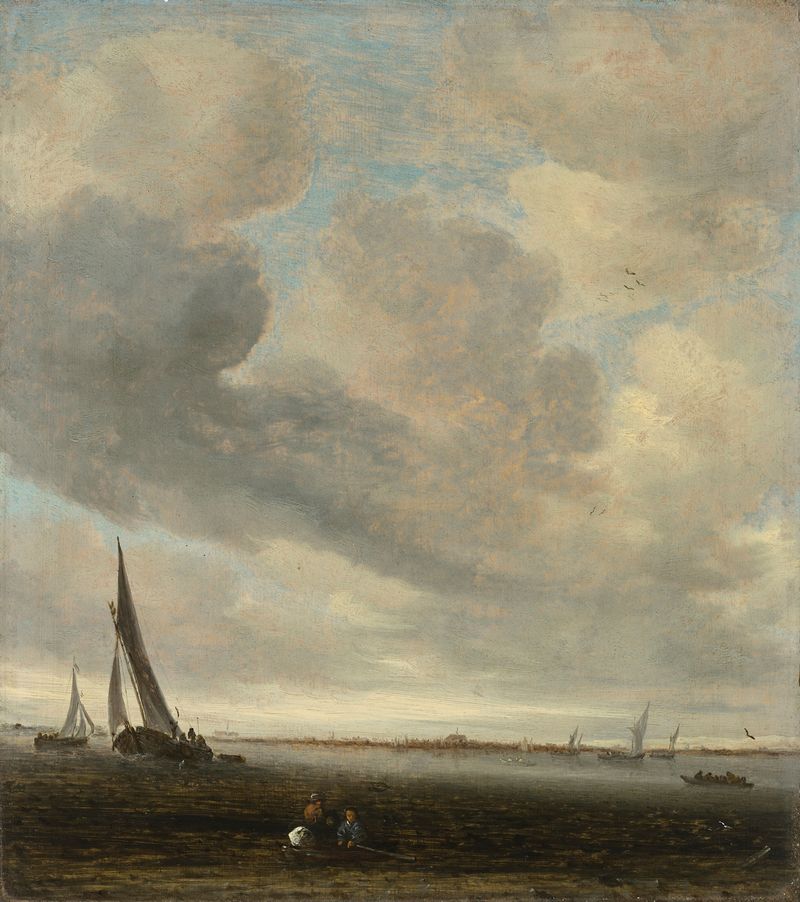
An estuary scene with a distant view of Haarlem
Salomon van Ruysdael
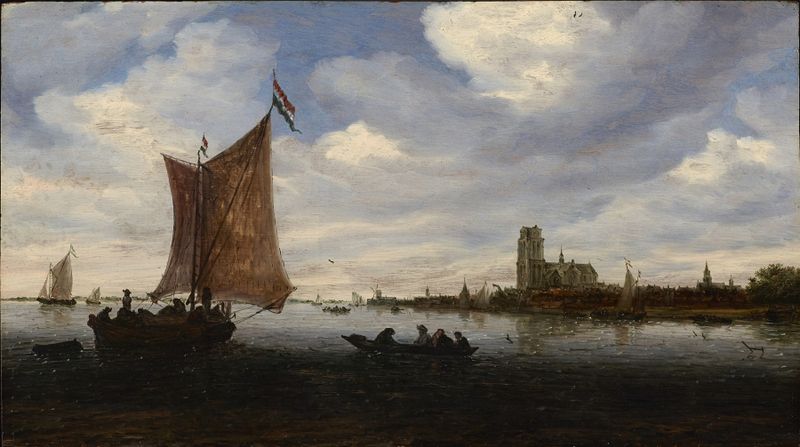
View of Dordrecht
Salomon van Ruysdael
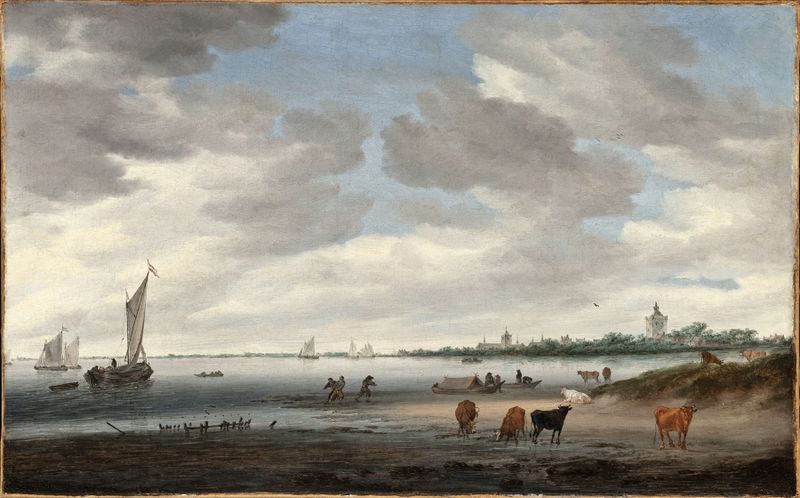
View of the River Lek and the Town of Vianen
Salomon van Ruysdael
River View near Deventer
Salomon van Ruysdael





