Road in the Woods with Staffage Figures — History & Facts
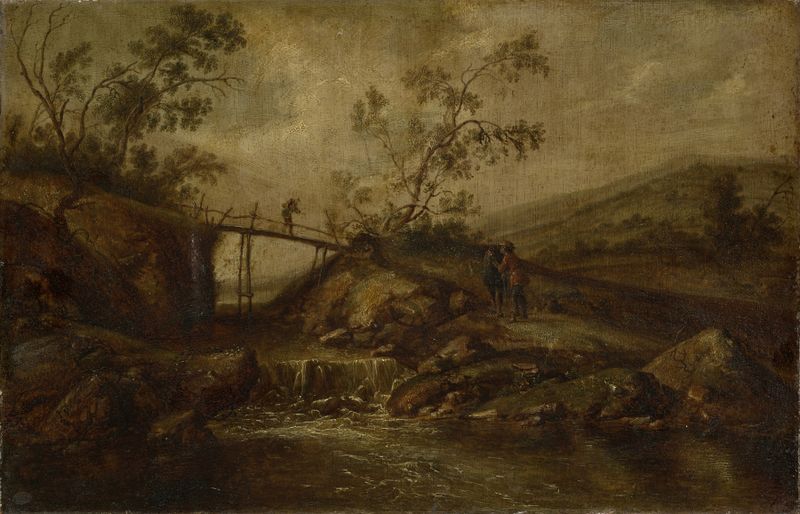
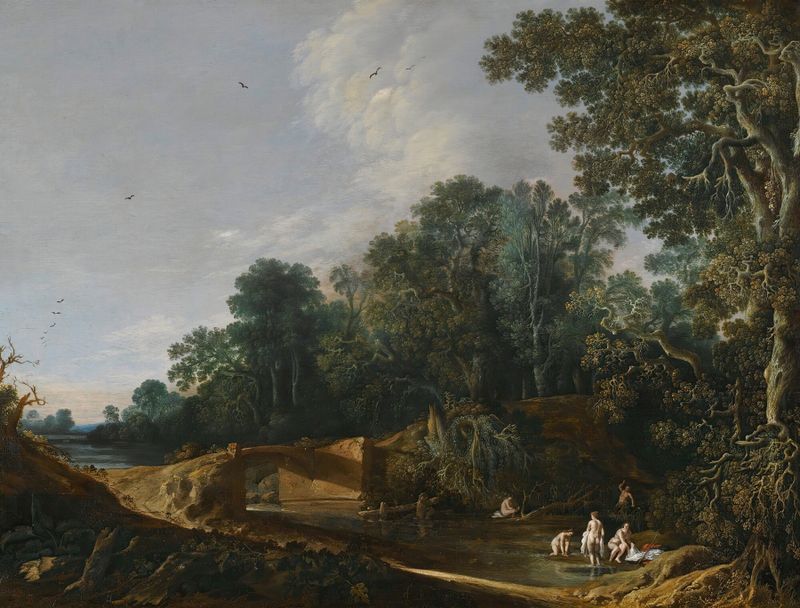
In Road in the Woods with Staffage Figures, a serene path beckons those who seek introspection amid the chatter of life. The landscape, a gentle invitation, speaks volumes about the interplay between nature and humanity. Look to the center of the canvas, where a winding road gently carves its way through a lush, green forest. Notice how the dappled light filters through the leaves, casting intricate patterns on the ground, creating a sense of tranquility.
The figures, subtle yet significant, are positioned along the path, their movements animated as they engage with the surrounding beauty, drawing your gaze further into the depths of the woodland. As you observe, consider the contrast between the warmth of the figures and the cool embrace of nature. Each figure appears almost ethereal, suggesting a connection to the environment that transcends mere presence. The tension between man and nature presents an underlying narrative about coexistence, while the quietude of the scene captures a fleeting moment of reflection and connection that often eludes us in our fast-paced lives. François van Knibbergen created this evocative piece during a time when the Dutch Golden Age was flourishing, though the exact date remains uncertain.
This era was marked by a burgeoning interest in landscape painting, as artists sought to explore the relationship between humankind and the natural world. Van Knibbergen’s nuanced approach to depicting figures amidst nature reflects the broader artistic movement of his time, capturing the delicate balance between the two realms.