
Rock at Berchtesgaden — History & Facts
Could beauty survive in a century of chaos? In a world teetering on the brink of uncertainty, the breathtaking landscapes beckon us to awaken to their profound truths. Look to the left at the majestic stone formation that dominates the foreground, its intricate textures bathed in soft, golden light. The rich greens of the foliage cradle the rocky base, creating a tranquil harmony that contrasts with the sharpness of the mountain's silhouette. Notice how the sky, a vibrant cascade of blues and whites, embraces the peaks, suggesting a fleeting moment of clarity amidst the tumultuous realities of existence.
Each brushstroke evokes a gentle caress, inviting the viewer into a serene dialogue with nature. As you delve deeper, the interplay of light and shadow reveals the duality of peace and turmoil inherent in the landscape. The imposing rock is a steadfast sentinel, embodying resilience, while the lush valley below hints at life’s fragility, caught in the throes of change. This juxtaposition forces a reflection on the enduring beauty of nature even as human conditions spiral into disarray, offering solace and a reminder that hope can thrive in the unlikeliest of places. During this period of uncertainty, the artist created this piece, likely in the early to mid-19th century, when Europe was engulfed in social and political upheaval.
Fearnley, a Norwegian painter deeply influenced by the Romantic movement, sought refuge and inspiration in nature’s sublime landscapes, capturing its ability to evoke emotion and provoke thought. In Rock at Berchtesgaden, he encapsulated a moment where beauty confronts chaos, a dialogue that resonates through the ages.
More Artworks by Thomas Fearnley
Browse all →
Norwegian Landscape, Marumfoss
Thomas Fearnley

View of the Oslofjord
Thomas Fearnley

Gudvangen
Thomas Fearnley

Stormy Landscape with a Rider
Thomas Fearnley
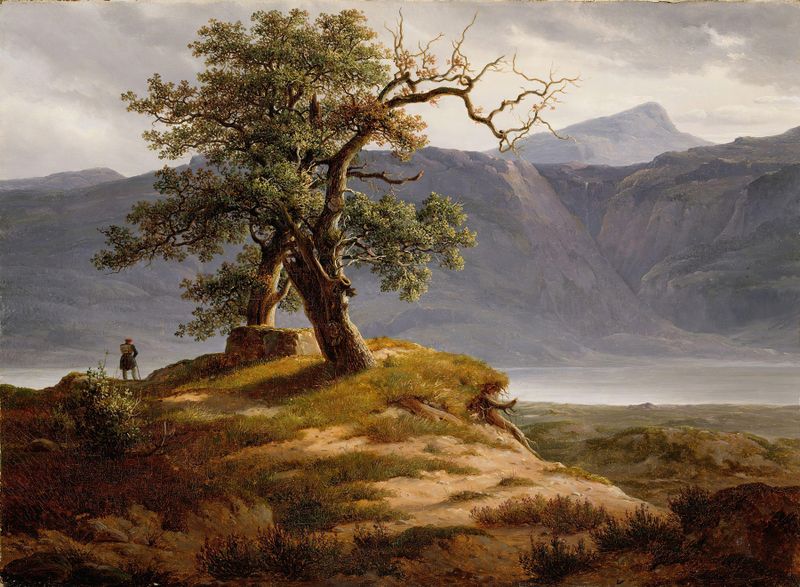
Landscape with a Wanderer
Thomas Fearnley
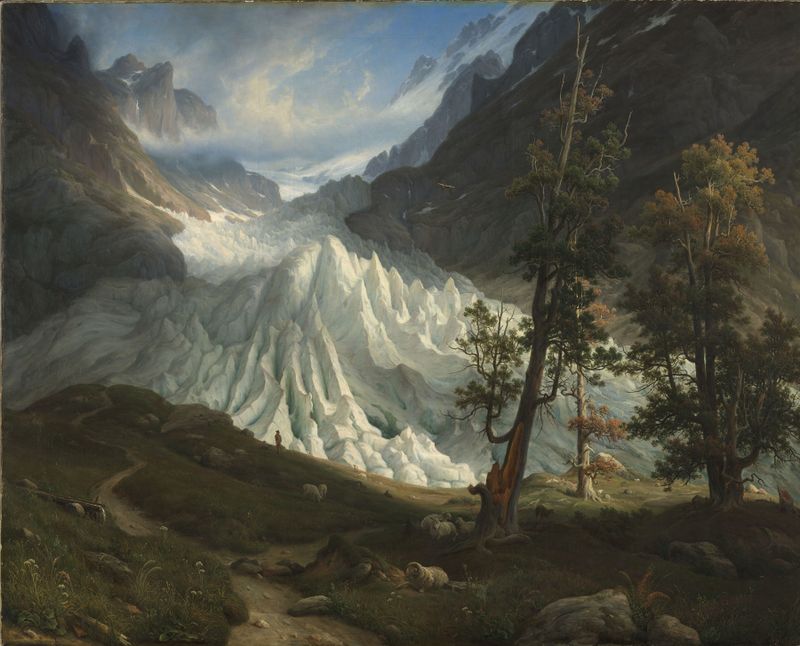
The Grindelwaldgletscher
Thomas Fearnley

Clouds over the Fjord
Thomas Fearnley
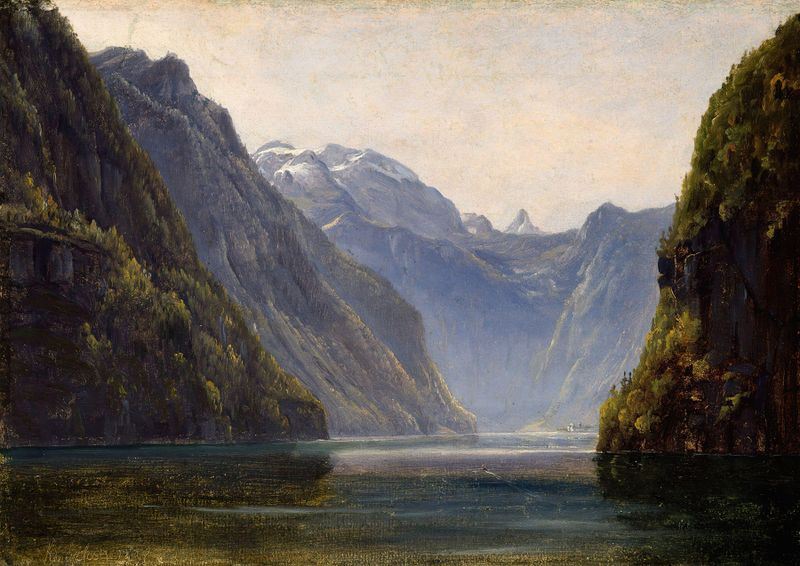
From Königssee
Thomas Fearnley

The Bridge of Hauge outside Arendal
Thomas Fearnley

King Vilhelm II’s ceremonial Processsion in Amsterdam in 1840
Thomas Fearnley





