
Roman Prison — History & Facts
When did color learn to lie? In the depths of the human experience, obsession twists reality, transforming the vibrant into the sinister. Look to the top left, where the muted palette of browns and grays washes over the oppressive stone walls of the prison. The heavy shadows cloak the figures, allowing only the faint flicker of light to reveal the contours of despair etched on their faces. Notice how the artists use chiaroscuro to enhance the emotional weight, drawing your gaze toward the weary expressions absorbed in hopelessness, yet illuminated by an almost spectral light that hints at their suppressed desires. The tension in this work lies in the juxtaposition of confinement and yearning.
Each figure is trapped not only by physical barriers but also by the emotional shackles of longing and regret. The locked doors are symbolic of their lost freedom, while the forlorn gazes reach toward the unseen world outside, suggesting an obsession with escape and redemption. The artist's decision to render their surroundings in ghostly hues speaks to the psychological entrapment experienced by the imprisoned souls. In the second half of the 18th century, this artwork emerged from a time of profound social upheaval in France.
The artist, part of a burgeoning movement that increasingly questioned authority and the human condition, sought to explore the darker facets of existence. Surrounded by revolutionary fervor, the French School produced compelling images that reflected the collective psyche, harnessing both beauty and horror to comment on the obsessions that bind us all.
More Artworks by French School
Browse all →
Architectural Landscape with Belisarius Receiving Alms
French School
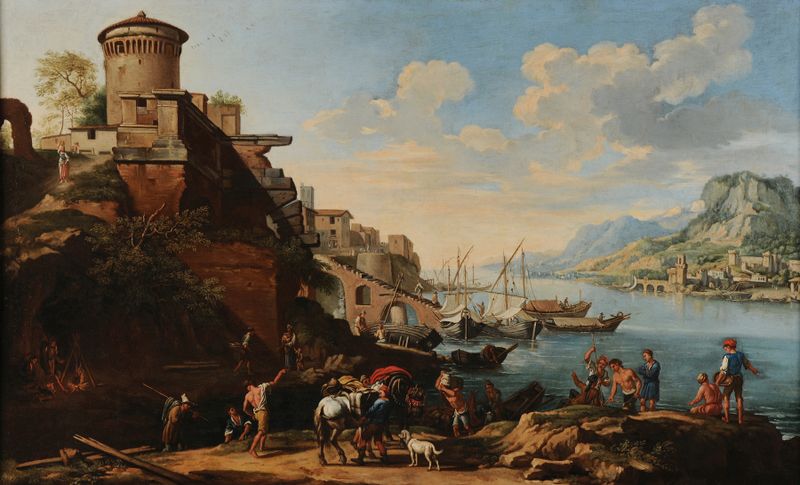
Paysage
French School

The Ponte Salario with Laundresses
French School

Still Life with Eggs and a Leg of Mutton
French School

The Carousal (Scene from Faust?)
French School

The Cave Of Neptune At Tivoli
French School

Portrait of a Lady
French School

A river landscape with figures by ruins
French School
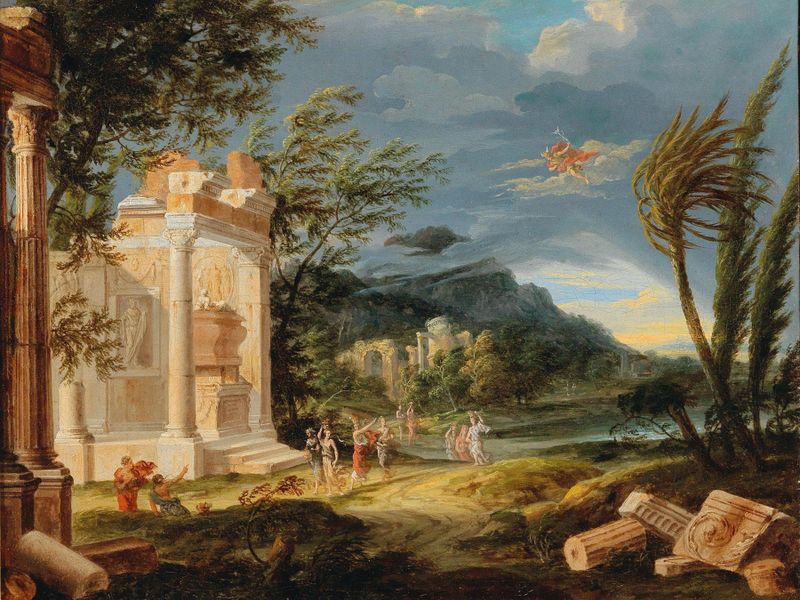
Stormy Landscape with figures and Hermes
French School

Portrait of an Artist
French School
More Historical Art
Browse all →
The Night Watch Militia Company of District II under the Command of Captain Frans Banninck Cocq
Rembrandt van Rijn

Lincoln Memorial
Henry Bacon

The Third of May 1808
Francisco de Goya

Isaac and Rebecca, Known as ‘The Jewish Bride’
Rembrandt van Rijn

The Charge of the Mamelukes (1814)
Francisco de Goya

De vier ruiters van de apocalyps
Albrecht Dürer