Rosa Inermis (Thornless Rose) — History & Facts
The eye is drawn first to the lush, layered bloom at the heart of Rosa Inermis (Thornless Rose), a specimen so meticulously rendered that each petal seems to hold its own quiet weight. The artist, Pierre-Joseph Redouté, invites us to pause at the fullness of the central rose, then follow the elegant arc of the stem upward to the tightly furled buds—promises of future blossoms. The leaves, crisp and veined, are arranged with botanical precision, yet their subtle variations in green suggest a living plant, not a mere diagram.
The absence of thorns, noted in the title, is not just a botanical curiosity but a visual relief: the stem’s smoothness lends the composition a sense of gentle accessibility, as if the flower offers itself without reservation. The creamy background isolates every detail, letting the rose float in a space where time and decay seem suspended. Works like this belong to a world where science and art moved hand in hand, especially in the late eighteenth and early nineteenth centuries, when botanical illustration flourished as both a tool for knowledge and a form of beauty. Redouté, celebrated as the “Raphael of flowers,” created such images for royal patrons and scientific publications alike, his watercolors prized for their clarity and grace.
This particular piece, now in a private collection and documented at a Belgian auction in 2010, stands in the tradition of botanical plates meant to educate as much as delight. History has kept few traces of the individual stories behind many of these works, but their purpose endures: to let viewers marvel at the artistry of nature, and at the human hand that records it so faithfully. Look again at the rose—how much can be discovered in a single stem, when seen through the eyes of an artist who understood both science and wonder.
More Artworks by Pierre-Joseph Redouté
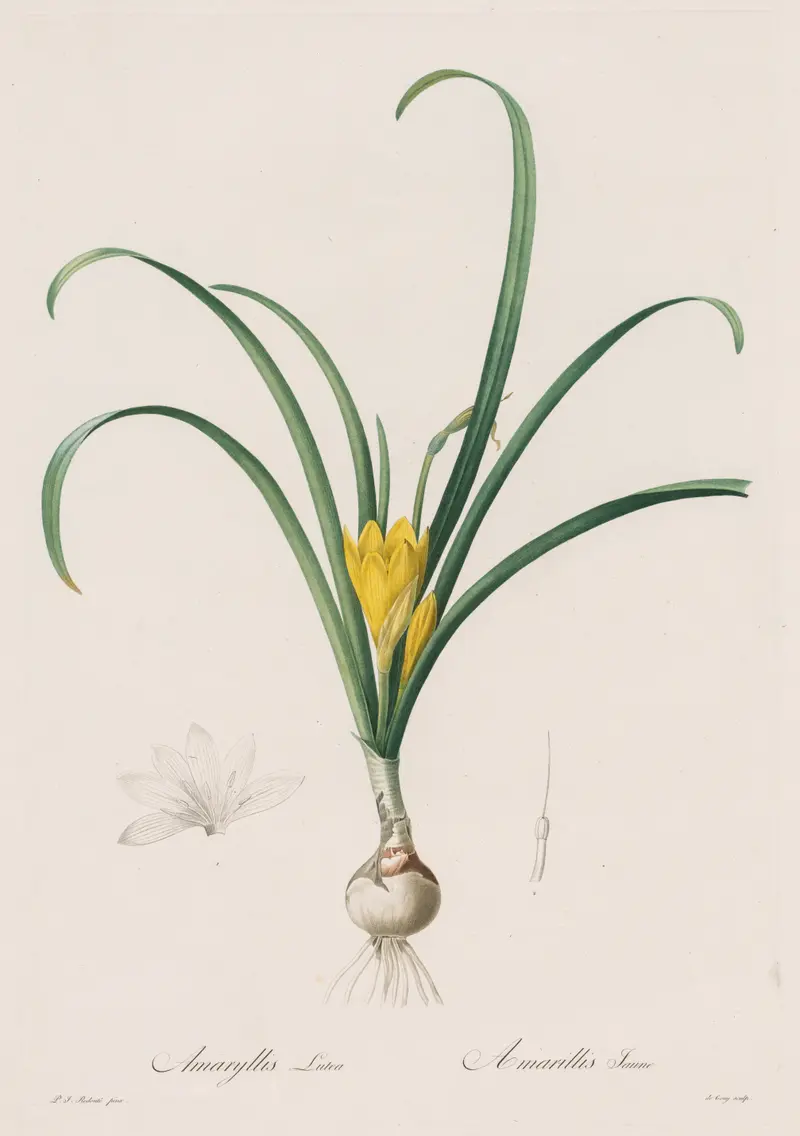
Amaryllis lutea (Les Liliacées)
Pierre-Joseph Redouté
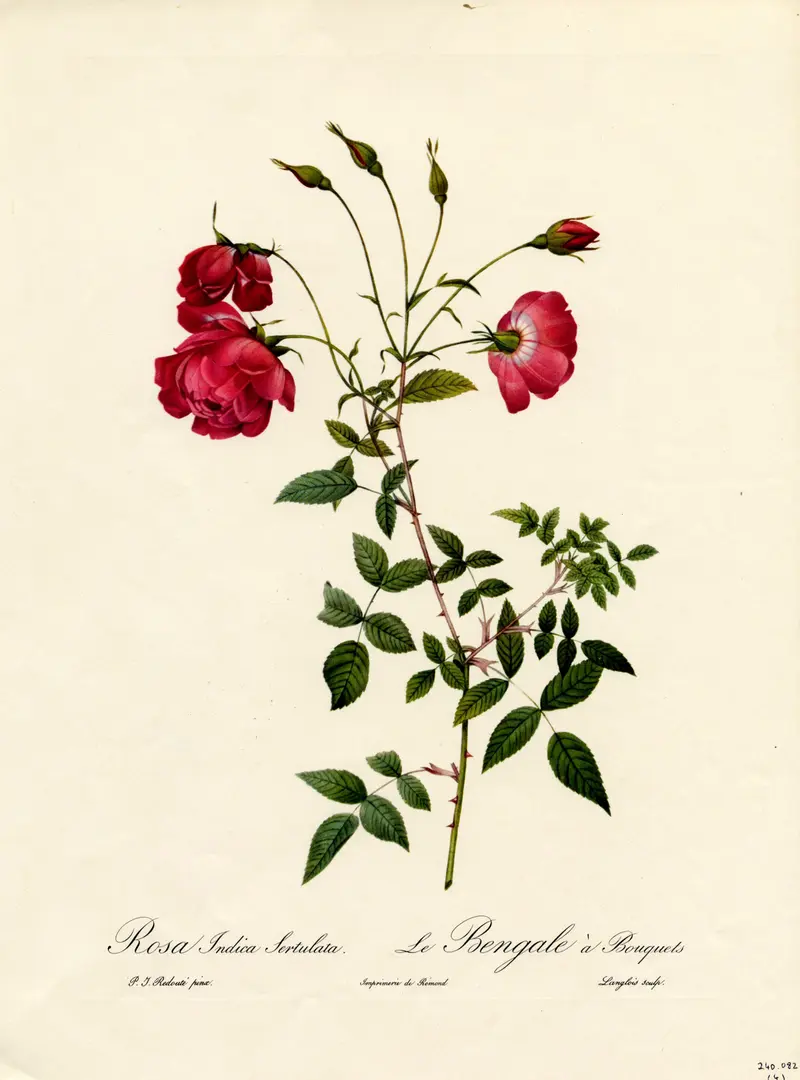
Rosa Indica Sertulata (Bengal Rose)
Pierre-Joseph Redouté

Rosa Centifolia Foliacea
Pierre-Joseph Redouté
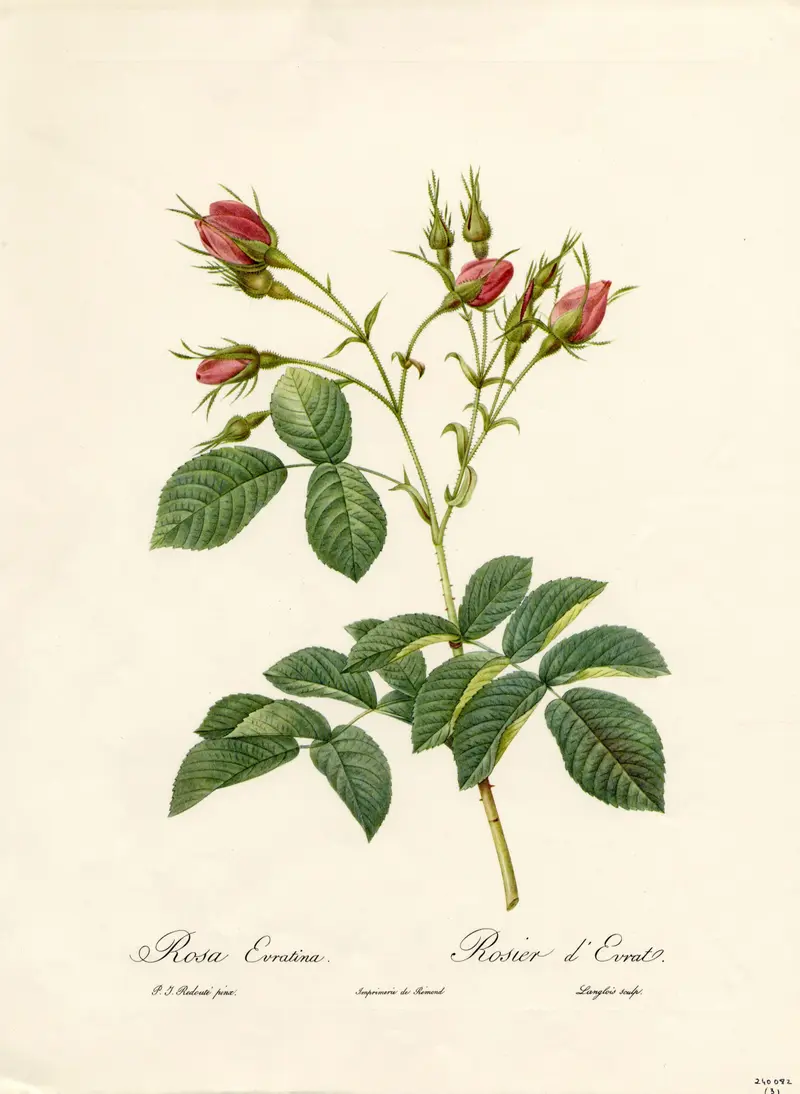
Rosa Evratina (Evrat's Rose)
Pierre-Joseph Redouté
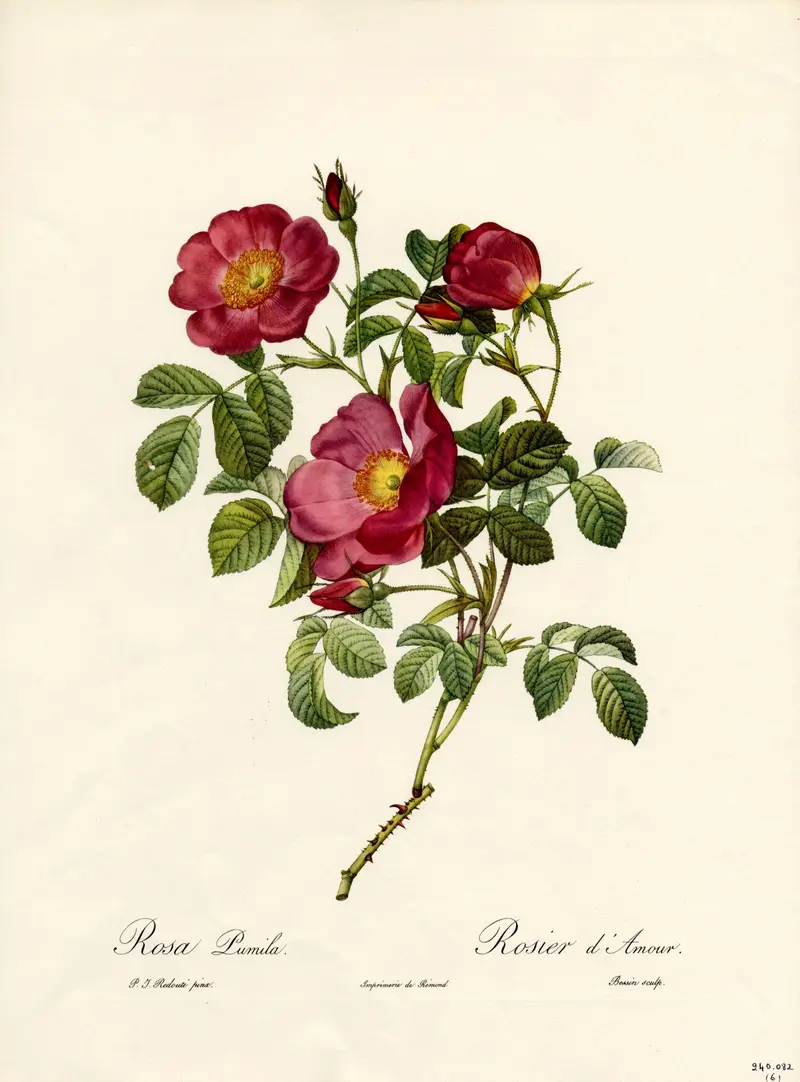
Rosa Pumila (Love Rose)
Pierre-Joseph Redouté
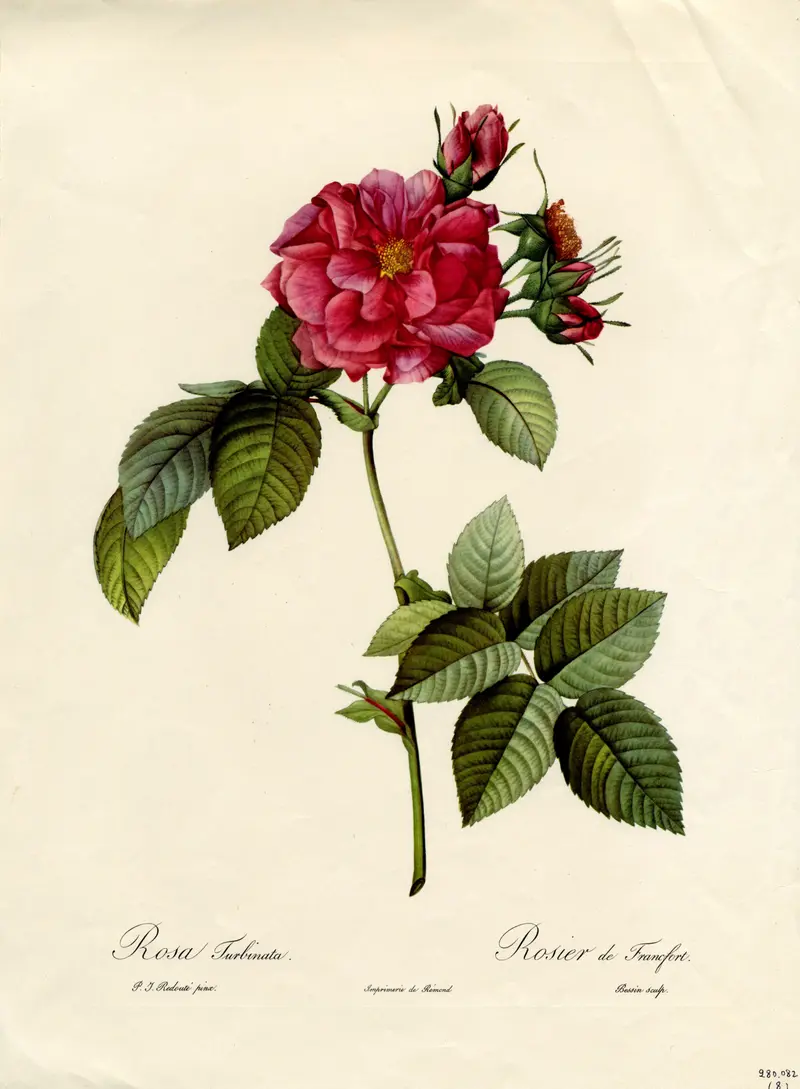
Rosa Turbinata (Frankfurt Rose)
Pierre-Joseph Redouté

Rosa Multiflora Carnea
Pierre-Joseph Redouté

Rosa Damascena Aurora
Pierre-Joseph Redouté
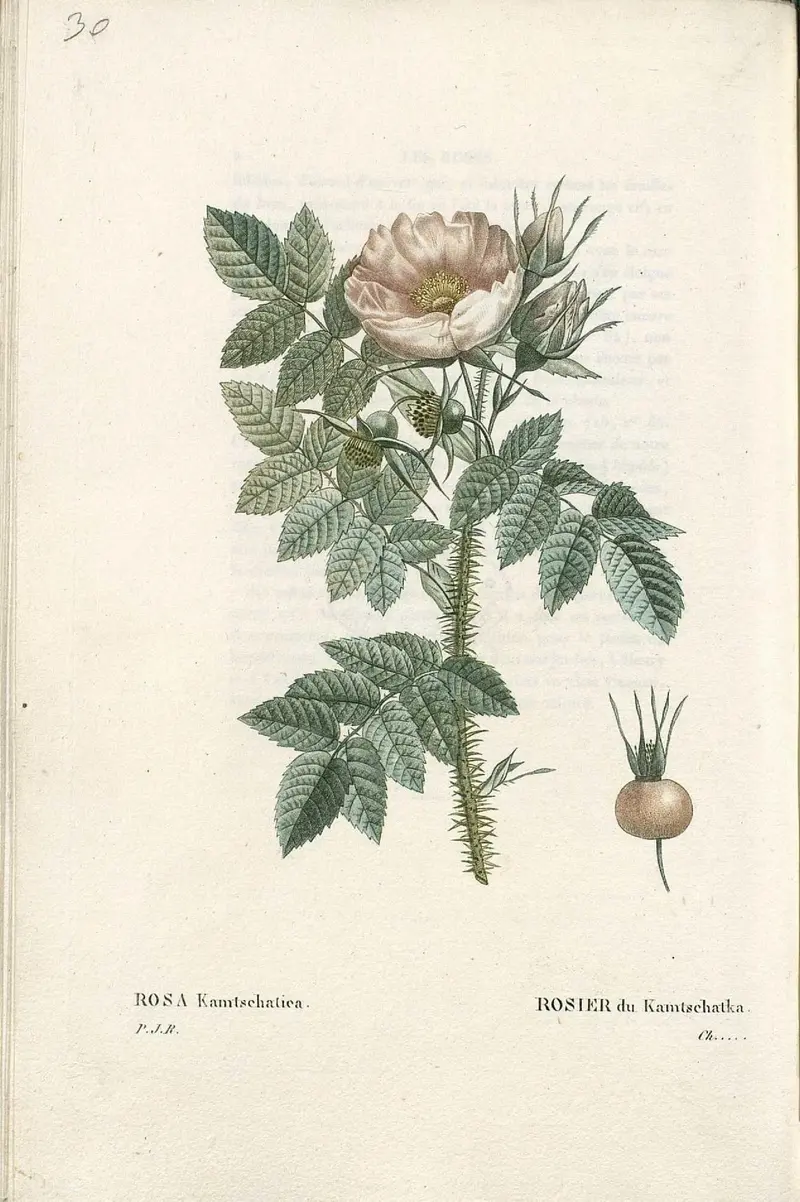
Rosa Kamtchatica (Kamchatka Rose)
Pierre-Joseph Redouté
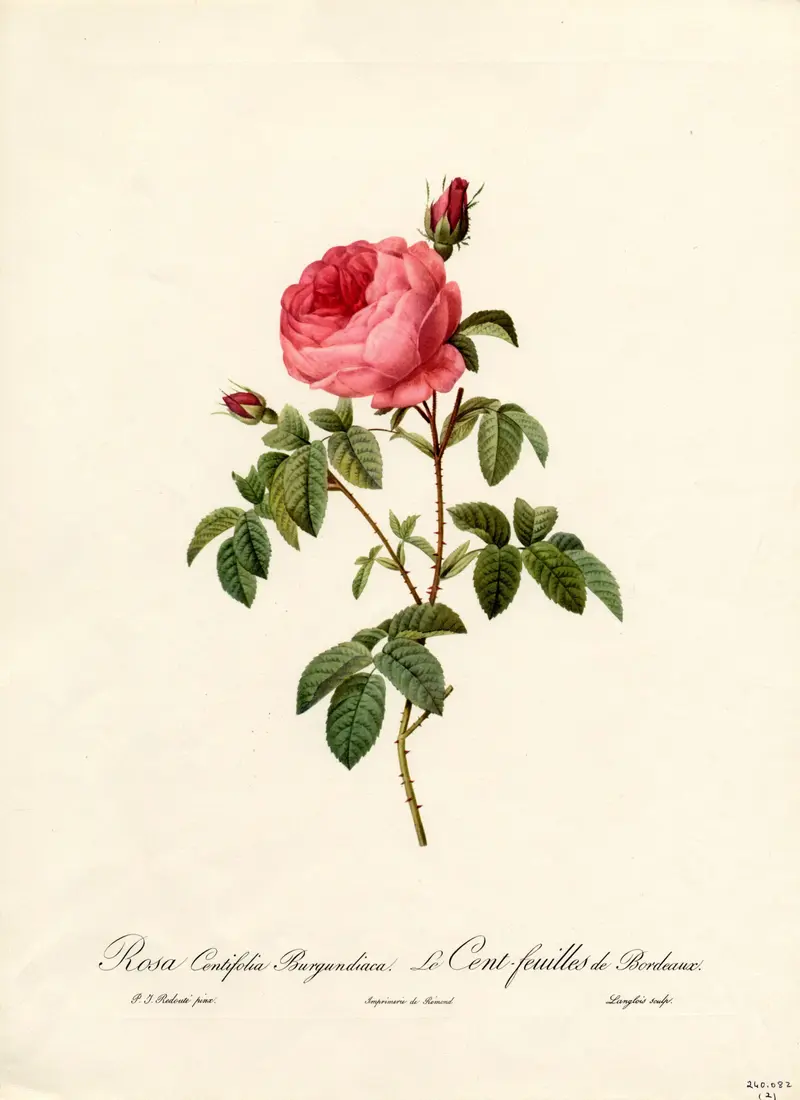
Rosa Centifolia Burgundiaca (Burgundy Rose)
Pierre-Joseph Redouté