Rosa Centifolia Burgundiaca (Burgundy Rose) — History & Facts
A single rose, poised as if caught in a moment of quiet growth, commands the entire field of vision in Rosa Centifolia Burgundiaca (Burgundy Rose) by Pierre-Joseph Redouté. The bloom itself, lush with overlapping petals in shades of deep pink, seems almost to float against the bare, creamy background. Each leaf is rendered with clinical precision, serrated edges and delicate veins speaking to the artist’s devotion to botanical truth.
The composition leads the eye from the swelling heart of the rose outward, along the slender, thorned stem to the two buds—one tightly furled, the other just beginning to open—hinting at the cycle of life and the promise of renewal. The light is soft and even, allowing the natural colors to speak for themselves, while the emptiness around the stem isolates the specimen, transforming it from garden flower to object of study and admiration. This kind of botanical illustration flourished in the late eighteenth and early nineteenth centuries, a period when artists like Redouté became celebrated for their ability to bridge art and science. Such works were often commissioned by collectors, scientists, and aristocrats eager to document the expanding world of plants brought to Europe through exploration and trade.
The image belongs to the collection of the Bibliothèque nationale de France, a reminder of the era’s hunger for knowledge and beauty catalogued in print. Though little is recorded about this specific sheet, it stands as a testament to the age when flowers were not only admired in gardens but preserved forever in the pages of grand folios—inviting the viewer to look closer, and then closer still.
More Artworks by Pierre-Joseph Redouté
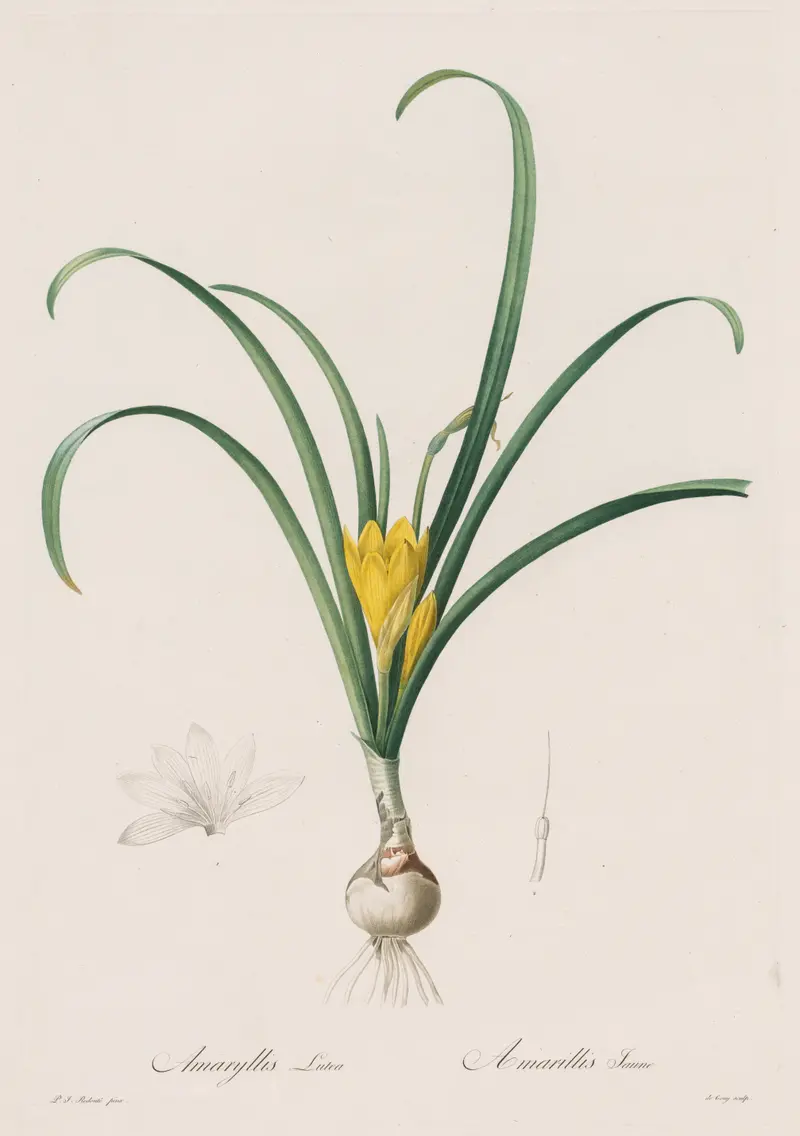
Amaryllis lutea (Les Liliacées)
Pierre-Joseph Redouté
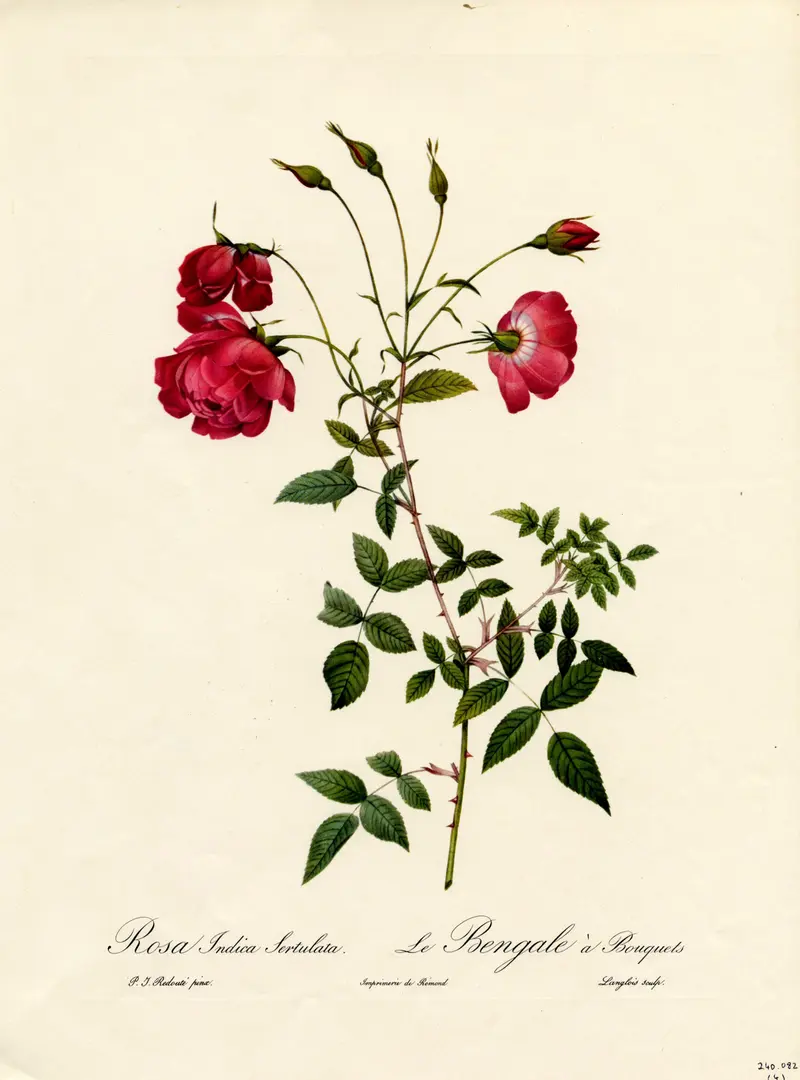
Rosa Indica Sertulata (Bengal Rose)
Pierre-Joseph Redouté

Rosa Centifolia Foliacea
Pierre-Joseph Redouté
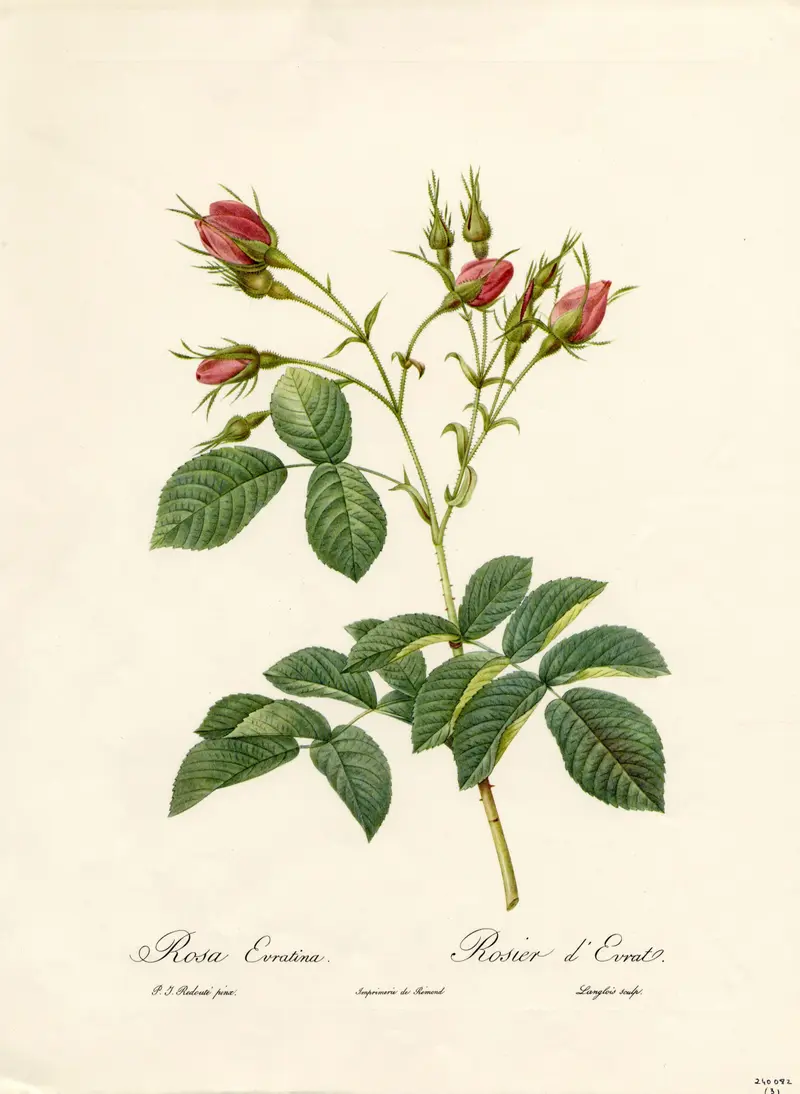
Rosa Evratina (Evrat's Rose)
Pierre-Joseph Redouté
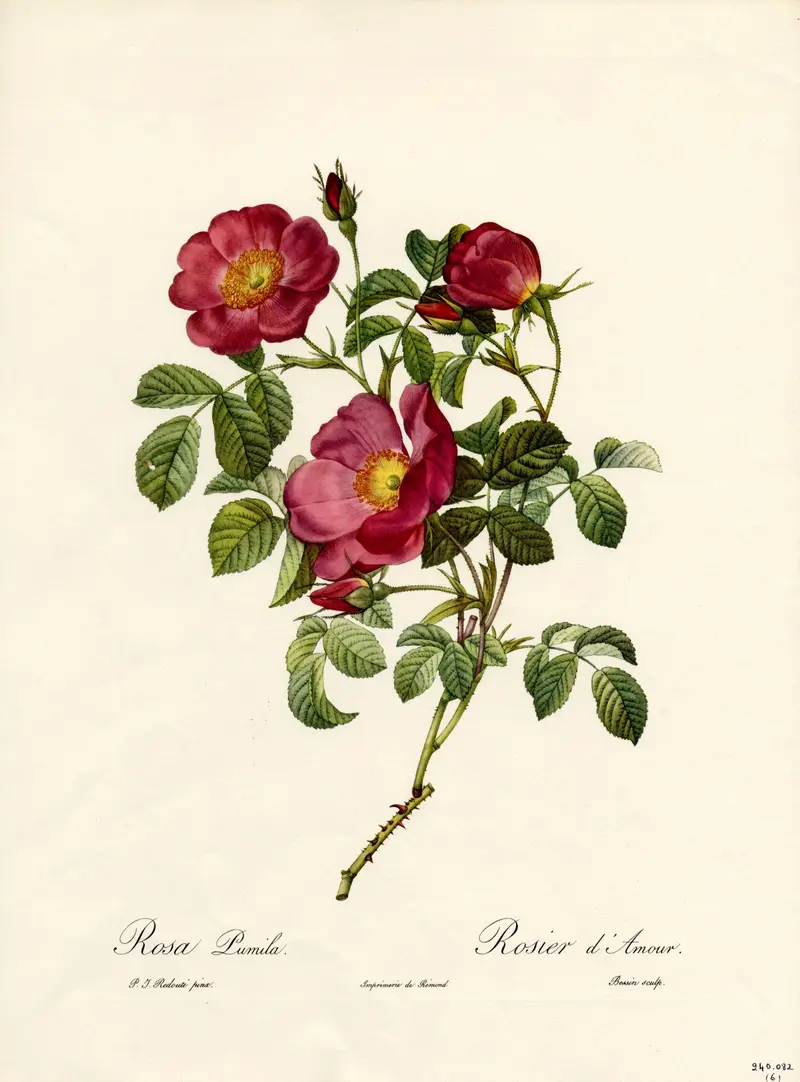
Rosa Pumila (Love Rose)
Pierre-Joseph Redouté
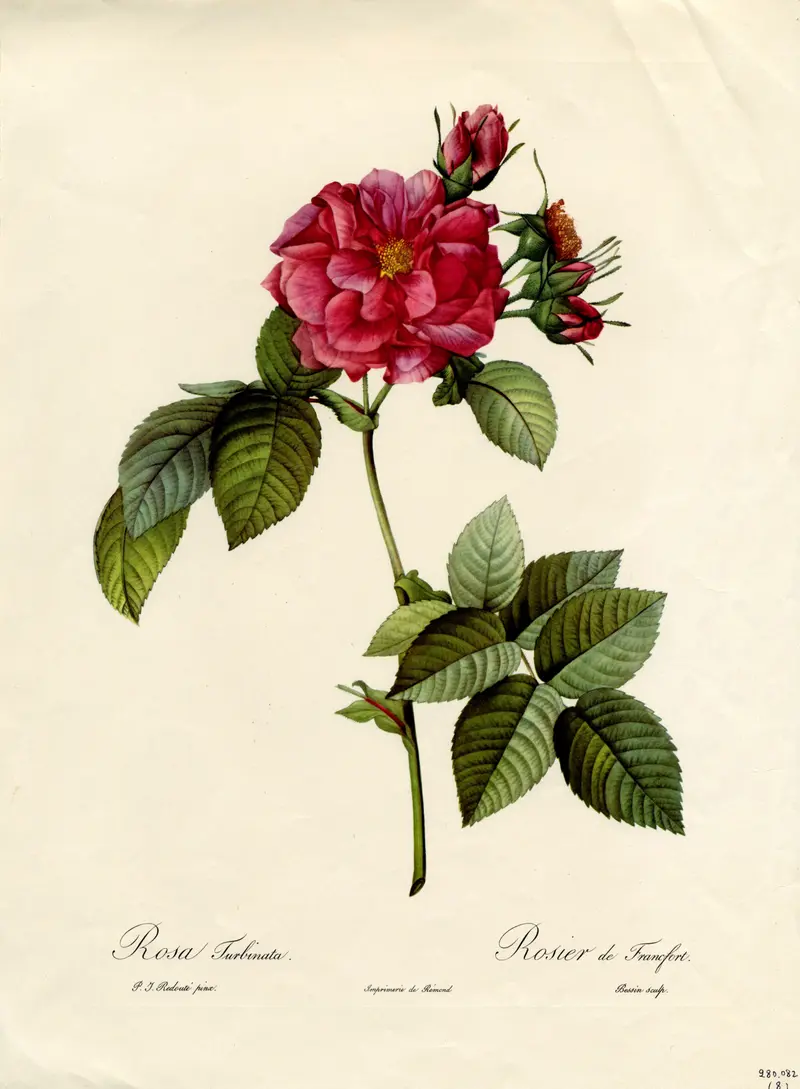
Rosa Turbinata (Frankfurt Rose)
Pierre-Joseph Redouté

Rosa Multiflora Carnea
Pierre-Joseph Redouté

Rosa Damascena Aurora
Pierre-Joseph Redouté
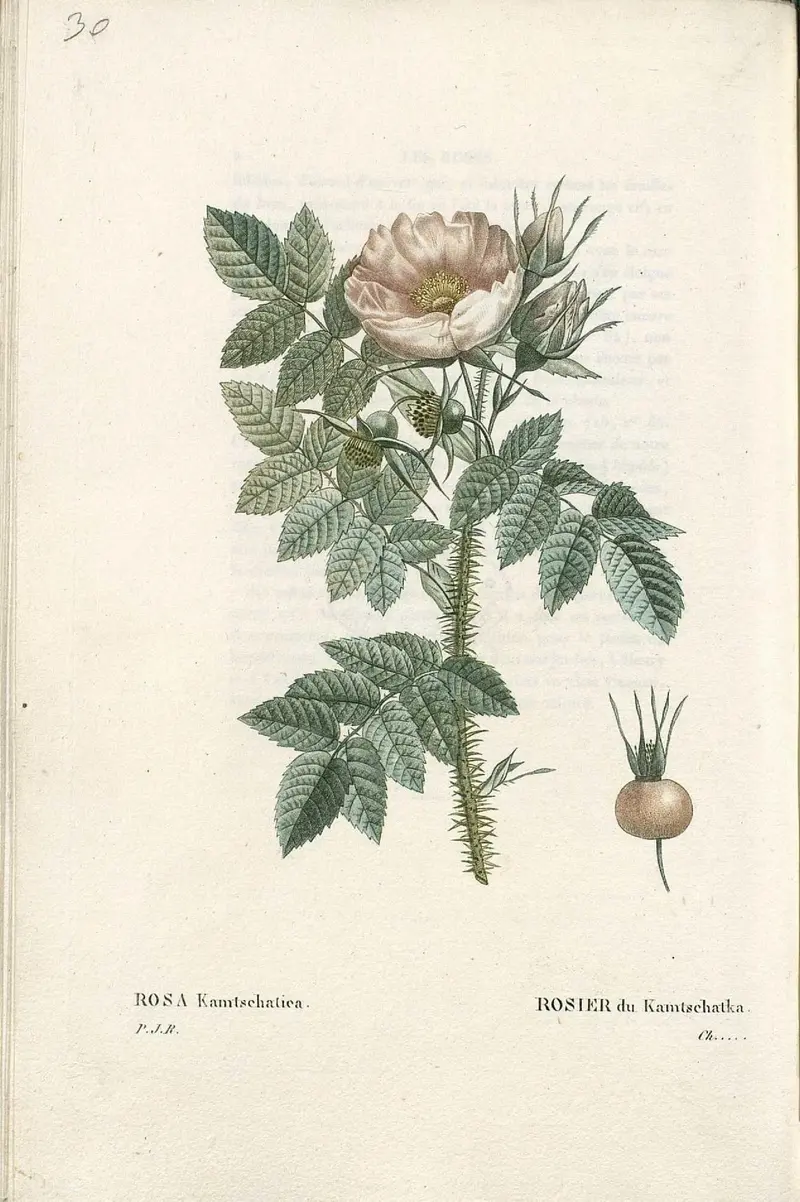
Rosa Kamtchatica (Kamchatka Rose)
Pierre-Joseph Redouté
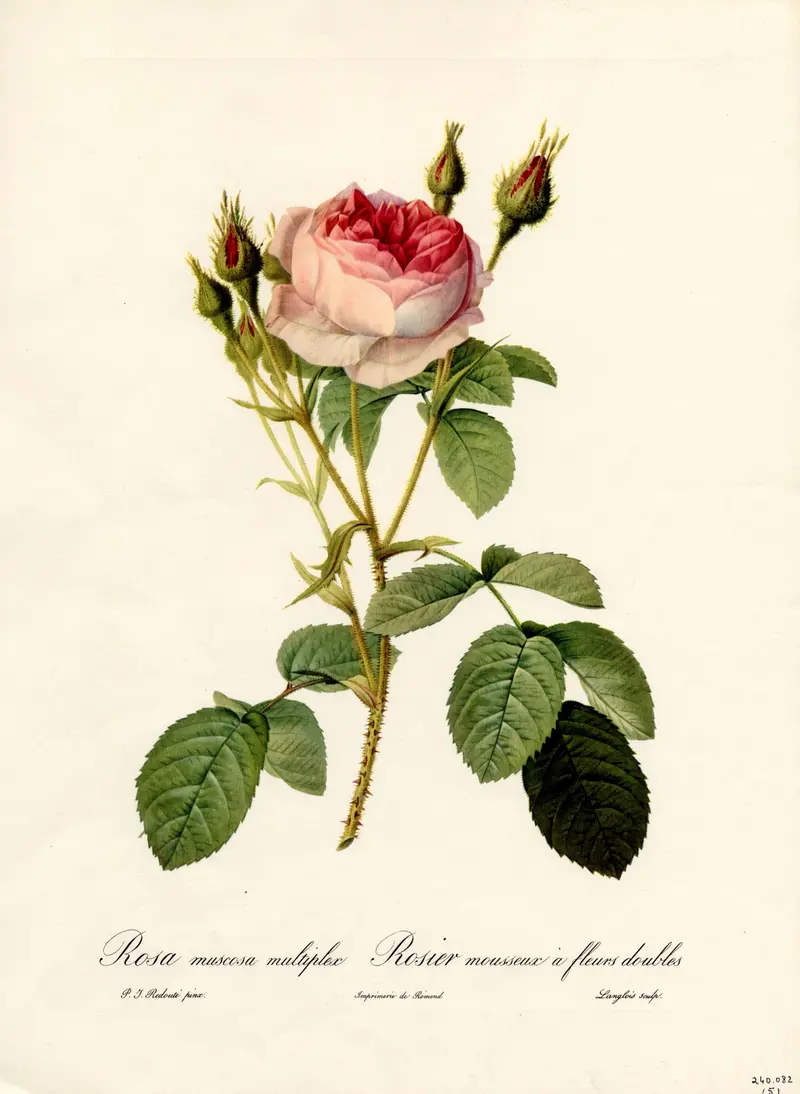
Rosa Muscosa Multiplex (Double Moss Rose)
Pierre-Joseph Redouté