Rosa Multiflora Carnea — History & Facts
A long, arching branch carries clusters of small, very double pale pink roses and many round buds on slender stalks. The leaves are made of small, toothed leaflets, and the stem runs down to a bare base. Engraved lettering below reads Rosa Multiflora carnea and Rosier Multiflore à fleurs carnées, with the painter's, printer's and engraver's credits beneath. Pierre-Joseph Redouté painted this rose for the second volume of Les Roses (1821), with text by Claude-Antoine Thory; Talbot engraved the plate.
Thory describes a climbing shrub with long reddish branches, leaf stipules cut like the teeth of a comb, and small, almost double, lightly scented flowers crowded into a spreading cluster. He wrote that the rose grows wild in China and was brought to England by T. Evans around 1804, flowering first in the Colvilles' nursery. Boursault had it sent from London to Paris in 1808, but it did not flower there until August 1812, in the garden of Dr.
Cartier, and the frosts of that winter killed plants left in open ground around Paris. Les Roses was first published in Paris in three volumes between 1817 and 1824.
More Artworks by Pierre-Joseph Redouté
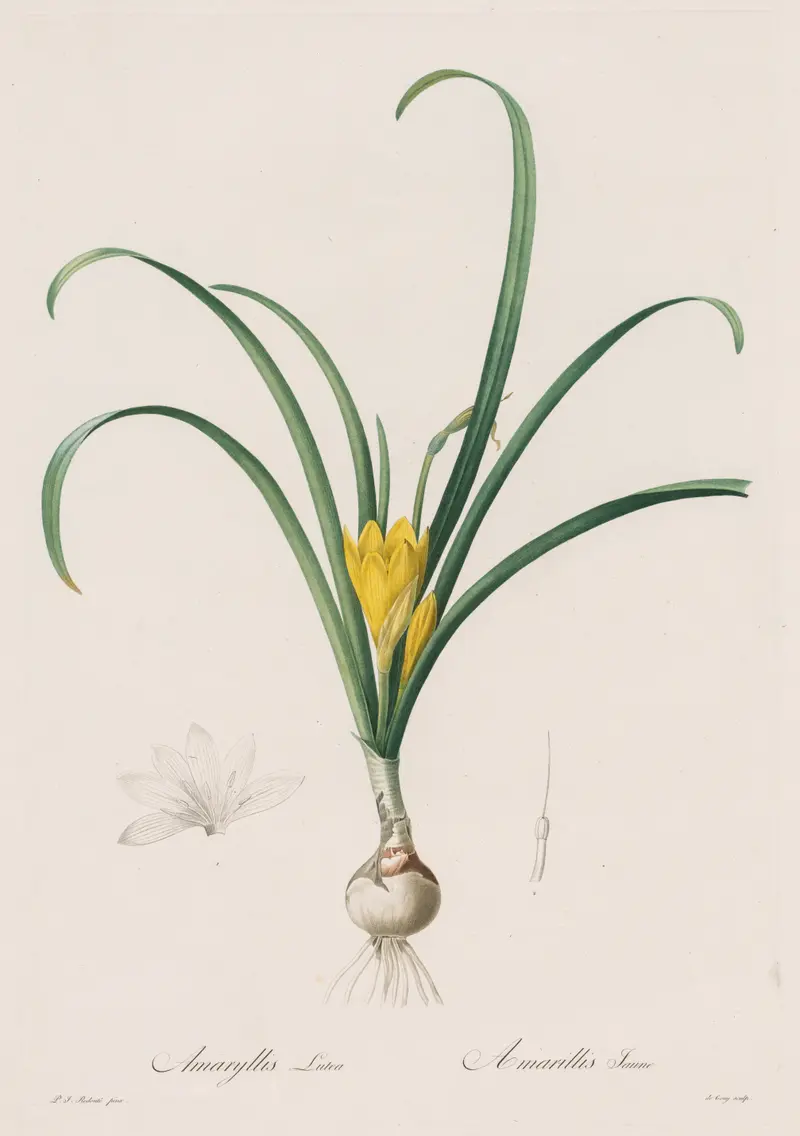
Amaryllis lutea (Les Liliacées)
Pierre-Joseph Redouté
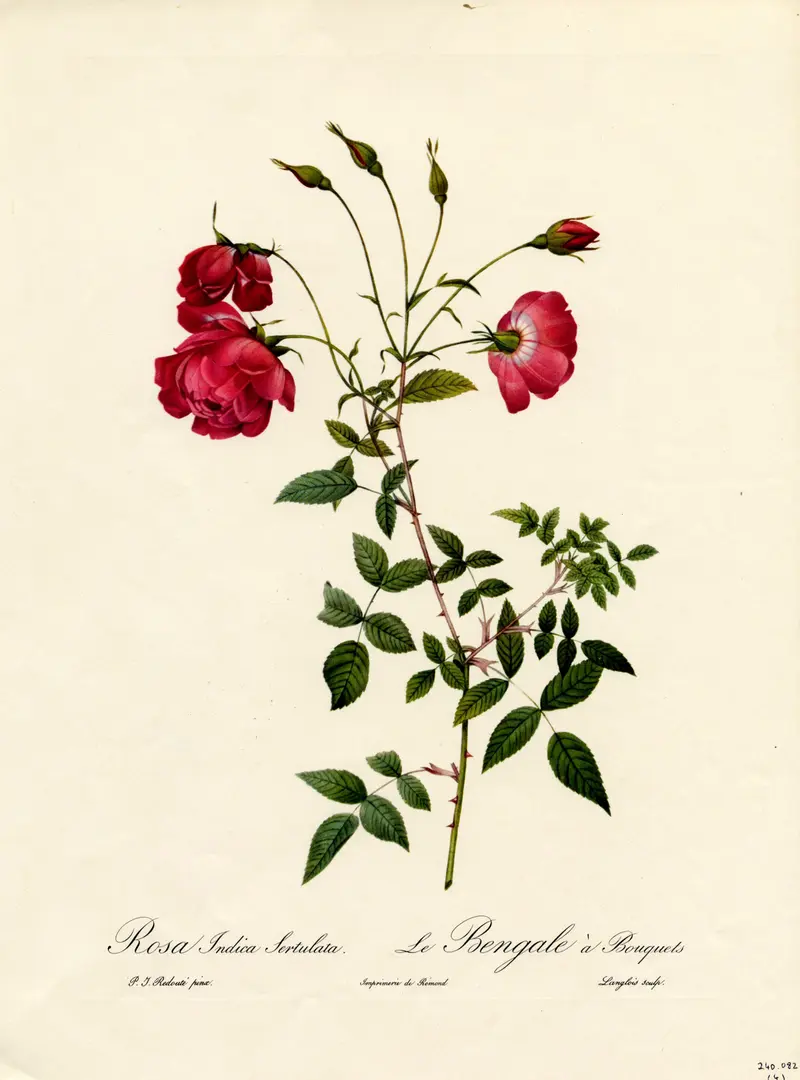
Rosa Indica Sertulata (Bengal Rose)
Pierre-Joseph Redouté

Rosa Centifolia Foliacea
Pierre-Joseph Redouté
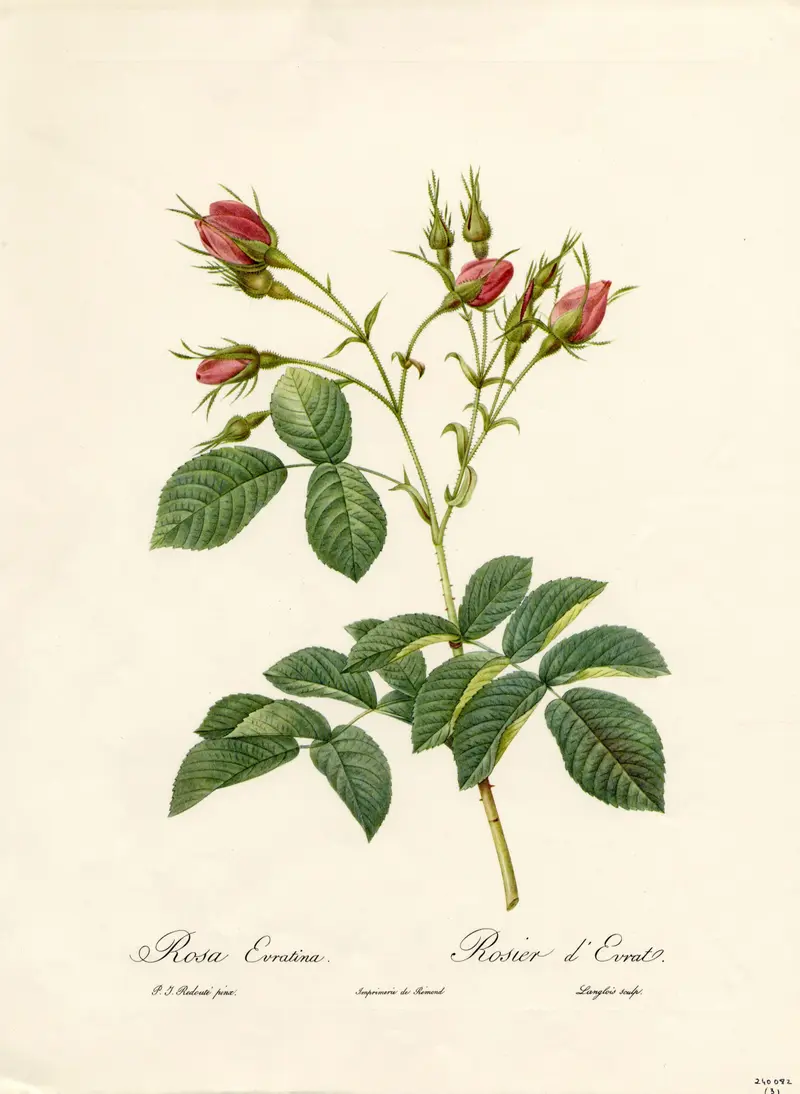
Rosa Evratina (Evrat's Rose)
Pierre-Joseph Redouté
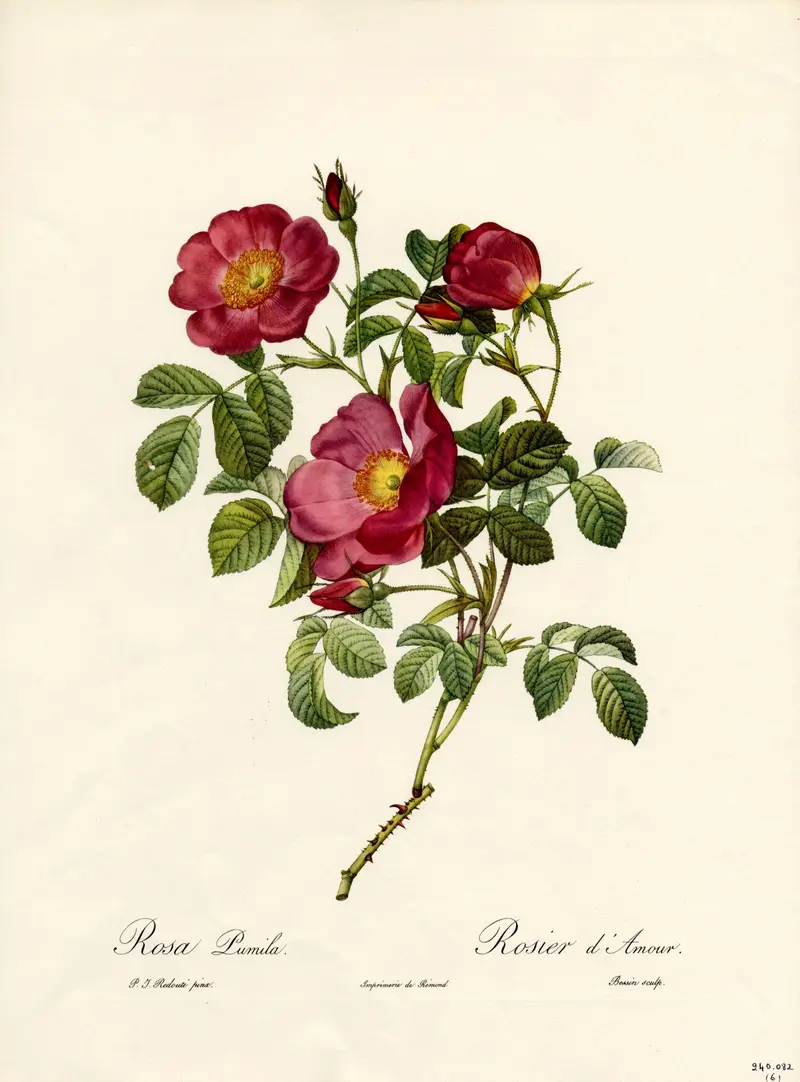
Rosa Pumila (Love Rose)
Pierre-Joseph Redouté
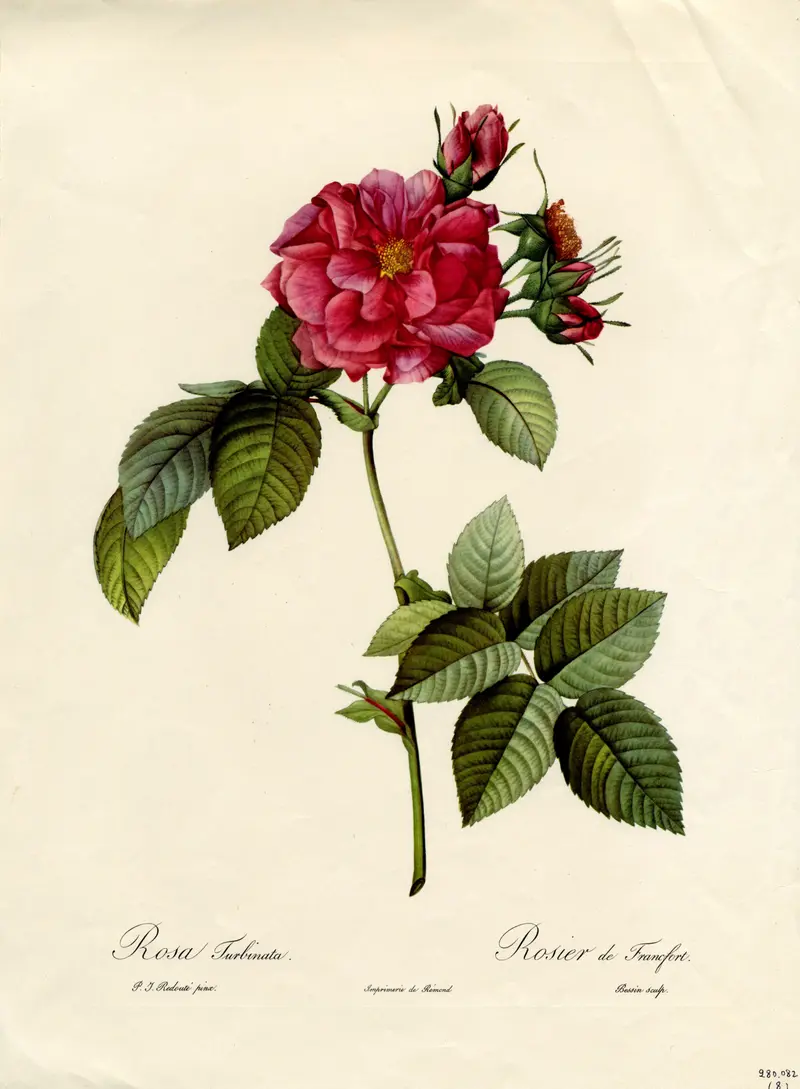
Rosa Turbinata (Frankfurt Rose)
Pierre-Joseph Redouté

Rosa Damascena Aurora
Pierre-Joseph Redouté
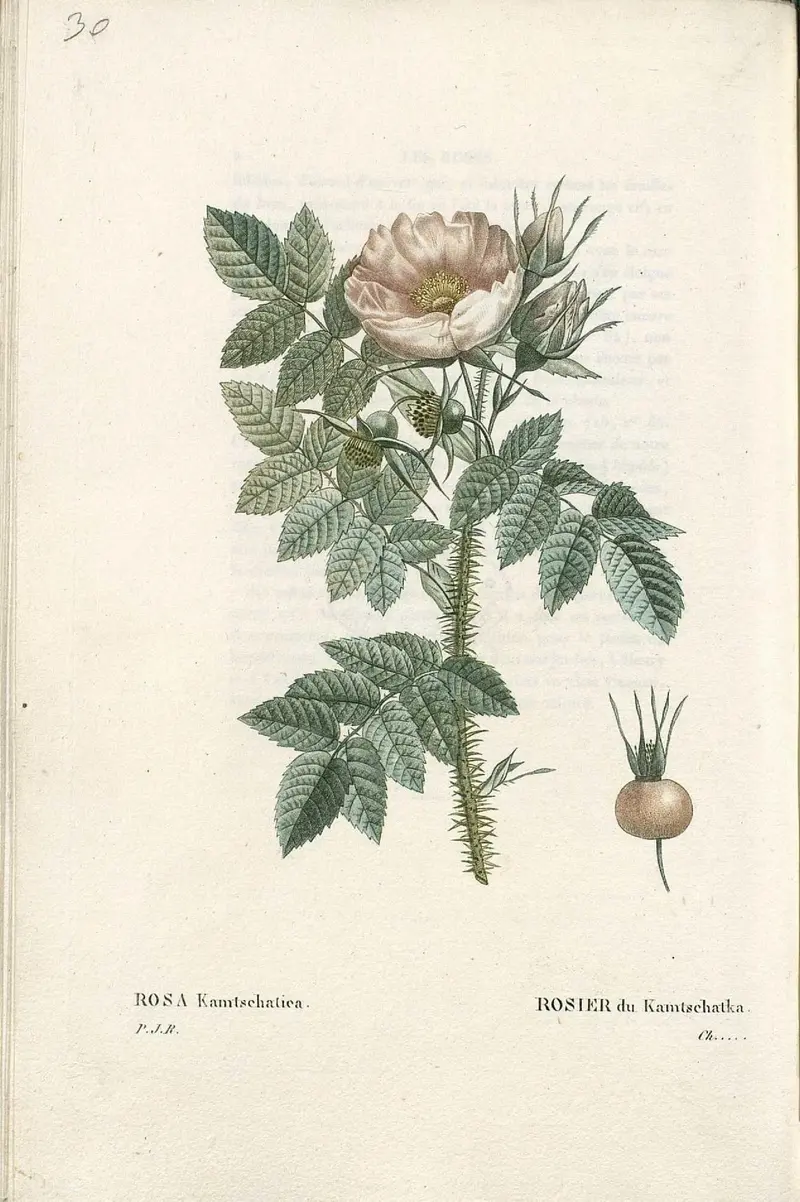
Rosa Kamtchatica (Kamchatka Rose)
Pierre-Joseph Redouté
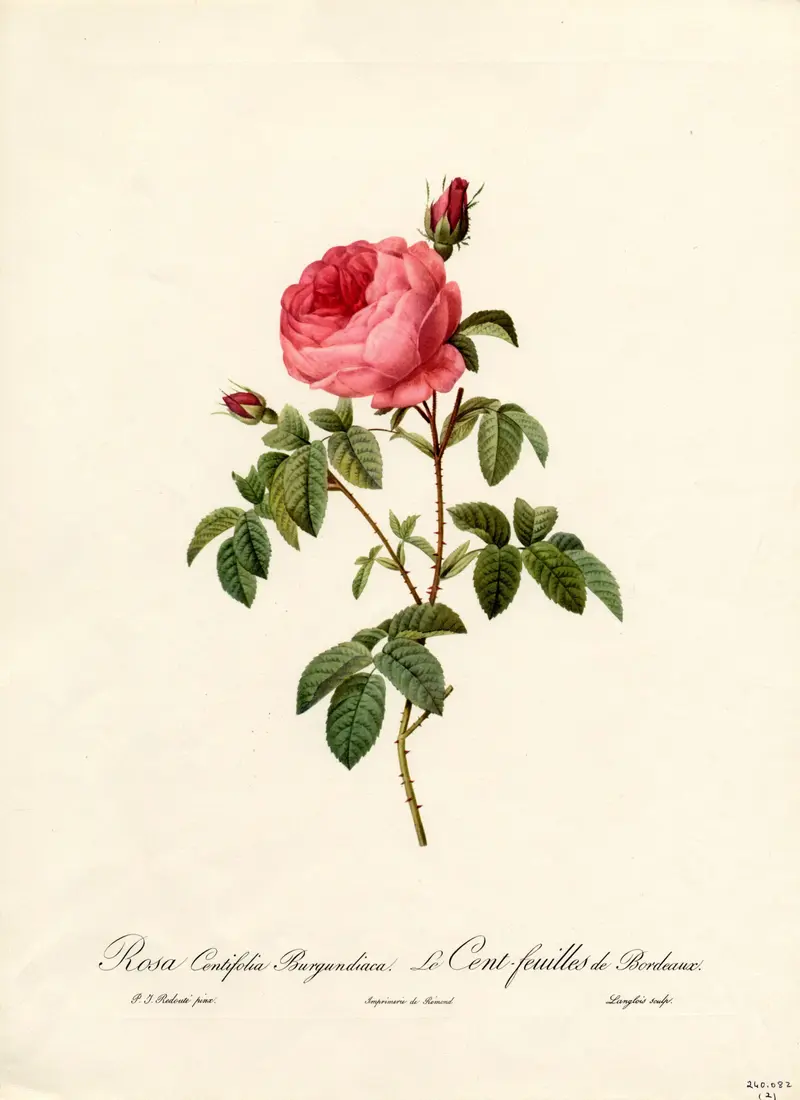
Rosa Centifolia Burgundiaca (Burgundy Rose)
Pierre-Joseph Redouté
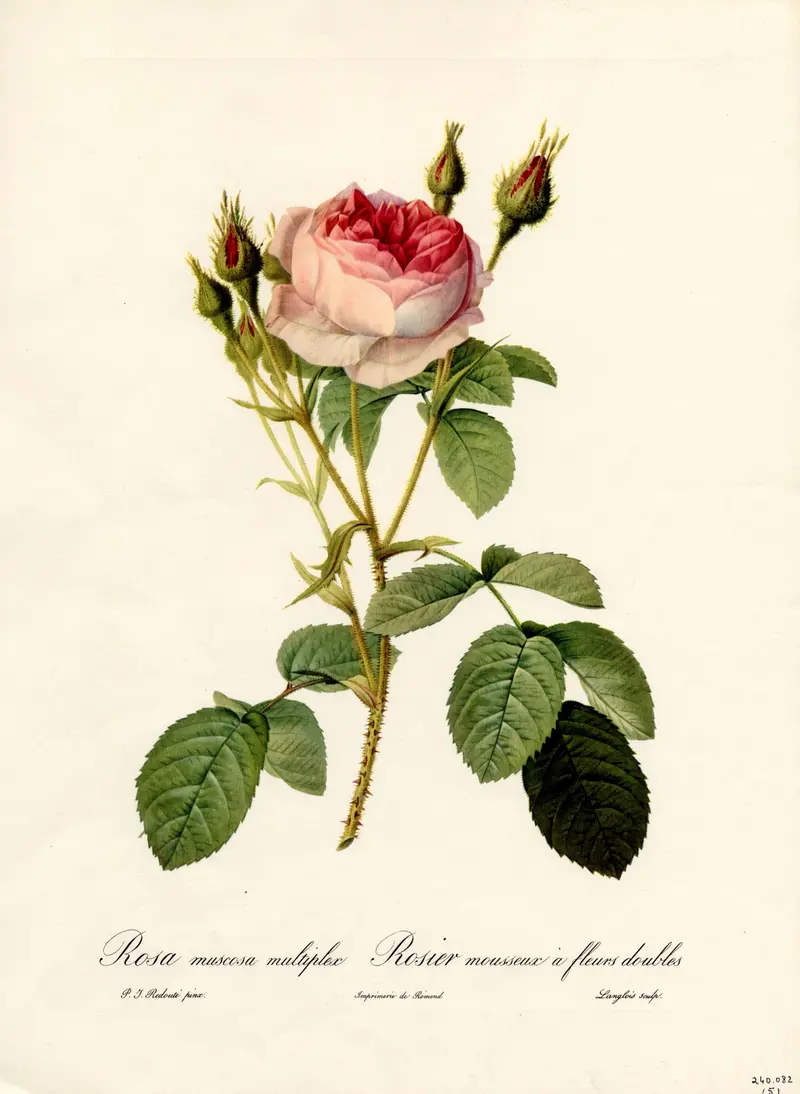
Rosa Muscosa Multiplex (Double Moss Rose)
Pierre-Joseph Redouté