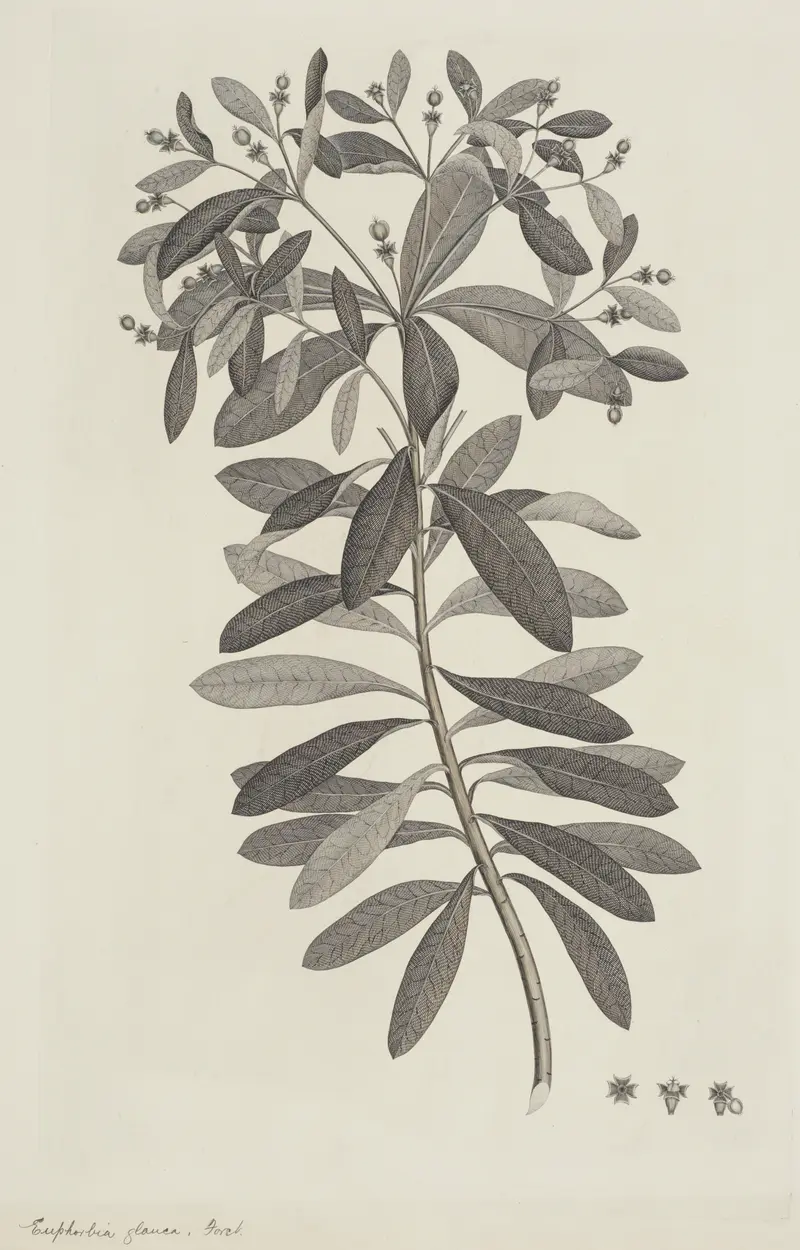
Rosa Muscosa Multiplex (Double Moss Rose) — History & Facts
What first draws the eye in Rosa Muscosa Multiplex (Double Moss Rose) is the remarkable precision with which each petal and thorn is rendered—every detail seems to invite close inspection, as if the rose might yield its scent if you lean a little nearer. The bloom itself, unfurling in layers of blush and deep pink, is surrounded by buds still tightly closed, their sepals bristling with the mossy growth that gives this variety its name. The artist’s careful gradation of color, from the tender green of the leaves to the subtle shadows along the stem, gives the flower a sense of freshness and immediacy.
Light falls softly from the upper left, catching the edges of the petals and the fine hairs of the buds, suggesting a moment of stillness in a sunlit conservatory. The empty background isolates the rose, focusing all attention on its form and structure, turning a simple botanical study into an object of contemplation. Works like this, produced by Pierre-Joseph Redouté and preserved today in the Bibliothèque nationale de France, belong to a golden age of botanical illustration when scientific curiosity and artistic ambition flourished side by side. In the late eighteenth and early nineteenth centuries, such engravings were commissioned by botanists, aristocrats, and collectors eager to catalogue the marvels of the natural world with accuracy and beauty.
Redouté, celebrated as the “Raphael of flowers,” brought a clarity and elegance to his subjects that made his images both useful to science and beloved as works of art. Though little is recorded about the specific journey of this sheet, its survival in a great library speaks to the enduring appeal of art that marries observation and delight. The longer you look, the more the rose reveals—each thorn, each vein, each subtle shift of color—a testament to an era when seeing and knowing were one and the same.
More Artworks by Pierre-Joseph Redouté
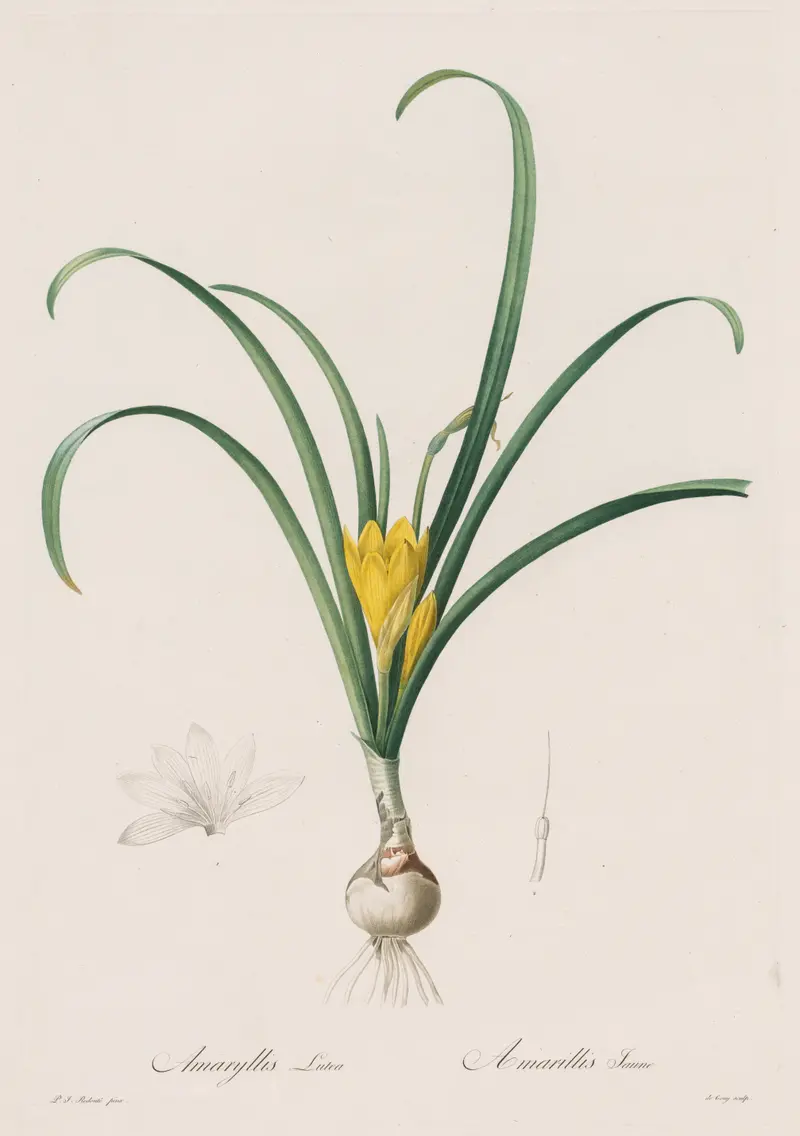
Amaryllis lutea (Les Liliacées)
Pierre-Joseph Redouté
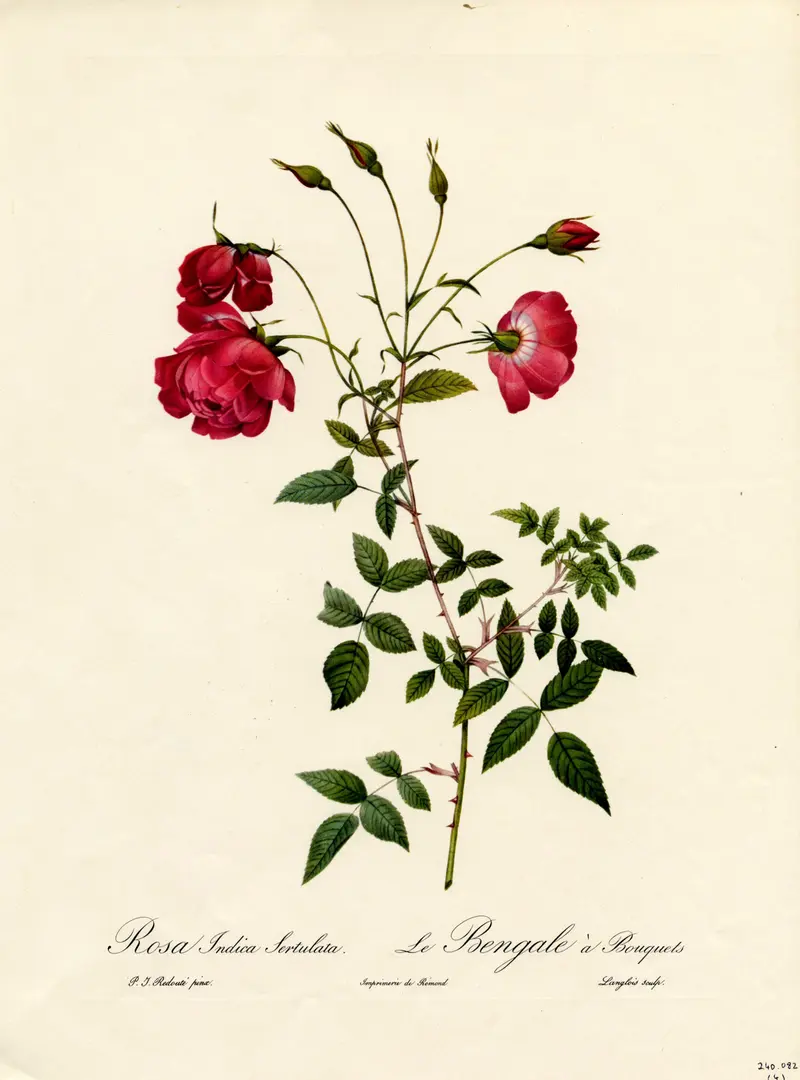
Rosa Indica Sertulata (Bengal Rose)
Pierre-Joseph Redouté

Rosa Centifolia Foliacea
Pierre-Joseph Redouté
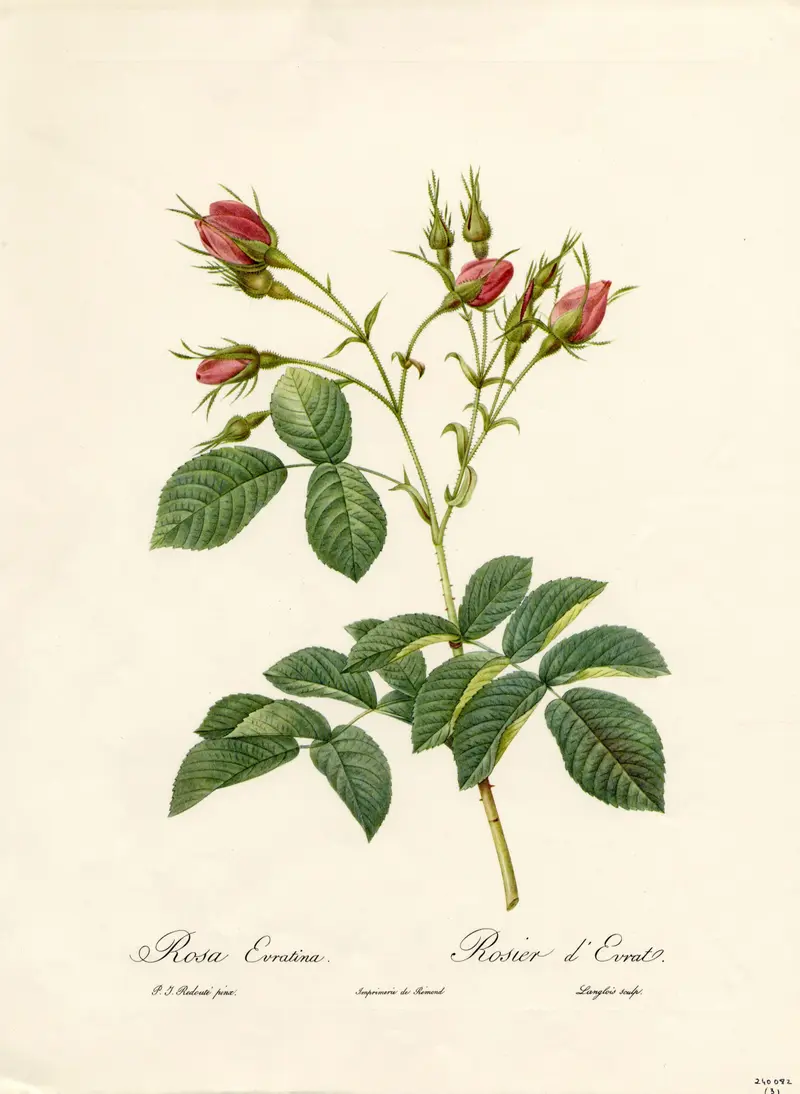
Rosa Evratina (Evrat's Rose)
Pierre-Joseph Redouté
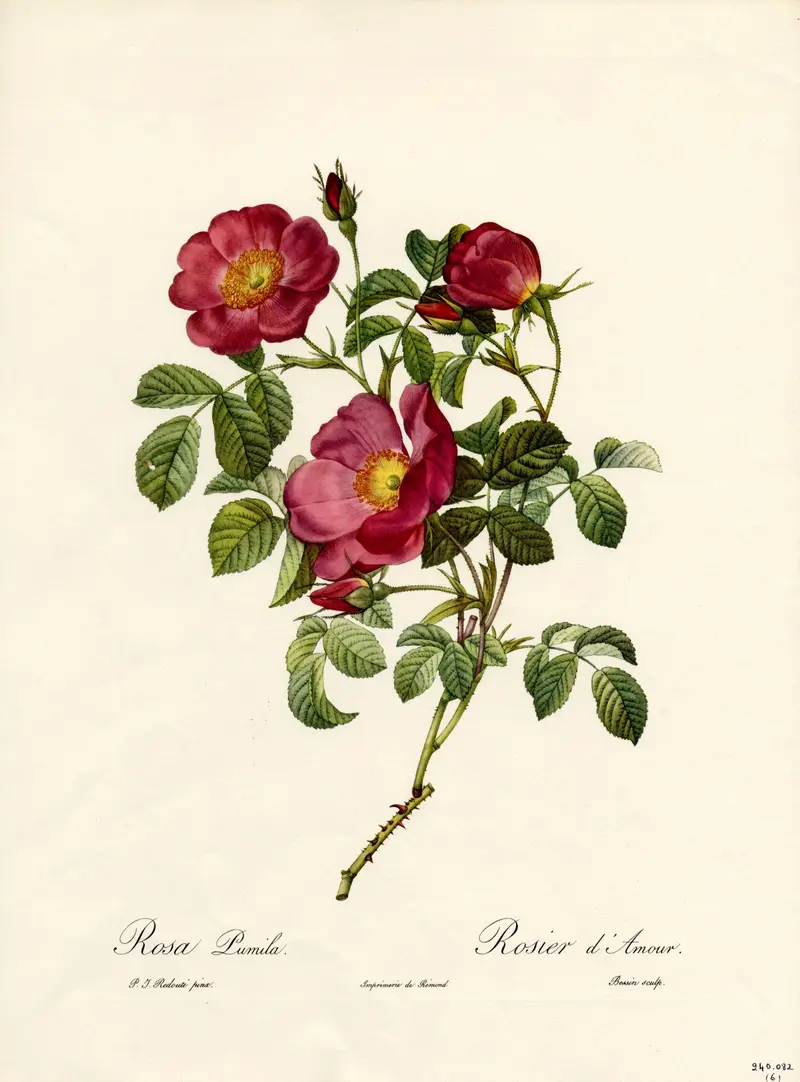
Rosa Pumila (Love Rose)
Pierre-Joseph Redouté
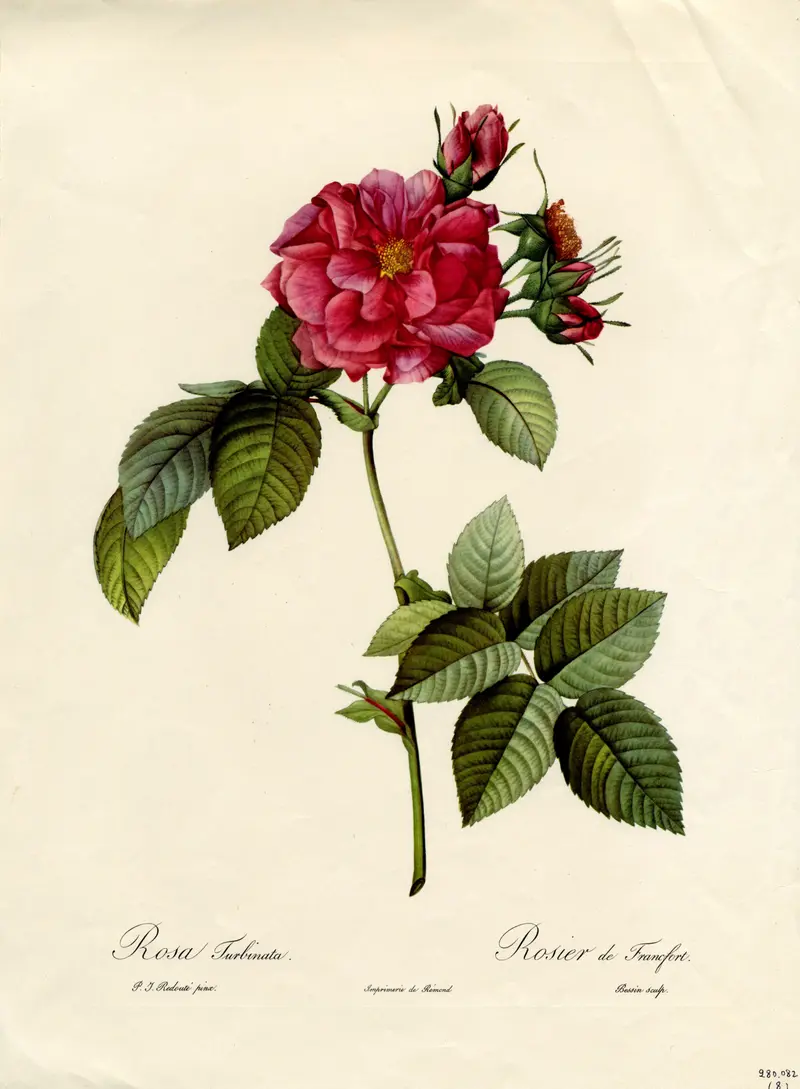
Rosa Turbinata (Frankfurt Rose)
Pierre-Joseph Redouté

Rosa Multiflora Carnea
Pierre-Joseph Redouté

Rosa Damascena Aurora
Pierre-Joseph Redouté
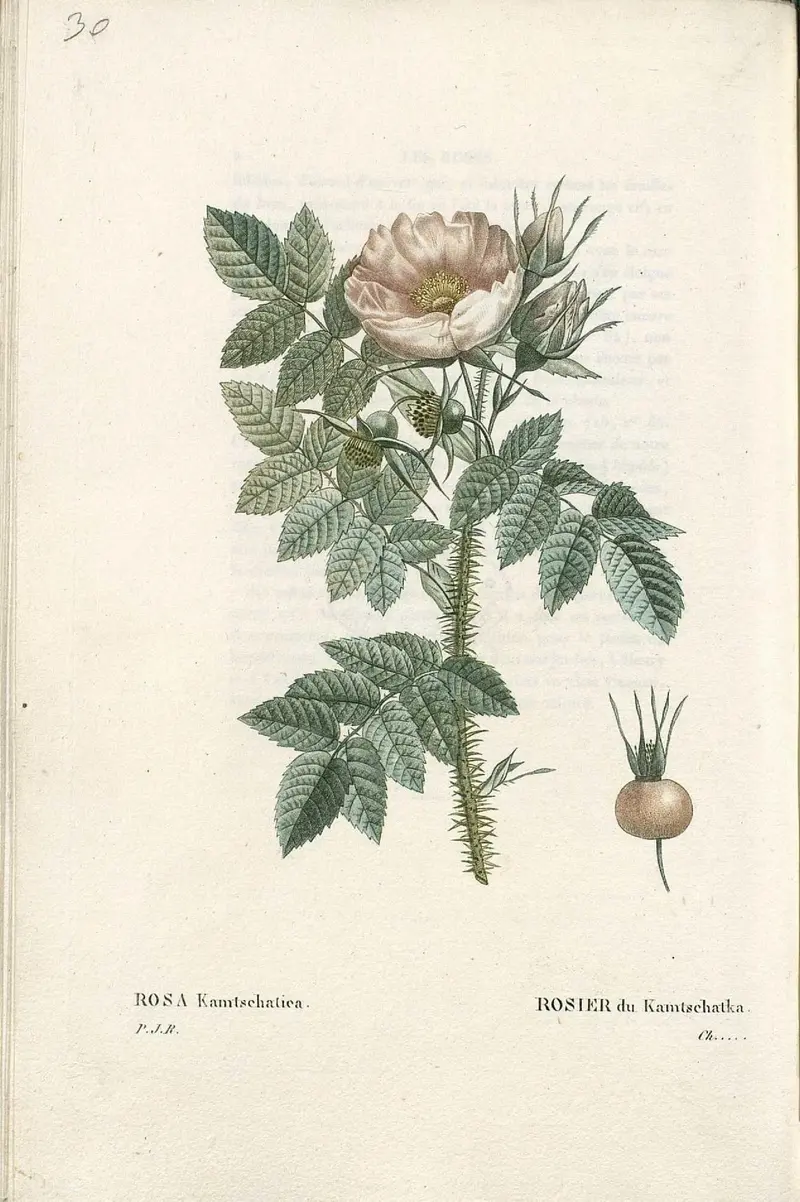
Rosa Kamtchatica (Kamchatka Rose)
Pierre-Joseph Redouté
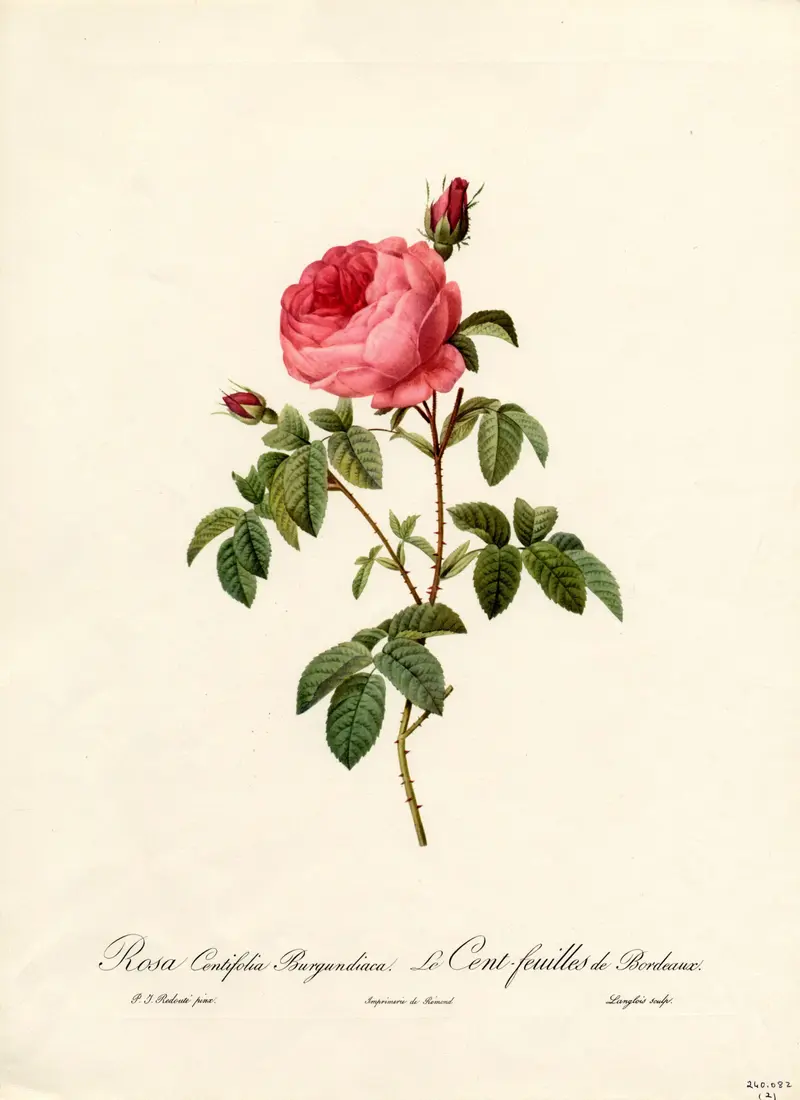
Rosa Centifolia Burgundiaca (Burgundy Rose)
Pierre-Joseph Redouté