Rosa Sepium (Semi-double Hedge Rose) — History & Facts
What first catches the eye in Rosa Sepium (Semi-double Hedge Rose) by Pierre-Joseph Redouté is the sense of quiet precision: each leaf, thorn, and petal is rendered with a clarity that feels almost like a botanical revelation. The arching stem, dotted with tightly furled buds and crowned by two lush pink blossoms, draws the gaze upward in a gentle spiral. The artist’s careful gradation of greens and pinks, paired with the crisp white of the background, isolates the plant in a way that invites close study—every serrated edge and subtle shadow is a clue to its living structure.
The roses themselves seem to hover between fragility and resilience, their layered petals both delicate and robust, as if caught in the act of unfurling. This work belongs to a world where science and art were partners, not rivals. In the late eighteenth and early nineteenth centuries, botanical illustration was a vital tool for naturalists, gardeners, and collectors, and Redouté became renowned for elevating this genre to new heights of beauty and accuracy. Commissioned by royal patrons and published in lavish volumes, such images were prized in both libraries and salons.
The presence of this print in the Bibliothèque nationale de France speaks to the enduring value placed on such works as both scientific documents and objects of aesthetic pleasure. As you look again at the subtle interplay of light and line, imagine the hands that once turned these pages in search of knowledge—and delight.
More Artworks by Pierre-Joseph Redouté
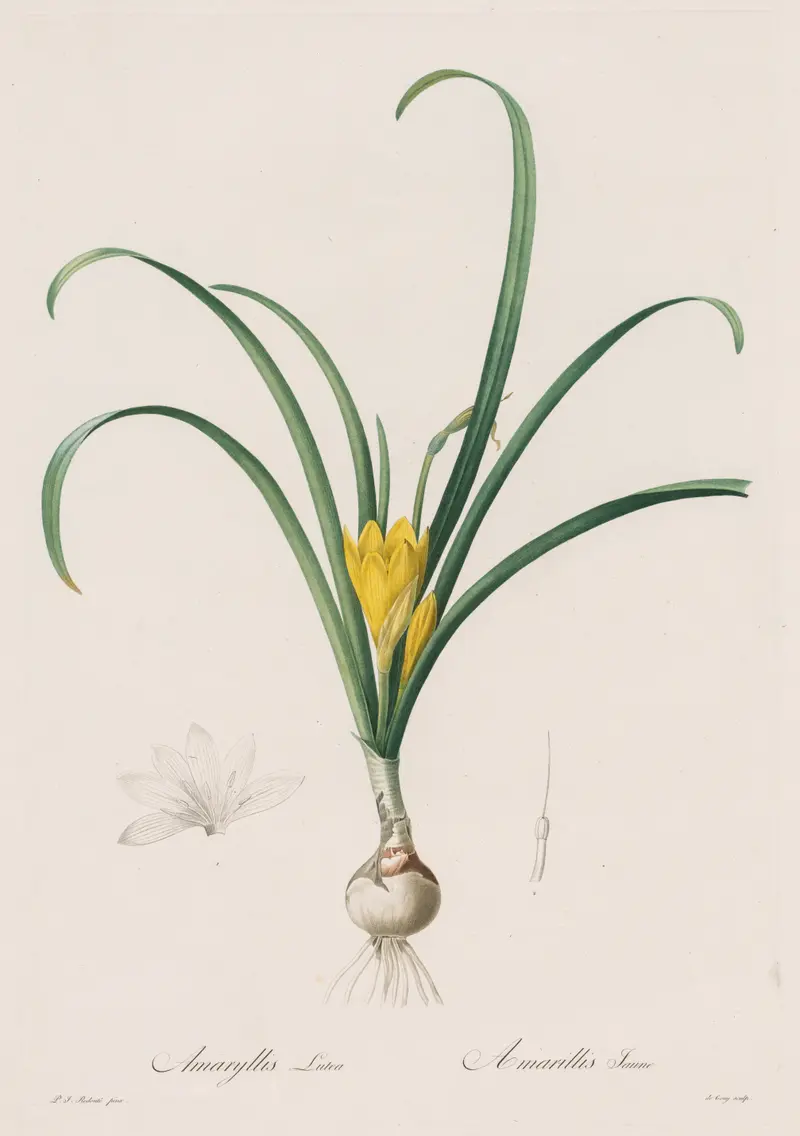
Amaryllis lutea (Les Liliacées)
Pierre-Joseph Redouté
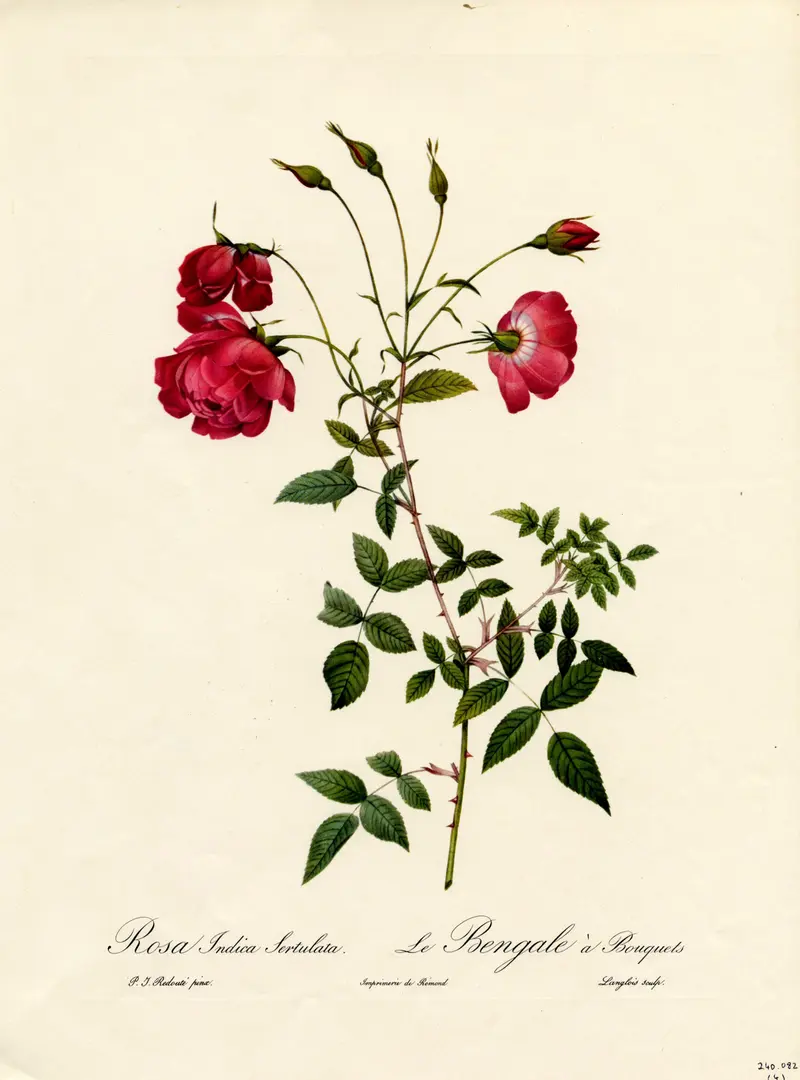
Rosa Indica Sertulata (Bengal Rose)
Pierre-Joseph Redouté

Rosa Centifolia Foliacea
Pierre-Joseph Redouté
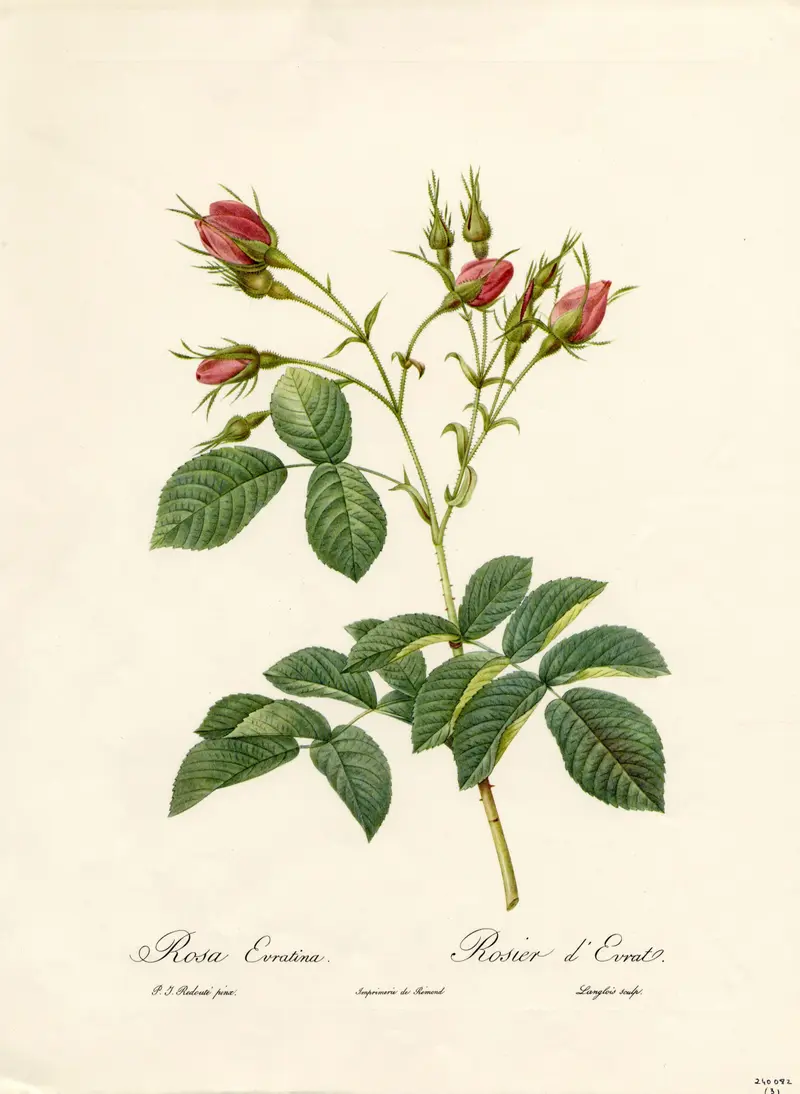
Rosa Evratina (Evrat's Rose)
Pierre-Joseph Redouté
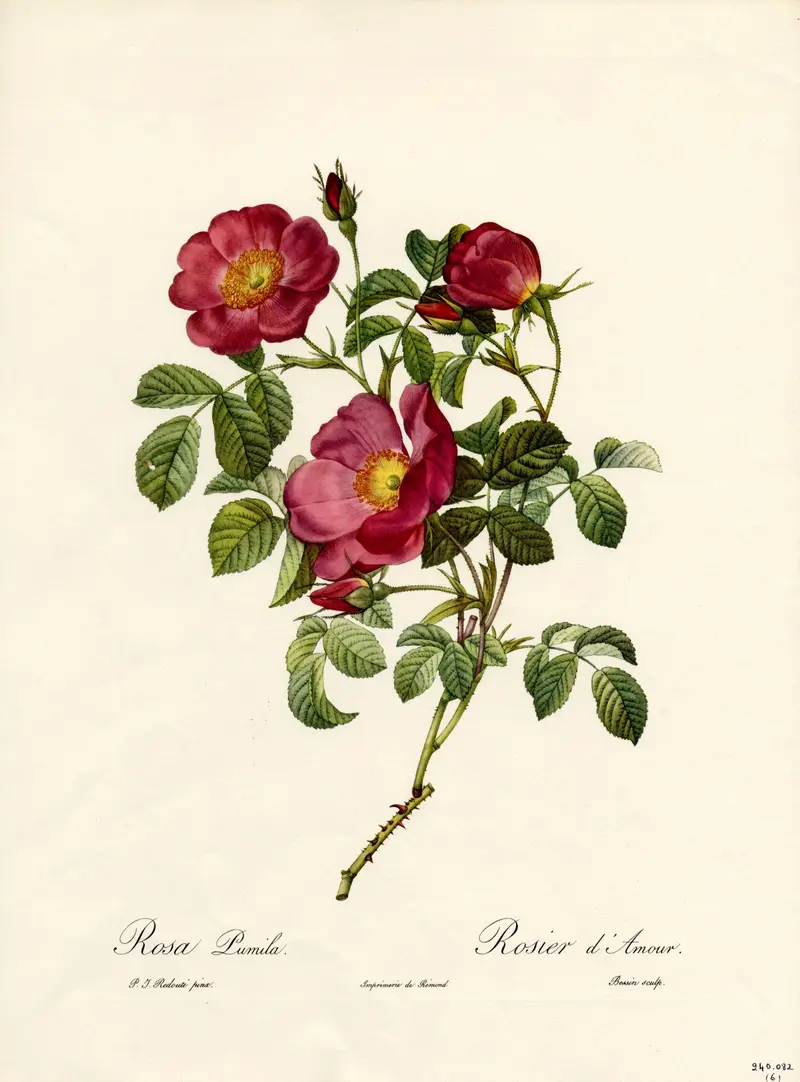
Rosa Pumila (Love Rose)
Pierre-Joseph Redouté
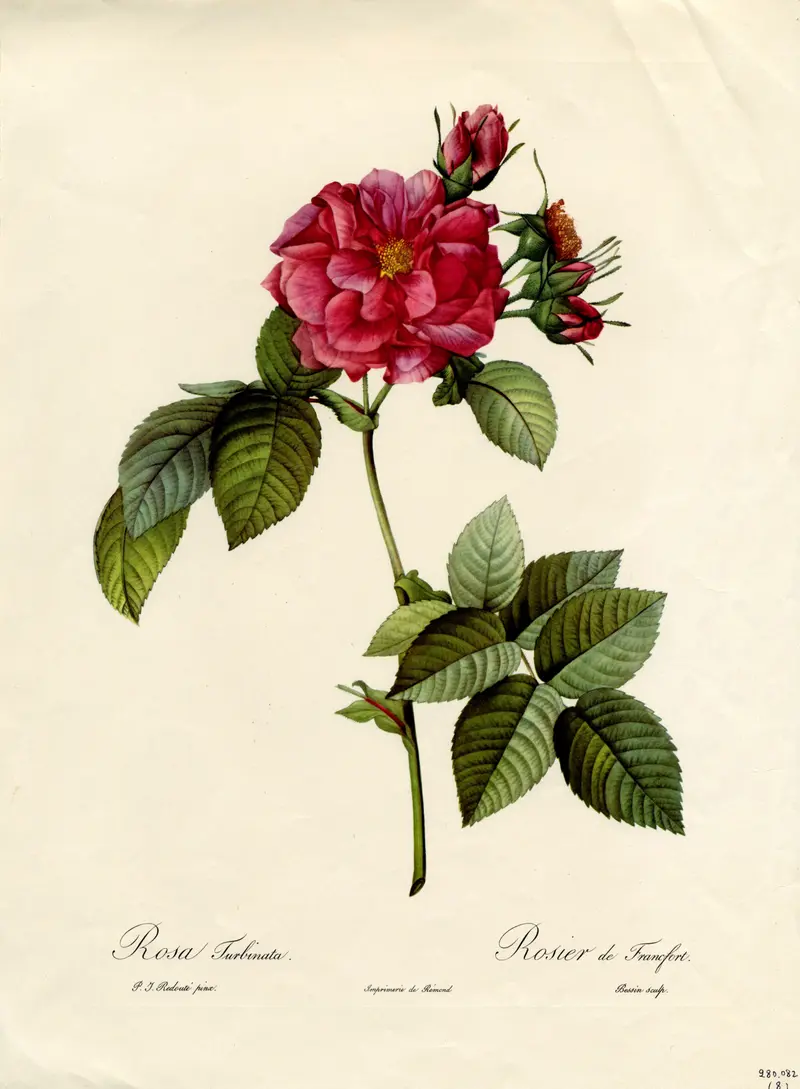
Rosa Turbinata (Frankfurt Rose)
Pierre-Joseph Redouté

Rosa Multiflora Carnea
Pierre-Joseph Redouté

Rosa Damascena Aurora
Pierre-Joseph Redouté
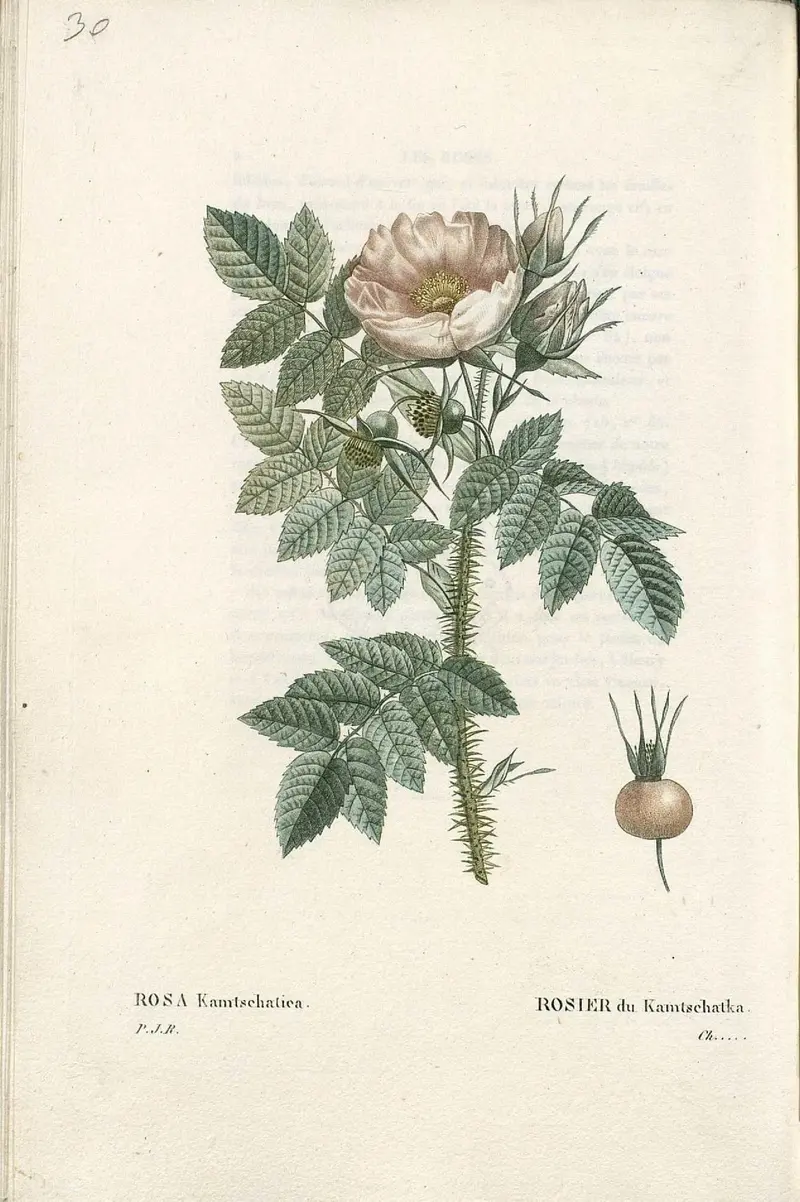
Rosa Kamtchatica (Kamchatka Rose)
Pierre-Joseph Redouté
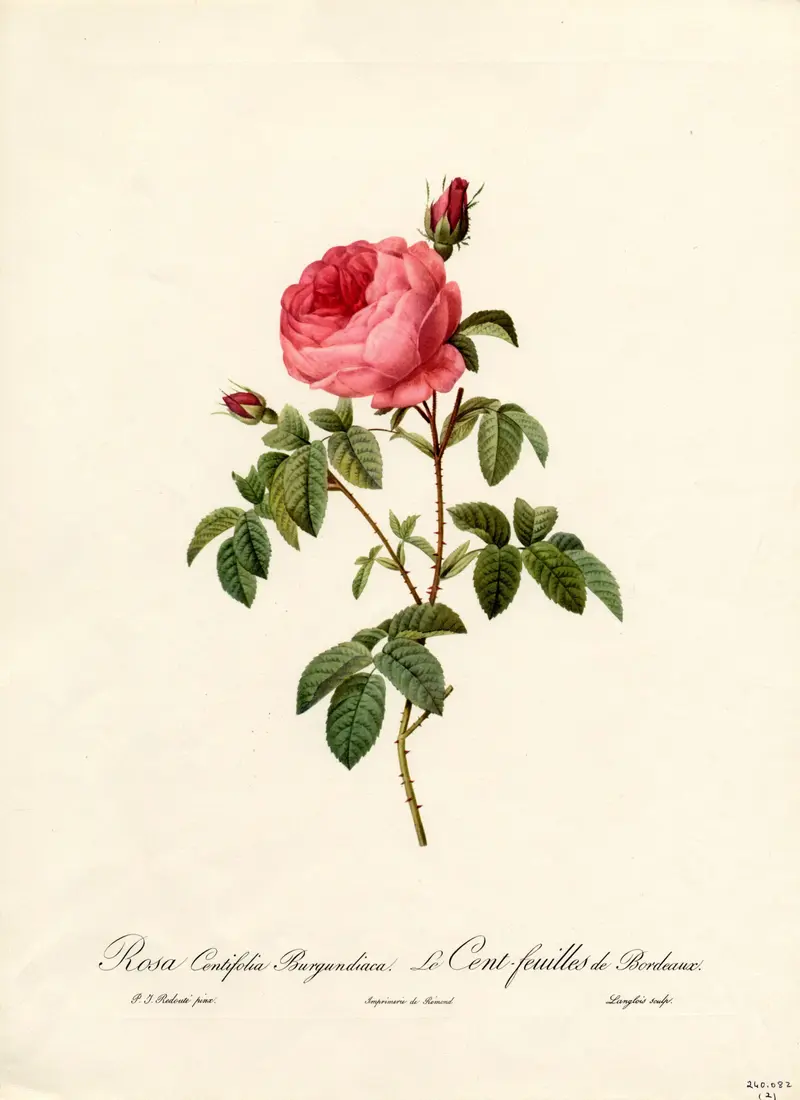
Rosa Centifolia Burgundiaca (Burgundy Rose)
Pierre-Joseph Redouté