
Roter Abend Blaue Berge — History & Facts
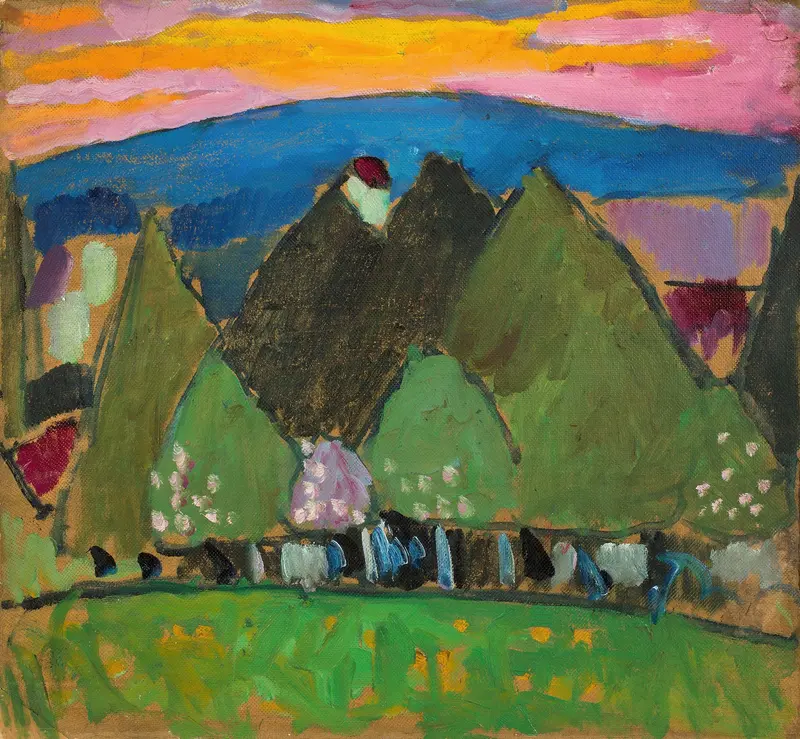
The eye is first caught by the clash and harmony of color: a sky of molten orange presses down upon mountains rendered in a blue so intense it seems to hum. The house at the center, its roof a vivid slash of red and its walls a swirl of lilac, stands as both anchor and enigma—its form simplified, almost abstracted, yet unmistakably solid against the wildness of the palette. Notice how the brushwork is urgent and broad, the boundaries between field, forest, and mountain blurred by the artist’s hand, as if the landscape itself is vibrating with evening’s last light.
The shadows are not black but deep purple and green, suggesting that even darkness in this world is alive with color. This is not a quiet sunset, but an evening charged with energy, where every element seems to pulse with its own inner heat. Created in 1910, Roter Abend Blaue Berge belongs to the world of early twentieth-century German Expressionism, a moment when painters like Alexej von Jawlensky sought to remake landscape painting from the inside out. Rather than record a specific place, artists of this movement used color and form to express inner states and the emotional charge of nature.
Works like this were rarely made for official commissions; instead, they emerged from the artist’s own drive to experiment and from the support of collectors and small exhibitions. The painting’s presence in the Christie's LotFinder in our own time is a reminder of how such radical visions, once the province of avant-garde circles, have become treasures sought by collectors and museums alike. The landscape invites you to look again—not for what is familiar, but for the way it makes you feel.
More Artworks by Alexej von Jawlensky

Murnau
Alexej von Jawlensky
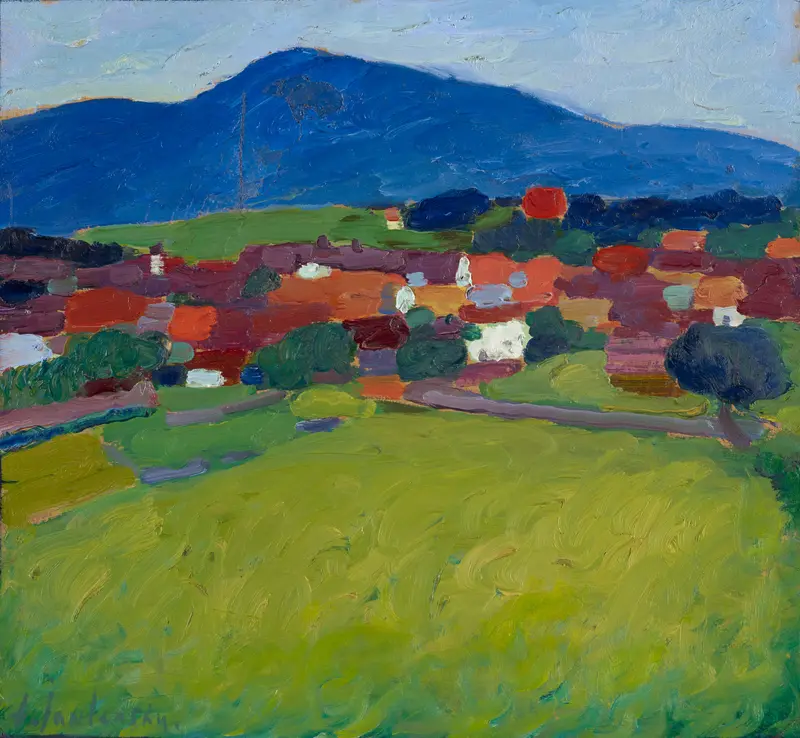
The Village Of Murnau
Alexej von Jawlensky
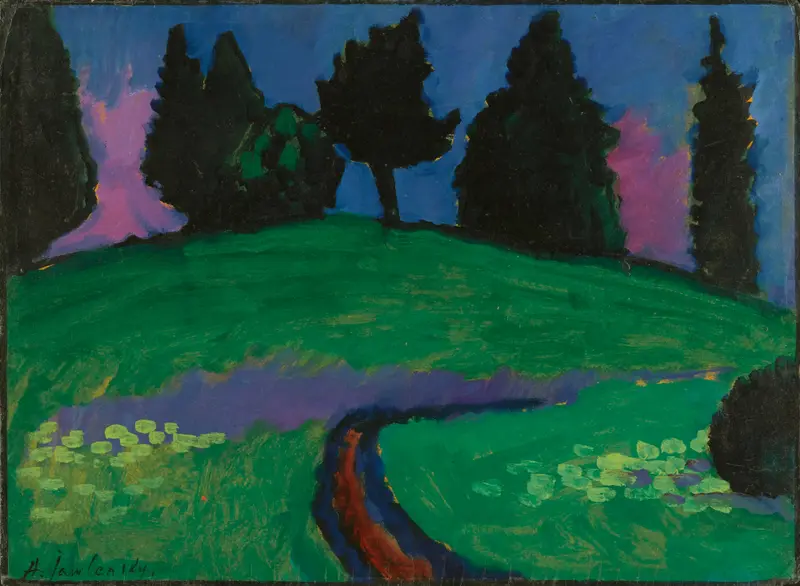
Dunkle Bäume über Grünem Hang (Dark Trees Over Green Slope)
Alexej von Jawlensky
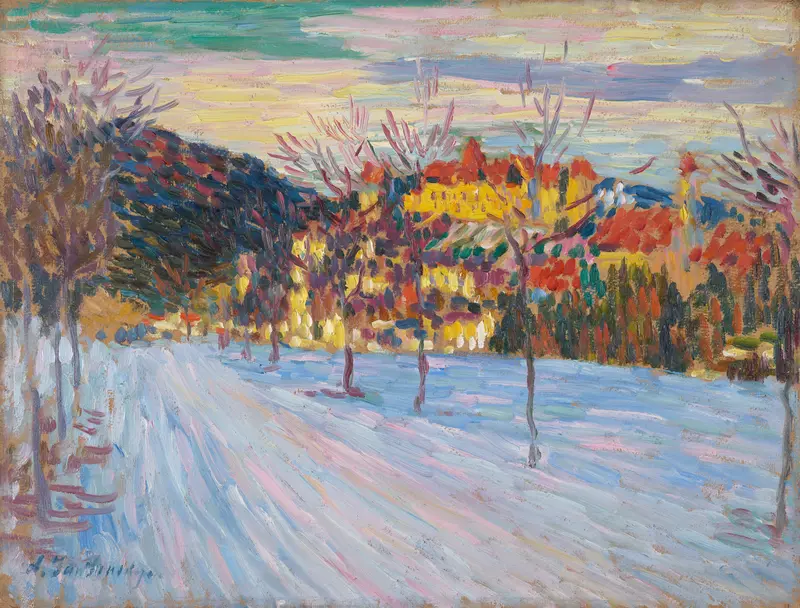
Füssen
Alexej von Jawlensky
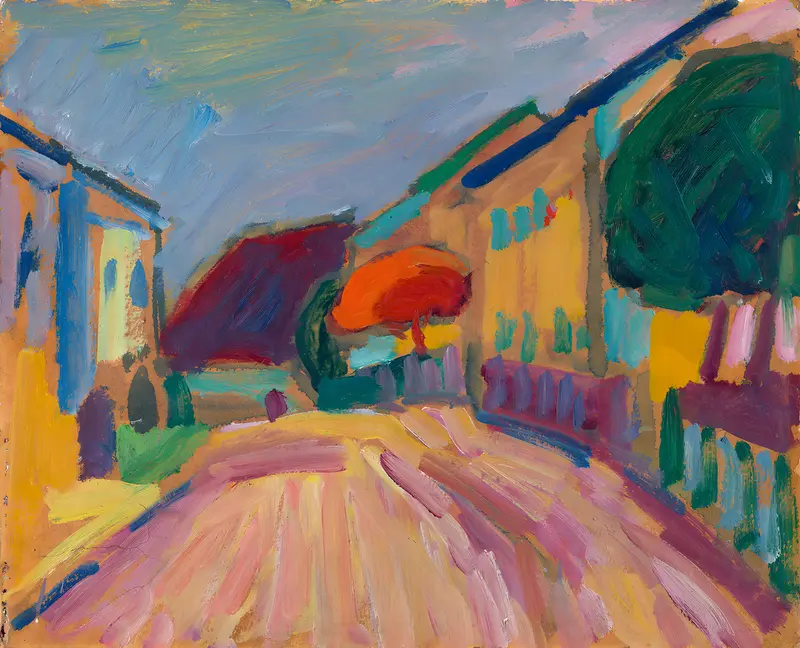
Sketch from Murnau
Alexej von Jawlensky
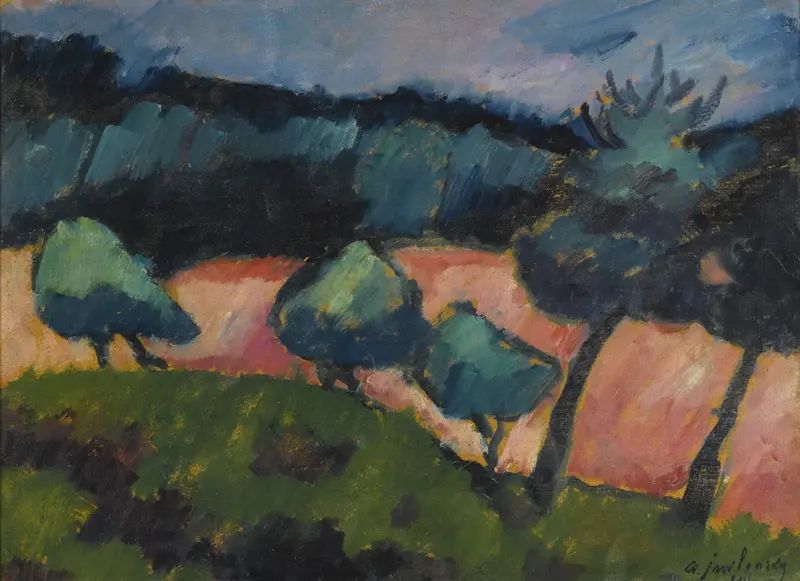
Bäume und Dünen in Prerow (Trees and dunes in Prerow)
Alexej von Jawlensky
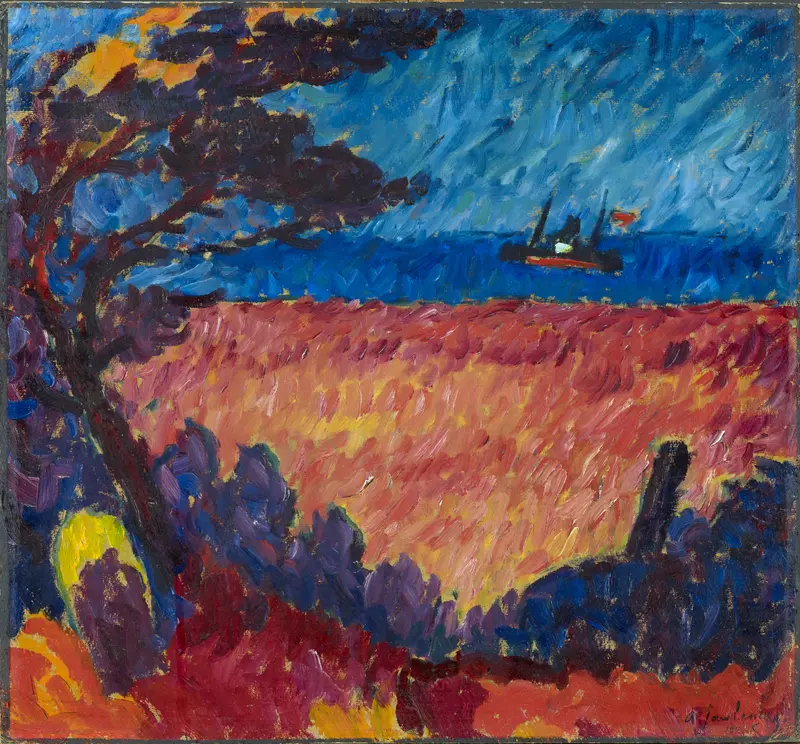
At The Baltic Sea
Alexej von Jawlensky
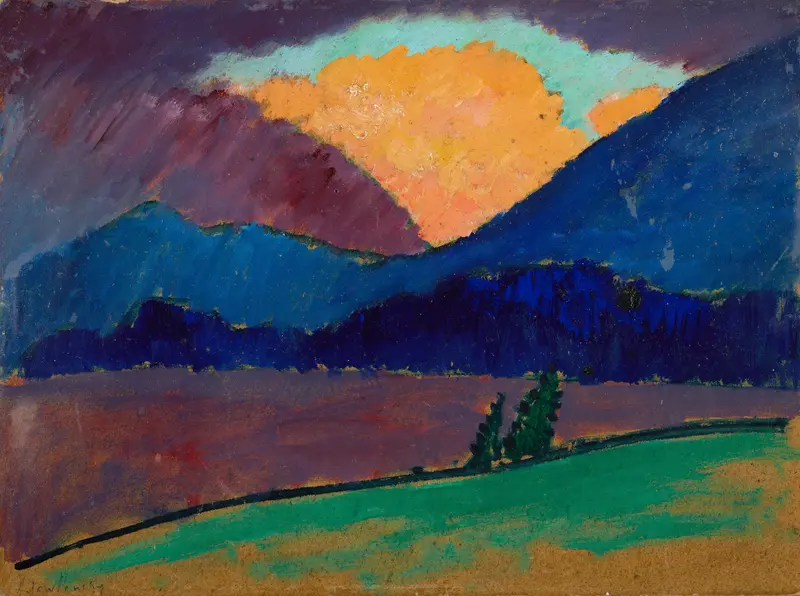
Summer evening in Murnau
Alexej von Jawlensky
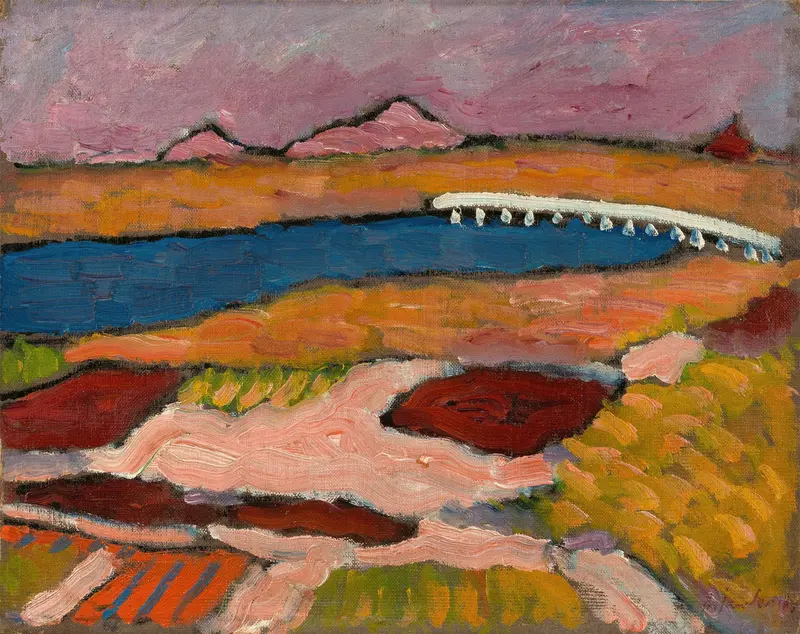
Prerow (Darß), Pommern
Alexej von Jawlensky
Landschaft mit Bäumen
Alexej von Jawlensky
More Landscape Art

The Starry Night
Vincent van Gogh

View of Delft
Johannes Vermeer

Water Lilies
Claude Monet

The Grand Canal, Venice, looking north-west from the Ca' Corner to the Ca' Contarini degli Scrigni, with the campanile of Santa Maria della Carità
Canaletto

Windsor Castle
Canaletto

The Grand Canal looking North-East from the Palazzo Dolfin-Manin to the Rialto Bridge
Canaletto