
Route de Versailles — History & Facts
In this dreamlike landscape, the viewer is invited to wander through a moment suspended between reality and imagination. Focus on the winding path that leads us deeper into the scene, the gentle curve drawing the eye toward a distant horizon where soft blues meet pastel pinks. Notice how the sunlight filters through the trees, casting dappled shadows on the ground, creating a serene interplay of light and texture. The meticulous brushstrokes suggest a tender affection for nature, capturing not just the image but the very essence of a fleeting moment. The juxtaposition of the vibrant greens against the muted earth tones speaks to a harmony that transcends the ordinary.
Look closely at the figures in the distance; they are rendered with a delicate simplicity, suggesting a narrative that is both personal and universal. The almost ethereal quality of the air, combined with the path winding toward an unseen destination, evokes a sense of nostalgia and longing, as if one is walking through a memory rather than a physical space. In 1886, Lepère was experimenting with Impressionism, immersing himself in the landscapes surrounding Paris. The era was marked by a fascination with capturing ephemeral effects of light and atmosphere, as artists sought to express the transient beauty of their world.
This work reflects not only his artistic development but also the broader movement toward modernism, where the subjective experience reigns, and the viewer is beckoned into a visual reverie.
More Artworks by Auguste Louis Lepère
Browse all →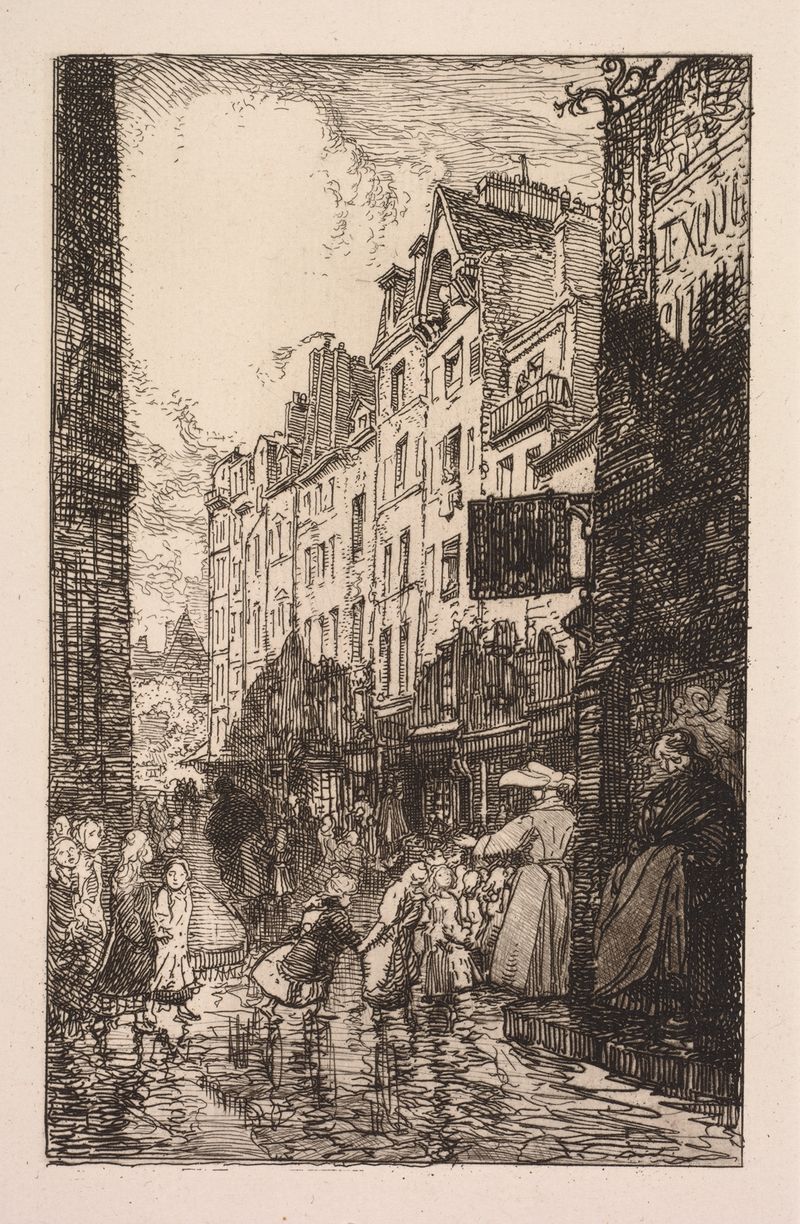
La Rue des Prêtres Saint-Séverin
Auguste Louis Lepère
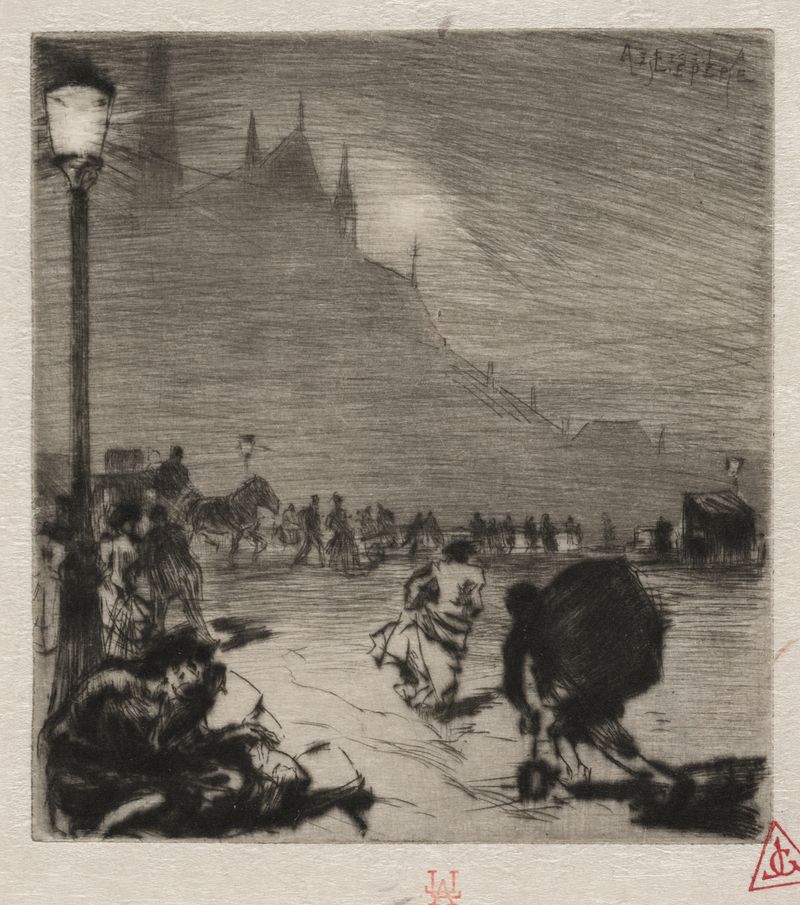
Au Coin du Pont-aux-Doubles
Auguste Louis Lepère
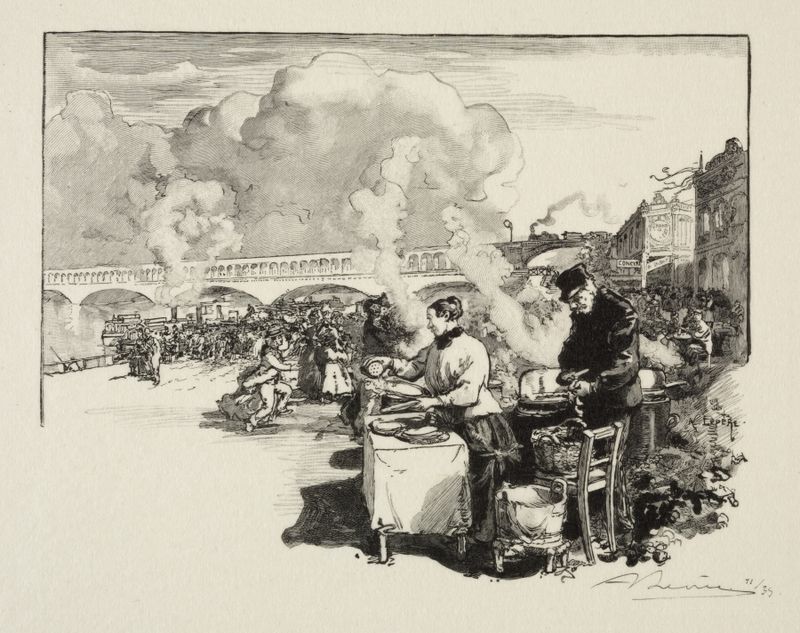
Debarcadère des bateaux-omnibus
Auguste Louis Lepère

La Seine, au quai de la Rapée
Auguste Louis Lepère
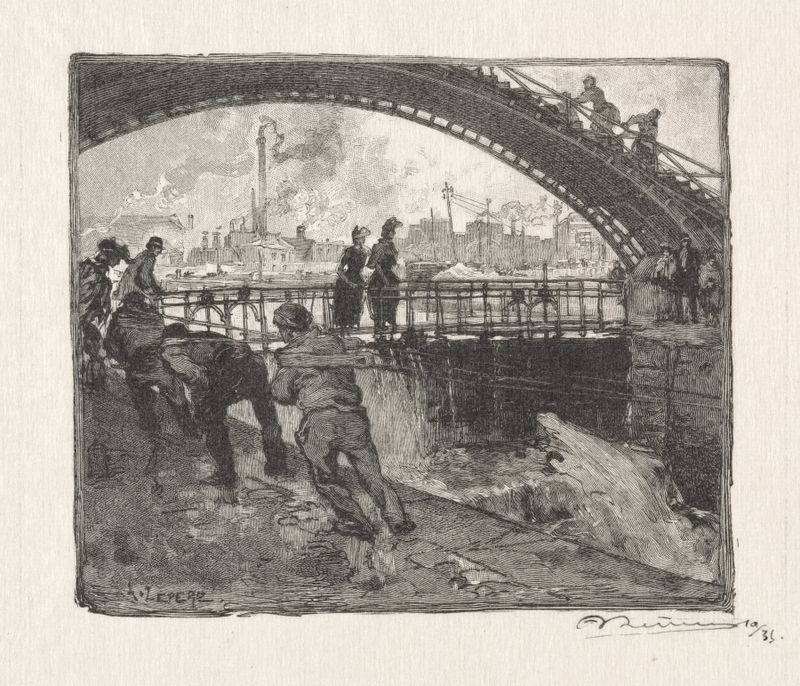
L’Ecluse du Canal St. Martin
Auguste Louis Lepère

Le Boulevard Montmartre, le Soir
Auguste Louis Lepère

Une Chasse au Mont Gérard
Auguste Louis Lepère
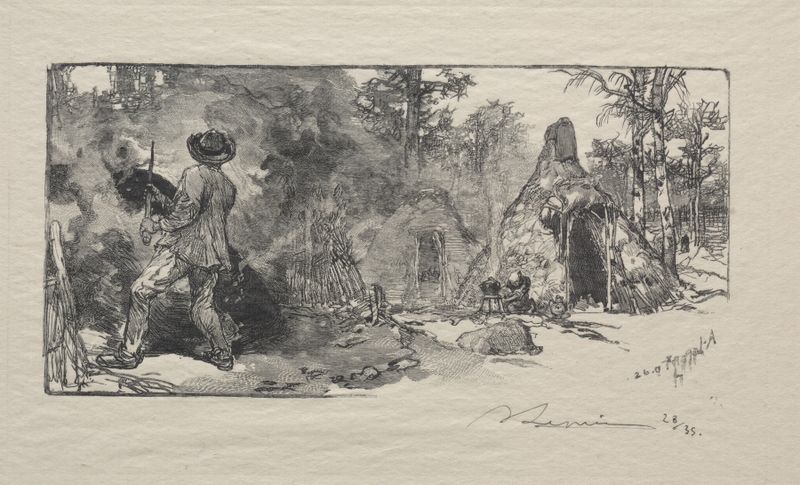
Les Charbonniere
Auguste Louis Lepère
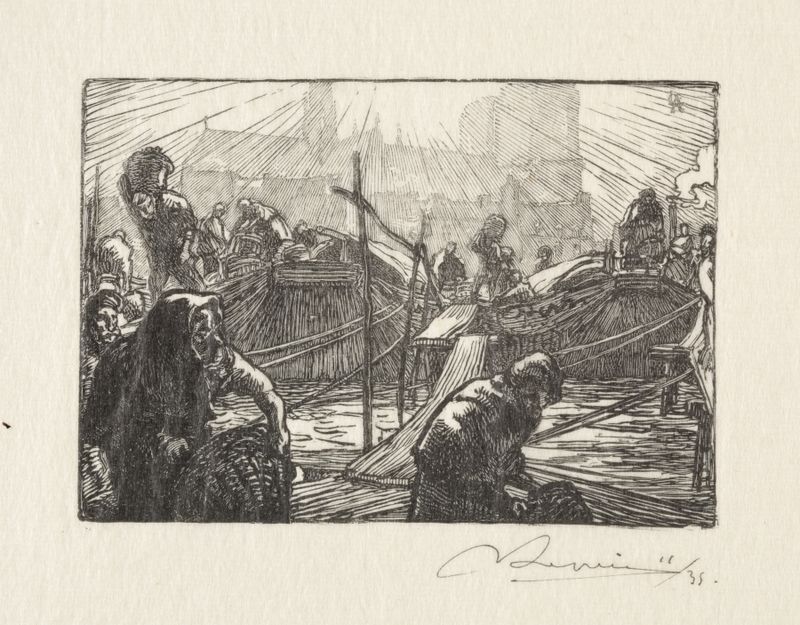
Notre Dame vue du Marché aux pommes
Auguste Louis Lepère

Le Palais des Arts Liberaux, Intèrieur
Auguste Louis Lepère





