
Rue à La Côte-Saint-André, Dauphiné — History & Facts
The quiet streets often veil deeper truths, revealing moments of revelation hidden within their charm. Look to the left at the soft, warm hues that envelop the quaint buildings, where strokes of ochre and gold blend harmoniously to capture the golden hour. The sweeping brushwork creates a sense of movement, as if the houses themselves breathe in the radiance of the moment. Notice how the winding path leads the viewer’s eye, inviting exploration, while the shadowed corners hint at the mysteries that lie beyond the light. In this serene landscape, contrasts emerge—between light and shadow, warmth and coolness, presence and absence.
The vibrant colors exude life, yet the empty street evokes a sense of solitude and reflection. Each brushstroke whispers of the artist's own journey, suggesting that the beauty of a fleeting moment is often accompanied by layers of unseen complexity and emotion. Created in 1882, this work emerged during a pivotal time for the artist, who had settled in France after grappling with personal struggles and the evolution of his style. Jongkind, often regarded as a precursor to Impressionism, was deeply influenced by the changing dynamics of the art world, which was beginning to embrace modernity and new approaches to light and color.
Here, in this tranquil scene, he encapsulates both the tranquility of the pastoral landscape and the artist's ongoing search for revelation amidst life's quiet complexities.
More Artworks by Johan Barthold Jongkind
Browse all →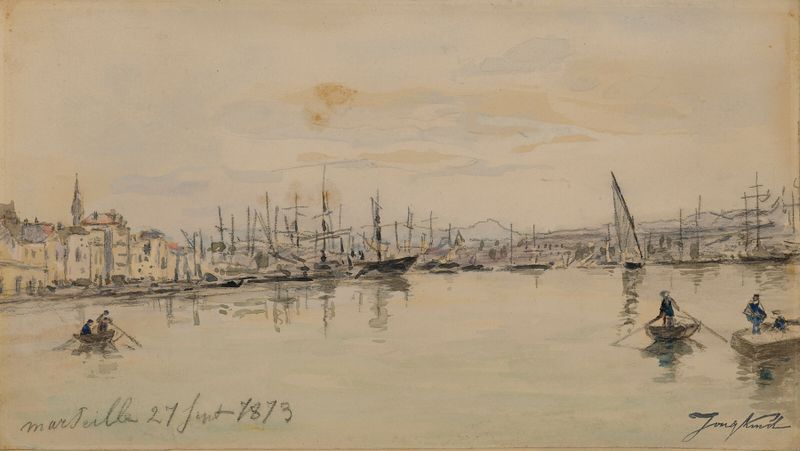
Le Port de Marseille
Johan Barthold Jongkind

Canal Saint-Martin
Johan Barthold Jongkind

Countryside near Brezins, between Grenoble and Vienne
Johan Barthold Jongkind

Notre-Dame vue du quai de la Tournelle
Johan Barthold Jongkind

Environs de Grenoble
Johan Barthold Jongkind

Clair de lune à Overschie (environs de Rotterdam)
Johan Barthold Jongkind

Port de Honfleur
Johan Barthold Jongkind
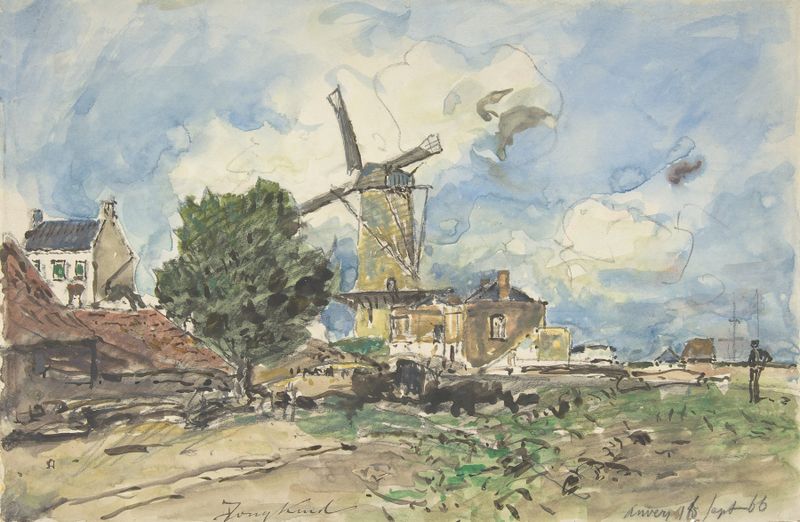
Wind Mill at Antwerp
Johan Barthold Jongkind

Le Havre
Johan Barthold Jongkind

The Church of Overschie
Johan Barthold Jongkind





