
Rue À Saint-Parize-Le-Châtel, Près De Nevers — History & Facts
What if beauty was never meant to be finished? In Rue À Saint-Parize-Le-Châtel, Près De Nevers, the artist captures an ephemeral moment, inviting viewers into a world that breathes with the freshness of creation. Look to the left, where gentle strokes depict the winding path flanked by verdant trees, their leaves kissed by light. Notice how the brushwork creates a sense of movement, suggesting a breeze rustling through the foliage. The palette, a symphony of greens and soft yellows, contrasts against the cobalt sky, binding nature and tranquility into a single frame.
The composition draws the eye along the road, leading into a distant horizon that teases the idea of journeys yet to come. In the foreground, a small figure embraces solitude; perhaps a traveler or a dreamer, contemplating the unfolding scene. This solitary presence hints at a larger narrative about the human experience and our relationship with nature. The delicate interplay of light and shadow reveals an emotional depth, evoking feelings of nostalgia and wonder.
Each brushstroke emanates the vitality of the moment while simultaneously suggesting that beauty, like life, is a fleeting phenomenon—ever in the process of becoming. Painted in 1862, during Jongkind's time in France, this work reflects the artist's transition into plein air painting, a technique that celebrated the spontaneity of nature. As the Impressionist movement began to bloom, he found inspiration in the landscapes of rural France, creating pieces that would influence future generations of artists. This painting stands as a testament to his belief in capturing the transient beauty of the world around him.
More Artworks by Johan Barthold Jongkind
Browse all →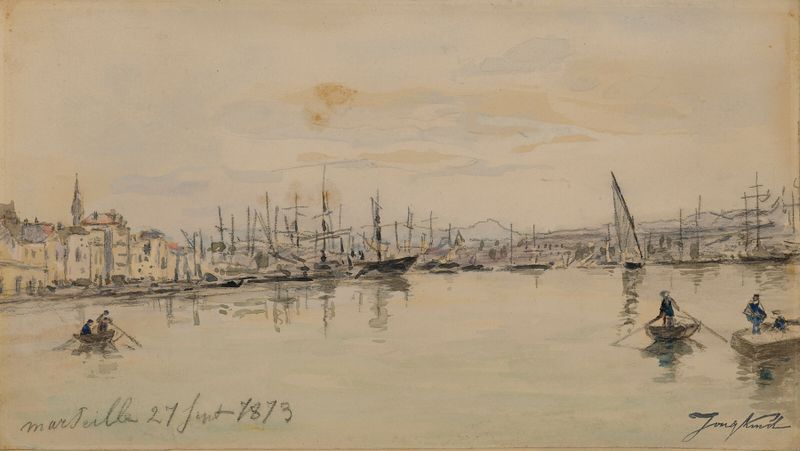
Le Port de Marseille
Johan Barthold Jongkind

Canal Saint-Martin
Johan Barthold Jongkind

Countryside near Brezins, between Grenoble and Vienne
Johan Barthold Jongkind

Notre-Dame vue du quai de la Tournelle
Johan Barthold Jongkind

Environs de Grenoble
Johan Barthold Jongkind

Clair de lune à Overschie (environs de Rotterdam)
Johan Barthold Jongkind

Port de Honfleur
Johan Barthold Jongkind
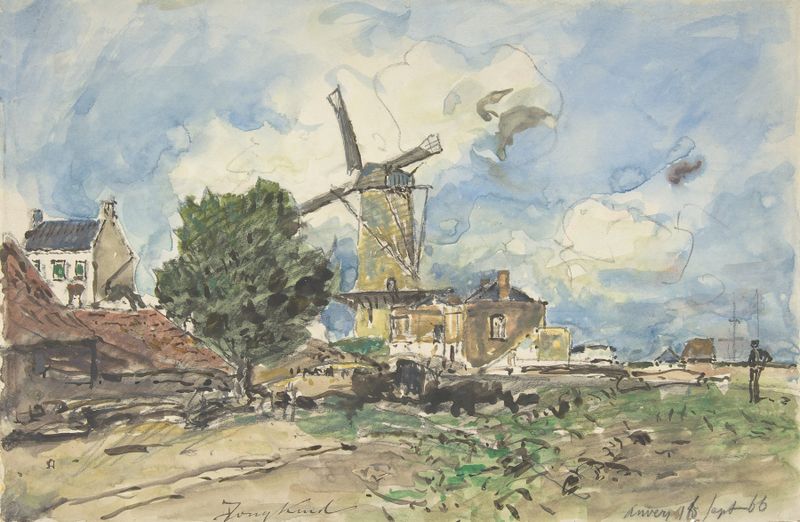
Wind Mill at Antwerp
Johan Barthold Jongkind

Le Havre
Johan Barthold Jongkind

The Church of Overschie
Johan Barthold Jongkind





