
Ruined Flat Archway — History & Facts
Can beauty exist without sorrow? The emptiness within Ruined Flat Archway resonates with a haunting stillness, inviting the viewer to ponder the remnants of what once was, emphasizing the bittersweet nature of decay. Look to the center of the canvas, where the weathered arch looms, its crumbling stones stark against a muted backdrop. The light gently caresses the edges of the structure, revealing textures that speak of time's passage and neglect. Surrounding foliage, rendered in soft greens and browns, serves as a contrast to the rigidness of the archway, enhancing the sense of isolation and abandonment.
The artist's careful brushwork imbues each crack with a history, prompting us to consider the stories behind this forgotten structure. Amidst this desolation lies an exploration of duality; the archway symbolizes both resilience and fragility. Its grandeur hints at former glory, while the absence of life around it evokes profound loneliness. The play between light and shadow amplifies the emotional weight, creating a poignant tension that resonates with the viewer's own experiences of loss and memory.
Each detail reveals the complex relationship between beauty and emptiness, challenging us to find meaning in what remains. In 1785, Willey Reveley painted Ruined Flat Archway during a period marked by a burgeoning interest in the romanticized ruins of antiquity. Living in England, he engaged with a movement that admired the picturesque qualities of decay, reflective of the broader cultural shifts towards the appreciation of nature and history. This period influenced his work, as he sought to capture the fleeting beauty of structures in decline, which echoed the transitory nature of life itself.
More Artworks by Willey Reveley
Browse all →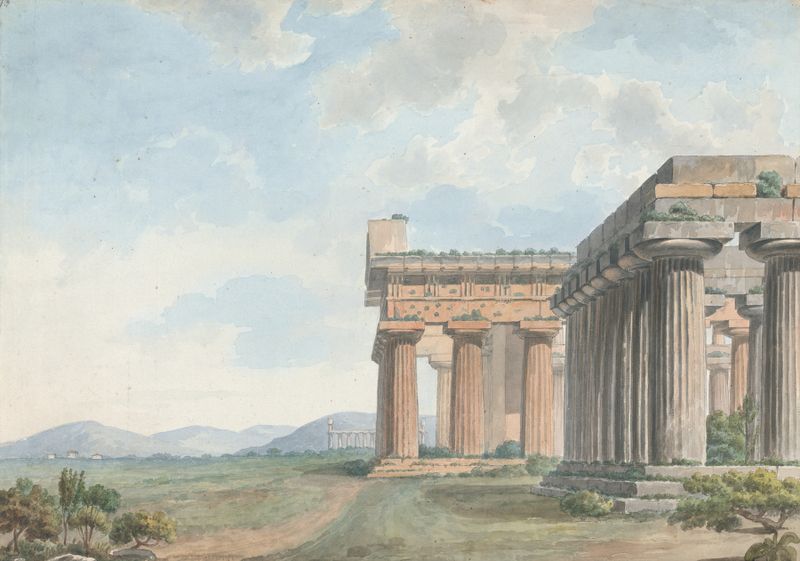
Temple Ruins at Paestum
Willey Reveley
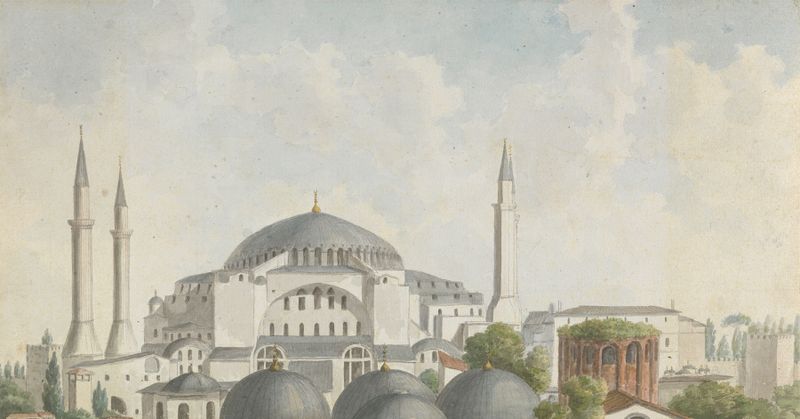
View of the domes and spires of Hagia Sophia, Istanbul
Willey Reveley
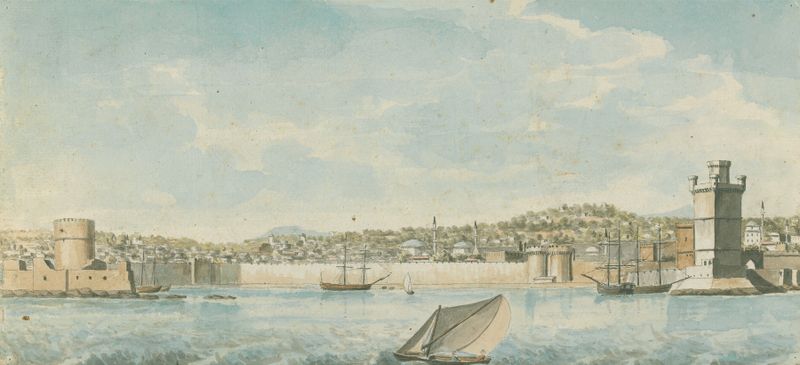
View of a Walled Town and Harbour with Towers Seen From the Sea
Willey Reveley
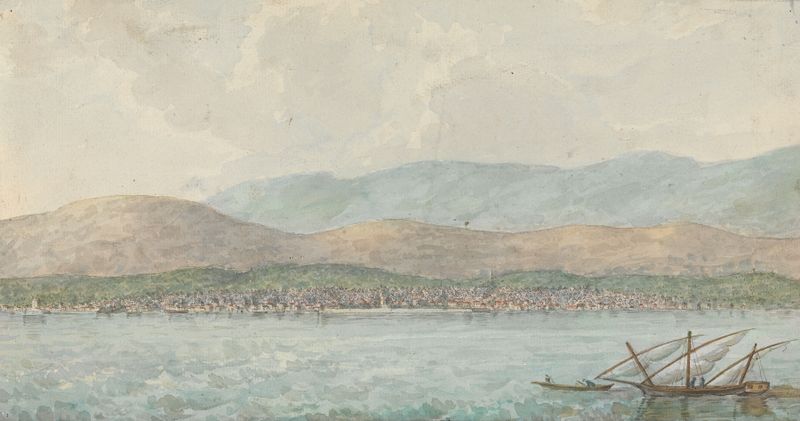
View of a Harbour and Town From the Sea, Turkey
Willey Reveley
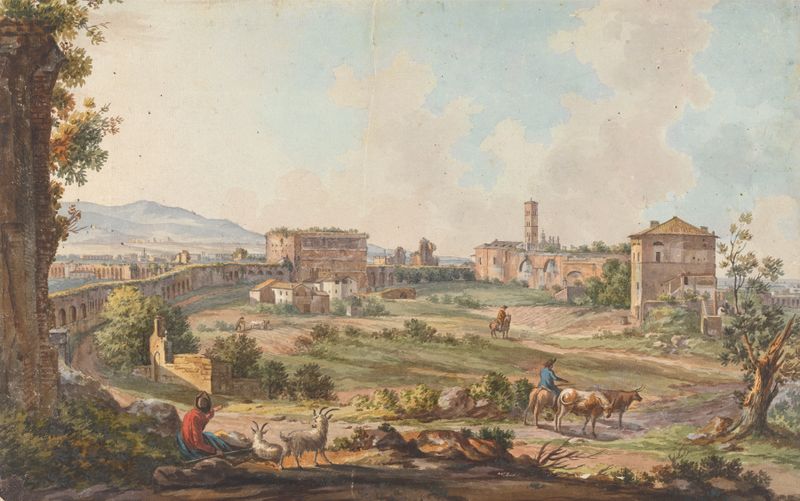
Ruins in Rome with Goats, Cows and Herdsmen
Willey Reveley
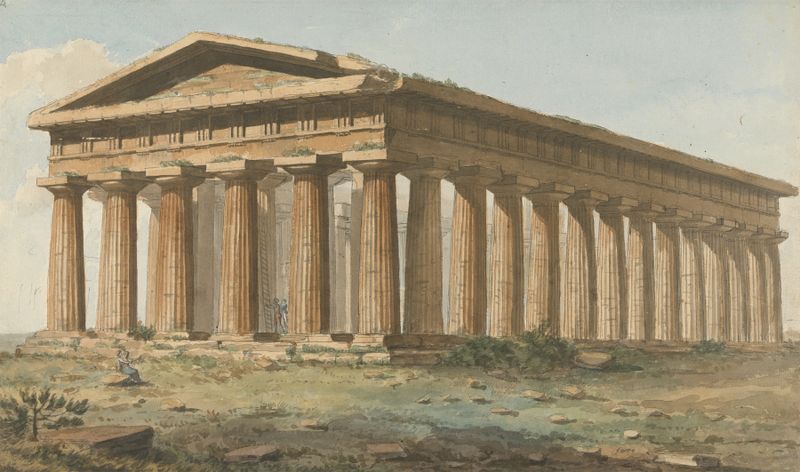
Paestum
Willey Reveley
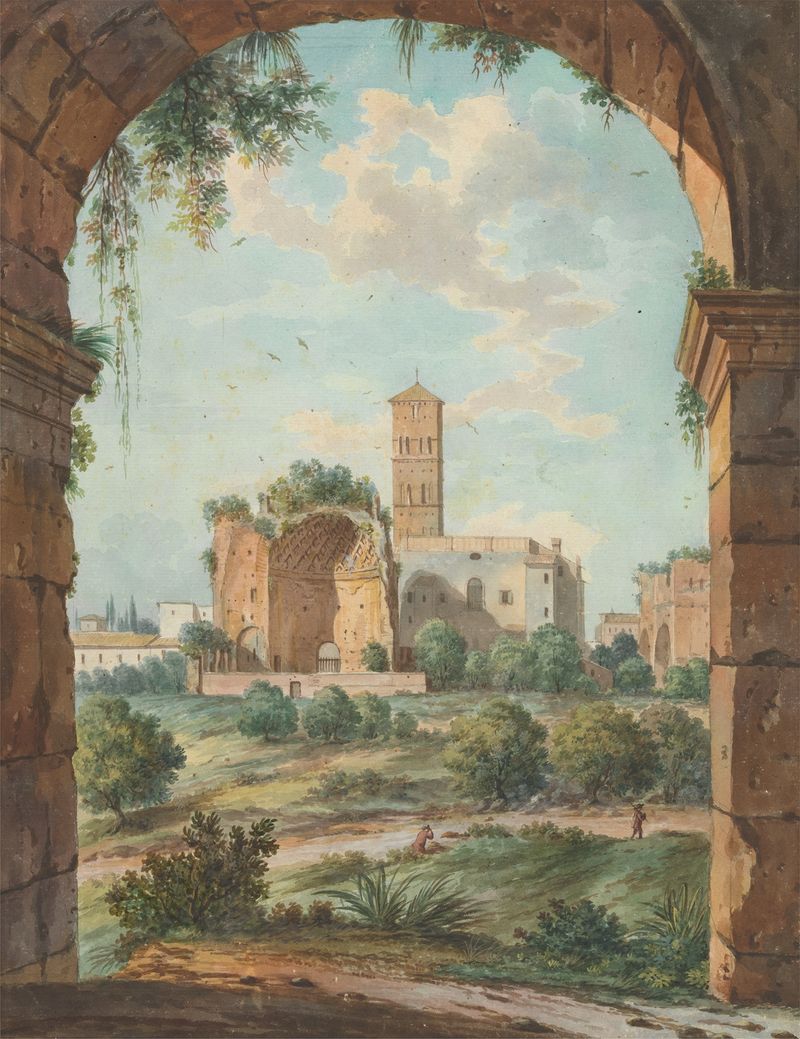
Rome with Ruins seen Through an Archway
Willey Reveley
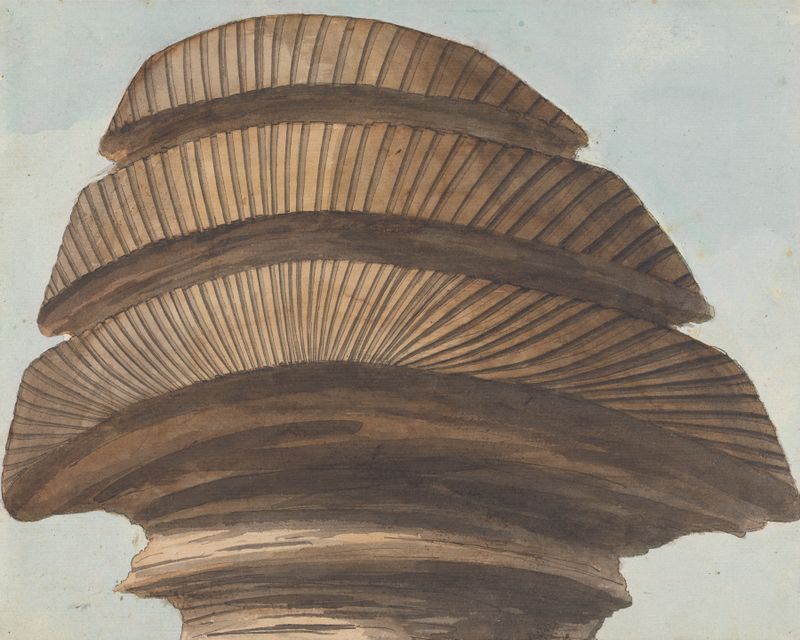
Back View of the Head of the Sphinx
Willey Reveley
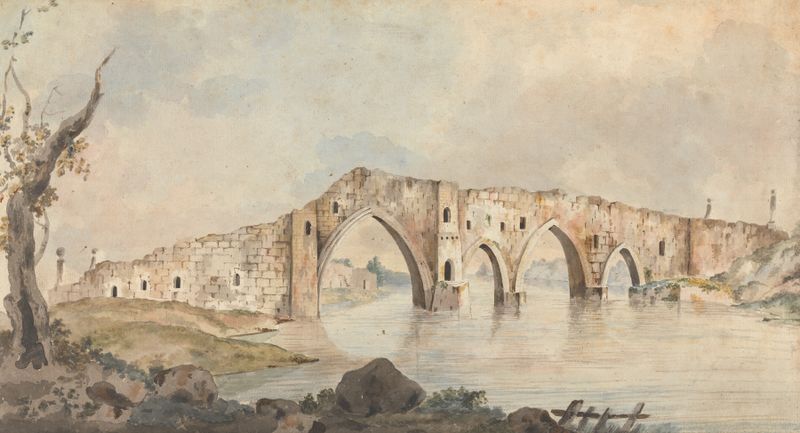
Ruined Bridge with Four Pointed Arches Near Rome
Willey Reveley
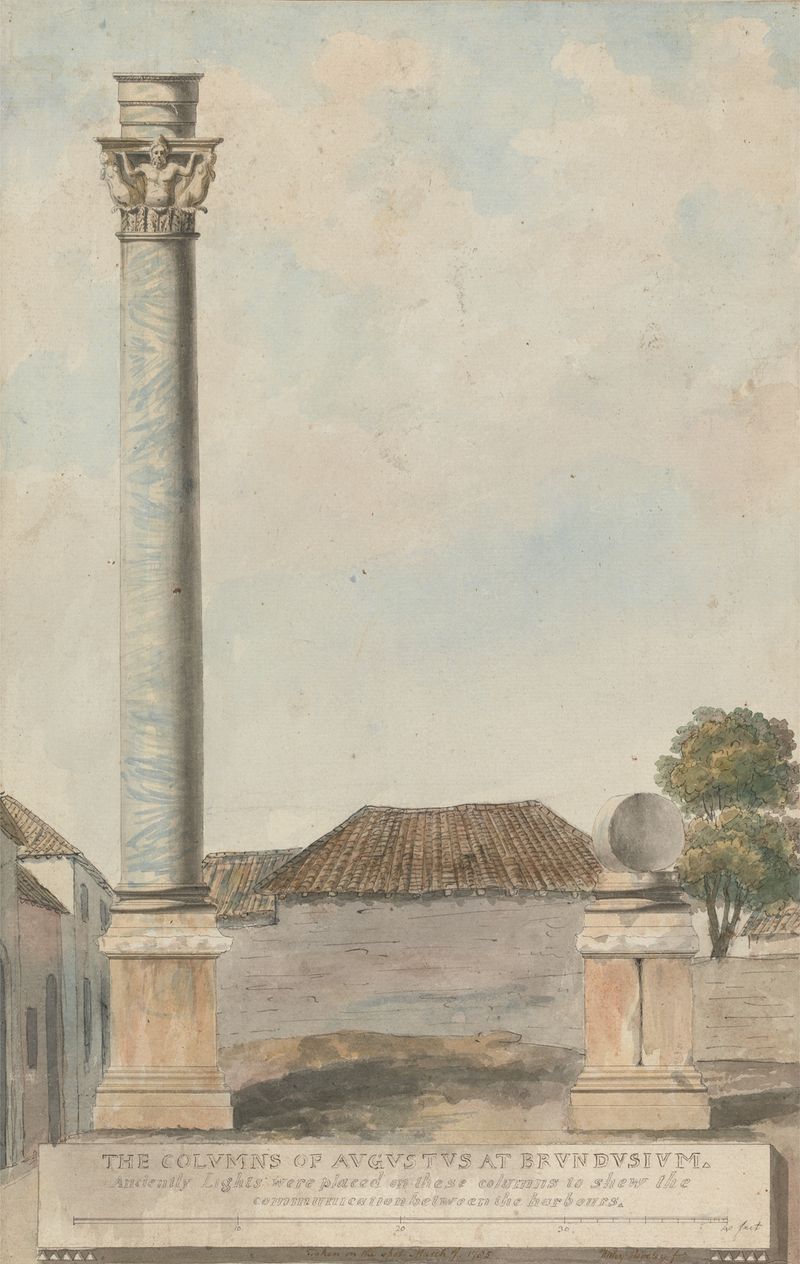
The Columns of Augustus at Brundisium
Willey Reveley
More Architecture Art
Browse all →
The statue of Liberty
Frédéric Auguste Bartholdi

View of Houses in Delft, Known as ‘The Little Street’
Johannes Vermeer

View of Houses in Delft, Known as ‘The Little Street’
Johannes Vermeer

The Cathedral in Rouen. The portal, Grey Weather
Claude Monet

The yellow house
Vincent van Gogh

The Church in Auvers-sur-Oise, View from the Chevet
Vincent van Gogh