
Ruins of Lukullus Villa by Via Appia in Rome — History & Facts
Who listens when art speaks of silence? In the stillness of Ruins of Lukullus Villa by Via Appia in Rome, a haunting echo of the past emerges, inviting contemplation of what once was. Focus on the crumbling columns and archways that dominate the canvas. Their weathered surfaces, bathed in a soft, golden light, evoke a sense of nostalgia. Notice how the interplay of shadow and light enhances the textures, drawing your eye to the intricate details of the stonework.
The muted palette, with its earthy tones, lends a reverence to the scene, transforming decay into beauty. Delve deeper, and you’ll uncover the emotional weight of loss and memory. The juxtaposition of the villa’s grandeur against its current state of dilapidation speaks to the passage of time and the fragility of existence. Small patches of greenery peeking through the ruins symbolize resilience, suggesting that nature reclaims what humanity leaves behind.
The silence of the setting is palpable, creating a contemplative space that invites personal reflections on history and transience. In 1872, Arthur Blaschnik painted this evocative scene amidst the burgeoning interest in classical antiquity, reflecting a broader artistic movement that sought to explore the ruins of the past. Living in Rome, he was surrounded by remnants of ancient civilization, inspiring him to capture the poignant beauty of decay. This work resonates with a moment when artists began to celebrate not just the splendor of the past, but the quiet stories embedded within its ruins.
More Artworks by Arthur Blaschnik
Browse all →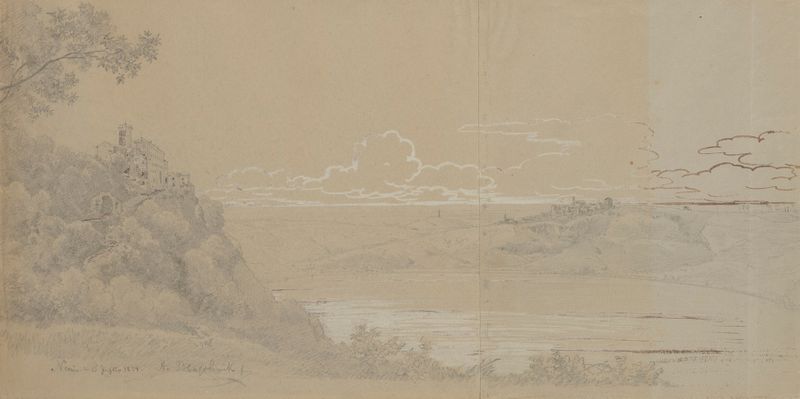
Palazzo Ruspoli by Lake Nemi, in the Distance the Town of Genzano di Roma
Arthur Blaschnik
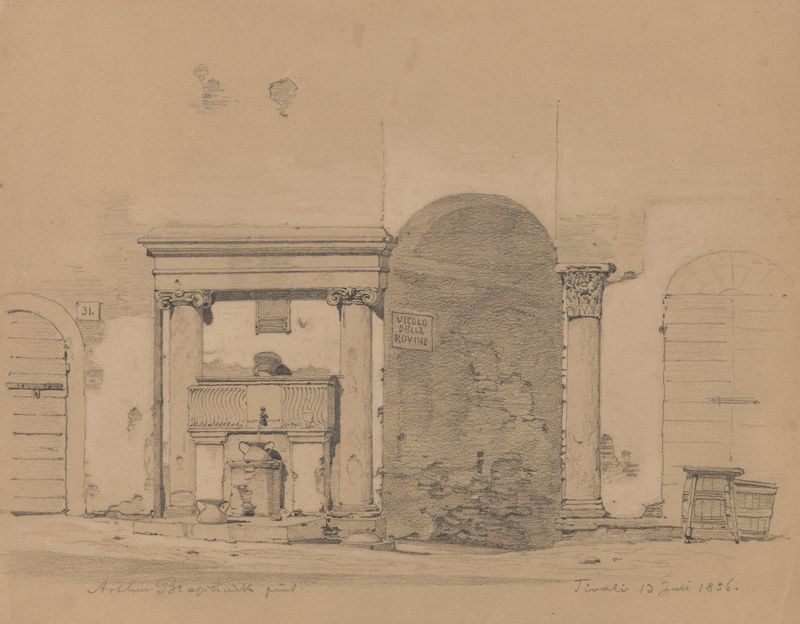
Gate Leading to Vicoli dei Grana near Piazza Palatina in Tivoli
Arthur Blaschnik
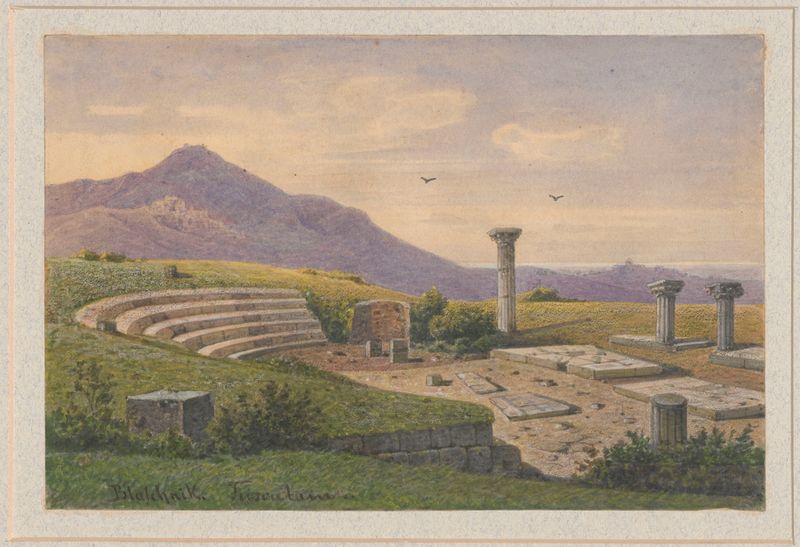
Amphitheatre in Tusculum
Arthur Blaschnik
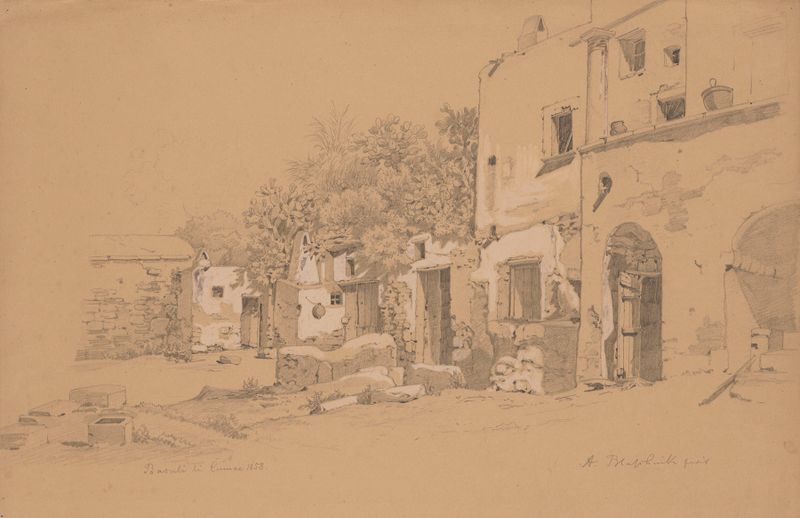
House and Outbuildings in Bacoli
Arthur Blaschnik
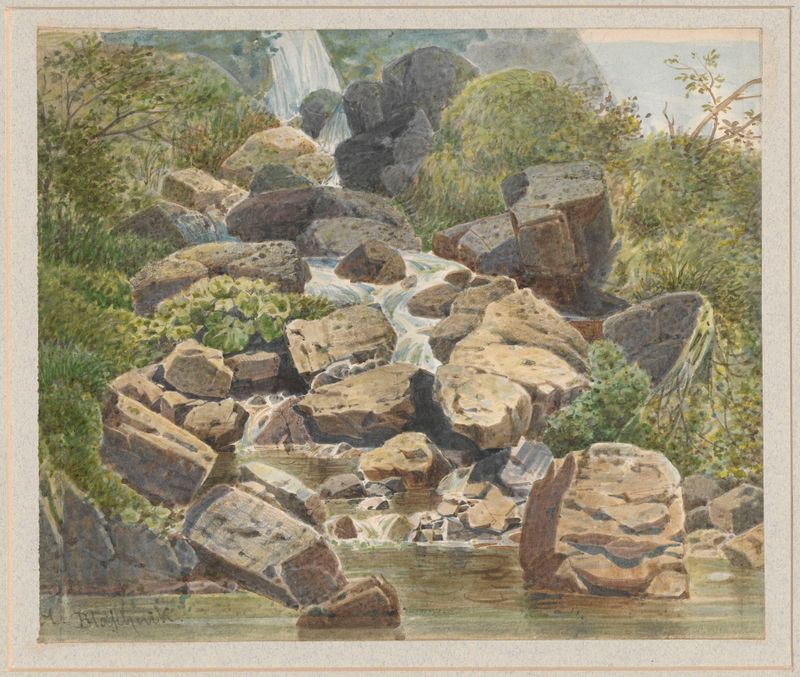
View of a small waterfall near Covigliaio, Tuscany
Arthur Blaschnik
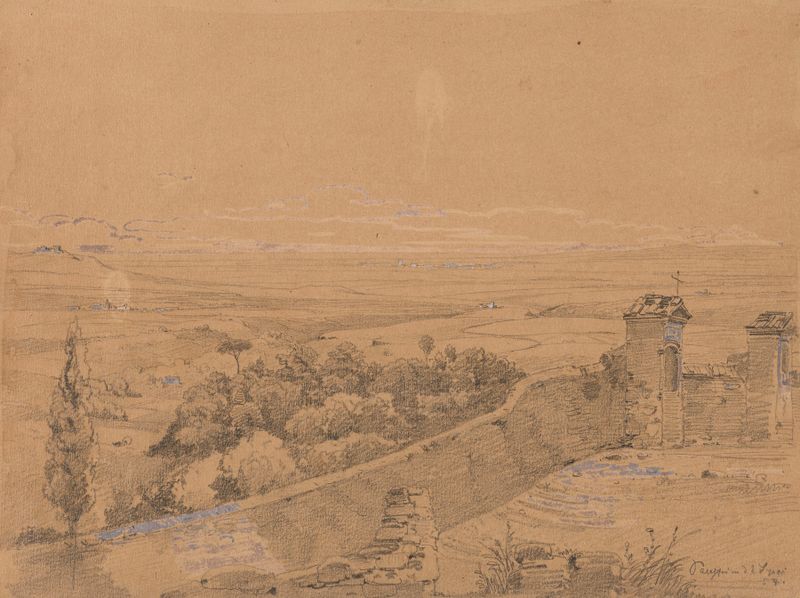
Landscape from the Vicinity of Palestrina
Arthur Blaschnik
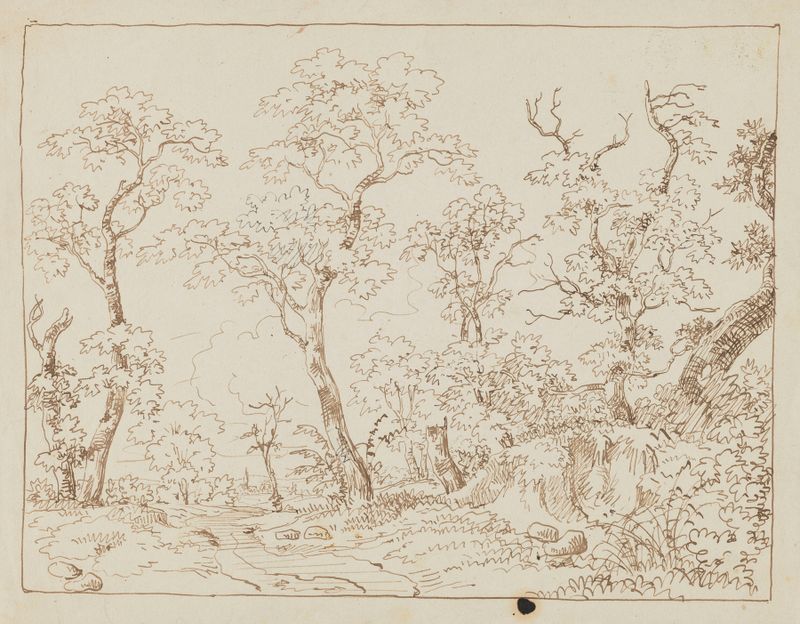
Studies of Trees, Landscape
Arthur Blaschnik
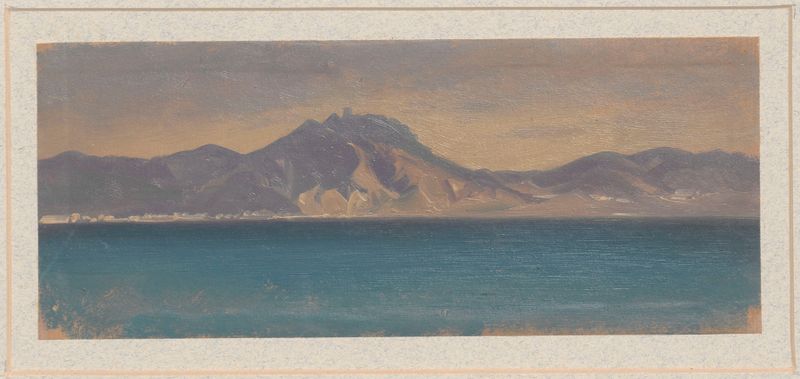
View of the Island of Capri
Arthur Blaschnik
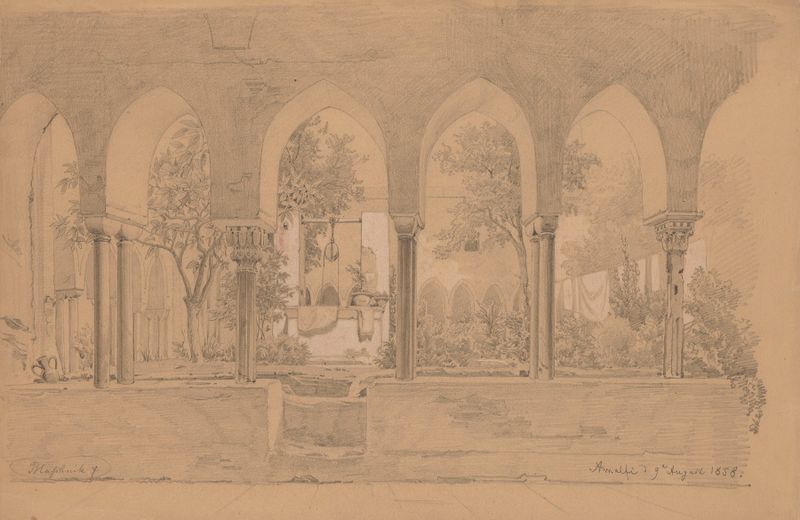
Cloister with Arcade Gallery in Amalfi
Arthur Blaschnik
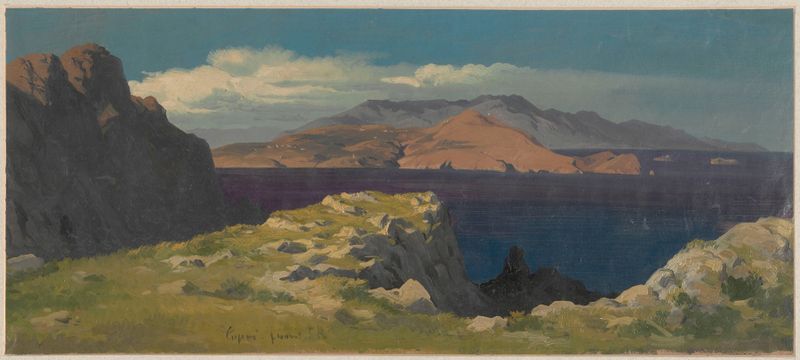
View of Capri
Arthur Blaschnik
More Architecture Art
Browse all →
The statue of Liberty
Frédéric Auguste Bartholdi

View of Houses in Delft, Known as ‘The Little Street’
Johannes Vermeer

View of Houses in Delft, Known as ‘The Little Street’
Johannes Vermeer

The Cathedral in Rouen. The portal, Grey Weather
Claude Monet

The yellow house
Vincent van Gogh

The Church in Auvers-sur-Oise, View from the Chevet
Vincent van Gogh