
Ruins on Pir Pahar, near Monghy, Bihar — History & Facts
What secret hides in the quiet of the canvas? In Ruins on Pir Pahar, near Monghy, Bihar, the viewer is invited into a serene yet poignant moment where history and nature intermingle, whispering of divinity and decay. Focus on the crumbling structures on the left, their faded stonework bathed in warm sunlight. The gentle contrast of the lush green surrounding emphasizes the wear of the ruins, as if nature is both cradle and conqueror. Notice how the artist meticulously captures the delicate interplay of shadows and light, drawing your eye along the path that leads into this forgotten world, evoking a sense of tranquil nostalgia. Hidden meanings linger in the details—each weathered stone tells a story of time, while the vibrant foliage suggests life’s persistence against the backdrop of human endeavors.
The openness of the landscape invites contemplation, reflecting the transient nature of existence and the eternal cycle of creation and decay. There’s a profound juxtaposition between the sacred remnants of architecture and the embrace of wilderness, hinting at a deeper divinity lurking just beyond the visible. William Daniell painted this piece in 1790, during a period when Western artists were increasingly drawn to the exotic landscapes of the East. His travels through India inspired a series of works that illuminated both the natural beauty and historical richness of the region.
In a time marked by the British East India Company's expansion, his artistry not only captured sights but also contextualized cultural encounters, offering viewers a glimpse into a world rich in layers both earthly and spiritual.
More Artworks by William Daniell
Browse all →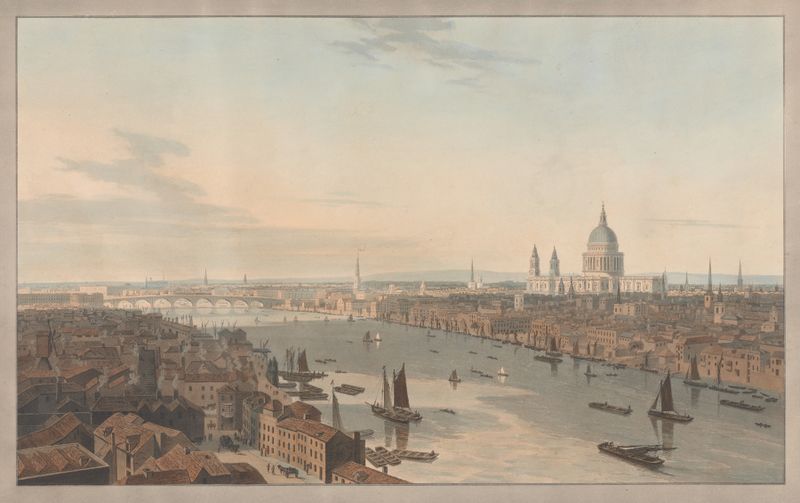
St. Paul’s and Blackfriars Bridge from Southwark
William Daniell
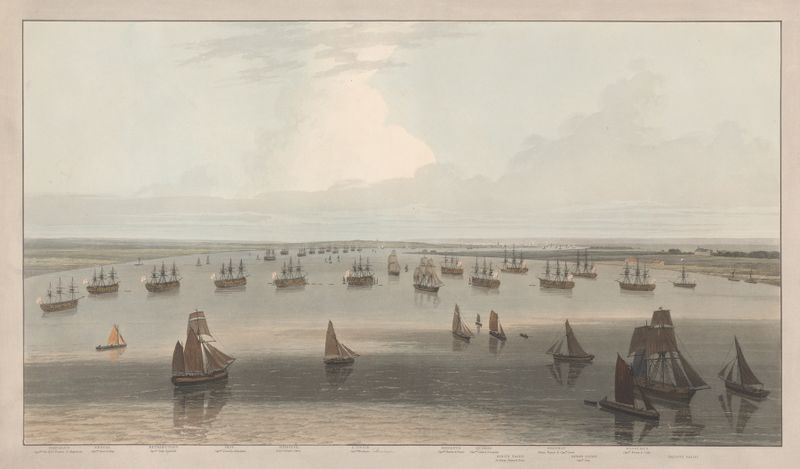
A View of the Frigates Stationed in the Hope under the Command of the Elder Brethen of the Trinity House, Thames Estuary
William Daniell

Main Entrance of the Jami Mosque, Jaunpur
William Daniell

London Bridge
William Daniell

London from Greenwich Park
William Daniell
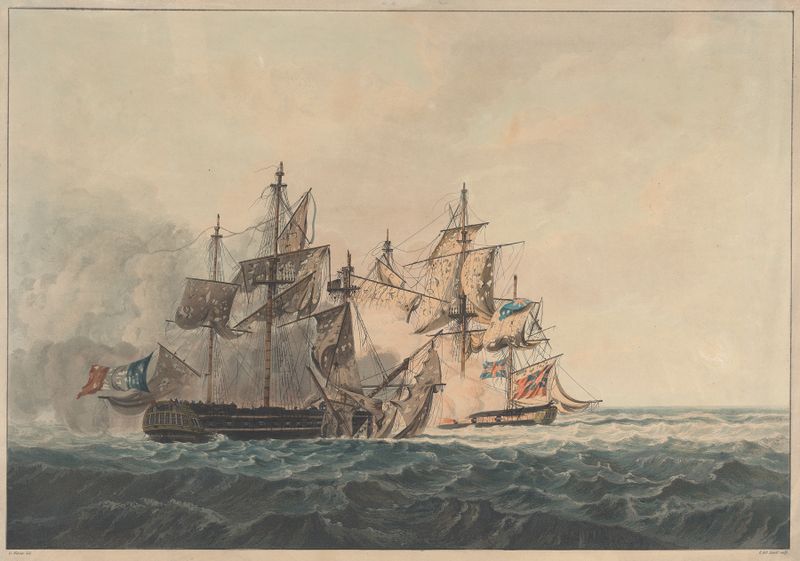
The Action between his Majesty’s Sloop ‘Bonne Citoyenne’ and the French Frigate ‘La Furieuse’
William Daniell
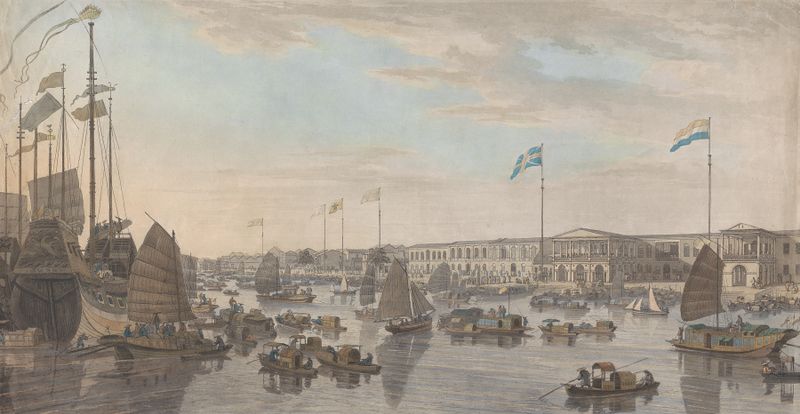
The European Factories at Canton in China
William Daniell

View of London Bridge and St. Paul’s Cathedral
William Daniell
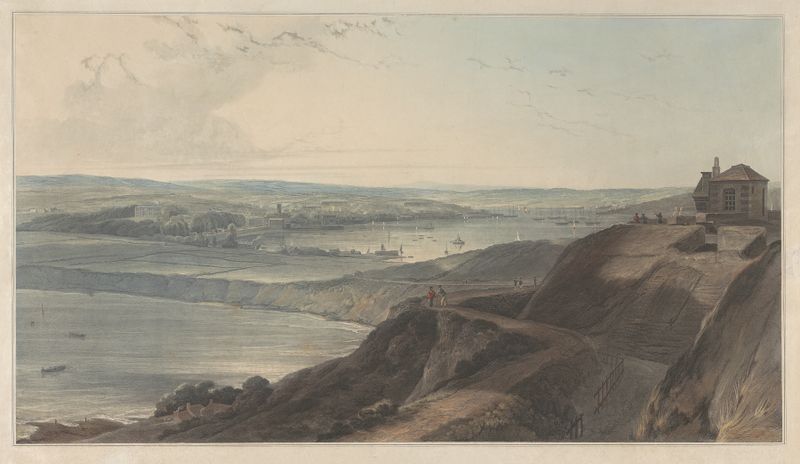
View of the Town and Part of the Harbour of Falmouth from Pendennis Castel, Cornwall
William Daniell

Madras, or Fort St. George, in the Bay of Bengal — A Squall Passing Off
William Daniell





