
Saint Charles’s Church in Vienna — History & Facts
Is this a mirror — or a memory? In a world reshaped by revolution, reflections can be both an echo of the past and a glimpse into the future. Focus on the luminous dome that dominates the scene, its intricate architecture cradling the light in a soft embrace. Notice how the cool blues and warm golds interplay, creating a dialogue between the sky above and the stones below. The painter’s brush strokes catch the essence of each detail, inviting you to explore the grandeur of the church while simultaneously grounding it in the realities of everyday life.
The juxtaposition of the soaring structure against the bustling atmosphere below evokes a sense of awe, yet also a recognition of its place within the urban landscape. Within the canvas lies a tension between permanence and transience. The church stands as a witness to the city's turmoil, a steadfast monument amidst the ever-changing tides of history. The figures scattered in the foreground, caught in motion, represent the human connection to this sacred space, embodying both hope and uncertainty.
Each passerby seems to carry fragments of their own stories, reflecting the diverse narratives woven into the fabric of Vienna during a time of great upheaval. Created in 1919, this piece emerged as Graner navigated the aftermath of World War I. The artist, engaged in the bustling cultural environment of post-war Vienna, sought to capture the essence of a city undergoing profound transformations. In this period of recovery and introspection, Saint Charles’s Church in Vienna stands not merely as a structure, but as a symbol of resilience and renewal, reminding viewers of the power of memory amid the chaos of revolution.
More Artworks by Ernst Graner
Browse all →
The Departure of Emperor Francis Joseph, near the Schweizertor in Hofburg residence
Ernst Graner

Old Albrechtsplatz (today Albertinaplatz) in Vienna with the Philipphof and the Mozart monument
Ernst Graner
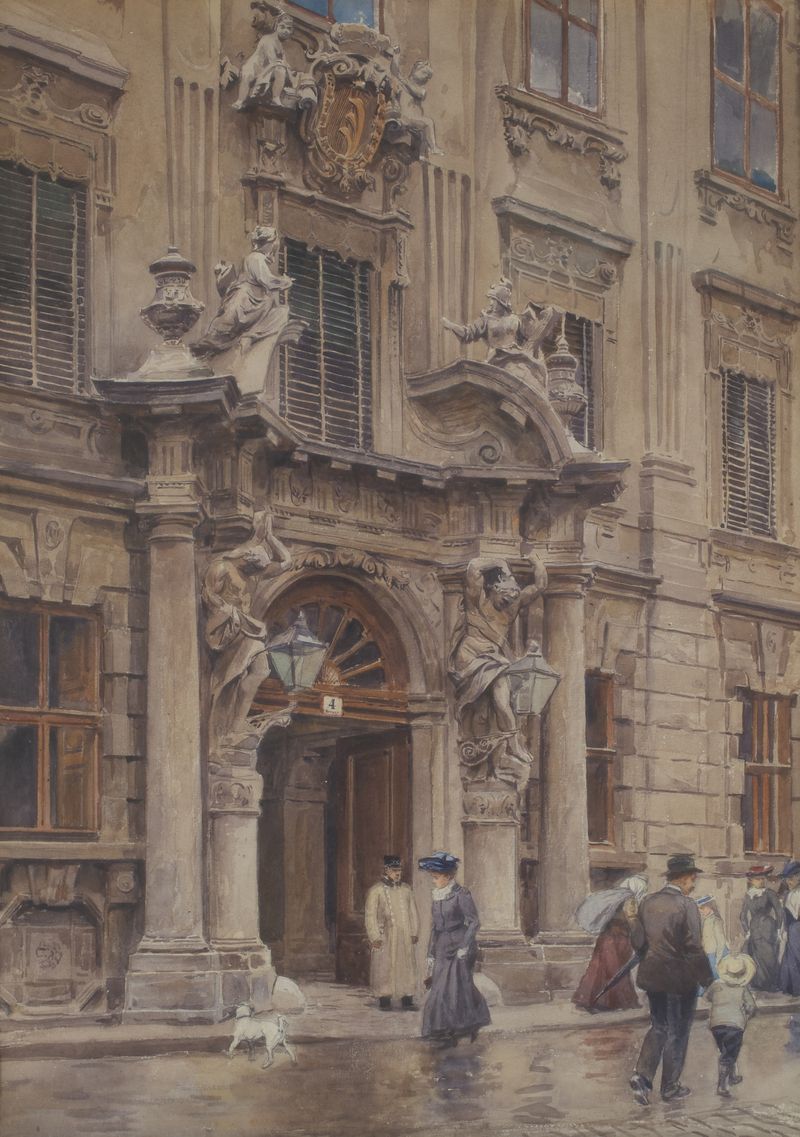
Das Portal Des Palais Kinsky
Ernst Graner
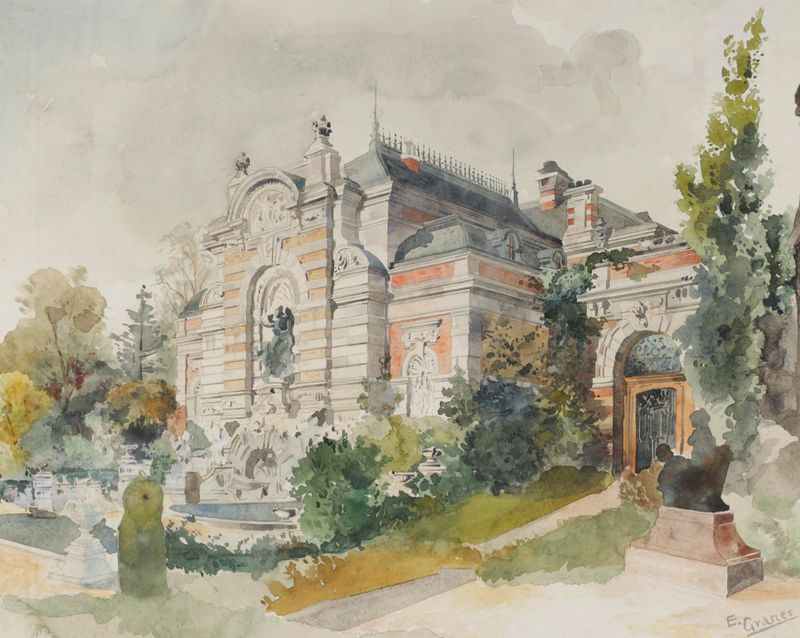
Villa in einem Park
Ernst Graner

Karlskirche
Ernst Graner

Kaiser Franz Joseph überquert den Naschmarkt
Ernst Graner

Palais des Prinzen Eugen in der Himmelpfortgasse
Ernst Graner

Die Schwendergasse In Wien Mit Schwenders Colosseum
Ernst Graner
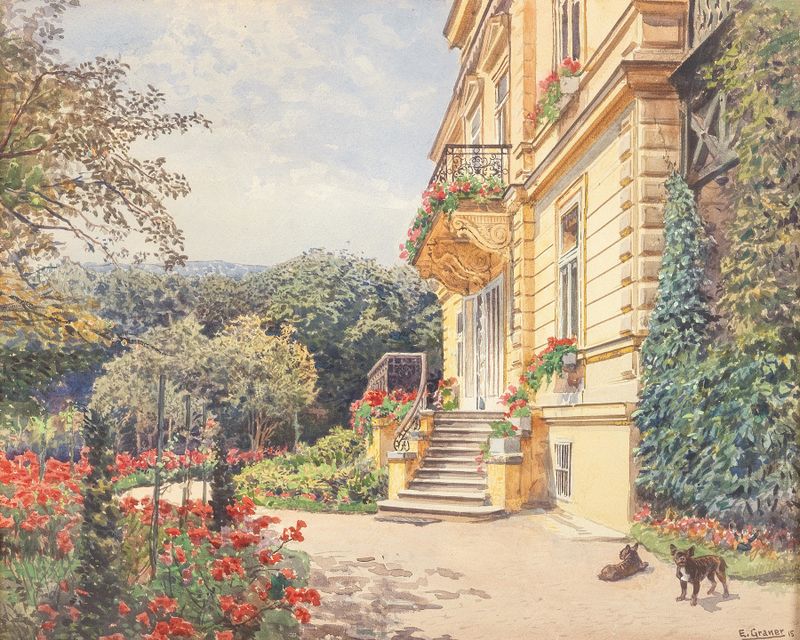
Villa in gepflegtem Garten
Ernst Graner
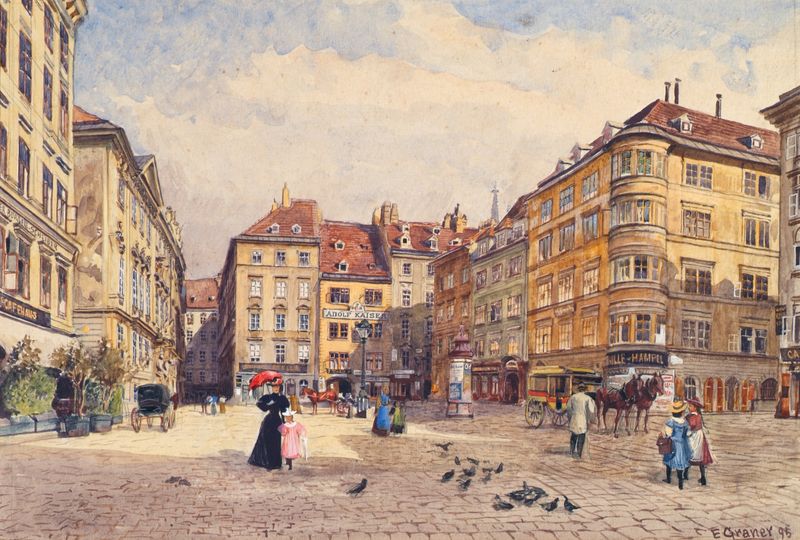
Der Judenplatz In Wien
Ernst Graner
More Architecture Art
Browse all →
The statue of Liberty
Frédéric Auguste Bartholdi

View of Houses in Delft, Known as ‘The Little Street’
Johannes Vermeer

View of Houses in Delft, Known as ‘The Little Street’
Johannes Vermeer

The Cathedral in Rouen. The portal, Grey Weather
Claude Monet

The yellow house
Vincent van Gogh

The Church in Auvers-sur-Oise, View from the Chevet
Vincent van Gogh