Sandviken, Norvège, effet de neige — History & Facts
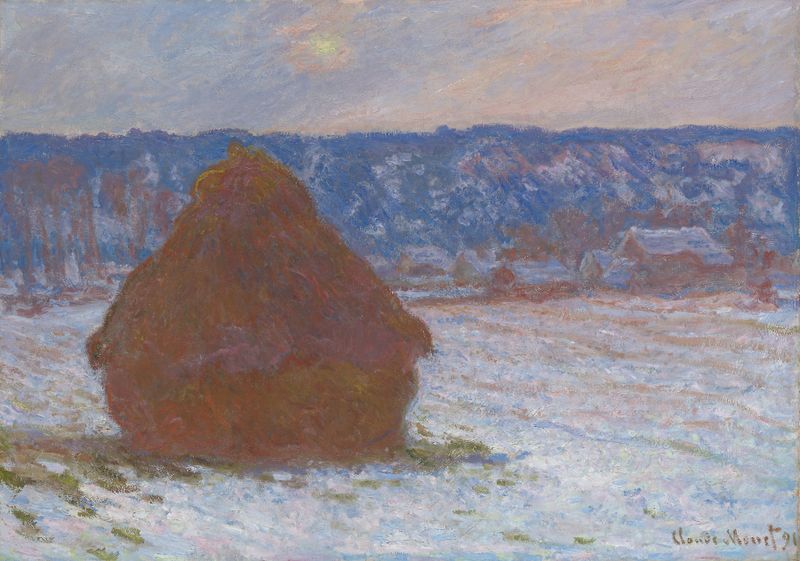
In Sandviken, Norvège, effet de neige, a fleeting memory of winter unfolds, encapsulating the essence of a moment frozen in time. The scene invites introspection, urging us to consider how our recollections shape the landscapes of our lives. Look closely at the foreground, where delicate strokes of white and pale blues swirl together, evoking the soft embrace of freshly fallen snow. Notice how the trees, cloaked in winter’s chill, stand like silent sentinels, their forms obscured yet striking against the dim backdrop.
The hazy sky, with its muted greys, creates a sense of ethereality, drawing your gaze towards the distant, snow-laden hills that fade into obscurity. Beneath the surface beauty, the painting conveys a tension between tranquility and isolation. The interplay of light and shadow suggests the weight of the season, as if each flake of snow carries the memory of warmth long forgotten. Monet's signature brushwork breathes life into the winter scene, hinting at the fleeting nature of time—how memories, like snowfall, can bury the past while simultaneously revealing traces of our experiences. In the winter of 1895, Monet was immersed in the challenges of capturing the nuances of light and color in the changing seasons.
Living in Giverny, France, he found himself drawn to the natural beauty surrounding him, as well as the burgeoning Impressionist movement, which sought to reflect the world as experienced rather than merely observed. This period of his life marked an exploration of memory, blending perception with emotion on canvas.