
Sappho and Alcaeus — History & Facts
In Sappho and Alcaeus, Lawrence Alma-Tadema presents a vibrant scene filled with rich colors. The figures of Sappho and Alcaeus are depicted in a lush, classical setting, surrounded by greenery and architectural elements. Sappho, with her flowing garments, appears contemplative, while Alcaeus engages with her, suggesting a moment of intimacy.
The use of light enhances the warm tones of the figures and the environment, creating a harmonious composition. The painting is executed in oil on canvas, showcasing Alma-Tadema's skill in rendering textures and details. The brushwork is precise, allowing for a lifelike representation of the figures and their surroundings. The dimensions of the artwork are approximately 90 x 120 cm, making it a substantial piece that draws the viewer's attention.
The intricate details in the clothing and the background reflect the artist's dedication to historical accuracy. Lawrence Alma-Tadema was known for his depictions of classical themes and settings, often incorporating rich historical detail. Sappho and Alcaeus, painted around 1881, is a prime example of his Victorian style, blending romanticism with classical subjects. An interesting fact about this work is that it reflects Alma-Tadema's fascination with ancient Greece and Rome, which was a significant influence in his career.
This painting remains a testament to his ability to capture the beauty of mythological narratives.
More Artworks by Lawrence Alma-Tadema

The Roses of Heliogabalus
Lawrence Alma-Tadema

A Juggler
Lawrence Alma-Tadema
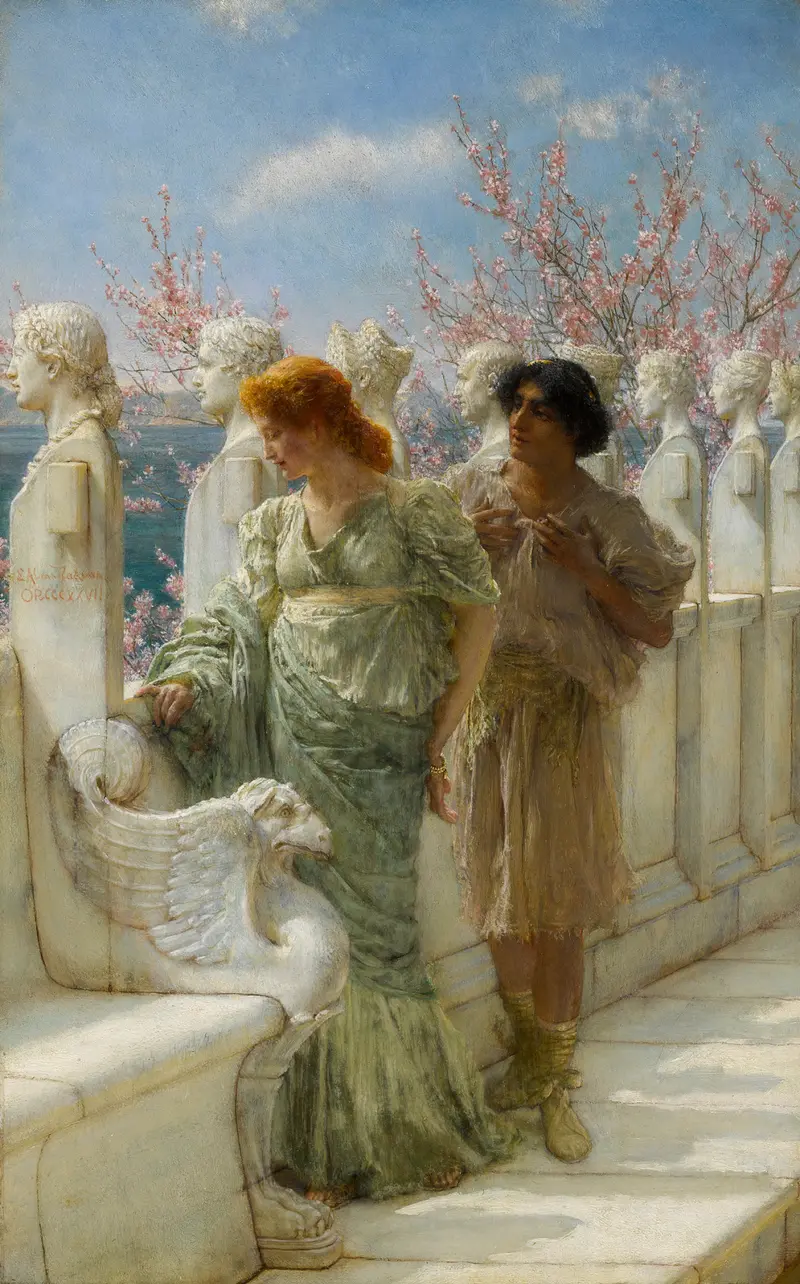
Past And Present Generations
Lawrence Alma-Tadema
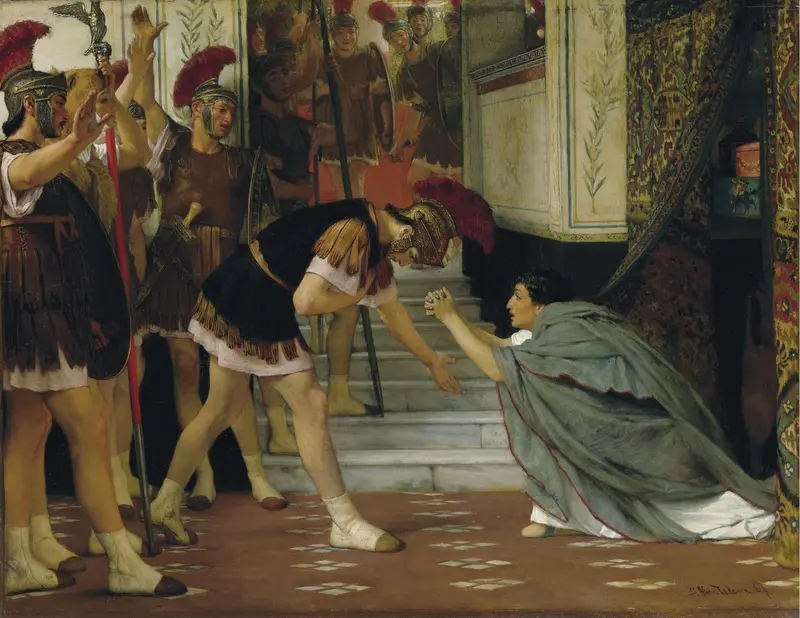
Proclaiming Claudius Emperor, Opus XlVIII
Lawrence Alma-Tadema
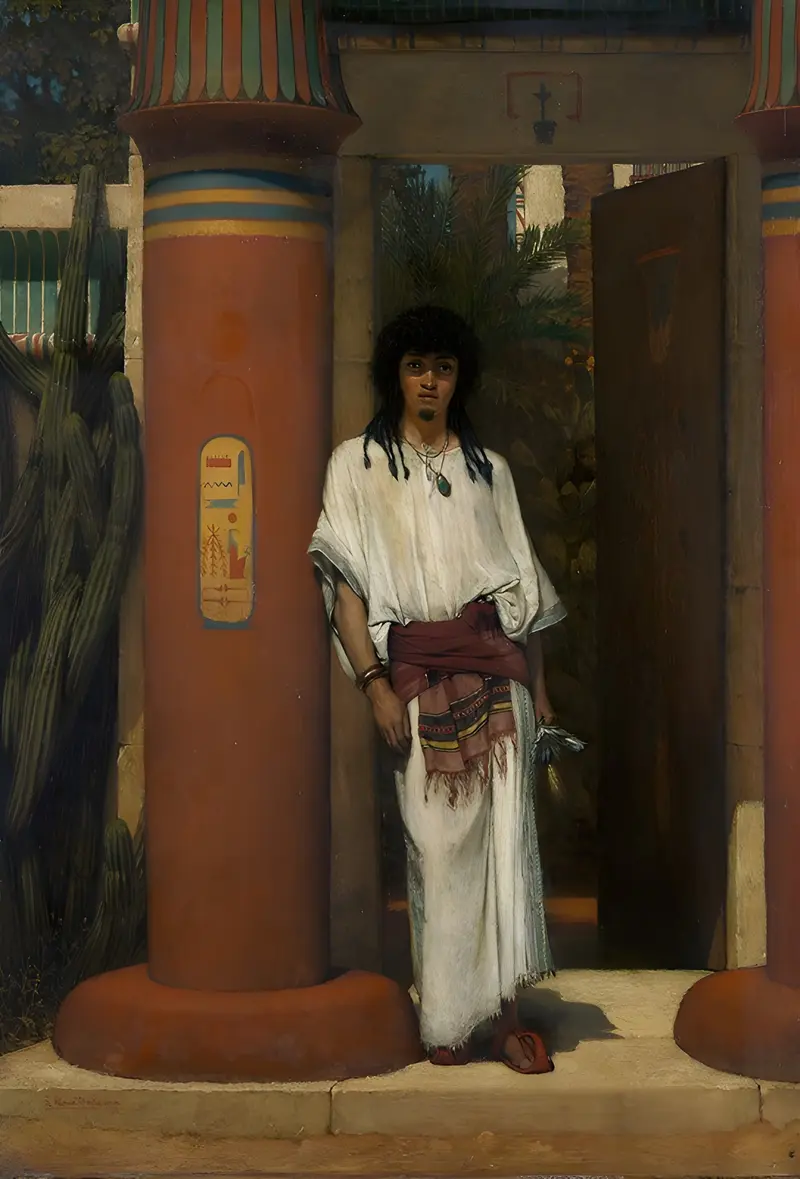
An Egyptian in a Doorway
Lawrence Alma-Tadema
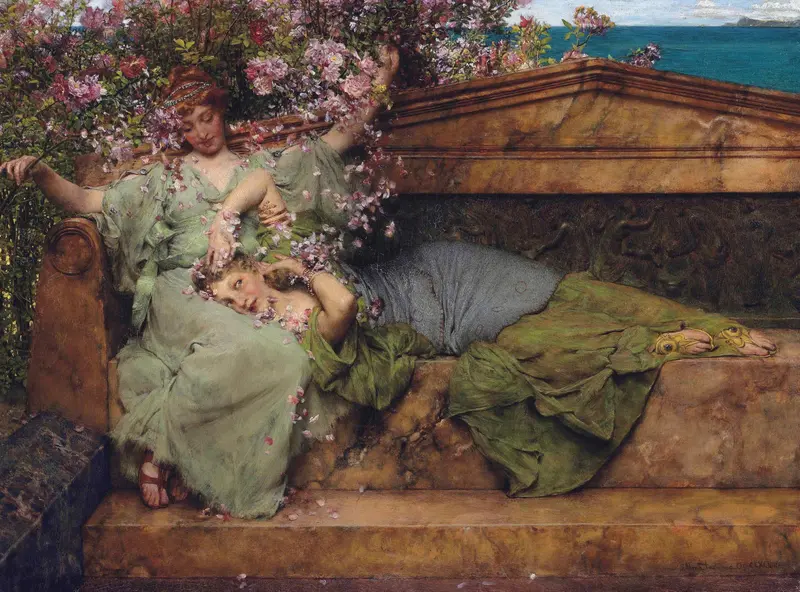
In A Rose Garden
Lawrence Alma-Tadema
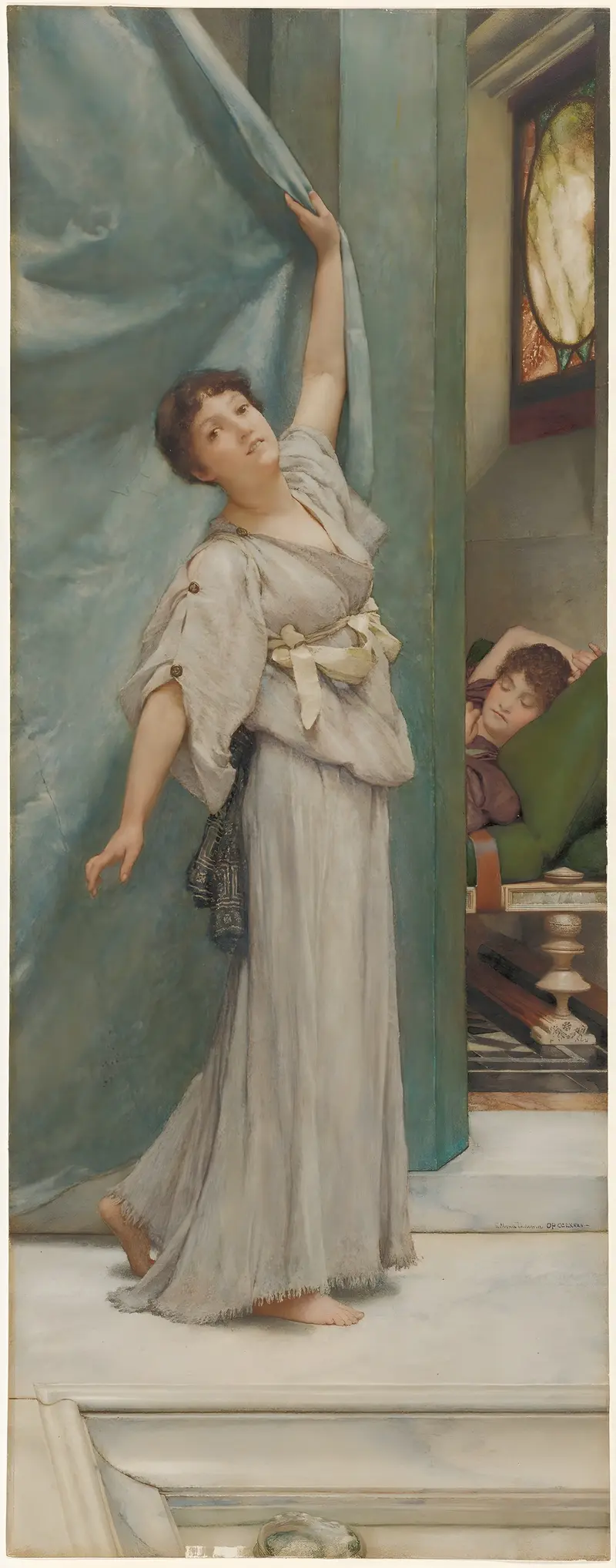
Midday Slumbers
Lawrence Alma-Tadema
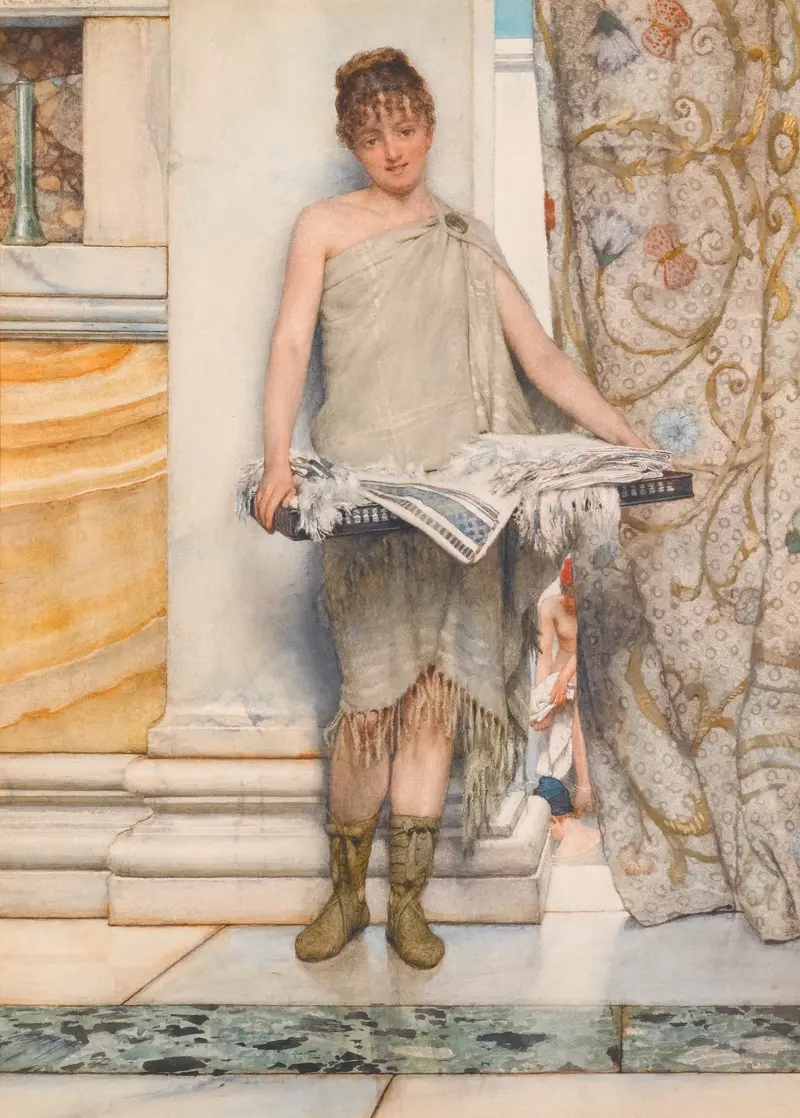
A Balneatrix
Lawrence Alma-Tadema
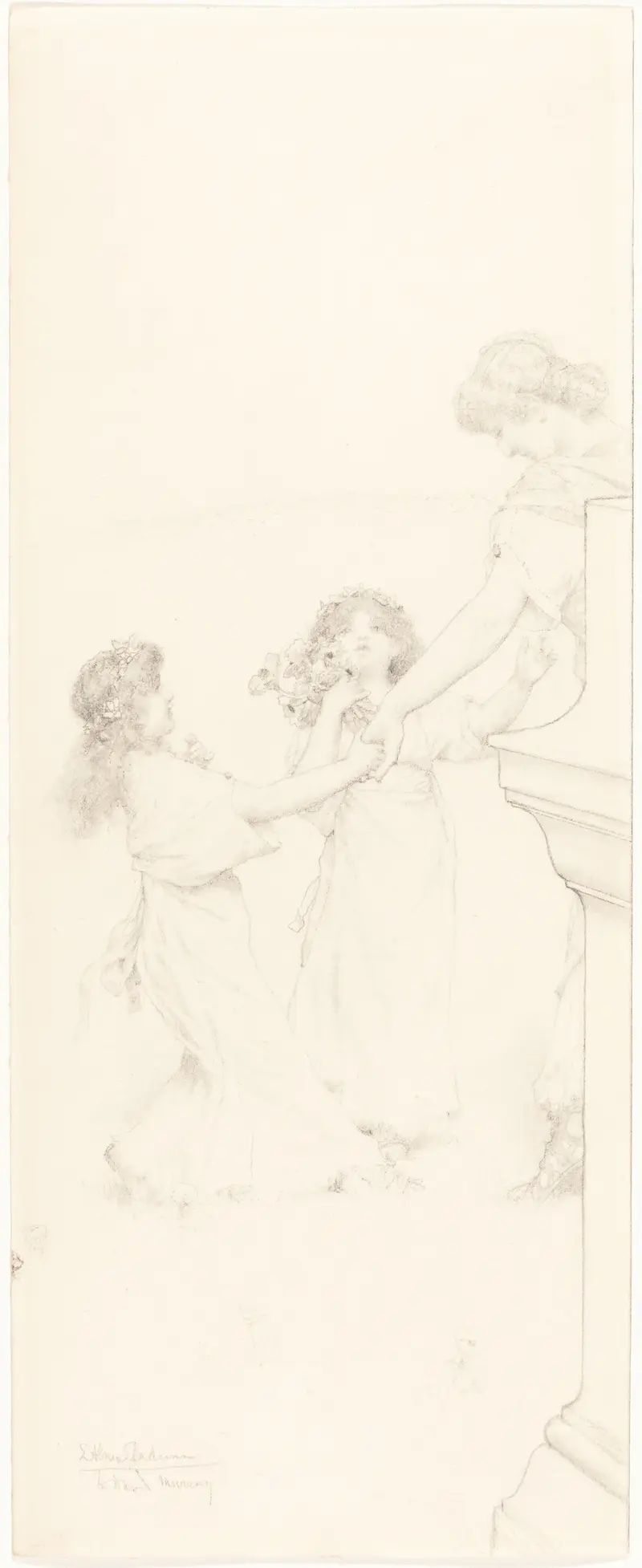
A Dance in Spring
Lawrence Alma-Tadema
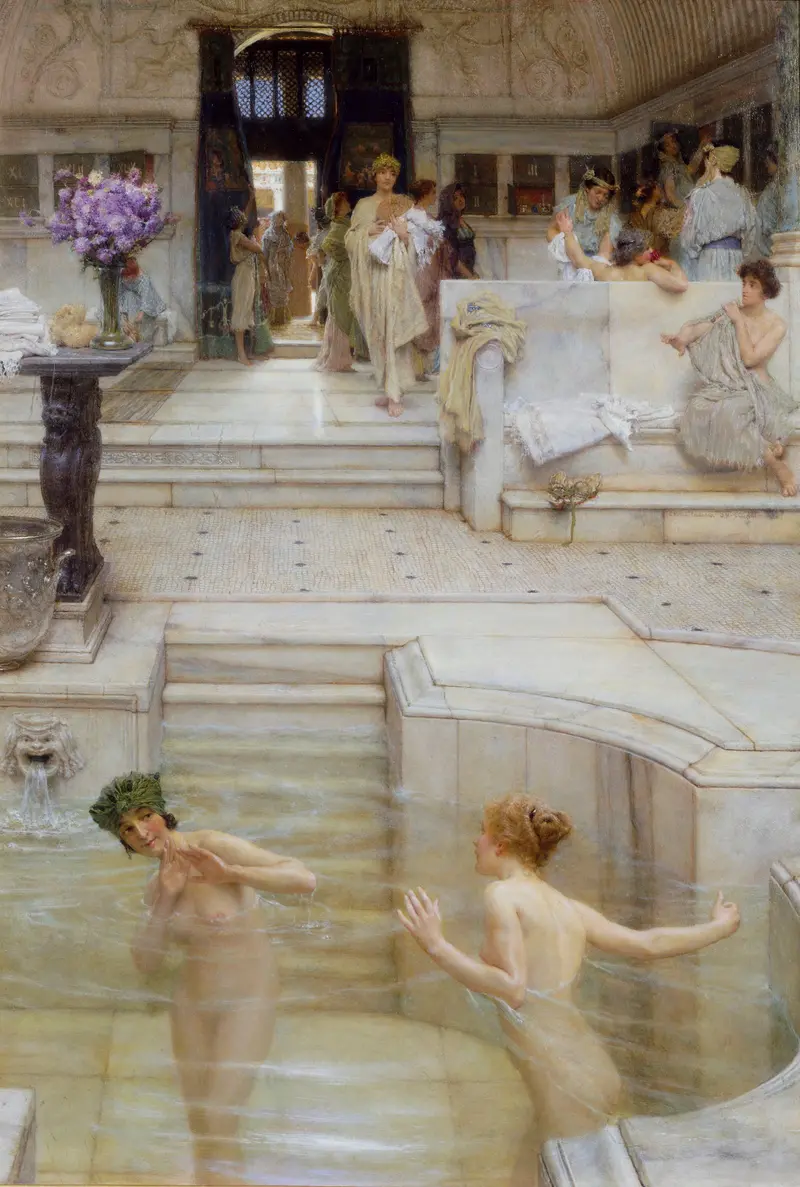
A Favourite Custom
Lawrence Alma-Tadema





