
Sawmill, Outskirts of Paris — History & Facts
Did the painter know this moment would outlive them? In a world where nature thrives amid the encroachments of industry, Sawmill, Outskirts of Paris captures the tension between humanity and the raw power of the forest, evoking an undercurrent of fear that lingers long after the brushstrokes dry. Look to the left, where the sawmill stands starkly against the dense, verdant backdrop. The sharp geometry of the mill cuts through the softness of the trees, crafted in muted earth tones that contrast with the vibrant greens, as if nature is both a spectator and a victim. The play of light filtering through the canopy highlights the textures of bark and wood, juxtaposing the mechanical with the organic, while shadows compound the unsettling atmosphere, suggesting a moment of reflection on what is being sacrificed for progress. As the viewer's gaze wanders deeper, notice the figures—laborers, caught in their toil, their expressions hinting at both determination and resignation.
The tension between these human forms and the overpowering nature surrounding them symbolizes the fear of encroachment, not just on the land but on existence itself. Each brushstroke conveys the unspoken anxiety of an era grappling with the rapid advance of industry, where the forest's looming presence serves as a reminder of what is at stake. Henri Rousseau painted this piece around 1893-95 during a period when Paris was rapidly industrializing. At this time, he was working in a customs office, finding inspiration in the contrasting worlds of urban life and nature.
The art world was shifting towards movements that embraced realism and symbolism, and Rousseau, an outsider to academic training, infused his work with imaginative visions that often evoked primal emotions, urging society to confront its relationship with nature.
More Artworks by Henri Rousseau
Browse all →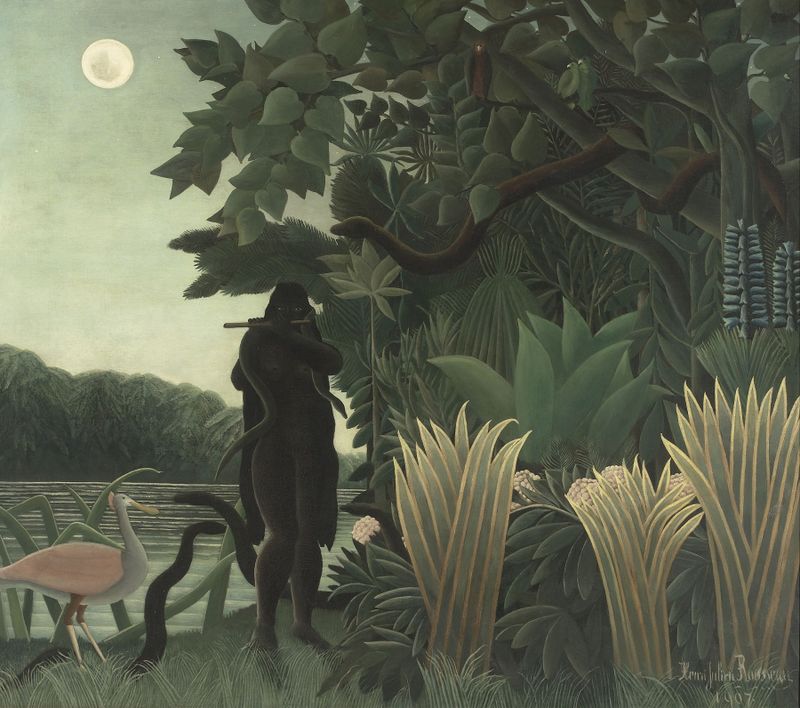
The Snake Charmer
Henri Rousseau
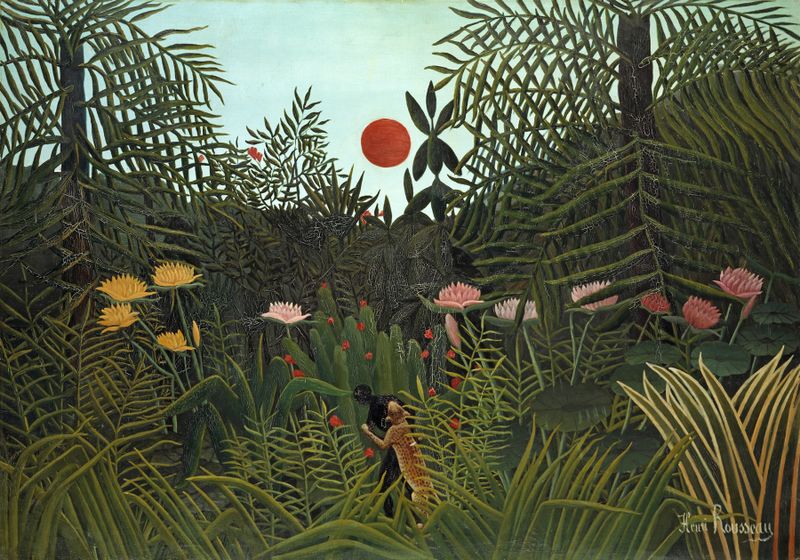
Jungle with Setting Sun
Henri Rousseau
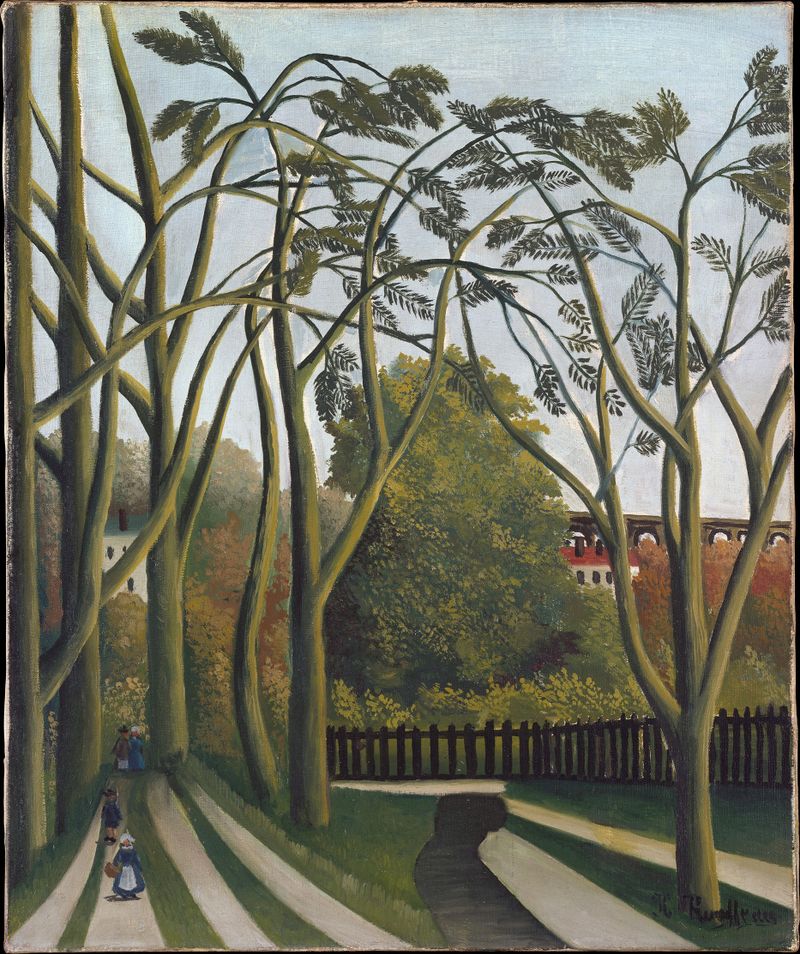
The Banks of the Bièvre near Bicêtre
Henri Rousseau
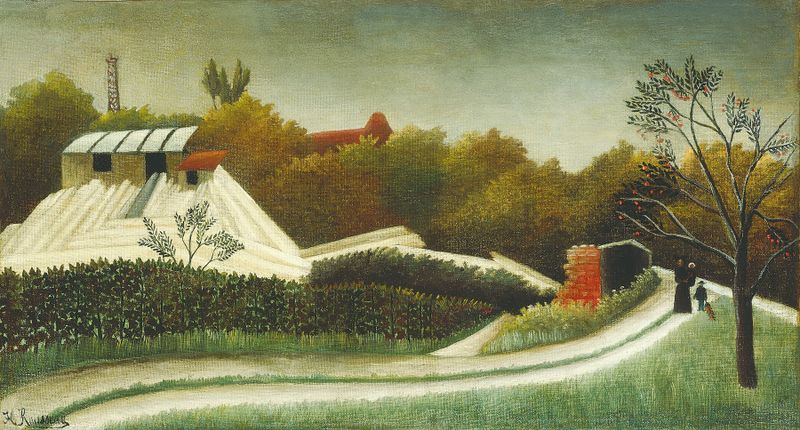
Sawmill, Outskirts of Paris
Henri Rousseau
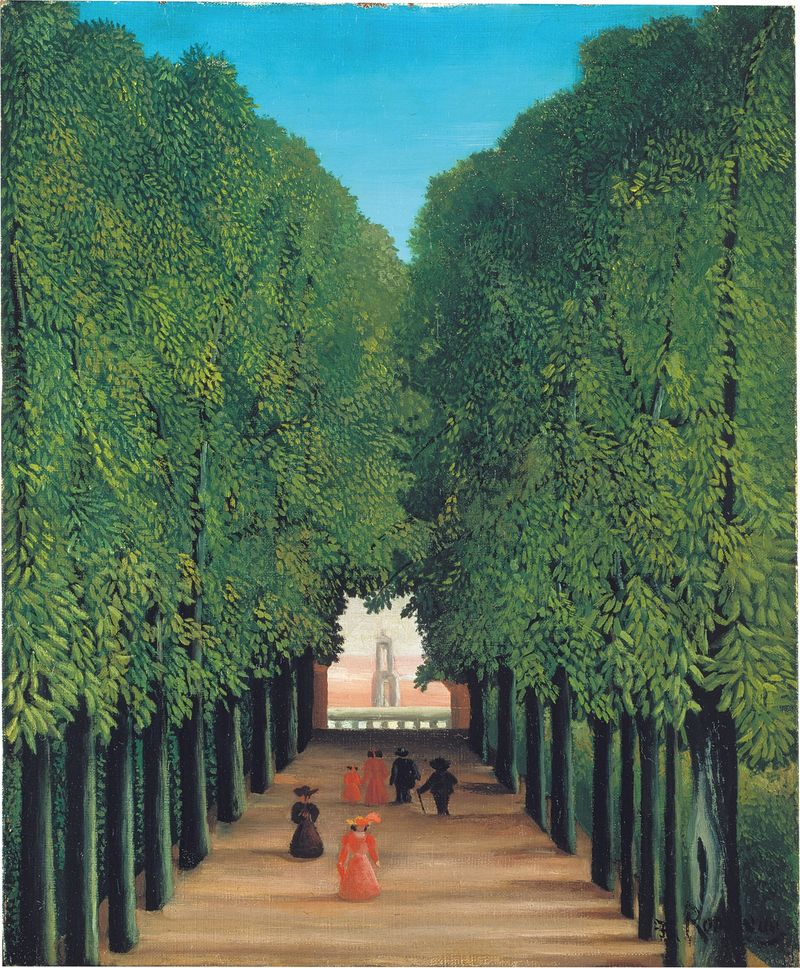
The Avenue in Saint-Cloud Park
Henri Rousseau
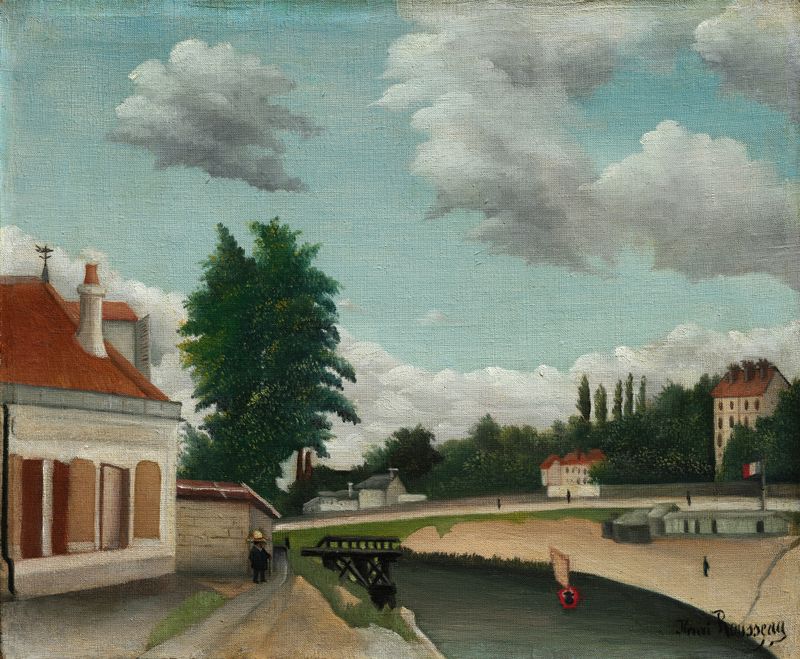
Outskirts of Paris
Henri Rousseau
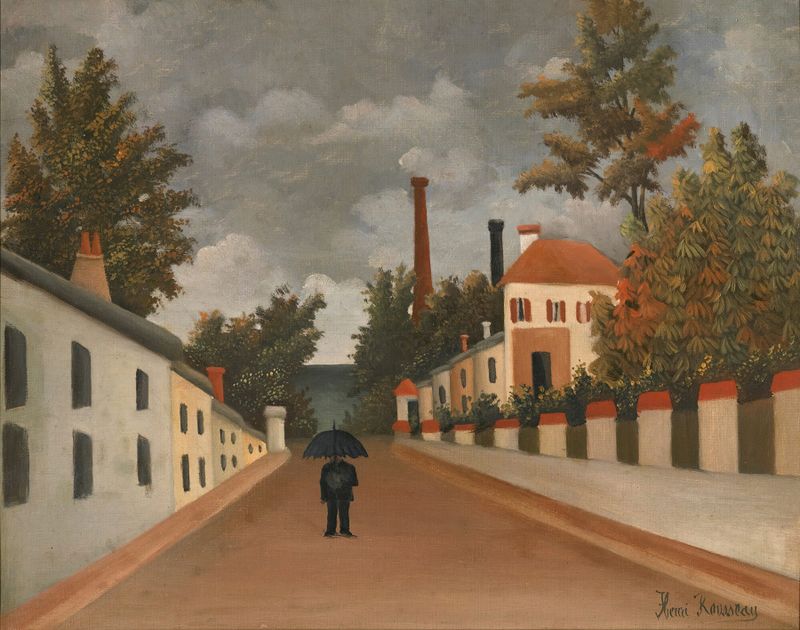
Vue Des Environs De Paris
Henri Rousseau
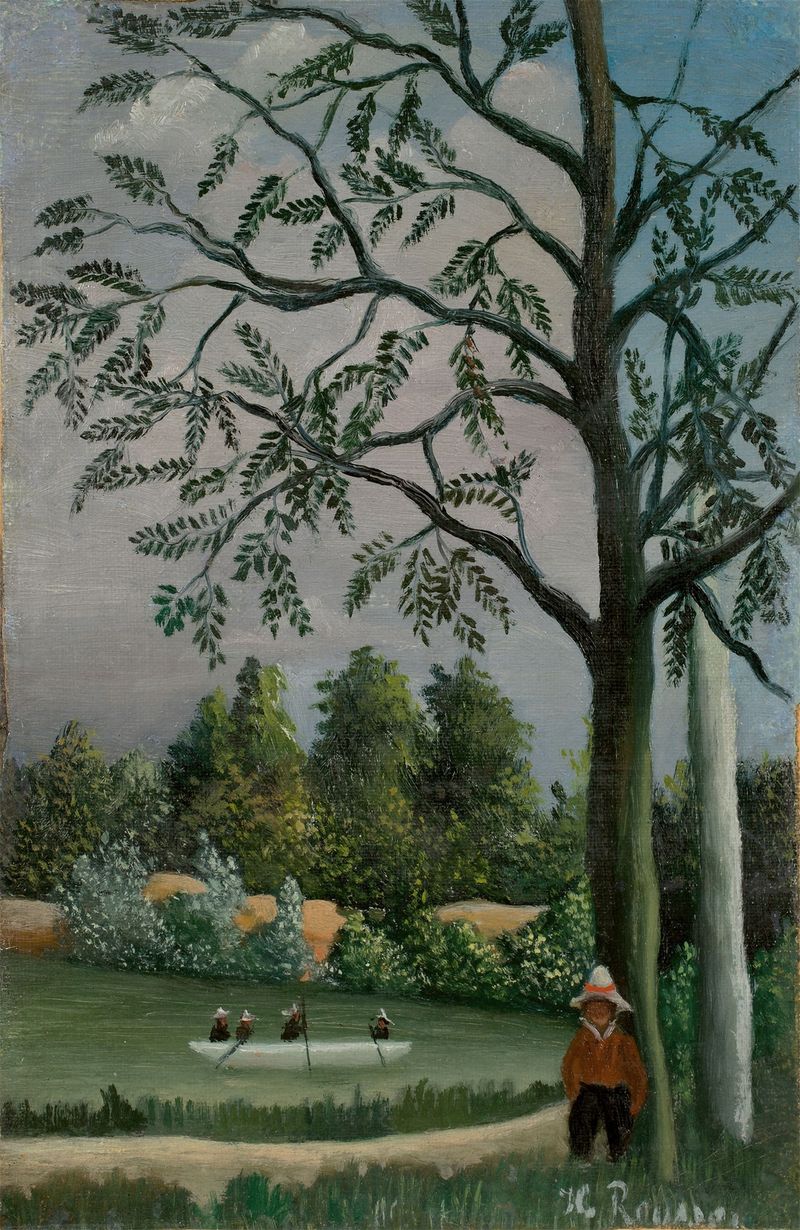
Paysage avec des pêcheurs
Henri Rousseau
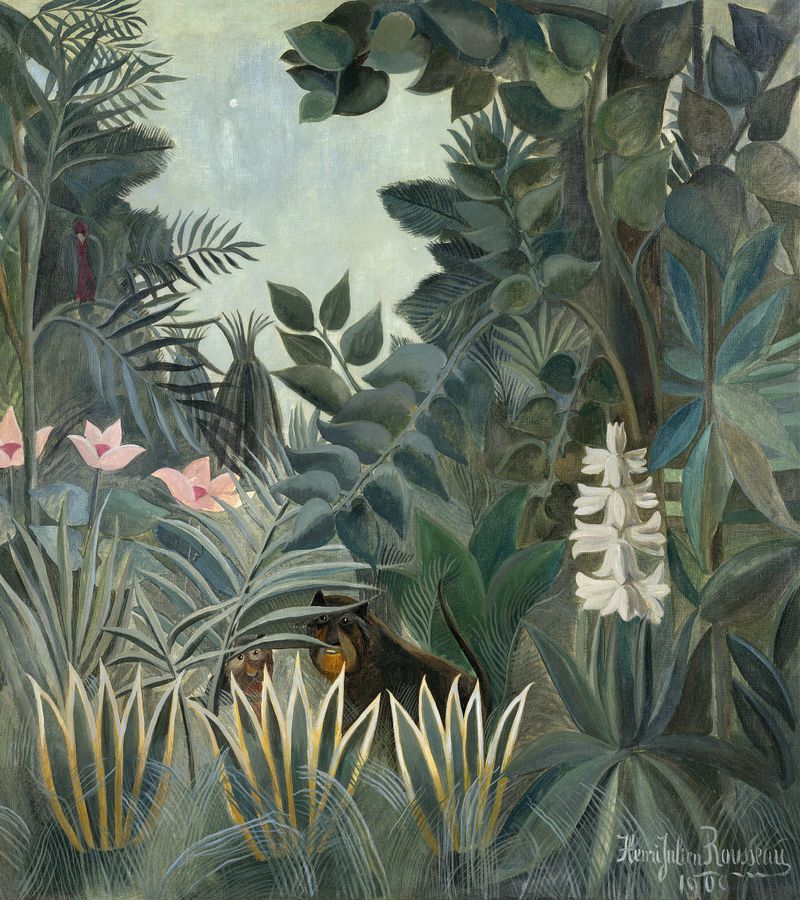
The Equatorial Jungle
Henri Rousseau
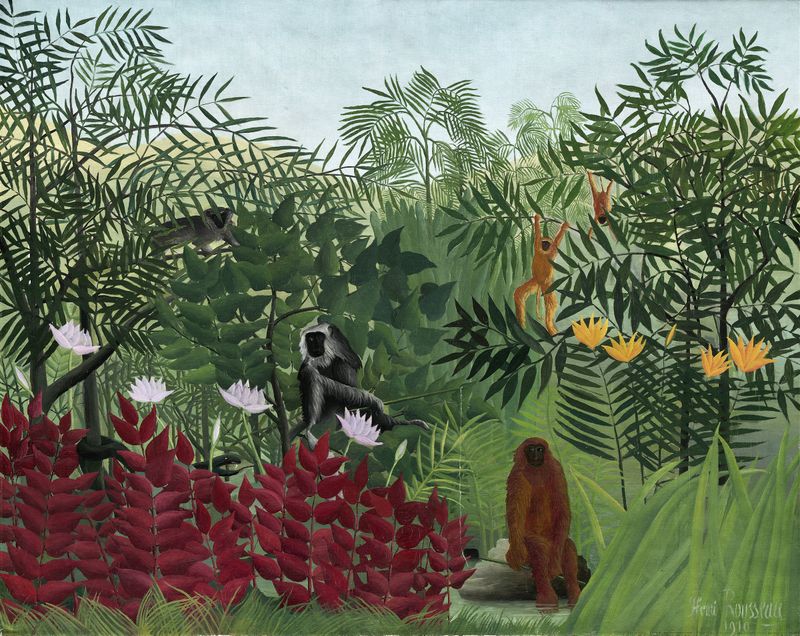
Tropical Forest with Monkeys
Henri Rousseau





